Attention all metagenomicists: put your pinky in the corner of your mouth & say "1 million dollars"

Already posted this to Twitter and Facebook but had to post here too.  This is wild.  DTRA has announced a $1 million prize for metagenomic analysis: DTRA Algorithm Challenge | Landing Page.  From their page

The Prize:
As nth generation DNA sequencing technology moves out of the research lab and closer to the diagnostician’s desktop, the process bottleneck will quickly become information processing. The Defense Threat Reduction Agency (DTRA) and the Department of Defense are interested in averting this logjam by fostering the development of new diagnostic algorithms capable of processing sequence data rapidly in a realistic, moderate-to-low resource setting. With this goal in mind, DTRA is sponsoring an algorithm development challenge. 

The Challenge:
Given raw sequence read data from a complex diagnostic sample, what algorithm can most rapidly and accurately characterize the sample, with the least computational overhead?

My instinct is to keep this to myself because, well, I want to win.  But my sharing side of things won out and I am posting here.  Maybe we (i..e, the community) can develop an open, collaborative project to do this?  Just a thought …

Get the genomes of up to 12 type strains of bacteria and/or archaea sequenced, for free

Barny Whitman asked me to post this announcement and, well, I am.  I made one edit below (see strikethrough) in honor of Norm Pace.

Genomic Sequencing of Prokaryotic Bacterial and Archaeal Type Strains

The Community Sequencing Program (CSP) Quarterly Microbial call of the DOE Joint Genomes Institute provides a great opportunity to obtain draft genomic sequences of the type strains of bacterial and archaeal species. The type strains may also include proposed species prior to publication. Type strains must be relevant to DOE mission areas, such as bioenergy, biogeochemistry, bioremediation, carbon cycling, and phylogenetic diversity. However, strains of human pathogens and human associated species are not eligible. Proposals for genome sequencing of type strains can be submitted through the CSP Quarterly Microbial call, whose deadline is December 17, 2012, with approval usually being completed within one month. Up to 12 strains can be included in each proposal. Proposals for larger numbers of strains need to be submitted to the CSP annual call in the spring. If you cannot make the December call, Quarterly calls are also scheduled for March 25, June 17, and September 23, 2013.

Proposals may be completed on-line at: http://proposals.jgi-psf.org/proposals. You will need to register and sign in to this server. Once on the server, follow the links to the “CSP Quarterly Microbial/Metagenome”. All strains will have to have been deposited in a culture collection, including proposed type strains prior to publication. If a culture collection ID is not available, you can attach a copy of the Certification of Availability. Once approved, you will need to provide 5-10 µg of high molecular weight DNA.

For questions, contact Barny Whitman, University of Georgia (whitman@uga.edu).

Continuing with the sampling and water chemistry of the new coral pond

They’re going to add old sand, rocks, and animals from old reef tank next week, which will be crucial in our succession study. Fortunately (not!) next week is finals week for us undergrads. So basically our study breaks will consist of Sampling and water chemistry! 😛


Then over break David and Matt will get to have all the fun while the rest of us go home. But when we come back there will be so many DNA extractions to do I won’t even know where to start.


Today I did some DNA extractions from Day 1 and 2’s sediment samples of the new Coral Pond.

People not Projects: the Moore Foundation continues to revolutionize marine microbiology w/ its Investigator program

People not Projects.

It is such a simple concept.  But it is so powerful.  I first became aware of this idea as it relates to funding scientific research in regard to the Howard Hughes Medical Institute’s Investigator program.  Their approach (along with a decent chunk of money) has helped revolutionize biomedical science.  And thus I was personally thrilled to see the introduction of this concept in the area of Marine Microbiology a few years back with the Gordon and Betty Moore Foundation’s “Marine Microbiology Initiative Investigator” program.  Launched in 2004 it helped revolutionize marine microbiology studies in the same way HHMI’s investigator program revolutionized biomedical studies.

The first GBMF MMI Investigator program ran from 2004 -2012. And the people supported were pretty darn special:

Now I am I suppose a little biased in this because at the same time GBMF launched this program they also put a bunch of money into the general area of Marine Microbiology and I have been the recipient of some of that money.  For example, I got a small amount of money as part of the GBMF Funded work at the J. Craig Venter Institute on the Sargasso Sea and Global Ocean Sampling metagenomic sequencing projects and also had a subcontract from UCSD/JCVI to do some work as part of the “CAMERA” metagenomic database project.  I ended up being a coauthor on a diverse collection of papers associated with these projects including Sargasso metagenome and this review, and GOS1GOS2 and my stalking the 4th domain paper.

I am also a bit biased in that I have worked with many of the people on the initial MMI Investigator list some before, some after the awards including papers with Jen Martiny, Ed Delong, Alex Worden and Ginger Armbrust, and Mary Ann Moran.

But perhaps most relevant in terms of possible bias towards the Gordon and Betty Moore Foundation is that in 2007 my lab received funds through the MMI program for a collaborative project with Jessica Green and Katie Pollard for our “iSEEM” project on “Integrating Statistical, Ecological and Evolutionary analyses of Metagenomic Data” (see http://iseem.org) which was one of the most successful collaborations in which I have ever been involved.  This project produced something like a dozen papers and many major new developments in analyses of metagenomic data including 16S copy correction, sifting families, microbeDB, PD of metagenomes, WATERs, BioTorrents, AMPHORA. and STAP.  This project just ended but Katie Pollard and I just got additional funds from GBMF to continue related work.

So sure – I am biased.  But the program is simply great.  In the eight years since the initial grants the Gordon and Betty Moore Foundation has helped revolutionize marine microbiology.  And a lot of this came from the Investigator program and it’s emphasis on people not projects.  I note – the Moore Foundation has clearly decided that this “people not projects” concept is a good one.  A few years ago they partnered with HHMI to launch a Plant Sciences Investigator Program  which I wrote about here.

It was thus with great excitement that I saw the call for applications for the second round of the MMI Investigator program.  I certainly pondered applying.  But for many reasons I decided not to.  And today the winners of this competition have been announced and, well, it is an very impressive crew:

Some of the same crowd as the previous round.  Some new people.  Some people not there from the previous round.  All of them are rock stars in their areas especially if one takes into account how senior they are (the more junior people are stars in development).  And all have done groundbreaking work in various areas relating to marine microbiology.  The organisms covered here run the gamut including viruses, bacteria, archaea, and microbial eukaryotes.  The areas of focus covered range from biogeochemistry to ecosystem modeling with everything in between.  It really is an impressive group. Delong pioneered metagenomics and helped launch studies of uncultured microbes in the oceans.  Karl has led the Hawaii Ocean Time series and done other brilliant work.  Sullivan and Rohwer and pushing the frontiers of viral studies in the oceans.  Allen, Armbrust, and Worden are among the leaders in genomic studies of microbial eukaryotes in the marine environment.   Dubilier, Bidle, Fuhrman and Follows Stocker (double listed Follows in original post …) – though they focus on very different aspects of marine microbes – are helping lead the charge in understanding interactions across the domains of life in the marine environment.  Orphan, Saito, Deutsch, Follows and Pearson are on the cutting edge of biogeochemical studies and trying to link experimental studies of microbes to biogeochemistry of oceans.

The great thing about the “people not projects” concept is that the people funded here get to follow their own path.  They are not going to be constrained by the complications and sometime idiocy of the grant review process.  They in essence get to do whatever they want.  Freedom to follow their noses.  Or their guts.  Or whatever.  It is a refreshing concept and as mentioned above has been revolutionary in various areas of science.  There has been a slow but steady spread of the “people not projects” concept to various federal agencies too but it seems to be more of a private foundation type of strategy.  Federal Agencies are so risk averse in funding that this type of concept does not work well there.  I wish there was more.  But I am at least thankful for what HHMI and GBMF and Wellcome and Sloan and other private groups are doing in this regard.  Now – sure – all of these private foundations do not do everything perfectly.  They have blunders here and there like everyone else.  But without a doubt I think we need more of the People not Projects concept.
Oh – and another good thing.  GBMF is quite a big supporter of Open Science in it’s various guises.  So one can expect much of the data, software, and papers from their funding to be widely and openly available.   
It is a grand time to be doing microbiology largely due to revolutions in technology and also to changes in the way we view microbes on the planet.  It is an even grander time to be doing marine microbiology due to the dedication of the Gordon and Betty Moore Foundation to this important topic.  

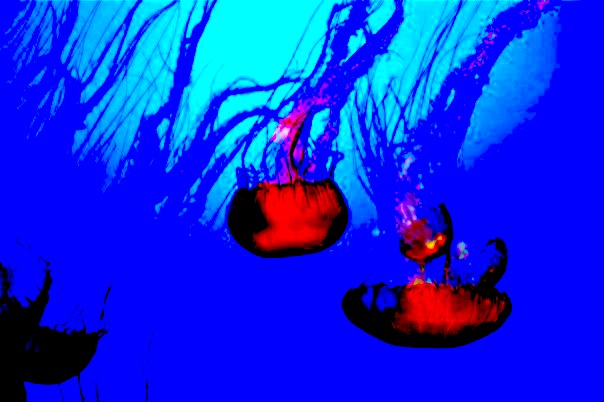
Twisted tree of life award #14: @nytimes and Nathaniel Rich on Immortal Jellyfish

Well, this article by Nathaniel Rich in today’s New York Times Magazine certainly has gotten people talking: Can a Jellyfish Unlock the Secret of Immortality? – .  Alas, from a scientific point of view there are numerous problems with it.  So many that Paul Raeburn at the Knight Science Journalism Tracker at MIT has published a major takedown: First we get proof of heaven; now the secret of immortality. 
Now, the science about immortality in the article is certainly bad.  But that is not what I am here to discuss.  I am here to discuss the parts of the article about evolution.  I suppose if I had read the article online instead of in print I might have been attuned already to potential evolution problems from the correction on the first page

This article has been revised to reflect the following correction:
Correction: November 29, 2012
An earlier version of this article misstated the title of Charles Darwin’s classic book on the subject of evolution. It is “On The Origin of Species,” not “On the Origin of the Species.”

Oops.  Not a good start.  The article has a lot of background about jellyfish and in particular on person who is studying them and claiming this one species is immortal (which it is not).  It is the higher vs. lower organism meme that drives me crazy in the article:

Today the outermost twigs and buds of the Tree of Life are occupied by mammals and birds, while at the base of the trunk lie the most primitive phyla — Porifera (sponges), Platyhelminthes (flatworms), Cnidaria (jellyfish).

And then 

The mystery of life is not concealed in the higher animals,” Kubota told me. “It is concealed in the root. And at the root of the Tree of Life is the jellyfish. 

Seriously?  The root of the tree of life is the jellyfish?  And higher vs. lower organisms?  What exactly is a higher organism?  Does this mean that jellyfish have not evolved since their branch separate from the trunk of the animal tree?  Oh – and – what about the rest of the Tree of Life – you know – outside of animals for example?  Aaargh.  
The higher vs. lower meme continues with this quote:

Hydrozoans, he suggests, may have made a devil’s bargain. In exchange for simplicity — no head or tail, no vision, eating out of its own anus — they gained immortality.

Really?  So there is a tradeoff between complexity and immortality?  So does this mean all simple organisms are more immortal?  And all complex ones are doomed?  Where does this notion even come from?
For helping perpetuate the higher vs. lower organism meme (which drives me batty) I am awarding the author and the editor and the NY Times my coveted “Twisted Tree of Life” award.


As an aside, the article is littered with painful other statements like

It is possible to imagine a distant future in which most other species of life are extinct but the ocean will consist overwhelmingly of immortal jellyfish, a great gelatin consciousness everlasting.

So – this jellyfish operates in the absence of an ecosystem?  Suppose individual organisms are “immortal” as claimed in the article.  What exactly will they eat when everything else is gone?
Plus there is a conspiracy part that is lame.

You might expect that biotech multinationals would vie to copyright its genome; that a vast coalition of research scientists would seek to determine the mechanisms by which its cells aged in reverse; that pharmaceutical firms would try to appropriate its lessons for the purposes of human medicine; that governments would broker international accords to govern the future use of rejuvenating technology. But none of this happened.

Really?  So all the scientists and companies of the world have ignored this amazing finding?  Maybe, just maybe you might think that is because this is BOGUS?
And then there is the bogus “small bodied organism” problem.

He cited this as an example of a phenomenon he calls the Small’s Rule: small-bodied organisms are poorly studied relative to larger-bodied organisms. There are significantly more crab experts, for instance, than hydroid experts.

What?  Is this even remotely serious?  So ignore Drosophila as a model for animals.  Or mice for that matter.  Ignore Arabidopsis as a model for plants.  Ignore yeast too.  And E. coli.  Uggh.  Completely inane. 

Can’t think of a better way to spend my Saturday afternoon!

Unlike most Saturdays, today I woke up and my first thought was, “I get to go to the SciLab building and sample!”  Jennifer and I took samples of the wall, water, and sand in the Coral Pond. We also did all of our water chemistry tests. Everything went well!


My only concern is with the nitrite test that I did. My value was extremely higher than the first two times (before the water was added to the pond and time zero). Those values were around 20 while I measured nitrite at 125 today. Because of this significant difference I ran the test twice, but got the exact same number the second time. I’ve been trying to find anything online that would give me a hint to whether my value makes sense or not.


We are going to have a lot to do this week. DNA extractions here we come!

Drexel Executive Leadership in Academic Technology and Engineering program fellowships

Just a quick post here.  I just got an email about the ICELA | International Center for Executive Leadership in Academics program in “Leadership Development for Senior Academic Women”.

The full email I received about this program is below:

Dear Colleague

As a recent recipient of an NSF institutional- level grant and a leader in your field, I would like to alert you to our (NSF-supported) leadership development program for mid-career women faculty in science and engineering.

The Executive Leadership in Academic Technology and Engineering program (ELATE at Drexel(r)) is a program for the enhancement of the professional and leadership skills of women faculty in mid-career (associate or full professor) in science and engineering fields. It is designed for faculty who are in a developmental phase of their institutional leadership, or who are already holding such positions.

We are now accepting applications for its 2013-2014 class through our online application<https://www.icela.net/apply/>.

The ELATE at Drexel program launched in 2012, and is currently hosting its inaugural class of Fellows from some of the nation’s leading universities in science and engineering. Over the past year, the program has been recognized with awards from the National Science Foundation, the Sloan Foundation, and the Henry Luce Foundation.  Our greatest honor has been to work with the accomplished Fellows and faculty in the program. More information about the current fellows and faculty is available at http://www.drexel.edu/engineering/programs/special_opp/ELATE/

ELATE advances knowledge and skills in strategic finance and management, personal and professional leadership effectiveness, and academic organizational dynamics. Upon graduation, each ELATE fellow becomes part of a community of leaders in higher education that provides continuing support for each member and her organization while serving as role models for the next generation of men and women scientists and engineers.

We would appreciate it if you could distribute this information to your colleagues, and encourage women in current or potential leadership roles to apply. Information provided in the attached brochure.

Applications are due by January 3, 2013.

Questions? Please contact us at ELATE@Drexel.edu or 215-991-8240.

New Coral Ponds

Hi all,

I have been looking forward to adding some blog posts on this great student outreach project but keep holding back because I wanted to include some pictures. I have recently joined Eisen’s lab and will be at Davis for the year before returning to San Diego State University to continue working on my Phd looking at microbial communities across Southern California kelp forests. I was excited about the opportunity to join in on this project and am impressed by the level of student participation.

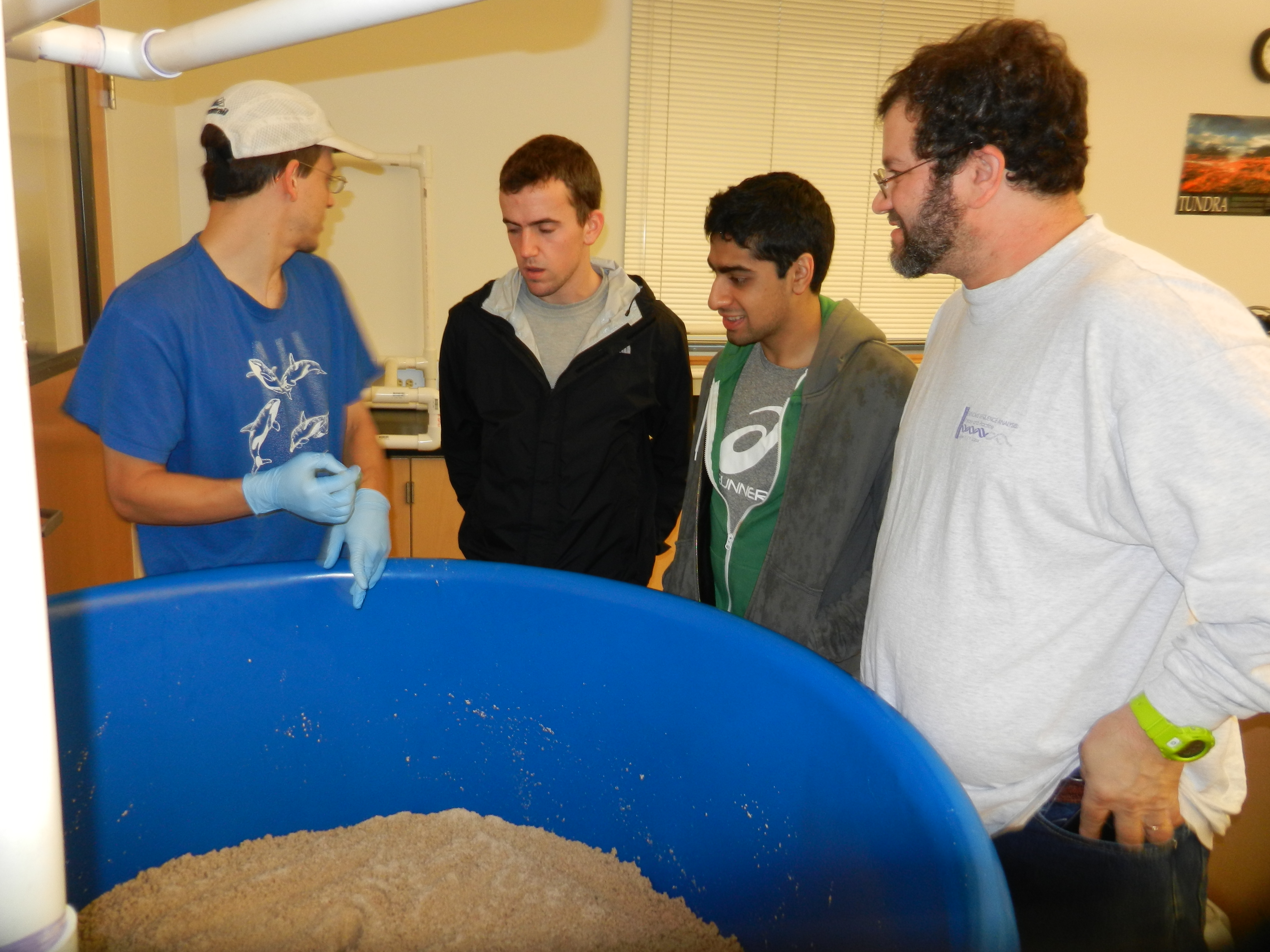
This week has been busy with everyone getting acquainted with all the new water chemistry kits David has ordered for us. With Russell’s new tweeting pH meter, I was afraid the machines were taking over but it turns out undergrads and grads are still needed for bench work.

ImageImage

Today we got to see the newest coral pond setup and everyone in action as we collect our baseline data. Despite the rain we had a lot of participation and everything went smoothly.

ImageImage

Convoluted title, cool paper in #PLoSGenetics on relative of insect mutualists causing a human infection

Saw this tweet a few minutes ago:

//platform.twitter.com/widgets.js
The title of the paper took me a reread or two to understand.  But once I got what they were trying to say I was intrigued.  And so I went to the paper:  PLOS Genetics: A Novel Human-Infection-Derived Bacterium Provides Insights into the Evolutionary Origins of Mutualistic Insect–Bacterial Symbioses.  And it is loaded with interesting tidbits.  First, the first section of the results details the history of the infection in a 71 year old male and his recovery and the isolation and characterization of a new bacterial strain.  Phylogenetic analysis revealed this was a close relative of the Sodalis endosymbionts of insects.

And then comparative genomics revealed a bit more detail about the history of this strain, it’s relatives, and some of the insect endosymbionts.  And plus, it allowed the authors to make some jazzy figures such as

And this and other comparative analyses revealed some interesting findings.  As summarize by the authors

Our results indicate that ancestral relatives of strain HS have served as progenitors for the independent descent of Sodalis-allied endosymbionts found in several insect hosts. Comparative analyses indicate that the gene inventories of the insect endosymbionts were independently derived from a common ancestral template through a combination of irreversible degenerative changes. Our results provide compelling support for the notion that mutualists evolve from pathogenic progenitors. They also elucidate the role of degenerative evolutionary processes in shaping the gene inventories of symbiotic bacteria at a very early stage in these mutualistic associations.

The paper is definitely worth a look.

Follow the pH meter on Twitter

As part of the environmental monitoring of the coral ponds that we’re going to undertake Russell has agreed to loan us his famous tweeting pH meter.   Right now it’s just practicing in a freshwater tank at the facility but soon it will go into the first coral pond and we’ll get a continuous record of pH over the course of the project.   Follow along on Twitter @RussellspHMeter