Eisen Lab Blog

New Parameters to Test!

We’ve ordered and are recieving a series of equipment to measure Nitrate, Nitrite, Ammonia, dissolved Oxygen, pH, salinity, temperature, Phosphate, alkalinity, Chloride, hardness, Iron, and Sulfite in the tanks’ waters. Now we can gather more information about the environment these microbes are thriving in.

Must read microbiome paper of the month: defined microbioata treatment of Cdiff infections

This is a must read: PLOS Pathogens: Targeted Restoration of the Intestinal Microbiota with a Simple, Defined Bacteriotherapy Resolves Relapsing Clostridium difficile Disease in Mice

This is the paper I referred to in a previous post: Mouse study of fecal transplants to treat Cdiff infection.  This post was about a BBC News story that appeared to have jumped the embargo.  And then the news article disappeared and the scientific article was missing.  Thankfully the paper is now out.

The article has gotten some press that was not retracted.

More on fecal transplants and bacteriotherapy from my blog can be found below:

Microbes, art and a bit of satire all in one place – Design Interactions at the RCA

Got pointed to an interesting site recently – “Design Interactions at the RCA”  This is a program (or as they call it – a programme) at the Royal College of Art in London.  One of the current students – Lana Porter – contacted me about a possible project she was working on involving microbes.  She also pointed me to some past projects connected to microbes from the program.  The two she pointed to are:

  • Viruses, close enemies or distant cousins? | Design Interactions at the RCA. From Mikael Metthey.  It appears to be from a few years ago but I am not sure.  Regardless, it is pretty humorous.  It is basically a description of an attempt to create “more intimate ways to approach the process of vaccination” by having poxteddy bears and cowpox rides and vaccination playgrounds.
  • The Race.  From Michael Burton.  Also from a few years ago. This one is about antibiotics and microbial evolution and the hygiene hypothesis.  

And then browsing around the site led to some other interesting concepts:

Seems like a fun programme (or program) …

RISE Symposium

Just received this:

2012-Nov-30-RISE-Symposium.pdf
Inaugural RISE Symposium Agenda.pdf

Seminar One-step Bacterial Genome Closure with Single-molecule Hybrid Assembly

Talk Title:

One-step Bacterial Genome Closure with Single-molecule Hybrid Assembly

Abstract:

Emerging single-molecule sequencing instruments can generate multi-kilobase sequences with the potential to dramatically improve genome and transcriptome assembly. However, the high error rate of single-molecule reads is challenging, and has limited their use to resequencing bacteria. To address this limitation, we introduce a correction algorithm and assembly strategy that utilizes shorter, high identity sequences to correct the error in single-molecule sequences. We present an assembly recipe combining long high-error sequences and short high-idenitity sequences that can generate near-finished bacterial genomes. We demonstrate the utility of this approach on several bacterial genomes: in the best examples, producing automatically closed bacterial chromosomes without the use of paired ends.

Speaker:

Sergey Koren, Ph.D.

Bioinformatics Scientist, Genomics

National Biodefense Analysis and Countermeasures Center

Affiliations:

Center for Bioinformatics and Computational Biology

University of Maryland

Email: sergek

Reference Publication:

Hybrid error correction and de novo assembly of single-molecule sequencing reads.

Koren S, Schatz MC, Walenz BP, Martin J, Howard JT, Ganapathy G, Wang Z, Rasko DA, McCombie WR, Jarvis ED, and Phillippy AM.

Nature Biotechnology 30(7):693-700 2012

http://www.nature.com/nbt/journal/vaop/ncurrent/abs/nbt.2280.html

Location and Time: 4202 GBSF 11am-12pm Thursday, November 15th

Genome Project Documentary finally finished!

After collecting dust for some months I’ve finally put together the (4-minute) documentary on the Undergraduate Genome Project.   The idea here was film the students throughout the project and create something that would give a basic idea of what they accomplished.

Soon I’ll be posting more about how the project went, but for now check out the video here

We have a guest speaker, Vincent Daubin from the Universite Lyon 1, France, for our lab meeting tomorrow.
We will be meeting in room 4202 from 1:30 to 3:30pm at the Genome Center.

Fermentation microbiomes part 2 from #UCDavis: American coolship ale microbiome

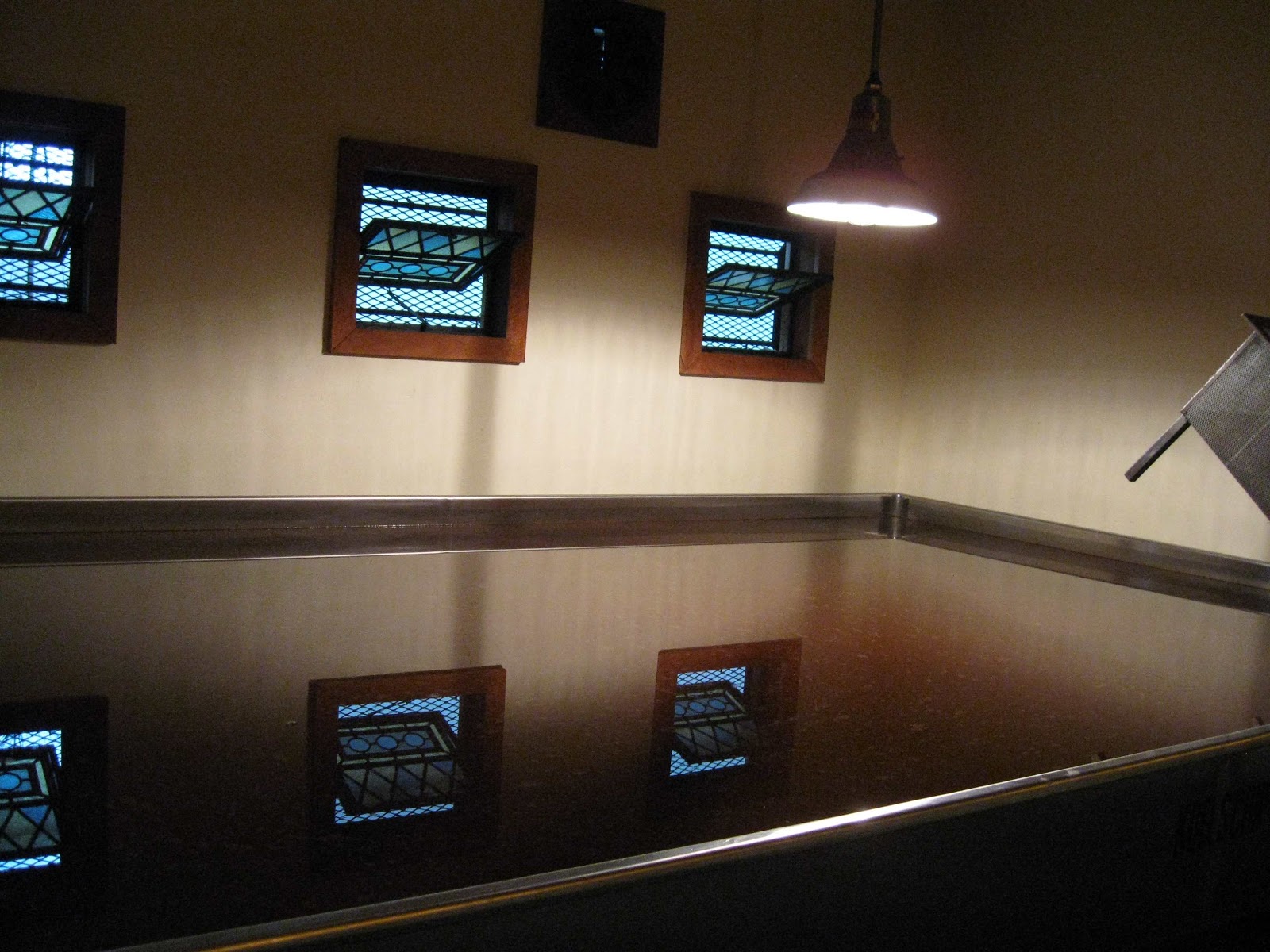
 From Nick Bokulich: This is an image of the “coolship” where the cooling wort
(pre-fermented beer) is left overnight and presumably where wild
microbes are introduced to kick off the fermentation. This is the
morning after, still full of wort.

Just a quick follow up to my recent post on How did I miss this? The botrytized wine microbiome … from #UCDavis colleague David Mills.  There is a similar paper from the same group also in PLoS One from about the same time: PLOS ONE: Brewhouse-Resident Microbiota Are Responsible for Multi-Stage Fermentation of American Coolship Ale.  What a job — microbes, ales and wines, and sequencing.  One of the few times when reading a paper where I have said “I wish that was me doing that work.” … must look into getting involved in such studies …

How did I miss this? The botrytized wine microbiome … from #UCDavis colleague David Mills

From here.

Fun use of next generation sequencing in this paper: PLOS ONE: Next-Generation Sequencing Reveals Significant Bacterial Diversity of Botrytized Wine.  They used sequencing to characterize the diversity of microbes associated with botrytized wine (wine produced from grapes infected with the mold Botrytis cinerea.  They focused in particular on Dolce wine (not 100% sure what this is but I think it is wine from the Dolce winery …).  And they focused in particular on the bacteria associated with this wine as it was being produced.  Anyway … I am no food/drink microbiologist .. but this seems cool.

Overselling the microbiome award of the month: Integrative medical group of Irvine

Wow.  Just discovered this site: Fecal Transplantation | Integrative Medical Group of Irvine.  Not sure how long it has been out there.  But this is one of the more aggressive and perhaps egregious overselling of the power of the human microbiome that I have seen. They are promoting fecal transplants at their clinic as a way to cure a diverse array of ailments from ulcerative colitis to obesity and imply they can be used for cardiovascular health, emotional status, bone health, and more.  My “favorite” part:

As our understanding of the enormous importance of bowel micro-biota (bacteria) grows, the indications for fecal transplant will expand greatly and public acceptance will follow. But there is no reason for you to wait. Dr. Lee, our naturopathic doctor, is one of only a tiny handful of specialists certified in the use of fecal transplant. She can expertly manage your case.

Yes that is right.  We (the royal We of course) are on the verge of showing that the microbiota does EVERYTHING and therefore, if anything ails you, just wash your troubles away with some shit from a relative.  There is no reason to wait.  Come in to our clinic now.

And for the misleading nature of this site, I am giving this Integrative Medical Group of Irvine my coveted “Overselling the microbiome award.”  Previous winners and discussions of this issue are listed below: