Eisen Lab Blog

Calling on Publishers to Resign from The Association of American Publishers Re Anti-Open Access Stance

Well, much has been said recently about the ickyness of a new bill in Congress that is targeting open access publishing.
For more about how this new “Research Works Act” is a bad idea see
And many more.  
I think a key aspect of this bill is the disturbing support for it from the The Association of American Publishers.  Now, this association includes many you might expect to be in favor of an anti open access bill, like Elsevier and Disney and Wiley and Macmillan.  But it also includes many publishers I would not have expected to see supporting this bill such as the University of California Press and MIT Press and there National Science Teachers Association   The full list of members of AAP is here.  I think it is clearly time for the Academic community to pressure groups to abandon AAP as suggested by John Dupais: Scholarly Societies: It’s time to abandon the AAP over The Research Works Act
I therefore am calling on the academic and scientific communities to look at the list of members of AAP and if one of them is an institution with which you have any affiliation please call on them to drop themselves from the membership list.  I will be doing this for the UC Press ASAP …

UPDATE

Just discovered a similar but much more detailed call from Cameron Neylon.

UPDATE2

See my post from 2007 calling for a boycott of AAP over their inane “PRISM” effort

Dear Representatives Issa and Maloney – Are you kidding me? Stop this bill now #ClosedAccess

Should the results of research funded by taxpayer money be freely available? Apparently two in Congress think no – Darrell Issa and Carolyn Maloney have cosponsored a bill that would reverse the NIH open access policies.

Why would they do this? Well, if you follow the money, you can see that they are well supported by Elsevier – one of the publishers vehemently against open access to scientific research results.

For more on this see

Draft post cleanup #7: Scamming Pubmed Central Deposition Rules

Yet another post in my “draft blog post cleanup” series.  Here is #7, from February this year.

I continue to be a bit annoyed by the Pubmed Central system for depositing your own papers there.  Well, actually, not annoyed with the existence of the system.  But am annoyed that you can only do it if you have an NIH grant ID associated with the paper you are depositing.  I am tempted to set up a system for sharing NIH grant IDs that would allow non NIH funded researchers to scam the system and to get their papers into Pubmed Central.  Almost certainly, people at NIH would not like this, but not sure whether this would be considered “illegal” or just “annoying”.

And I am still unclear as to why Pubmed does this.  Genbank is NIH funded but will take sequences from any researcher no matter the source of funding for the work.  Anyway – I have not set up a NIH grant ID sharing system but if you want to submit an article to Pubmed Central and do not have an NIH grant ID, you might want to just ask someone who has one for a grant covering a similar topic at a similar time period.  I do not think NIH would figure out that the grant did not actually fund your work.  And you could even use the NIH grant search engine that pops up when you use the manuscript submission system or search Pubmed directly.  Not that I would recommend anyone break their rules or anything like that.

Bentham publisher – so wrong in some many ways #SPAM

I have written about Bentham – that Spam bots of science publishing before.   Got an email from them today – it is wrong in so many ways.  I thought I would just post it here – and let people judge for themselves but am a bit wary of calling attention to them and putting out any of their message.  So I am going to put out mine

BENTHAM – LEAVE ME THE $&%#@ ALONE

And if that is not enough for you, how about reading Richard Poynder’s piece on them from four years ago.  Seems they have not changed a bit.

Vote early/often for #DavisCA house Holiday lights, help win $100K for Davis schools

Just a quick request for Davis folks or fans … there is a vote going on for best Holiday light display and a house in Davis is one of the finalists with the winner getting $100,000 for their local public schools. It would be great to get some more votes … See http://deckthehouse.patch.com/entry/229605 to vote (you will need a Facebook account).

And I note you can vote 1x/ day … so vote early and often.

Draft post cleanup #6 from 2005: Hydrogen producing microbe mea culpa

Yet another post in my “draft blog post cleanup” series.  Here is #6. From 2005. (Yes, the bottom of my draft list).  In fact, this would have been my second blog post if I had posted it …

I had written

OK, so a few months ago we published a paper on a hydrogen producing microbe and issued a press release. I think the paper we published was pretty cool – lots of interesting science.

Then we (me and our public affairs person) wrote a press release about the project. We were fortunate enough to have the press release picked up by all sorts of bloggers and web commentary groups. Examples include Softpedia (article here) and probably most importantly Slashdot.

So – what was wrong?  Well, I was starting to get more and more jaded with bad press releases about science papers.  And I felt ours had at least one really lame part – my quote

So if you’re interested in making clean fuels, this microbe makes an excellent starting point.

Well, WTF?  I have never done anything with biofuels and I really knew nothing about them then.  That quote should never have been in the press release and I am not sure I even said it.

Other parts of the PR are OK I think but I wish that quote had never been in there.  I note – I do like the end though

What we want to have is a field guide for these microbes, like those available for birds and mammals,” Eisen says. “Right now, we can’t even answer simple questions. Do similar hot springs , a world apart, share similar microbes? How do microbes move between hot springs? Our new work will help us find out.

I agree with that.   I have indeed been obsessed with a Field Guide to the Microbes for a long time …

Wow – Sacramento Zoo Education Team incredibly impressive

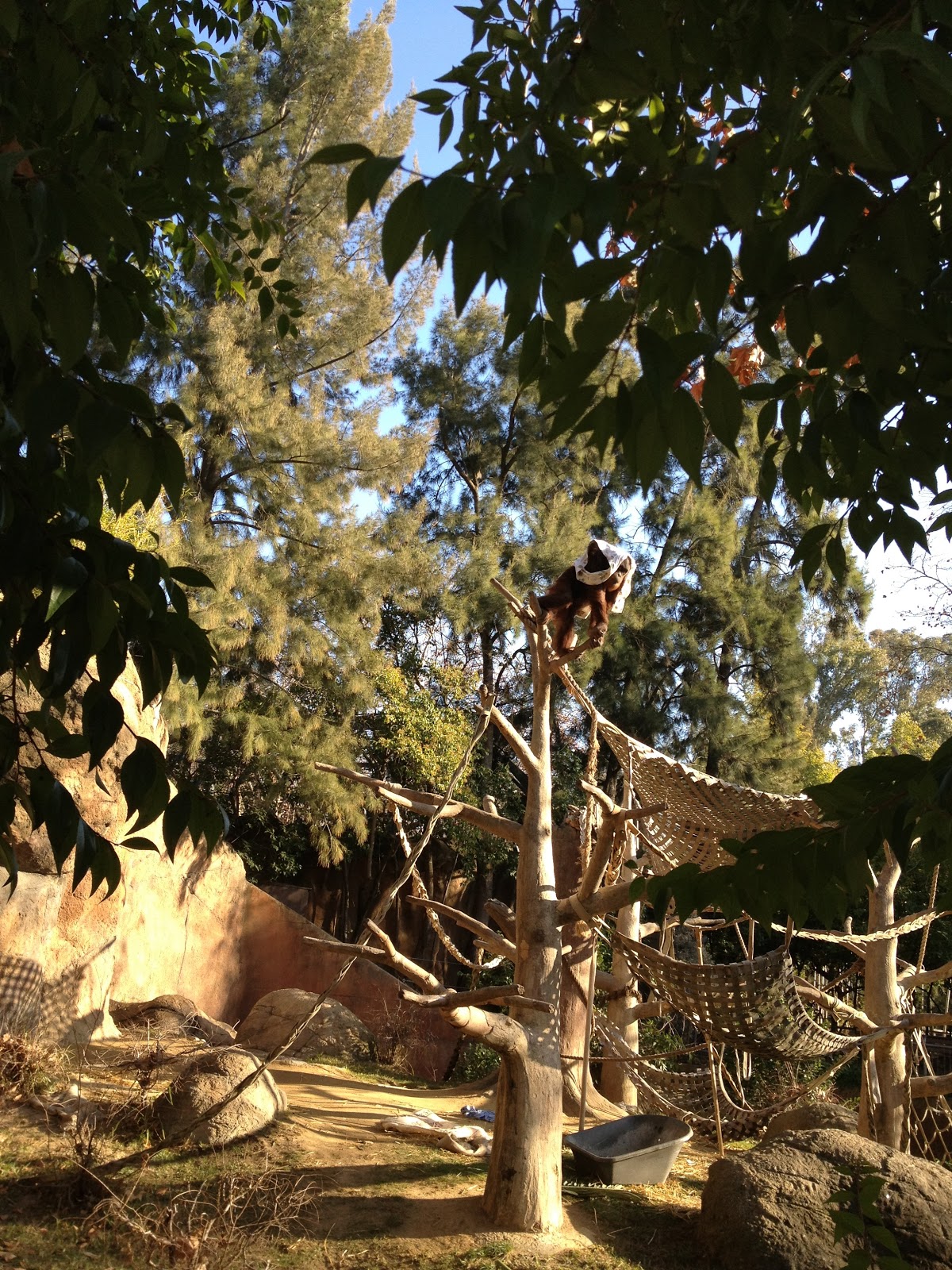
Went to the Sacramento Zoo yesterday with my brother, our wives, and our kids.  We met up there at 2:15 PM because my brother’s 2 year old daughter is obsessed with orangutans and there was a educational talk scheduled for 2:15.

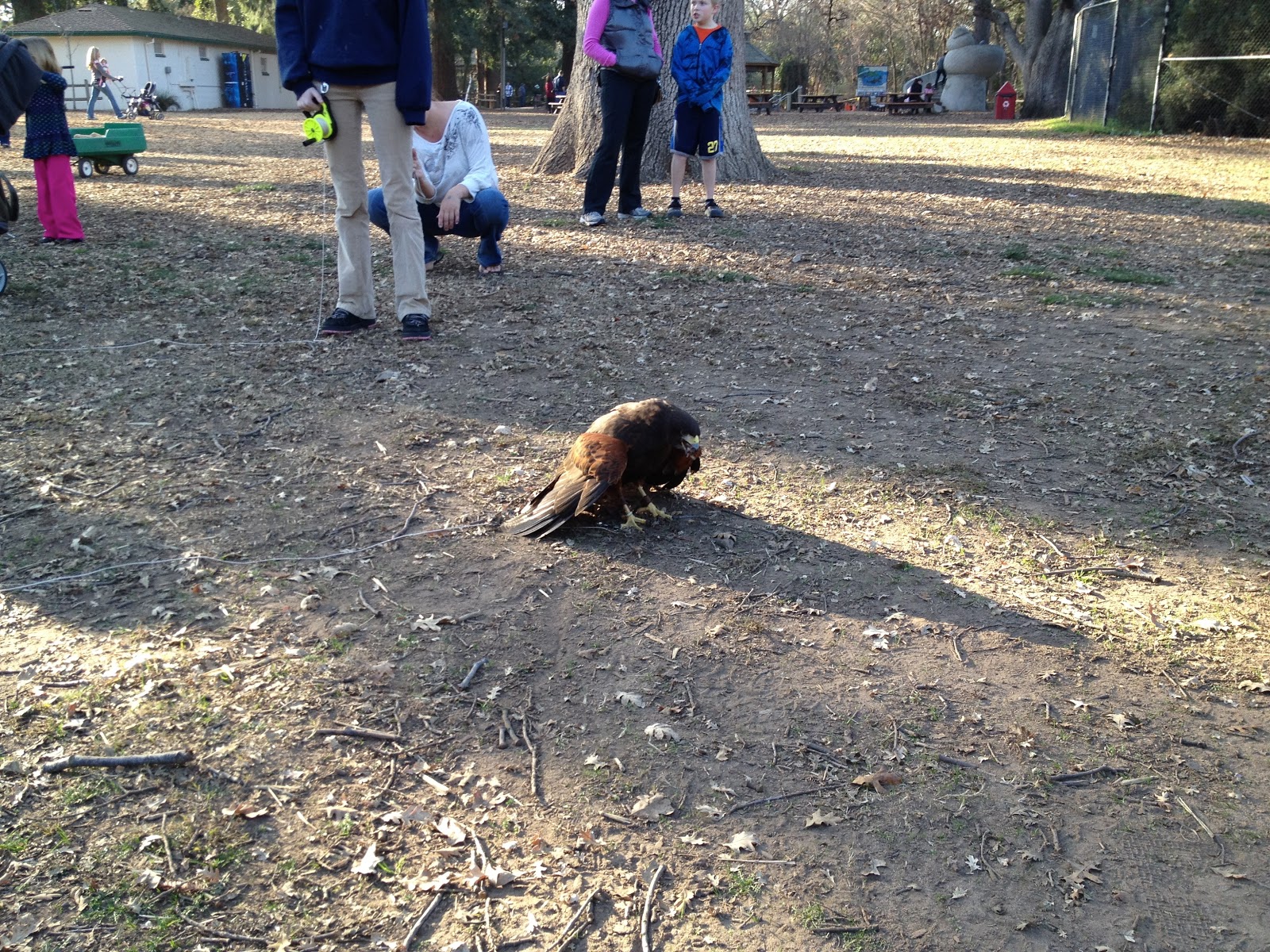
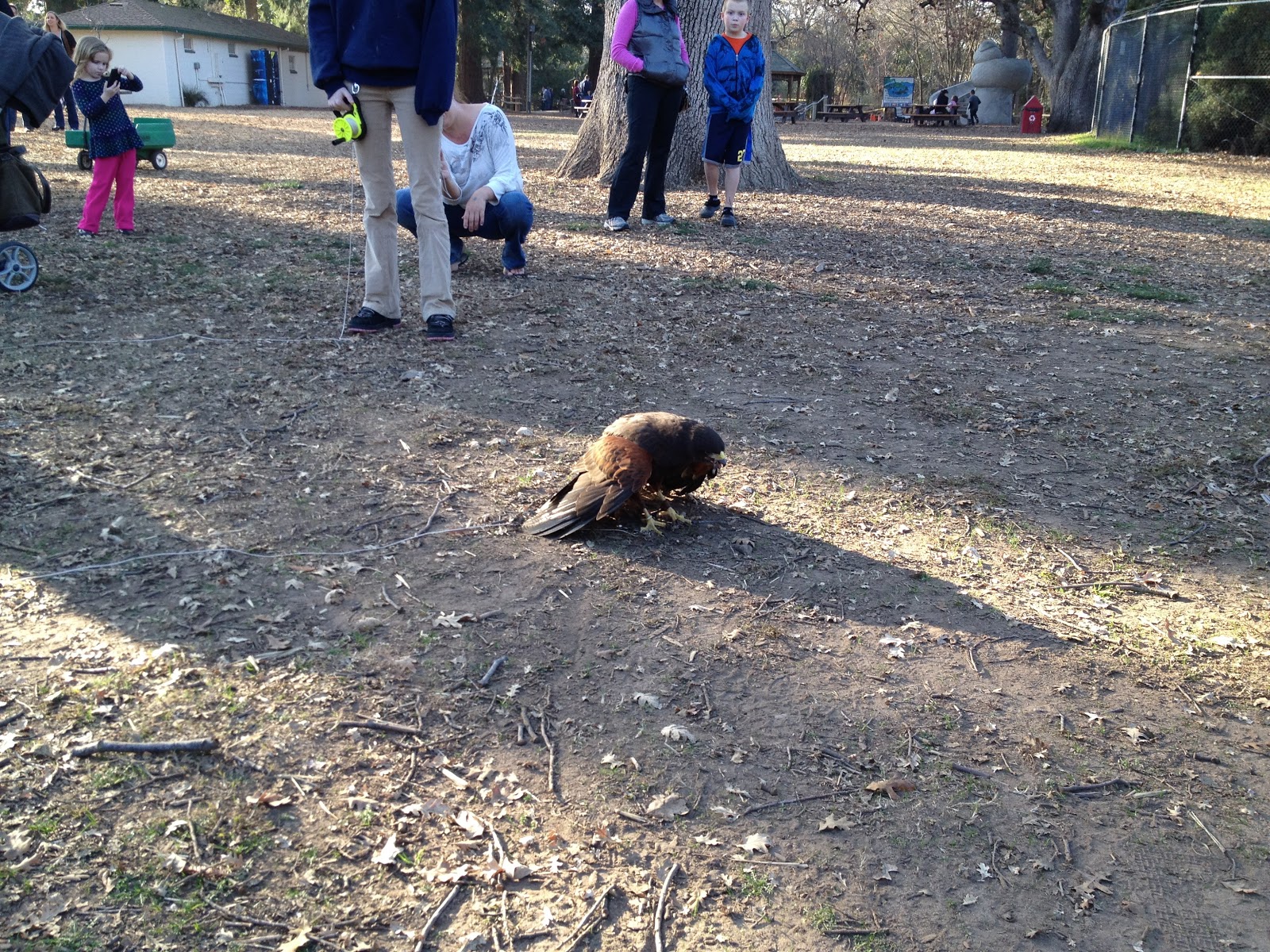
The talk was impressive and when it was over and the Zoo “Animal Ambassador” team started heading to the anteaters, well, we followed them.  And then, when that was over, we followed them to the clearing near the reptile house where they did an outdoor show with their Harris Hawk Saguaro.

The woman leading the show was one of the best public-science-education speakers I have ever seen.  Really.  She had a perfect temperament, explained complex topics, showed incredible respect to children asking bizarre questions, and showed a deep respect for the hawk that really blew me away (they realized that their activities with the hawk had been too repetitive and that it was getting bored so they were trying many new things to diversify it’s life, for example).  We lingered and lingered soaking up everything she was doing.  I wish I could remember her name to give her extra props but I will figure it out.

Here are some pics — most by me, some by my brother

Draft post cleanup #5: Best Science Paper Endings Award: Linking the Kama Sutra & Amoebas

OK – I am cleaning out my draft blog post list.  I start many posts and don’t finish them and then they sit in the draft section of blogger.  Well, I am going to try to clean some of that up by writing some mini posts.  Here is #5:

I was reading an article on MSNBC: Amoebas: Sexier than anyone knew – Technology & science – Science – LiveScience – msnbc.com

The article discusses a paper: “The chastity of amoebae: re-evaluating evidence for sex in amoeboid organisms” from the Proceedings of the Royal Society B.  The paper is freely available and it is definitely scientifically interesting.  But the last sentence is phenomenal and deserves some sort of prize

“When discussing the sex of amoeboid protists, the existing evidence does not evoke chastity but rather Kama Sutra”

So I am starting a new award here – the “Best Science Paper Endings Award”

If only scientists were as important as Rupert Murdoch


(CNN) — A synthetic life scandal may have cost J. Craig Venter the nobel prize in medicine in 2011, but the maverick science mogul managed to end the year with a modest addition to his empire — an account on Twitter.
Within 48 hours of debuting with tweets about family, work and his dogs, Venter had pulled in more than 5,000 followers and stirred internet debate over why the 60-year-old was now embracing a technology often used to attack him.
The tweets also raised doubts that the notorious technophobe was writing the messages himself. Science writer Carl Zimmer — one of only eleven people being followed by Venter — however insisted that the media mogul was writing “with his own voice, in his own way.
Venter appears to have made his Twitter debut some time ago but with the new year many are waiting anxiously for more posts with insight into his maverick lifestyle.
His past 27 tweets include posts about celebrations of the birthday of the first synthetic cell, Osama bin Laden, President Obama, and biofuels. These have raised suspicions that Venter’s Twitter account was being used as a publicity tool to help improve his image after a damaging few years of people complaining he is trying to play God.
Trump is the Winklevoss of politics
Craig Venter via Twitter
Others claimed that the voice of the tweets, as well as their faltering grammar and punctuation, were unmistakably Venter. “You can tell by the tweets he’s doing it himself,” wrote Hamilton Smith, Nobel Laureate and colleague of Venter’s.
A spokesperson for the Venter Institute confirmed to CNN the account is genuine.
The account could offer new insight into a scientist whose life has been under intense scrutiny over the past few years after creating life, beating the public human genome project in the race for the genome, and using his boat as a decoy to study microbes that live in his body.
Twitter played a prominent role in many of the scandals around Venter when it was used to pressure funding agencies into limiting funding for Venter’s Institutes. Commentators said the loss of this revenue was a key factor in Venter’s decision to create life.
Venter’s subsequent appearance before a US Congressional inquiry into synthetic biology also caused a sensation on Twitter, particularly after his wife, Heather Kowalski, threatened to use one of their motorcycles to run over anyone who threatened Venter at the hearing
There were echoes of Venter’s congressional appearance — which he called the “most humble day day of my life” — in some of his tweets such as his comments about his visit to Syracuse University “Impressed with the student enthusiasm at Syracuse U.”
But there were also signs that the science mogul was still getting to grips with social media. Reports suggested he was forced to quickly delete one post — possibly after Kowalski leapt to his aid once again.
The Institute for Genome Sciences — a fierce rival of Venter’s — was among genome centers claiming that Venter was guilty of “tweeting-before-thinking” for suggesting that Francis Collins was evil.
The message was apparently removed, but not before someone tweeting as Heather Kowalski implored: “Venter – DELETE TWEET.” A further post on the unverified Kowalski account later added: “EVERY1: @jcventer was only having a joke pROMISE!!!” [sic].
Among other tweets by Venter, who also follows President Barack Obama, humorist Bill Maher, and MicrobeWorld, was an expression of support for President Obama’s vision for the future. 

With apologies (sort of) to CNN and their report on Rupert Murdoch’s use of twitter. Brought to you by FSN – Fake Science News.

This is very cool: CrowdoMeter – consider signing in and participating

Just was catching up on PLoS Blogs which I do not read enough (some great stuff there).
And I discovered a really spectacular project described my Martin Fenner: CrowdoMeter – or trying to understand tweets about journal papers | Gobbledygook
Basically, this is an effort to crowdsource annotation of tweets about scientific papers. It is pretty simple – go to their website, sign in with a twitter ID, and start classifying. You can search for specific terms in the search bar, including “I’m feeling lucky” which will give you random tweets to classify. I first searched for evolution and four tweets came up. And then I played around with some other searches and I classified a few tweets. Not sure exactly where this is going but it is a cool idea and I will find out more at Science Online 2012 and will report back.