Eisen Lab Blog

The REAL Ghost-tree

Renowned parapsychologists Venkman, Stantz, Spengler and Zeddemore recently sat down with us to talk about their reactions to the newly released pre-print, “Ghost-tree: creating hybrid-gene phylogenetic trees for diversity analyses”.

“Initially we were really intrigued,” said Dr. Venkman,  “We thought that finally someone had paid attention to what our field really needed!”

However, it quickly became apparent to the parapsychologists that the paper wasn’t what it seemed.

“The farther I got in the paper, the more it became apparent that the authors had no real grasp of apparitional experiences and the science involved in studying them,” said Dr. Spengler, “It was as if the authors were from a field that was antithesis to the field of parapsychology.”

I asked Dr. Spengler if he was familiar with the field of mycology.

“Mycology… Never heard of it.”

At this point in the interview, I was increasingly curious as to what exactly the parapsychologists thought was wrong with the paper.

“Well, you see, it is lacking… in ghosts,” explained Dr. Stantz, “In fact, there are no ghosts in the entire paper! It is very misleading!”

I thought about pointing out that the word “ghost” actually appears several times in the pre-print (at least seventeen), but decided against it. Parapsychologists can be a little scary when they get worked up about a topic.

In fact, they got so worked up over the Ghost-tree paper that they decided to write their own paper titled, “The REAL Ghost-tree: a hybrid-media phylogenetic tree for diversity analyses in apparitional science”.

ghost-tree.png

ghost-tree
Figure 1. from their paper, a phylogenetic tree depicting the relationship between ghosts from different mediums (film, television, real-life, video games, etc). They used the small subunit ri-boo-somal DNA gene to produce the tree.

“In a way, that terrible Ghost-tree paper was actually a good thing for the field of apparational science,” said Dr. Venkman, “Now parapsychologists and citizen scientists everywhere can put their apparitional experiences into an evolutionary context.”

When asked if they had any comments that they would like related to the Ghost-tree authors, Dr. Zeddemore had the following to say,

“Next time, actually include ghosts.”

Guest Post on Open Source Hacker Insulin by Anthony Di Franco

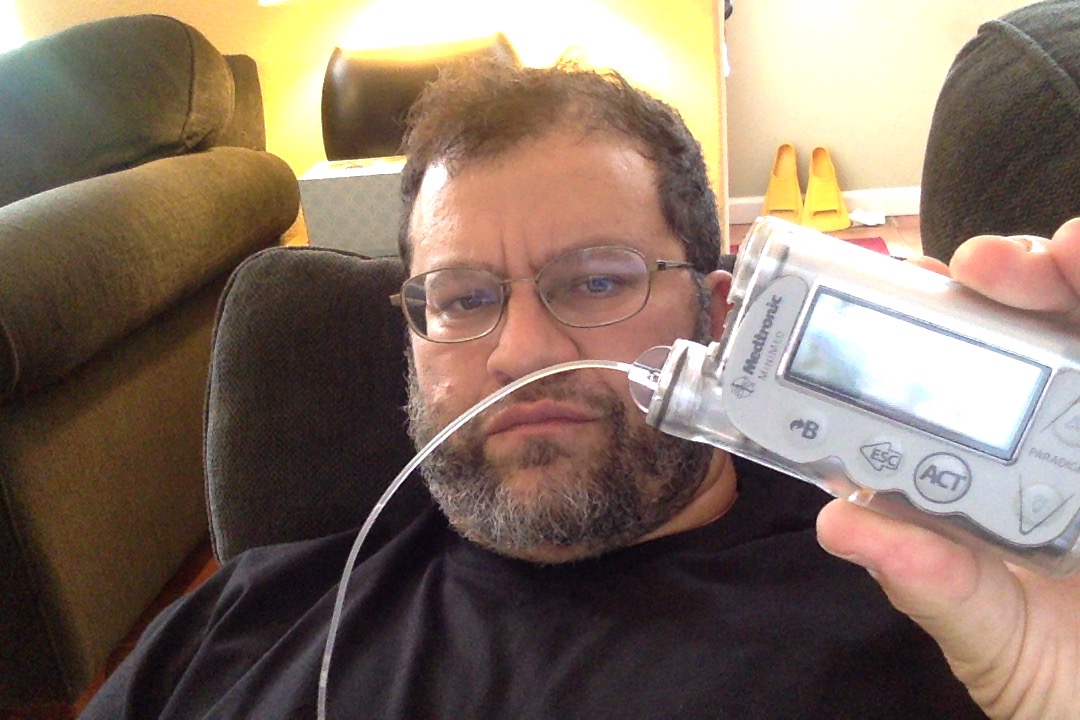
Last night I had a minor freak out episode.  My insulin pump alarm sounded at like 1:30 in the morning (I have type 1 diabetes). It was out of insulin (well, the alarm said “No Delivery” which is what it does when it is out of insulin.  So I got up, barely alert, and went to the fridge to get a bottle from my insulin supply.

This is not a usual occurrence.  Usually, I pay attention to the warning alarms saying my pump is running low.  But this time I had ignored them.  I guess I thought it would last through the night.  Oops.  But, in the grand scheme of things, this is not that big a deal.  All I have to do is get a new cartridge for the insulin, fill it, and then rewind the pump and load the new cartridge and prime the pump.  Except, this time, I took out the last bottle I have of insulin for my pump from the fridge, and as I turned around to the kitchen island, my hand carrying the insulin wacked into the fridge door, and the bottle flew out of my hand.  It went up a bit and then headed down to our brutally hard tile floor.  I instinctively reached out with my foot and somehow the bottle landed on my foot, not the floor (this is probably related to the daily soccer I have been doing with my son for the last year or so).  My foot-eye coordination never used to be so good.  And thankfully the bottle did not break.  And I loaded up my pump and primed it and headed back to bed.  But I could not sleep.  I was wondering – what would I do if I ran out of insulin or my last bottle broke.  I guess I would go to a 24 hour pharmacy or an emergency room.  Or I would use the now expired back up insulin I had in the fridge.  And then I wondered, what would I do if I could not get any insulin from a drug store or a hospital.

It seemed to me that the best solution would be to have some sort of freeze dried supply of insulin at home that I could rehydrate in an emergency.  So I started Googling that.  And not much came up that seemed right.   And since I was pretty tired, I onyl spent a few minutes at the computer and then I went back to bed.  But to say this ate at me would be an understatement.

This morning I got up, not as early as normal and took my son to school and then headed off to this workshop that was happening on campus hosted by my ICIS (Innovating Communication in Scholarship) Project on “The Social Life of Medical Data

And bizarrely and amazingly, the topic of making DIY insulin came up part way through the meeting.

//platform.twitter.com/widgets.js What a coincidence. Although the speaker said he was not going to focus on this, after I posted the Tweet, a response came implying that someone was working on this

//platform.twitter.com/widgets.js Well, wow. I had no idea. It makes sense, but I had no idea. And I wondered, is this anyone I know at the Counter Culture Labs doing this. And a few minutes later the answer came to that when I got an email from Patrik D’haeseleer – a friend, colleague, collaborator, and co-author

Hi Jonathan,  

We’re actually trying to get Anthony’s piece on Open Source Hacker Insulin guest posted somewhere before our kickstarter for Counter Culture Labs ends tomorrow (under the motto “if it’s worth doing, it’s worth doing last-minute”)  

Would you be interested in hosting it as a guest blog post?

And so I said yes.  And, well, here it is.


Open Source Hacker Insulin

Anthony Di Franco


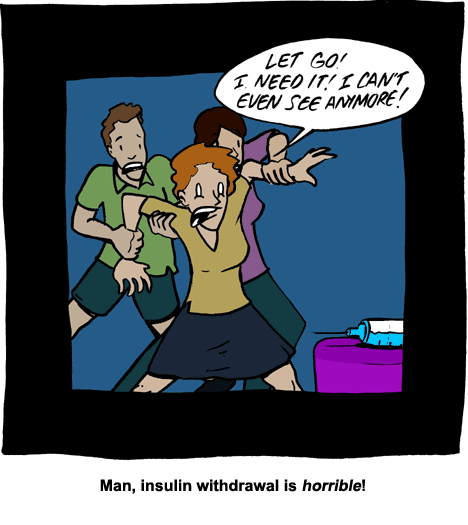
The effects of untreated diabetes include blindness, impotence, nerve damage and necrosis in the extremities, kidney failure, cardiovascular disease, coma, and death—all good reasons to assure the broad and consistent availability of insulin with decentralized production. Illustration by Zach Weiner of “Saturday Morning Breakfast Cereal.”

Hi, I’m Anthony Di Franco. I’m a member of Counter Culture Labs, a biohacker collective in Oakland. (We’re currently running a Kickstarter campaign to cement the core capabilities we need to pursue research – more on that below!) I also have type I diabetes. My general interest in biohacking is part of my interest in technological STEMI compression: making technology more efficient and effective and making it work at smaller scales, so that it empowers individuals more and more. My more specific interest is in doing this for the technologies that treat diabetes: mainly those for measuring blood glucose levels and making, purifying, and administering insulin. I’ve written previously about these topics in Biocoder magazine, among several others, where I suggested a variety of possibilities that might be well-suited to decentralized hackerspace development.

Right now I’d like to focus on insulin production and purification, without which measurement is mostly moot. The goal of producing insulin aligns well with the goals of the broader DIYbio movement for two reasons. First, because recombinant insulin was the first major commercial success of synthetic biology at scale, and set an early example of tools and techniques that shaped the future development of biologics. Second, irrespective of the role they happened to play in history, the tools involved are fundamental to biology and medicine and cover the core functions needed for all serious DIYbio research and other community goals: production and purification of biologics.

Open sourcing treatments is also important because pharmaceuticals in general and insulin and insulin pumping specifically suffer from perverse economic incentives that, at least in part, favor keeping people on the treatments with the most disposable or consumable supplies possible, at the highest price relative to the cost of manufacturing. In terms of the famous razor/blade business model, patients are the razors, and the treatments we need are a long stream of blades with a reliable revenue stream attached. Open source efforts could develop incentives more attuned to encouraging innovations that improve patient outcomes and constitute progress toward a definitive cure, in contrast with the current model which encourages corporations to sit on profits harvested by keeping patients addicted to consumable supplies.

With all that in mind, I’m pleased to announce a new collaboration between members of Counter Culture Labs and Arcturus Biocloud to develop generic insulin. Despite there being no formal barriers to its development, there remains no generic insulin on the market, a perplexing puzzlement pondered in context by Jeremy A Greene in his article in the New England Journal of Medicine. Now, we’re preparing to address this problematic situation directly. Arcturus biocloud will provide the means to economically produce the insulin, but we’ll still need to develop the means to purify it, eventually to the point where we need not fear the catastrophic consequences of injecting it in impure form – fulminant or chronic allergic reaction to insulin, both of which carry fatal risks. Even though we’re producing the insulin for research purposes only, and certainly aren’t intending to inject it into any living beings in the foreseeable future, a main goal is to demonstrate that we can achieve usable levels of purity in a DIY setting, and to document how we do and share the knowledge. To do that, we’ll need to equip Counter Culture Labs with the basics for isolating and purifying biologics, and for that we’ll need our kickstarter campaign to succeed. Fortunately, we’ve recently met our base goal, which will let us cover the basics of staying in the building and keeping things up to code. But we’ll still need much more to equip ourselves to work on projects like insulin purification, so we hope we can rely on your support as we pursue our stretch goals.

Please also consider becoming a member and donating via our regular website after our kickstarter ends as that is how we fund DIY insulin and projects like it in the long term.


Anthony Di Franco works at the intersections of complex adaptive systems, economics, and computing. He is a board member of the East Bay biology hackerspace, Counter Culture Labs, where he teaches and organizes events on topics at the intersection of computation and biology. He is also the author of the transgressive historical wuxia manhua, Three Sovereigns.

Guest post by Katie Dahlhausen on her project on "The effect of antibiotics for chlamydia on koalas and their microbiomes"

This is a guest post by Katie Dahlhausen, a PhD Student in my lab.

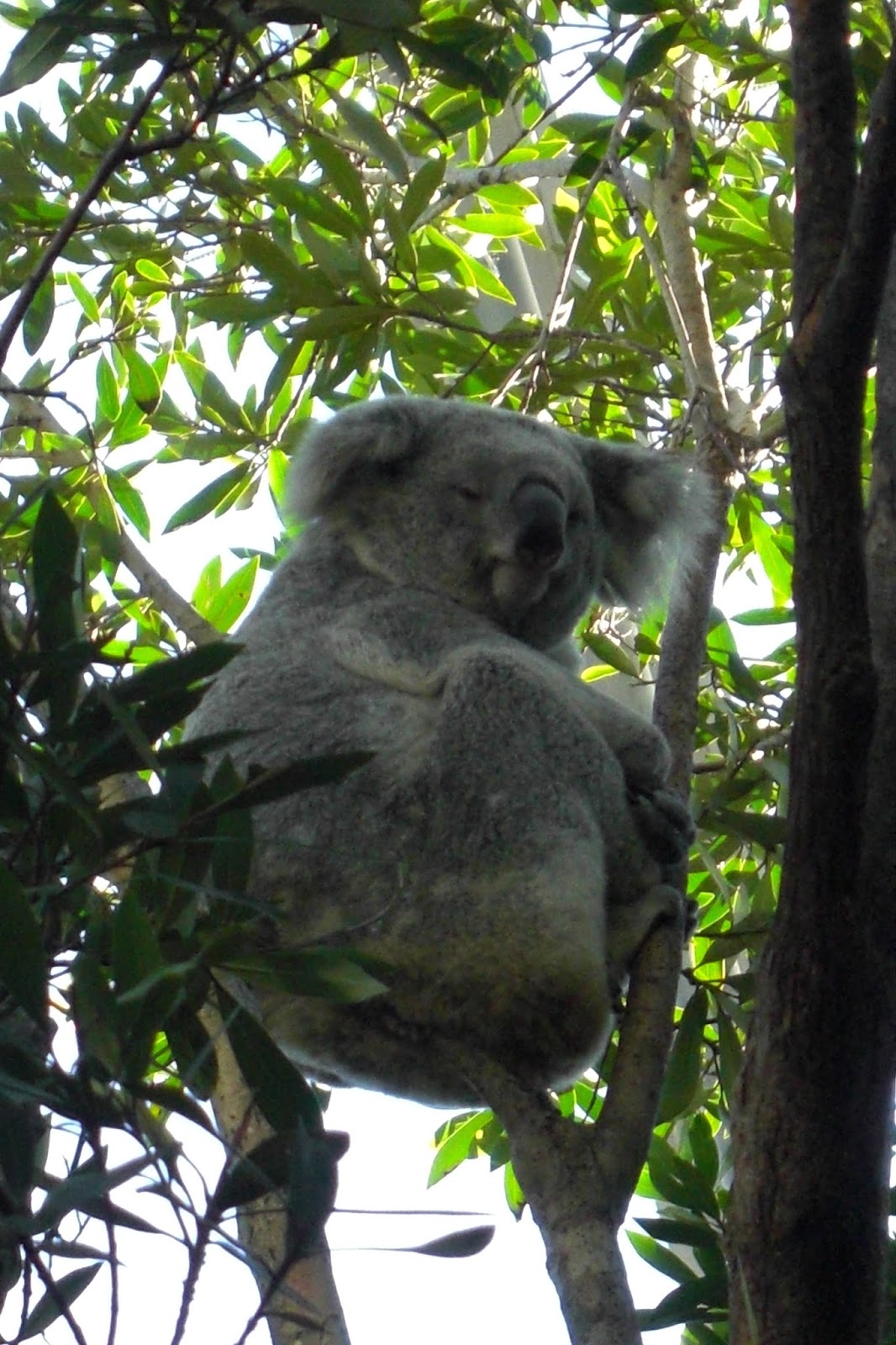
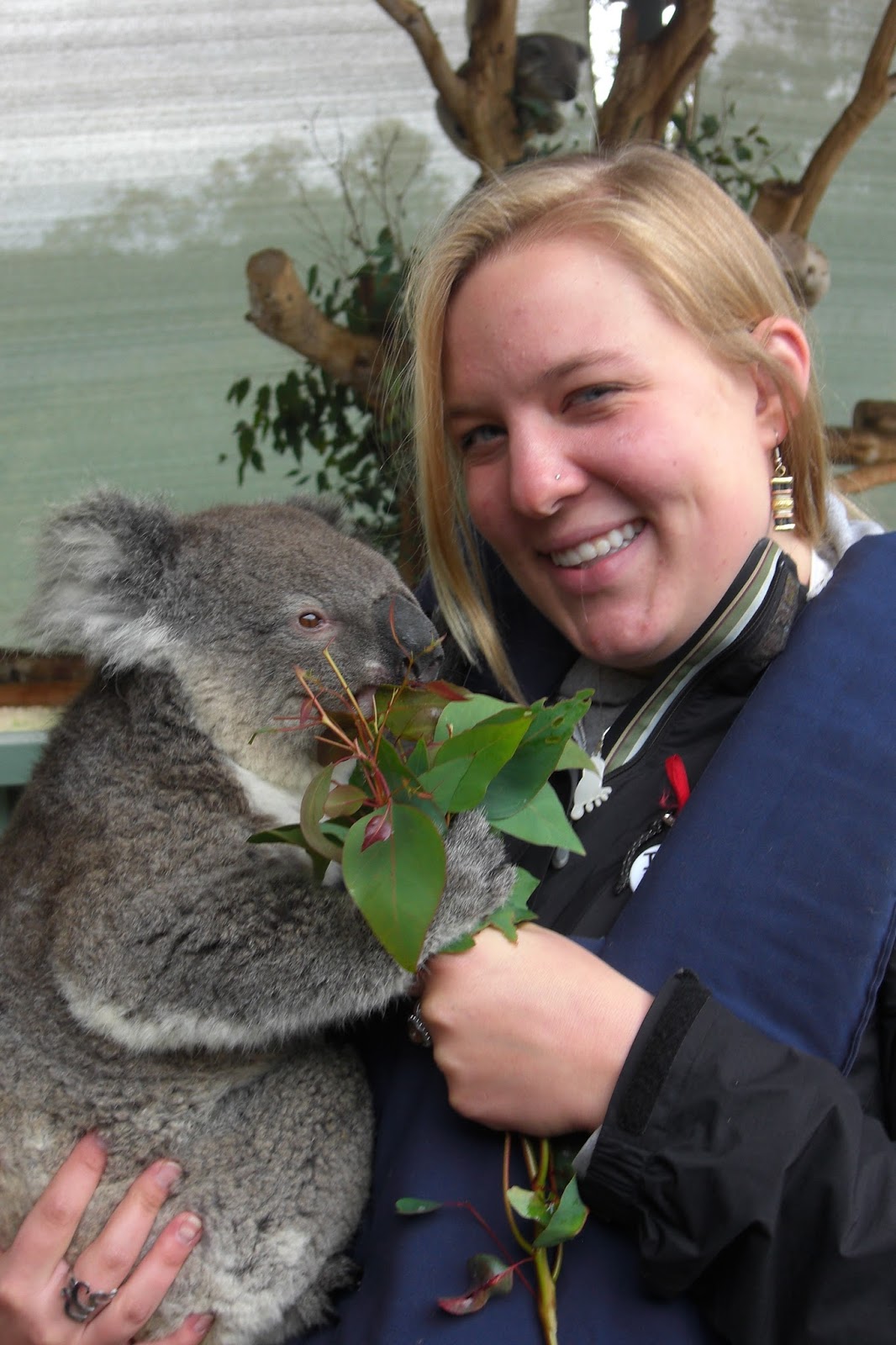
Koala populations across Australia are on a rapid decline due to many culprits including habitat loss, being hit by cars, attacks by dogs, and the Chlamydia infection. Yes, that’s right, Chlamydia. And when koalas are brought into wildlife hospitals, they are treated with antibiotics to cure their Chlamydia infection. Although ridding koalas of Chlamydia, the antibiotics also kill off important gut microbes that are essential to the koala’s life biology. Koalas eat a diet solely of eucalyptus leaves, which would be poisonous to the koalas if it wasn’t for the tannin-protein-complex-degrading enterobacteria that break down the toxic components of the koala’s diet. Brace yourself, because the koala’s biology gets even more interesting! Mother koalas feed their young joeys a substance called pap, a fecal matter more concentrated in nutrients and microbes than normal feces. This form of a natural fecal transplant allows the joeys to colonize the critical gut microbes necessary for them to eat noxious eucaplytus leaves. But what does this mean for joeys whose mothers have been administered antibiotics?

My name is Katie Dahlhausen and I am A PhD student in Jonathan’s lab. I am crowd-funding a project to study this fascinating koala biology, as well as investigate alternative infectious disease treatment where antibiotics are not a viable option. Want to help out these adorable critters? You can support the Indiegogo campaign here, which is live until June 16, 2015. More information about the project is available on the crowdfunding page, and in these recent articles published in Scientific American and the Washington Post.

So how did I get into this project? Well, When I was at the Australia Wildlife Zoo in Australia last September, there was a sign next to the koala exhibit with picture of a joey whose mouth was covered in a brown substance. The sign read something like “It’s not chocolate!” and explained the pap part of the koala’s biology.

The moment I read this I knew there was some fascinating microbiology questions that were begging to be answered. While researching the microbiology behind this behavior, I found a study the recorded the detrimental effects antibiotics had on a koala’s eating habit and inability to maintain weight, but the question of how antibiotics were effecting the microbial composition of koala’s guts remained unsolved. That is how this whole project started. Like most people, I think koalas are cute and appreciate how iconic they are to Australia. Otherwise, I’m not very attached to koalas – they are actually quite mean and antisocial! But koalas are a fantastic model system – one food source, plenty of sampling opportunities (in Australia at least), frequently given antibiotics, and clear mechanism of the transfer of microbes from mother to offspring. The implications of the study are vast, but are aimed at the care for animals in captivity and foster changes in how/when we administer antibiotics.

Guest post from Student Alex Martin on Kittybiome & Animal Shelters

We are nearing the end of our Kitty Kickstarter to fund research on the microbiome of cats (only three days left).  We have received some requests to learn more about our work with animal shelters. Here is a blog post by Alex Martin, a UC Berkeley junior who is working with us to study shelter cats in Berkeley.


The Berkeley Animal Shelter takes in all cats from within Berkeley city limits. Thus, cats who once varied markedly with regards to diet and home environment come to live under a fairly uniform set of conditions. It typically houses between fifteen and forty cats, but has held as many as seventy during the peak of breeding season. Recently we have begun collecting samples from cats at the Berkeley shelter in order to better understand their gut microbiomes.

A major dichotomy in the shelter cat population is the one separating house cats from feral cats. Both are considered domestic cats, members of the species Felis catus. If a kitten during its first few months of life is not exposed to humans, it develops behaviors to facilitate surviving in the wild, and grows up to become a feral cat. Some see feral cats as a nuisance, but the animals also tend to live difficult lives, enduring food shortages and a lack of medical care. Thus, a relatively new effort referred to as “trap-neuter-return”(TNR) aims to spay and neuter feral cats to slowly and humanely diminish the size and number of feral cat colonies. Differences in the gut microbiomes of feral cats versus their tamer counterparts is perhaps expected, as the two groups have vastly different diets and levels of environmental exposure. However, these differences have yet to be characterized.
In addition to the differences between feral and house cats, a small but important FIV(Feline Immunodeficiency Virus) population can potentially serve as an interesting point of comparison. Much like Human Immunodeficiency Virus, FIV attacks the immune system of infected individuals, making them markedly more susceptible to other infections. We think that this virus will affect the microbiome of FIV-positive cats in measurable ways. By identifying any differences, we will gain a better understanding of FIV as a whole and will hopefully be better positioned to one day develop more effective methods of treatment.

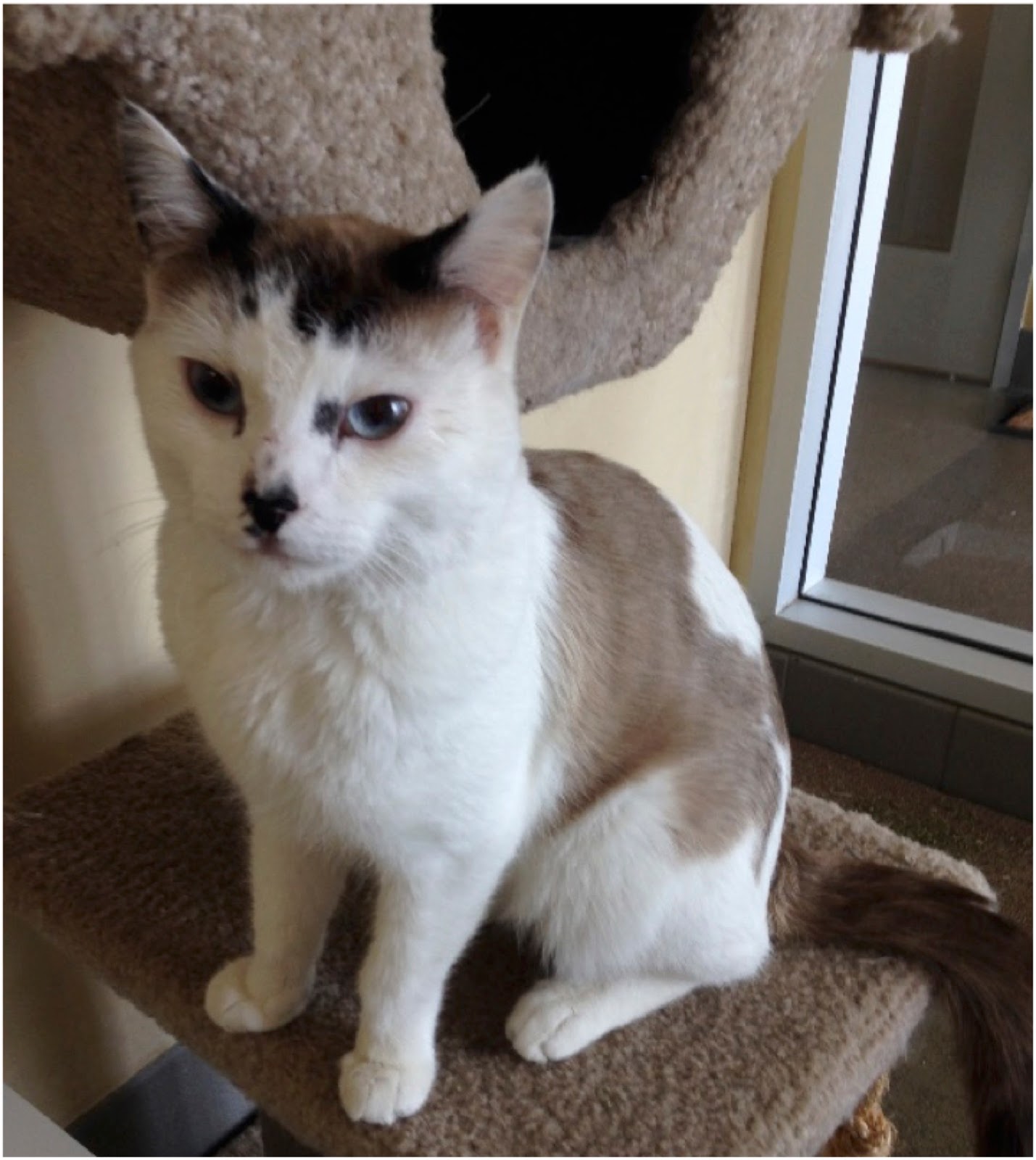
Geronimo is one Berkeley shelter cat whose gut microbiome will be analyzed. He was picked up as a stray just a few blocks from the shelter, and is three years old. Geronimo is exceptionally friendly, and loves playing with his wand toy and hiding in his cat tree to nap. He gets along well with other cats and was even introduced to a rabbit without incident. After spending about two weeks in the shelter, Geronimo was adopted into a loving home.

Guest post on Yet Another Mostly Male Meeting (YAMMM) – Programming for Biology

I have posted on Twitter and other places saying that I would be willing to share here anonymous postings about meetings with skewed gender ratios.  I generally am not overly fond on anonymity on the web but realize it has some very important and powerful uses, including protecting people from retribution.  So in the case of meetings with skewed gender ratios, I know from personal experience that posting about them can lead to serious vitriol, threats, and possible repercussions.  I feel confident enough in my status and position to mostly ignore these responses but I know that not everyone is so blessed.

So – here is one such anonymous post I received.
————————————————-

Last year I was looking around for good workshops to learn programming for biology
(http://programmingforbiology.org/index.html) and
about genome assembly and annotation. I came across the Cold Spring Harbor Laboratory
course called “Programming for Biology” and applied as they have a good reputation.
I was happy to get in and overall really enjoyed the course. I learnt how to program in
Perl (not Python what I regret a bit), a lot of background on downstream genome analysis
and had a mostly pleasant time. An interesting slogan of the meeting was
“It’s not only what you learn here, but also who you meet that makes this workshop so special”
(I am paraphrasing here a bit). Great! But wait are all big players in the field of bioinformatics
guys?

Out of the 10 Guest Lectures ALL were male.

  • Scott Cain             Ontario Institute for Cancer Research
  • Brian Haas            Broad Institute
  • Winston Hide        Harvard School of Public Health, South African National Bioinformatics Institute
  • Tomas Marques     Universitat Pompeu Fabra
  • Barry Moore          University of Utah
  • William Pearson    University of Virginia
  • James Robinson     Broad Institute
  • Michael Schatz      CSHL
  • Jason Stajich          University of California, Riverside
  • Paul Thomas          University of Southern California

Only 2 out of the 7 instructors and tutors were female

  • Simon Prochnik DOE – Joint Genome Institute, Walnut Creek, CA
  • Sofia Robb         University of California, Riverside
  • Steven Ahrendt University of California, Riverside
  • Dave Messina Cofactor Genomics
  • Shawn Rynearson University of Utah
  • Deborah Triant University of Virginia
  • Ken Youens-Clark University of Arizona

This means only 2 out of 17 teachers were actual women. This together with the fact that
the meeting was also sold as ‘who you meet here is important’ was the most disappointing
fact. There are so many talented and great female bioinformatics out there it would be
great to see at least some of them present at this workshop in 2015.

P.S.: Don’t get me wrong Simon and Sofia are great and organize a lovely meeting. So this
goes under the category ‘even when it hurts’.

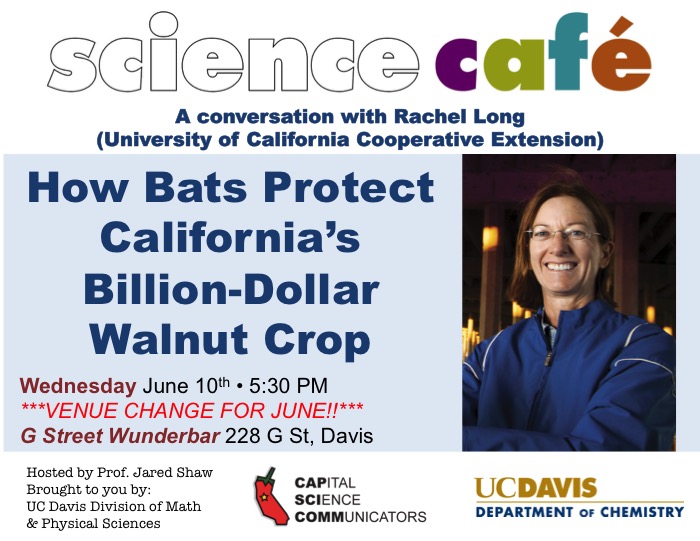
#DavisCA Science Cafe – 6/10 – Bats and Walnuts

Holly Ganz @hollyhganz on Why She Started the @Kittybiome Cat Microbiome Project

The Story Behind the Launch of the Kittybiome Cat Microbiome Project

Guest Post by Holly Ganz (Project Scientist in the Eisen Lab)

https://www.kickstarter.com/projects/catbiome/kittybiome-kitty-microbiomes-for-cat-health-and-bi/widget/video.html
Recently a group of us launched a Kitty Kickstarter campaign where we offer to sequence the bacteria in your cat’s gut microbiome as part of a long term research project to learn more about how microbes may affect cat health, behavior and evolutionary history (and vice-versa). Jonathan has written about the origins story here. This project complements our interests in the microbiology of animal shelters and the evolution of bacterial communities in the Felidae. In addition, we thought that other people like cats too and might be interested in learning more about the hidden life of their cats. We have had an overwhelming response that vastly exceeded our expectations (and we are still welcoming more kitty “pawticipants”).

https://www.kickstarter.com/projects/catbiome/kittybiome-kitty-microbiomes-for-cat-health-and-bi/widget/card.html?v=2

We have been asked “Why cats?” Personally I think it’s hard not to be fanatical about cats. The diversity of cats is astonishing and most people agree that cheetahs, leopards, lions and tigers are amazing. And when you see a lion in the wild for the first time, it’s hard not to see some of your house cat in there, in the way that it walks, naps, yawns, and even pounces (but not so much the roar). Also it’s really interesting that domestic cats have been associated with people for something like 10,000 years. Several years ago I decided to take what I learned from studying microbial ecology in soil (and how it might affect the transmission of anthrax in zebras) and apply it towards understanding the microbial ecology of the animals themselves. I believe that research in the microbiome of cats (and humans) will eventually lead to useful interventions.

In our kittybiome project, we aim to sequence the gut microbiome of 1,000 cats and by doing so begin to capture the variation in gut bacteria in different populations of cats (both domestic and wild). In domestic cats, we will compare cats living in houses with cats living in shelters and feral cats. We are starting to compare cats with different health conditions and have had some cats with diabetes and IBD join the project. This aspect of the project is really important because these conditions are fairly common and there is a lot of room for improvement in how cats suffering from IBD in particular are treated.

We are also collaborating with Adrian Tordiffe at the University of Pretoria, South Africa and the Africat Foundation on a study on how the diet of captive cheetahs might affect the gut microbiome. Here we hypothesize that the unnatural diet of captive cheetahs produces changes in the gut microbiota that may result in some of chronic diseases common in captive cheetahs.

In addition to being fanatical about cats and passionate about poop, I am especially interested in how social behavior affects the composition and function of microbial communities in cats (in their poop and their anal glands!). (My life was changed by reading about hyena scent gland bacteria.) The evolution of the interaction between cats and their symbiotic scent gland bacteria fascinates me. In the Serengeti, residential territorial cheetahs have been observed scent marking on an hourly basis. Domestic cats are really interesting because feral cats form social colonies. The only other cats that are social are lions (who form prides) and cheetahs (who form coalitions). We are comparing these cats with some social structure with some of their close relatives who are solitary (black-footed cats, leopards, and pumas).

Grad Scholar position at Bayer Biologics

The primary responsibilities of this role, as a Grad Scholar, are to:

• Participating in a multi-disciplinary team of scientists to offer bioinformatics, genomics, transcriptomics and metagenomics for controlling pests and diseases in plant and promoting plant health using microbes;

• Proactively identifying and incorporating new algorithms and technology to automate the analysis of microbial genomes and to extend the features of existing analysis pipelines;

• Understanding the dynamics of plant, microbe and pest/pathogen interaction using various omics technologies;

• Managing next-generation sequencing (NGS) data and analyses;

• Training scientific staff on the use of relevant bioinformatics software and tools;

• Working with other non-bioinformatics team member in the CLS group to understand their roles and to serve as backups as needed;

• Communicating effectively through listening, documentations and presentations, especially using compelling visualization tools to share analysis and interpretation of data.

Your success will be driven by your demonstration of our LIFE values. More specifically related to this position, Bayer seeks an incumbent who possesses the following:

• PhD in Computational Biology, Ecology and Evolution, Plant Biology,Bioinformatics, Genomics or related field with 0-1 year of post-graduate experience or a Master’s with 4+ years, or BSc. with 6+ years of post-graduate experience and currently enrolled in a graduate program.

• Proven ability to handle large data sets efficiently using scripts, databases, and other tools;

• Familiar with state-of-the-art open source and commercial bioinformatics tools;

• In depth familiarity with various public genomic databases, statistical software tools and packages such as R and bioinformatics algorithms, particularly for the analysis of NGS data (Illumina and PacBio);

• Should be comfortable enough with some basic statistical concepts and able to converse with other scientists about how to interpret basic statistical analyses such as ANOVA, linear regression, and power analyses.

• Experiences in three or more of the following areas: Comparative genomics; Transcriptome sequencing analysis; Phylogenetic analysis; Pathway modeling and analysis; and/or Metagenomics analysis;

Preferred Skills/Qualifications:

• Familiarity with SQL and relational database, particularly PostgreSQL;

• Fluent in Python, Perl, or other scripting languages;

• Previous laboratory experience;

• Knowledge of fungal, bacterial, insect, or plant genetics;

• Working with high performance computing clusters and/or cloud services.

Interested applicants should please send a resume and a cover letter to

Dilara Ally : email: dilara.ally

GradScholar.docx

Brooke Borel at #UCDavis 6/4 Discussing her New Bed Bug Book “Infested”

9780226041933

Brooke Borel

“Infested: How the Bed Bug Infiltrated Our Bedrooms and Took Over the World”

Thursday June 4, 2015

10:00 AM – 11:30 AM

UC Davis Memorial Union – MU II

Host: Jonathan Eisen


Brooke Borel is a science writer who is a Contributing Editor at Popular Science and has written for Slate, Aeon, PBS’s Nova Next, and many other publications and sites.  Her first book has just been published by the University of Chicago Press.  The book is   Infested: How The Bed Bug Infiltrated Our Bedrooms and Took Over the World and it is getting praise from all over the place (see some reviews below). She will be at UC Davis on June 4 to discuss the book and some of the fun, interesting, scary and wonderful things about bed bugs.


Some reviews of the book below:

New York Times Book Review (by Marlene Zuk)

“A book about bedbugs is, by necessity, a book about nearly everything: about travel and adventure, about our ­relationship to nature, about how scientists solve problems, about trust and whether we view strangers as friends or foes. It is a book about what people will do under extreme circumstances, and about environmental politics, and art and mental illness. It is even a book about kinky sex. Borel deftly takes us through this arthropod microcosm of the universe, as she traces the culture and biology of a resurgent scourge.”

Carl Zimmer, author of A Planet of Viruses

“Our encounters with bed bugs used to be limited to wishes for a good night’s sleep. But now they’re everywhere—in hotels, apartments, and even subways. In her fascinating book Infested,  Borel chronicles the renaissance of this frightful insect and leaves us marveling at their remarkable biology.”

Maryn McKenna, author of Superbug: The Fatal Menace of MRSA

“In an odyssey that begins with understandable loathing and ends with surprising sympathy, Borel takes us on a smart, subtle, witty journey through the biology and history of the bed bug—an insect that has been our companion for hundreds of millennia, yet one that we barely understand and have no clue how to control. Borel captures the persistence of the bug, the obsessiveness of its foes, and the eagerness of entrepreneurs to turn a quick profit with no thought for the long consequences. It is impossible to read Infested without experiencing fascination, respect—and just maybe, a phantom itch.”

Seth Mnookin, author of The Panic Virus: The True Story Behind the Vaccine-Autism Controversy

“Borel has done the seemingly impossible: written an absolute page-turner of a book about bed bugs. Infested is as engaging as it is erudite, as fun as it is informative. This is popular science writing at its best.”

Dan Vergano, National Geographic

“A fun, wild romp through the wily world of bed bugs and the folks hunting them down. Borel travels from Brooklyn bedposts to Bohemian benches on the trail of this burgeoning pest, itching for the reader as she goes. Infested unveils the secrets of these frankly weird bloodsuckers, right down to their unlikely sex lives, and introduces readers to the obsessives looking to stop their march into your own bed. A terrific science book.”

Guest Post: 5 Things You Probably Didn’t Know About Jonathan Eisen

5 Things You Probably Didn’t Know About Jonathan Eisen 

  1. He doesn’t know how to play Minecraft
  2. He mailed grass when he was a little kid
  3. His new phone is “precious” to him
  4. He loves Let it Go and Taylor Swift
  5. He has very ugly pink boots 
by his bored daughter A. I. Eisen