- Synthetic biology & biodesign
- Systems biology/transcriptional networks
- Application of single cell genomics in microbial ecology and bioprospecting
- Genomic analysis of biofuel traits in maize and switchgrass
- Cloud computing as a platform for large scale sequence analysis
- Ocean viruses: towards population genomics, understanding virus-host interactions, and accessing the uncultured
- Omics in the Arctic: Genome-enabled contributions to carbon cycle and biogeochemical research in high-latitude ecosystems
- Ancient DNA
Tag: meetings
Submit Ideas and Vote on Ideas for Presentation Topic Ideas for Special Session at the ASM General Meeting in SF 2012
Calling all microbiology fans – The American Society for Microbiology (ASM) is doing something very different for the 2012 General Meeting in San Francisco that might be of interest. There will be a special session, organized by the Communications Committee (of which I am a member) where everyone/anyone can propose topics and then these get voted on to determine the winners (see Your Topics, Your Votes, Your Choice).
From the web site
Submit your scientific presentation topic for ASM2012 and then vote and comment on your colleagues’ ideas. The people who submit the top 5 entries will receive a travel subsidy of $800 (or $1200 for international submitters) and will present their topics at the General Meeting in San Francisco, on Tuesday, June 19 at 2:30 p.m., PT.
The submission deadline closes Feb. 1, 2012 at noon, GMT. The top 5 voted topics will then be approved by March 1, 2012.
The rules of the system are as follows (also from the web site)
- All scientists are encouraged to submit, especially undergraduates, graduate students, post-docs and technical staff.
- Registered site users get 10 votes to allocate among topics, with a maximum of 3 votes per topic. However, votes can be reallocated up to the Feb. 1, 2012 deadline.
- Topics must be submitted with a title. A 3 to 5 sentence description is strongly encouraged. You may also include links to additional or background materials by inserting an http:// before a URL in the description field.
- While multiple topics may be submitted. Only one topic per submitter will be selected. In other words, if a submitter gets 3 topics in the top 5 by Feb. 1, 2012, that person will only be allowed to present on one topic at the meeting.
- The submitter must be the presenter.
- No pseudoscience allowed. If you see an entry that looks suspicious, please flag the idea as inappropriate at the end of the topic’s description. ASM reserves the right to remove improper submissions and comments.
- Topics must be presented within a 30 minute time slot, 10 minutes of which will be allotted for questions and answers.
- Speakers for invited sessions at ASM2012 are not eligible to participate in this session.
So – please consider submitting ideas and voting on ideas and spreading the word.
Earth Microbiome Project session at AAAS in Vancouver 2/18
This should be fun – session at AAAS meeting in Vancouver.
The Earth Microbiome Project: Modeling the Microbial Planet
Saturday, 18 February 8:30AM-11:30AM
Organized by: Jack A. Gilbert, Argonne National Laboratory, IL
Speakers:
- Folker Meyer, Argonne National Laboratory, IL
- Developing the Metagenome Data Exchange Format
- Jonathan Eisen, University of California, Davis
- Toward a Field Guide to the Microbes
- Rob Knight, University of Colorado, Boulder
- Uncovering Novel Bioiformatic Techniques for Exploring Microbial Life
- Rick Stevens, Argonne National Laboratory, IL
- High-Performance Computing and Modeling the Microbial World
Fun at #compass11 – or – well – not at the meeting
–
Having fun at banking session at #compass11
Blast from the past: video of a talk I gave in 2006 #metagenomics
Just re-found this video and posted it to youtube. It is from a talk I gave in 2006 at the first “International Metagenomics Meeting” in 2006.
Note – I wrote a blog post about the meeting here:
The Tree of Life: Metagenomics 2006
Notes from a trip to Woods Hole, MA to teach #genomics at the MBL Microbial Diversity Course
Here are some notes from my recent trip to Woods Hole, MA where I went to give a talk for the Marine Biological Lab “Microbial Diversity Course”.
Day 1: Thursday
My trip started quite poorly. I wrote a whole post on the first day so if you want more detail go here: A squatter’s journey to the Marine Biological Lab (MBL). I posted (of course) to twitter along the way. Here are some of my posts:
- Heading to Woods Hole/MBL-giving talk for symposium for the Microbial Diversity Class http://t.co/o2hx0tf #fb
- Anyone out there recommend best way to get from Logon to Woods Hole after 10:30 PM (no Peter Pan bus) w/o renting car?
- Got lots of responses to this including from @ctitusbrown and @PhoebeFossil and @larry_parnell
- Best suggestion was from Julie Huber
- Thank you Delta for out early arrival in MSP- not so many thanks for sitting on runway for 20 minutes ad more waiting for gate
- Yhgtbfkm – we finally got to a gate at MSP and the gate agents keep missing our door with jetway
- @nwheat maybe I’ll see you as I head to my connection
- Had a long twitter conversation with her about the fact that both of our flights were becoming disasters
- Plane was very late bit now in a nice Prius from Green Shuttles on way to Woods Hole #gomicrobes http://t.co/zwAHWy
- UGGGH – arrived Woods Hole/MBL; got dorm room key at 1am; woman in room not very happy; finally got other hot crummy dorm room; Ahh MBL
Day 2: Friday: Hanging out at MBL
Woke up at the Swope Dorms and, thanks to the lovely reception I got from the Housing Staff (see A squatter’s journey to the Marine Biological Lab (MBL) again for more detail) I was not very happy. I went in to town to get a latte and something to eat and then made it over to the Microbial Diversity Course to hear a few talks and see some of the folks there. Then I went back to my dorm room, packed up my stuff and abandoned Swope and went to the Sleepy Hollow Motor Inn just up the road, a bit out of town. I had already called and they held a room for me (I tried the one place actually in town but they were full). So I checked in, dumped my stuff and then walked back in to town. I eventually ended up going to dinner with some of the course TAs and other personnel.
Here are some tweets from the day
- Fun- MBL housing team can give me wrong keys for 1 AM checkin but rushes in to new room in early AM b/c I’m a squatter – Ahh MBL
- At least the view is nice #MBL #WoodsHole http://t.co/MPEBmHk
- The Tree of Life: A squatter’s journal to the Marine Biological Lab (#MBL) http://goo.gl/fb/yFfXe #travel #teaching
Alas, was quite a bit tired from the horrible trip and bad housing experience so did not tweet much the whole day. Here are some pics from the day:
![]() |
| View from my second room at Swope |
![]() |
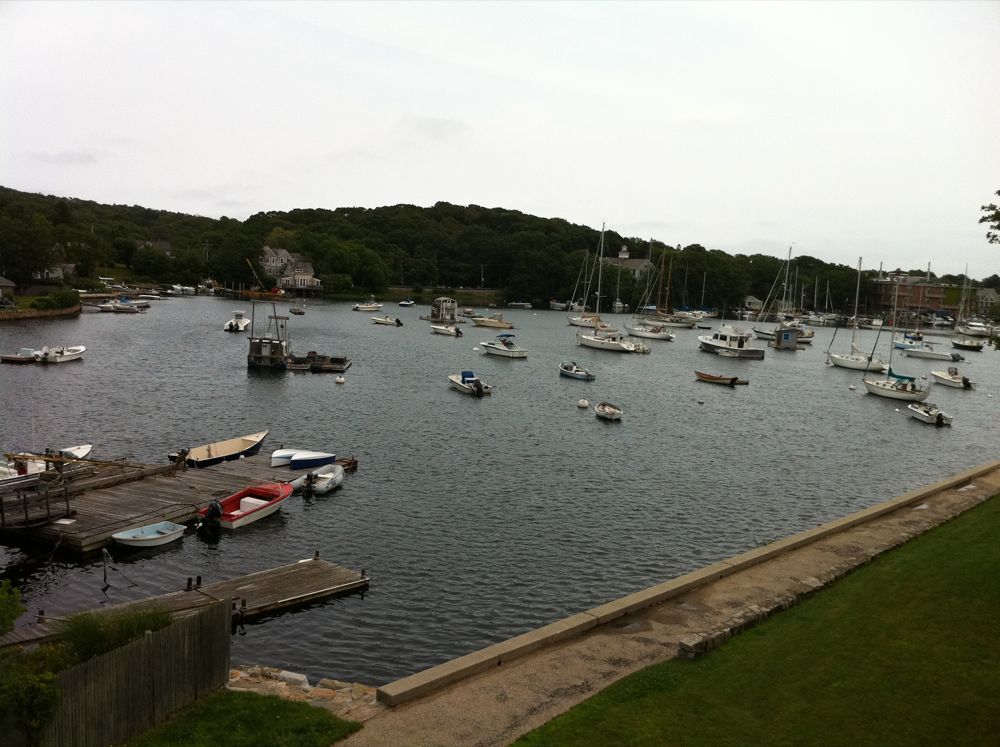
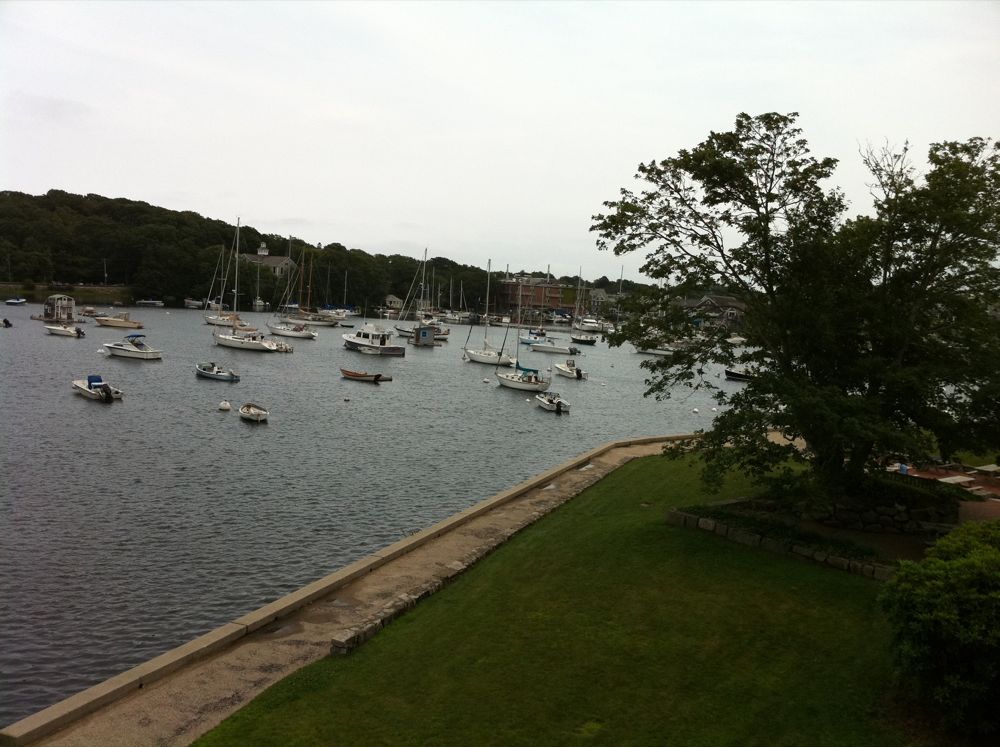
| View from my room of Eel Pond |
![]() |
| View from my room – nice view – but room was unbearably hot even on a cool day. |
![]() |
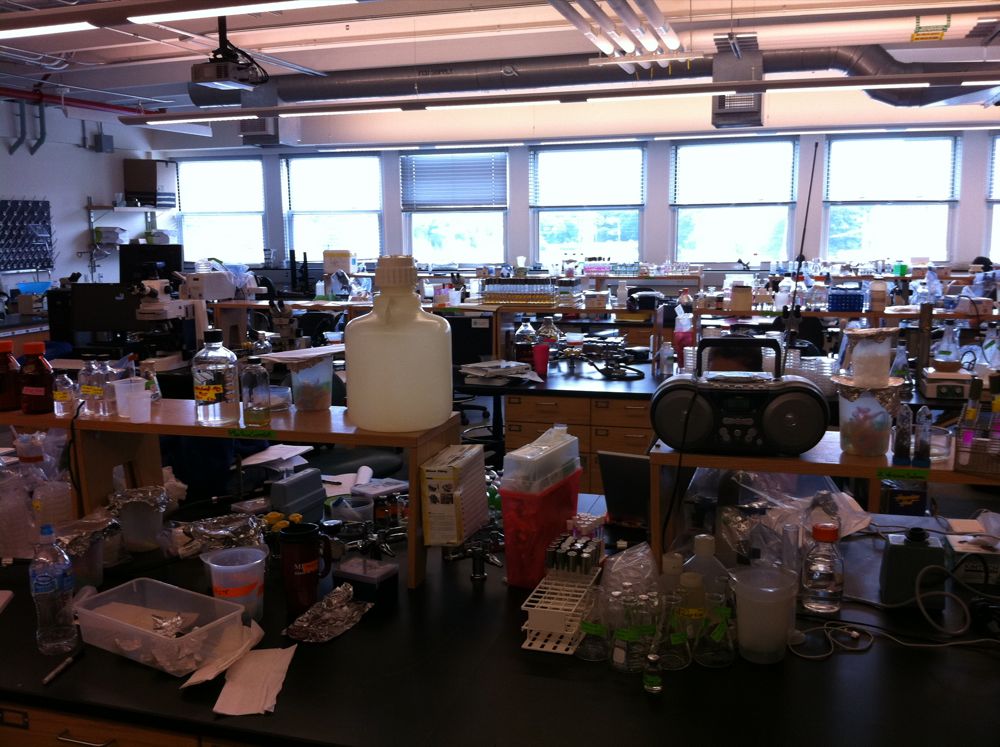
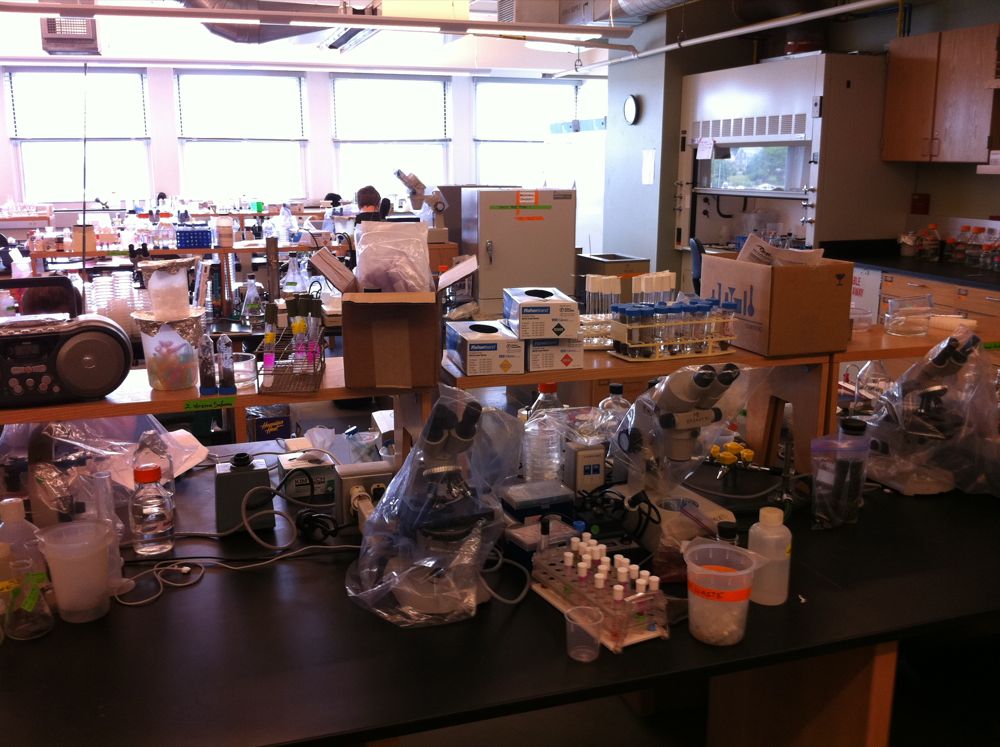
| Microbial Diversity course lab |
![]() |
|
|
![]() |
|
|
![]() |
|
|
![]() |
|
|
![]() |
| Eel Pond again |
![]() |
| Eel Pond again |
![]() |
| The Kidd |
![]() |
| Art around MBL |
![]() |
|
|
![]() |
|
|
![]() |
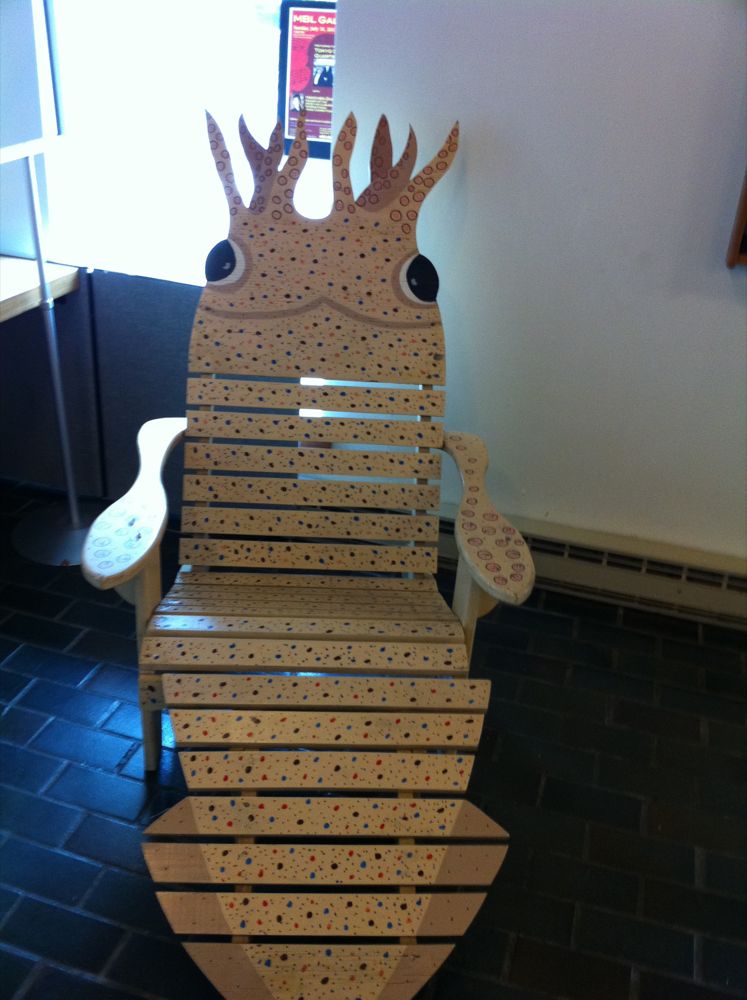
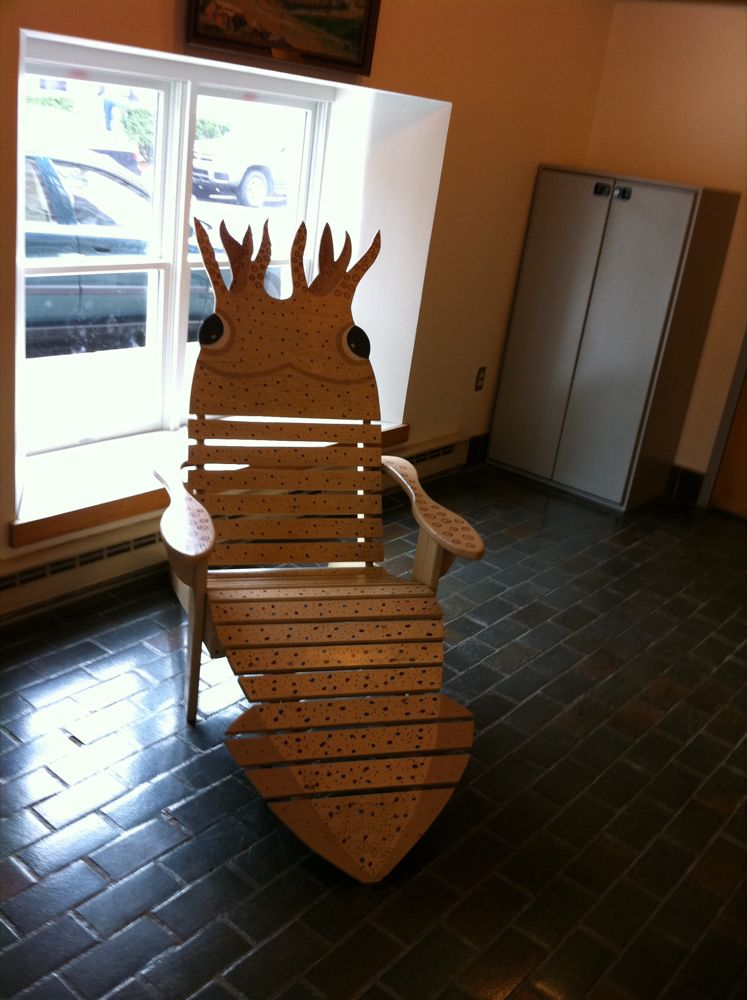
| Fun chairs in the Candle House |
![]() |
|
|
![]() |
| Squid on a fence |
![]() |
| Squid on a fence |
![]() |
| More eel pond |
![]() |
| Magical berries |
![]() |
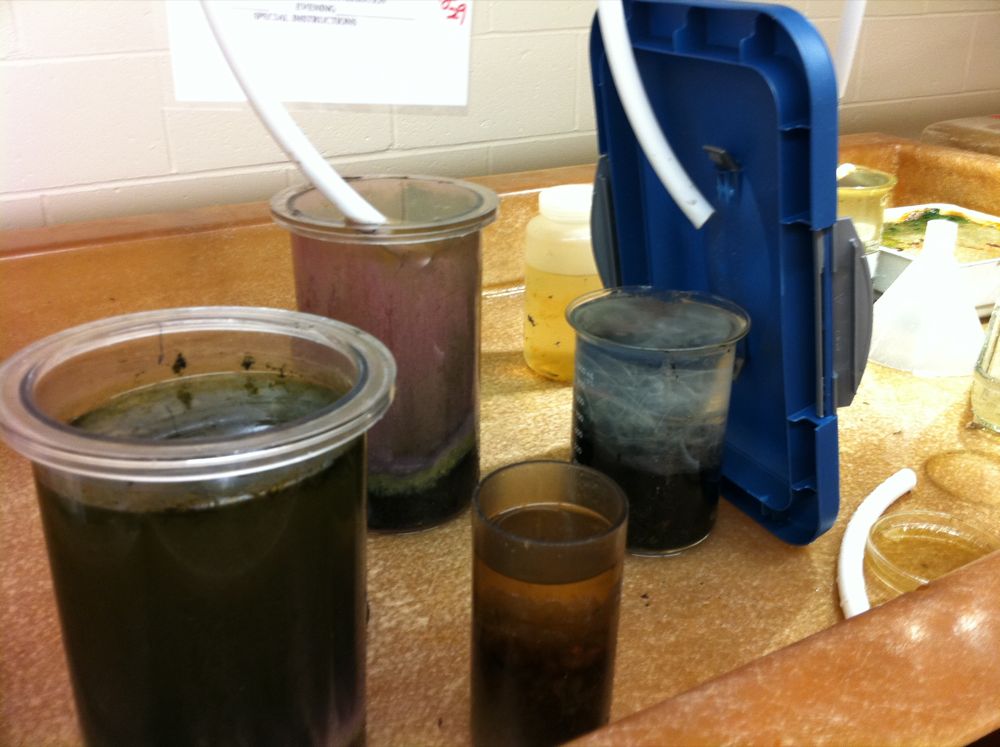
| Microbial mat |
![]() |
|
|
![]() |
|
|
![]() |
|
|
![]() |
|
|
![]() |
| Microbial mat |
![]() |
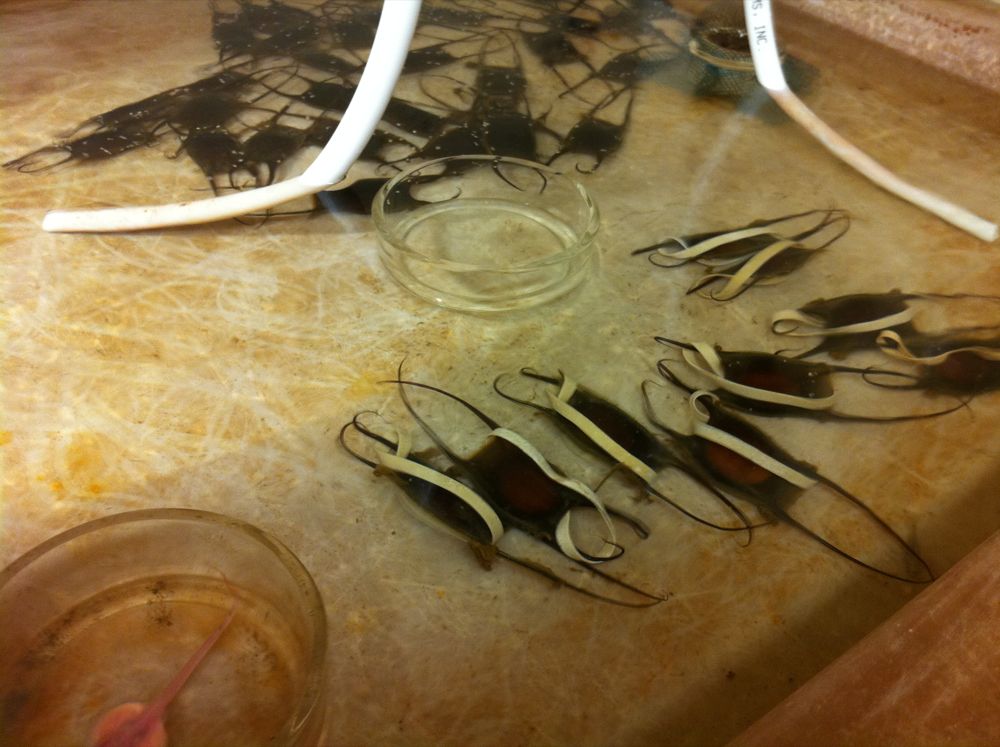
| Skate babies |
Day 3: Symposium
Saturday was the day for the genomics symposium I had come for. The symposium was hosted by the Microbial Diversity Course and was focused on microbial genomics. There were four speakers – me, Howard Ochman, Nancy Moran and Eugene Koonin. I thought the symposium went quite well — each speaker did a good job of not both complimenting and complementing the other speakers. I hope the students liked it.
I spent many hours the night before and in the AM working on my talk, trying to fine tune it for the audience. I grabbed a latte in the morning at a nice Woods Hole place, and eventually walked on over towards the lab.
- Good morning Woods Hole http://t.co/yyoKrC2 http://t.co/oxGL0aOhttp://t.co/18j6qTh http://t.co/jbUFTaJ
I headed over to Swope and fortunately found a person from the course who told me where the talks were. I gabbed some breakfast in the dining hall and then went to the room next door where the Symposium was going to be held. I set up my laptop and alas noticed I had forgotten my Apple remote. So I did a App store search to see if my iPhone could serve as a remote for Keynote and it can (for 99 cents). So I downloaded the App and got it working and was ready to go.
I got a nice introduction from Dan Buckley, one of the Course organizers and then gave my talk. I think I went a bit fast in parts but people seemed to like it. I got some good questions and then it was time for a break. Anyway – here are my slides, which I posted on Slideshare: Eisen Talk for MBL Microbial Diversity Course
View more presentations from Jonathan Eisen Then Howard Ochman gave a talk. Here are some tweets from his talk:
- Done with my talk at MBL for the Microbial Diversity course Symposium on Microbial Genomics – now listening to Howard Ochman
- Howard Ochman discussing how genes in a bacterial genome w/ atypical composition are considered likely to have entered by lateral transfer
- Ochman referencing classic paper by Sueoka “ON THE GENETIC BASIS OF VARIATION & HETEROGENEITY OF DNA BASE COMPOSITION” http://t.co/zBCPHnb
- Ochman showing time course of the plot of genome size vs. # of genes for bacteria – all looked good 1kb=1 gene until M. leprae genome
- Ochman quotes “Less than half of the genome contains functional genes but pseudogenes …. abound” http://t.co/B1SsFd2
- Ochman: Why aren’t there lots of pseudogenes in most bacterial genomes? B/c there is a mutation bias towards deletionshttp://t.co/MPZWVHl
- Ochman referencing “Bacterial genome size reduction by experimental evolution” http://t.co/I8jjKLl re: deletion bias
- Ochman making genetic drift personal: sometimes you pull out just the blue M&Ms, which of course you really don’t like #funny
- Ochman referencing “The consequences of genetic drift for bacterial genome complexity” http://t.co/hTTatjV
- Ochman: an increase in genetic drift from reduced effective population size can lead to increase in Ka/Ks
- Ochman discussing how effect of drift on bacterial genome size is opposite trend predicted in Lynch and Conery 2003
Then there was a little break for Lunch. After lunch I had an entertaining conversation with Howard Ochman about various topics. And then we were back to talks.
Nancy Moran. Here are my tweets:
- Listening to talk by Nancy Moran about tiny bacterial genomes – she is discussing her work w/ now retired #UCDavis prof. Paul Baumann #fb
- Moran – discussing work of Allison Hansen in her lab on bacterial gene expression in bacteria containing cells in aphid gut
- Moran discussing incredible diversity of insect symbionts that help hosts obtain nutrients from nutrient poor diets #microbesrule
- Moran discussing the Tremblaya genome which has recently shown up in Genbank http://t.co/Cy9ydrz
- GavinHThomas: @phylogenomics Tremblaya is awesome. John McCutchoen is the man – hope this is published soon.
- GavinHThomas: @phylogenomics 58% GC in an insect symbiont – simply weird. McCutcheon talked about this at SGM Insect Symbiosis in Harrogate, UK in April.
- @GavinHThomas yes, high GC but it is related to organisms with even higher GC
Then Eugene Koonin. Here are my tweets from his talk:
- Now listening to the one and only Eugene Koonin discussing evolution of archaea/bacteria at MBL Microbial Diversity course #fb
- I note my start in genome evolution really came from reading papers by Koonin on helicases
- Koonin showing figures from one of my favorite papers of his: … the emerging dynamic view of the prokaryotic world http://t.co/sHxjYjg
- Koonin: Archaeal genomes are even more gene dense than bacterial genomes
- Koonin: the majority of genes in bacterial and Archaeal genomes are part of conserved families
- Koonin: most gene families show patchy phyletic patterns across bacterial and Archaeal genomes
- Note – Koonin has more than 500 papers listed in Pubmedhttp://t.co/KuU7Oaz
- Koonin : most of the universal genes in bacteria and archaea are involved in translation
- Koonin describes “bureaucratic ceiling” to genome size b/c of exponential incr. in regulators vs. genome size – can’t get too big
- TRyanGregory @phylogenomics Limit on “genome size”. He means gene number (which does correlate in bact/arch but not euk)
- @TRyanGregory Sorry .. He is only discussing bacteria and archaea … So here it does correlated w/ genome size
- @TRyanGregory indeed .. He was using gene number as his key feature
- Koonin describing 1998 Aravind et al paper on Aquifex which was 1st report of massive gene transfer between bacteria / archaea
- Side story: when Thermotoga genome paper came out (I was buried as middle author) Koonin called me, POd that we had not refd Aquifex paper
- @leonidkruglyak yes but this was a bit of a big deal … Press coverage … Nature paper, etc etc …
- @leonidkruglyak The funny part was . He was POd at me even though I was buried in the middle b/c he said I should know better …
- I must say Koonin is giving a damn excellent talk on bacteria and Archaeal evolution
- Koonin discussions how there is a central tree-like structure in the “forest of life” of trees of conserved genes
- Koonin discussions this: Comparison of phylogenetic trees and search for a … http://t.co/9n9t27Q
- Koonin: there is a strong signal of vertical evolution even among much lateral gene transfer, b/c transfer is mostly random
- ATGC: a DB of orthologous genes from closely related prokaryotic genomes & a research platform for microevolutionhttp://t.co/uAUy5zl
- Koonin: “There is such a thing as a prokaryote” (gives many reasons)
- Koonin discussing my favorite topic these days: CRISPR-CAS system
- Koonin discussing his paper on early finding of crispr elementshttp://t.co/ksp1ZGA
- Prediction: A Nobel in the near future will go for work on CRISPR/CAS system of adaptive immunity in bacteria / archaea
- Koonin discussing the journal he helped start called Biology Directhttp://t.co/2sY75BX which is both #openaccess and has open review
- Koonin has a new Book: The Logic of Chance: The Nature and Origin of Biological Evolution: ProQuest Tech Bookshttp://t.co/94cvGr5
After Koonin was done, everyone dispersed. I wandered around and took some pics:
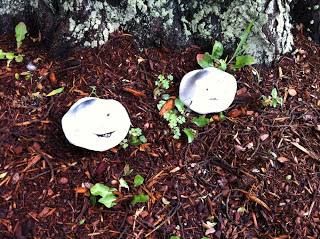
![]() |
| Magical mushrooms |
![]() |
| Sloan Urinal (inside joke about http://microbe.net |
![]() |
| ???? |
I went back to my motel room for a little bit and then headed down to Eel Pond for a Course BBQ.
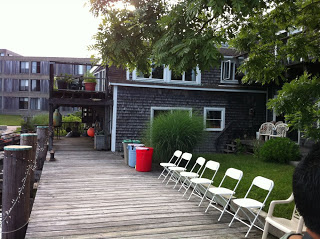
![]() |
| Deck for party |
![]() |
| Deck for party |
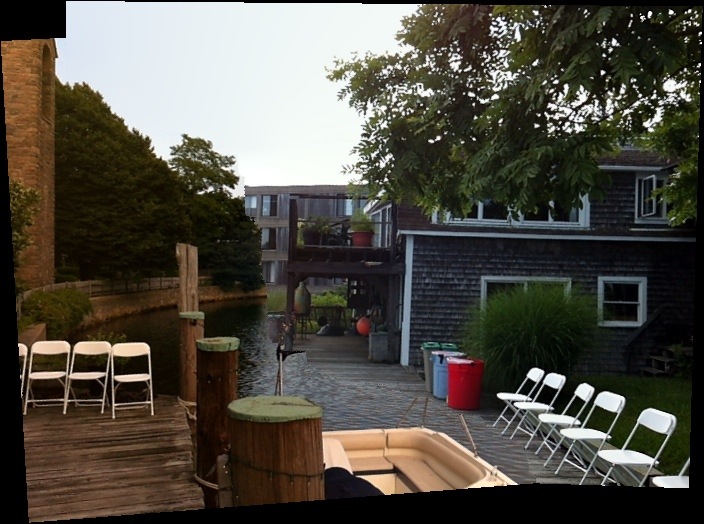
![]() |
| Photosynth stiched together pic |
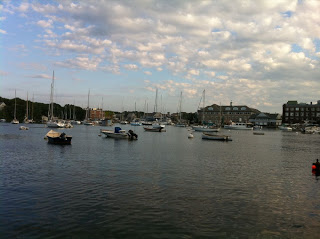
![]() |
| Eel pond |
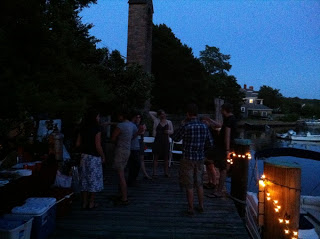
![]() |
| Party |
![]() |
| Party |
![]() |
| Party |
I then headed in to town where my friend Nipam Patel was having a party for the Embryology Course he was teaching. And I hung out as his house for a bit and then went back to my room.
Day 4: Home
Got up late. Checked out. Wandered into town with my suitcase. Took some pics.
And after some internal debate, decided to switch my flight to return that day rather than go visit relatives in Boston (sorry Diana, Hal — just wanted to get home). So I took the Bonanza Bus to Logan – discovered that Karl Stetter was also going on the bus to Logan. I tried to watch the US-Brasil women’s soccer game on my iPad using the wireless they have on the bus but it was choppy. So I just followed updates on the game – and even that was exciting.
Here are my tweets from the day:
- I’m at Pie in the Sky (10 Water St, Woods Hole)http://4sq.com/r0HOFh
- MBL -> BOS -> JFK -> SMF – sorry to leave microbial diversity course; wonder if @lancearmstrong will still be in #Davisca tonight
- Eel pond – Woods Hole, MA – last night #fb twitpic.com/5ob3ka twitpic.com/5ob3iy #fb
- Can’t get away from the deepsea – even at Logan Airporthttp://t.co/3k8gX3t
- #Scienceart at MBL in Woods Hole twitpic.com/5oc5f0twitpic.com/5oc5bj twitpic.com/5oc5vd twitpic.com/5oc5fbtwitpic.com/5oc625
Travel and meeting notes from #IndoorAir2011 in Austin Texas #microBEnet
Here are some quick notes from my trip to Austin Texas for the Indoor Air 2011 meeting.
About the meeting:
I got involved in helping organize a session at this conference as part of my microBEnet project. More on the planning and the meeting later but here are some quick notes just to get them out there. I wrote a bit about the run up to the meeting in the following posts:
- Indoor Air 2011 coming up in Austin, TX – still time to sign up …
- Reminder – Indoor Air 2011 coming up June 5-10 Austin TX …
- Indoor Air 2011; Austin, Tx; June 5-10 #microBEnet | Microbiology …
- The Tree of Life: Off to #IndoorAir 2011 in Austin, TX – to …
The meeting.
Below are some notes about the trip with twitter posts, pictures, and a few comments. I will post later with some more “scientific lessons learned” and such. But wanted to get this out there before I forgot details.
Headed out June 6.
Was going to head out June 7 but decided to head out late on June 6 so I could get to the meeting a bit earlier. I am posting my tweets below as a guide to the trip. Tweets are highlighted in yellow.
- Sacramento to Las Vegas to Austin to #IndoorAir2011#fb
- Off to #IndoorAir 2011 in Austin, TX – to discuss and promote http://microbe.net #microBEnet http://ff.im/-F6NDP
- Apparently – cards never rest in Vegas – many people at restaurant in airport playing cards twitpic.com/5824ni twitpic.com/5824nb
- How to have fun at Vegas airport – sit near security & watch ; apparently what happens in Vegas stays at security
- @PsiWavefunction sorry – you missed the hidden joke – I can’t tell story because what happens at security …. twitpic.com/582r4r
- Wow, on plane about to leave for Austin; southwest attendant moved person out of exit row next to me b/c he was drunk twitpic.com/582uko
- Good call Southwest – keeping planes safe (see last post)
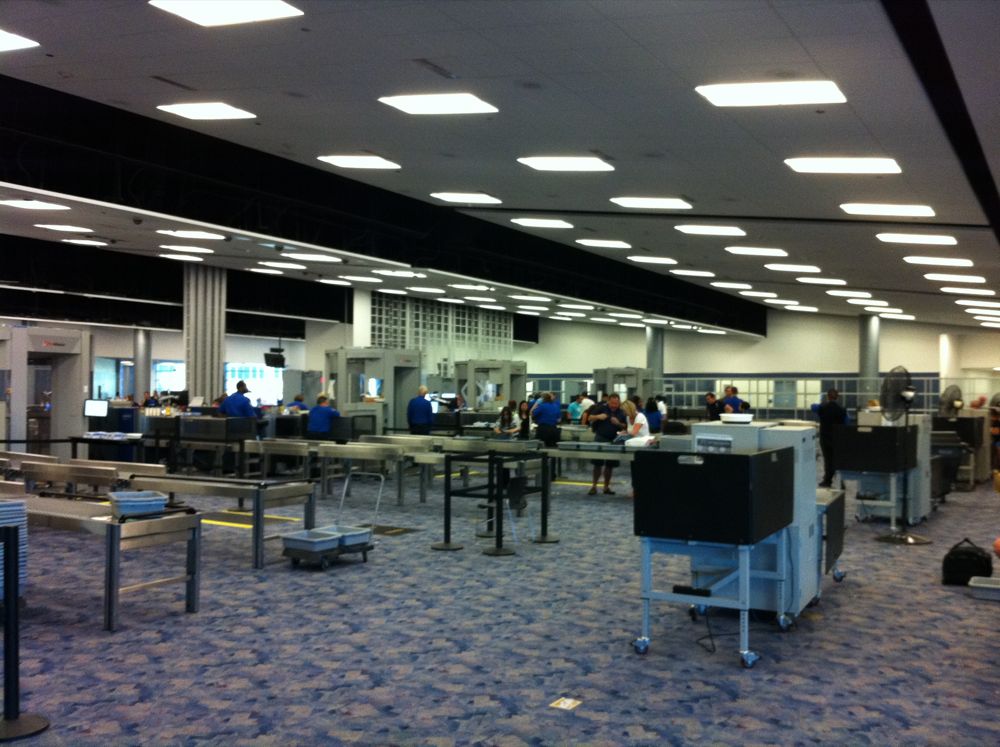
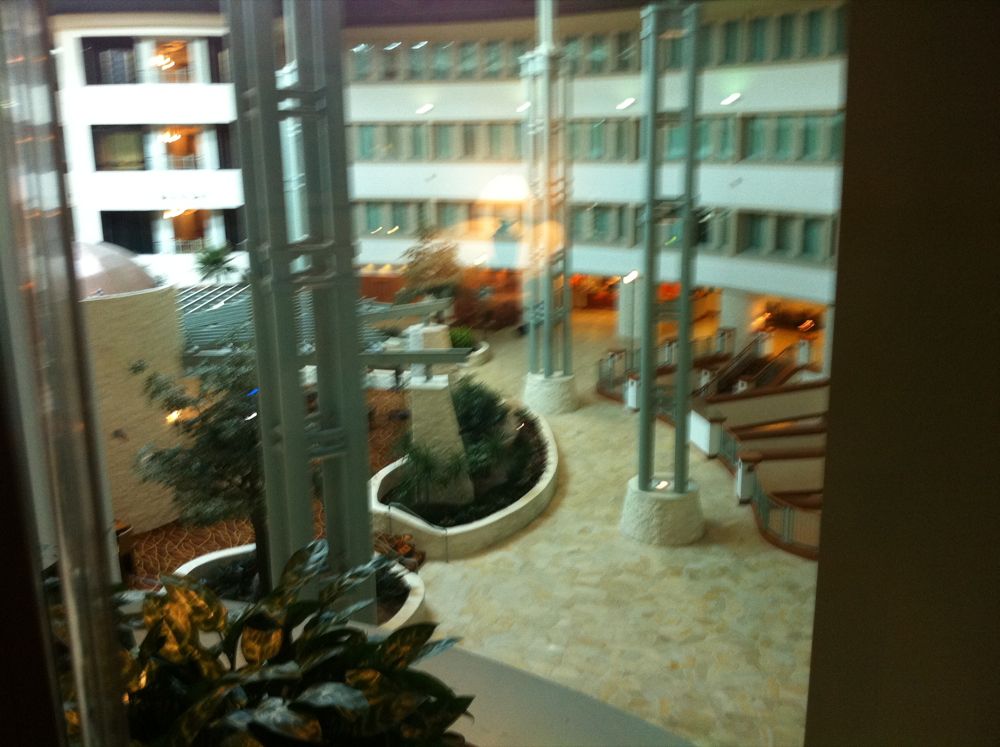
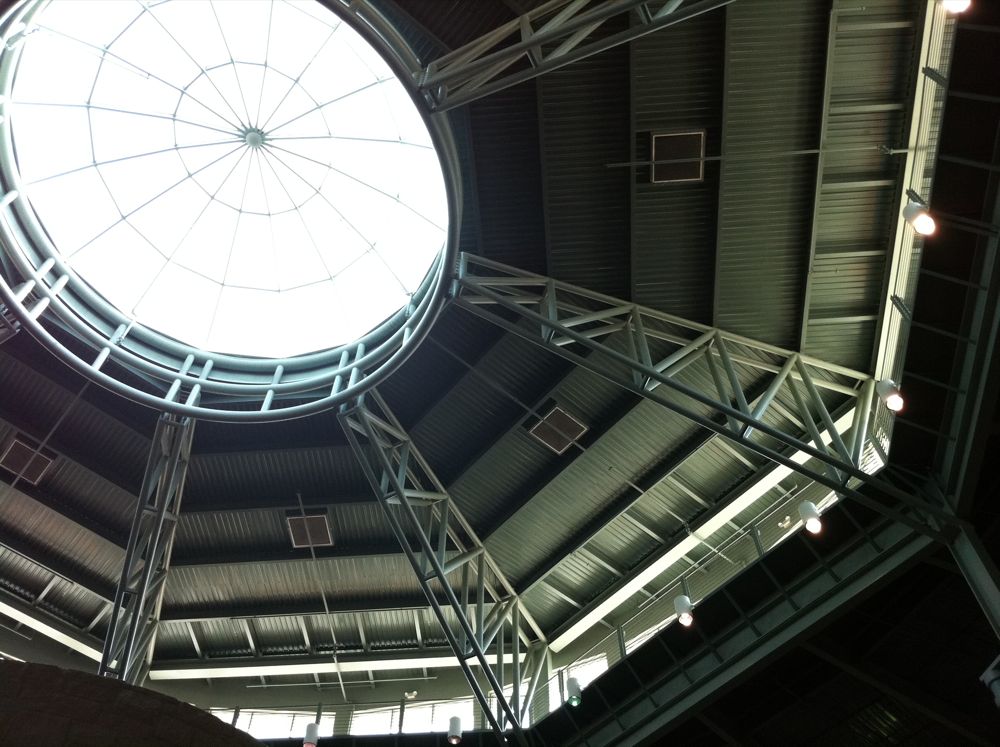
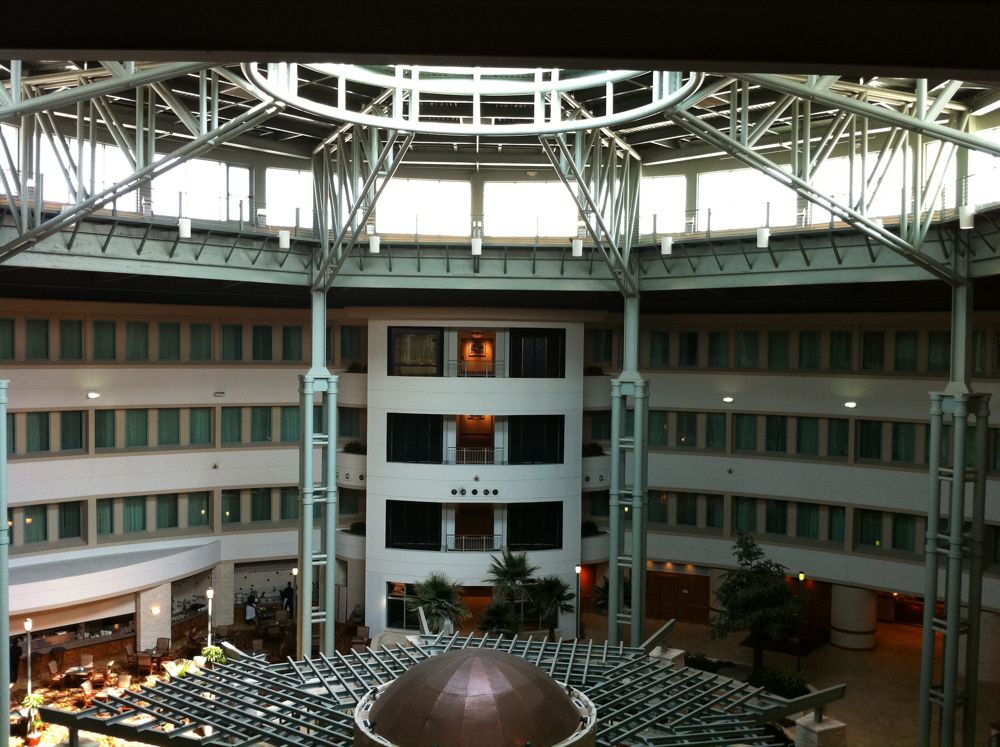
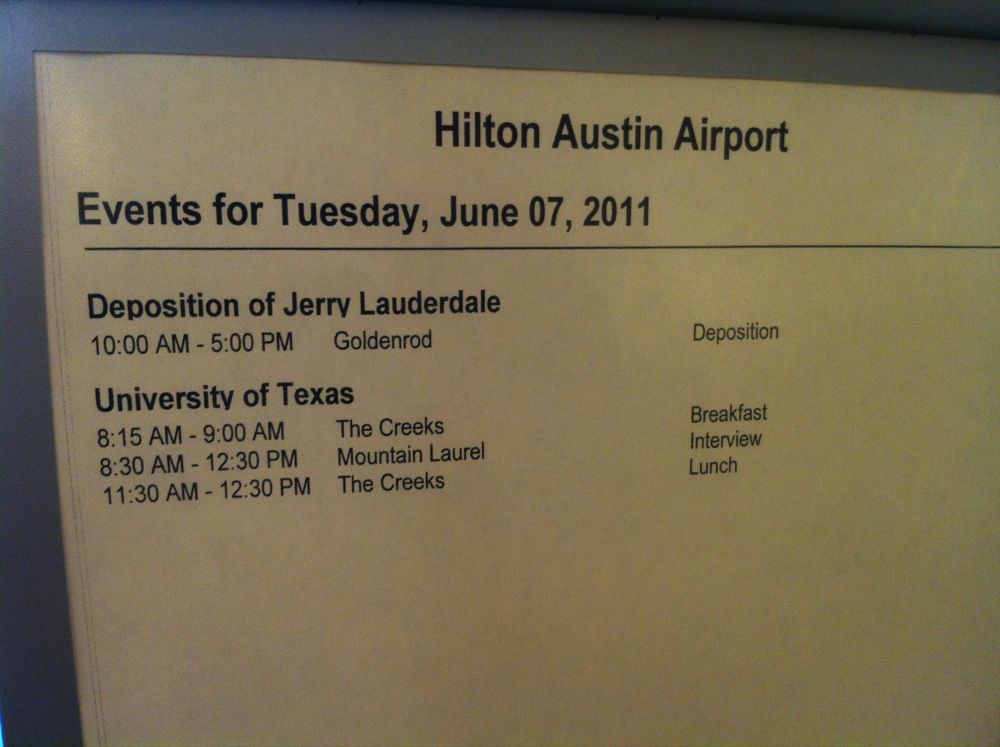
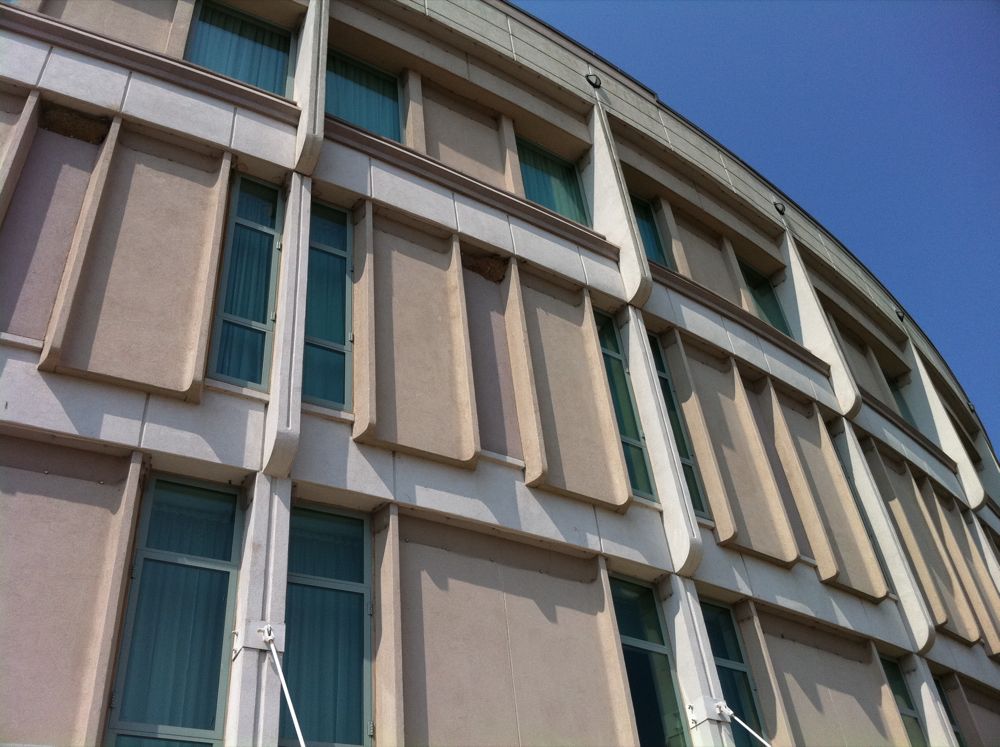
- Ok this is a strange hotel bldg – Airport Hilton in Austin TX #IndoorAir2011 twitpic.com/58ae4k twitpic.com/58ae44 twitpic.com/58ae4j
- More pics of Austin airport Hilton #IndoorAir2011 twitpic.com/58alsi twitpic.com/58altb twitpiccom/58alrw twitpic.com/58alsf
- Learning about affect of copper vs Aluminum surfaces in HVACs on microbial growth: copper seems to control growth better #IndoorAir2011
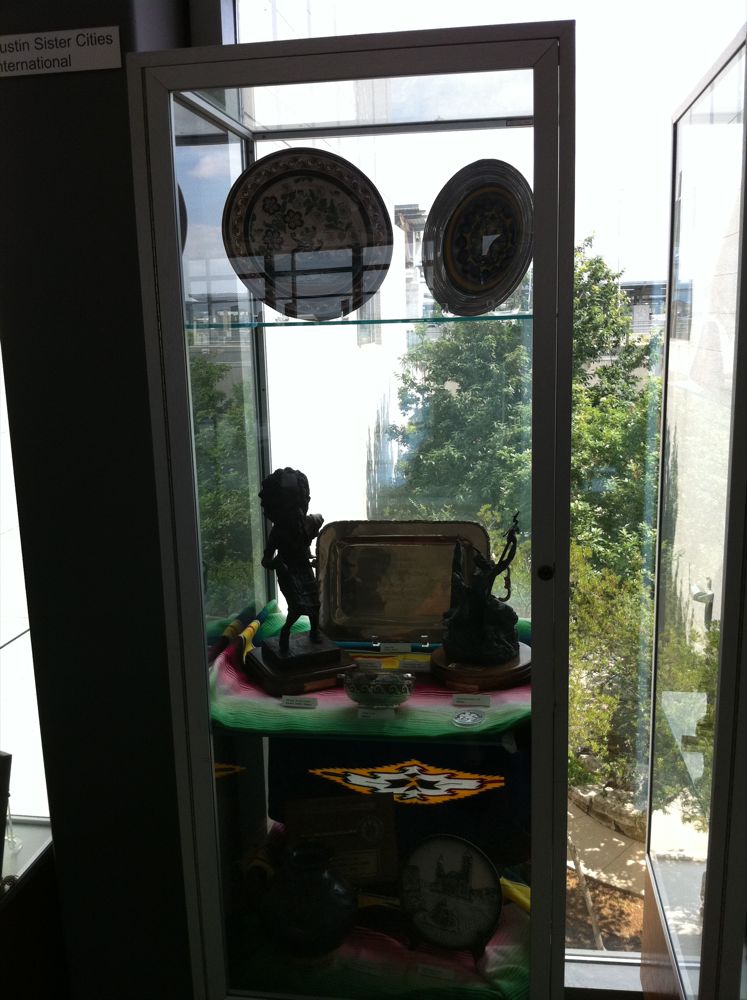
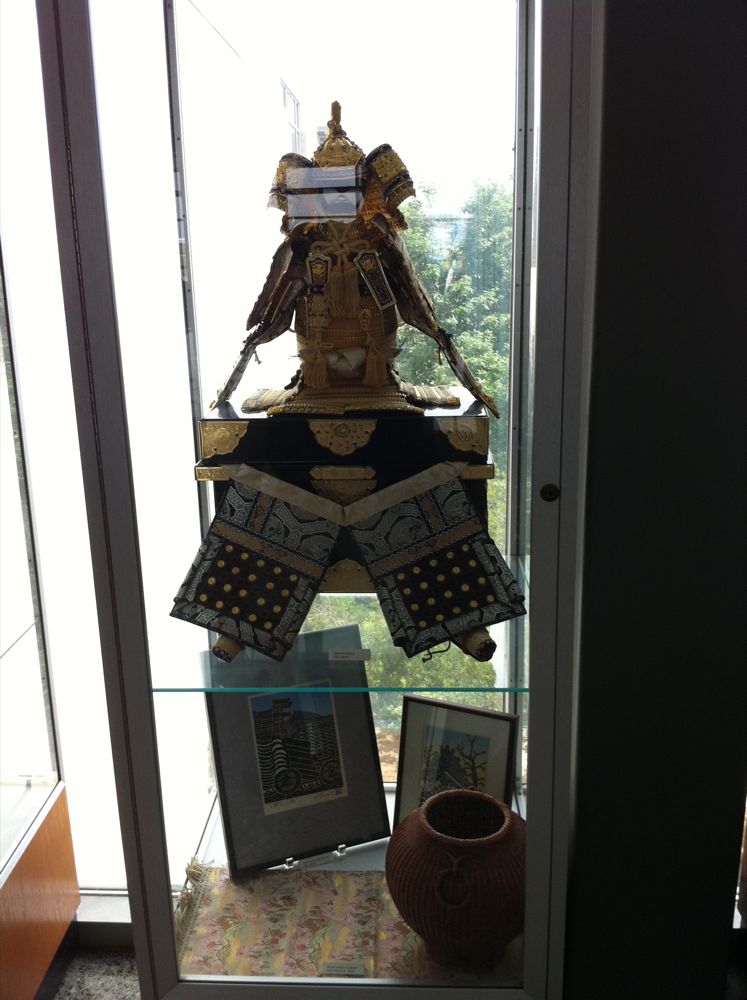
- Interesting artwork at Austin Convention Ctr -DNA,viruses,space #IndoorAir2011 twitpic.com/58diii twitpic.com/58diim twitpic.com/58diil
- In Austin,TX, had lunch w/ David Hillis & @hyphaltip; saw Norm Pace at #IndoorAir2011; that covers the tree of life #fb #MyWorkIsDone
- RT @stevenkembel Tips for a healthy home #1: keep it clean, dry, pe(s)t free #indoorair2011 #TSCA #NAGP
- Still wondering if #IndoorAir2011 has a policy on tweeting … so not posting much until I find out more
- And there is @ryneches playing with stuff from #IndoorAir2011 product show twitpic.com/58efll
- Heading to session on “where indoor air meets outdoor air” at #IndoorAir2011 – this pic seems appropriate twitpic.com/58egqd
- Yuguo Li, Bill Nazaroff, Hal Levin, Charlie Weschler &; Jan Sundell now discussing continuity between indoor & outdoor air #IndoorAir2011
- Charlie Weschler “Outdoor measurements are useless in exposure analysis? No! Ozone” When outdoor ozone up so is indoor #IndoorAir2011
- Weschler: Why care about ozone? Morbidity and mortality go up when ozone does #IndoorAir2011
- Bill Nazaroff discussing indoor vs outdoor exposures and a tutorial on particles which come in a whole zoo of forms #IndoorAir2011
- Nazaroff working on models to predict indoor exposure from measures of outdoor air #IndoorAir2011
- Having serious jargon/context #fail issues at talks at #IndoorAir2011 tho Nazaroff from Berkeley nearly flawless in being jargon free #wow
- RT @IAQnerd: “43 chemicals found in virtually every pregnant woman” #indoorair2011 #TSCA #NAGP #holisticmoms #healthychild
- My collaborator on microbe.net #microBEnet Hal Levin now discussing microbes indoor/outdoor #IndoorAir2011
- It is funny that at the #IndoorAir2011 sessions there have been troubles with WindowsOS – do indoor air researchers dislike windows?
- Funny notion from speaker at #IndoorAir2011 – windows define buildings as much as doors so why not say we are “Inwindows”
- Speaker at #IndoorAir2011 “Indoor air is much more important than outdoor air” but $$ is in outdoor air – though I & others don’t agree
- @phylogenomics VIA @ryneches Richard Corsi has given us permission to tweet, advises against emulating congressmen. #indoorair2011
- @B_EMC Yuguon Li
- @B_EMC actually I think it was Jan Sundell who said that
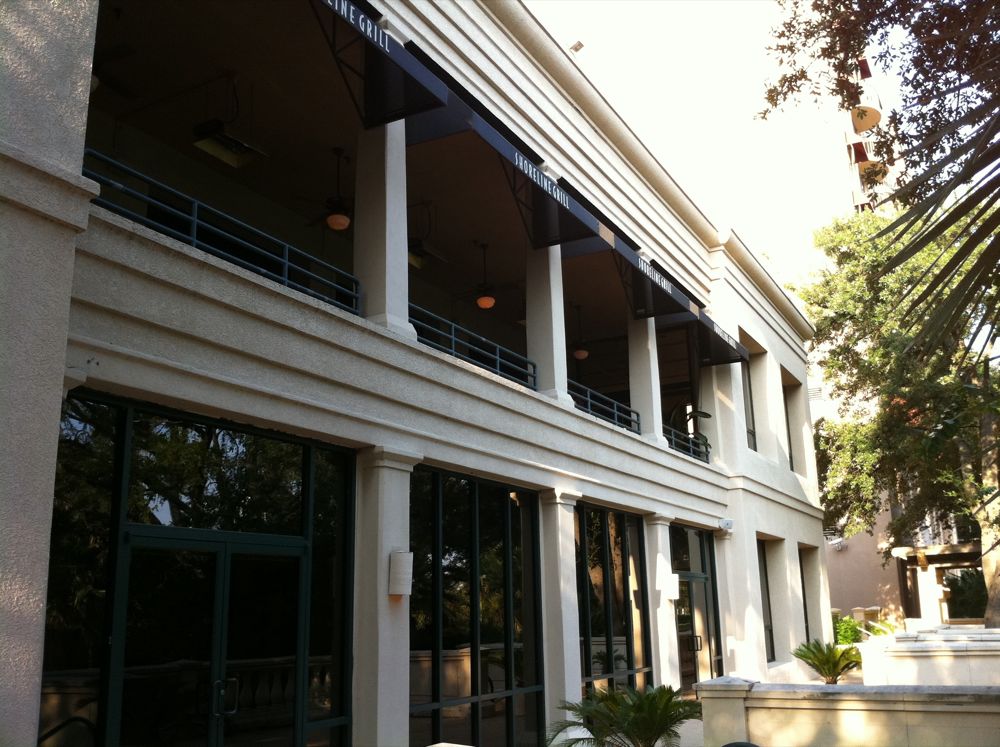
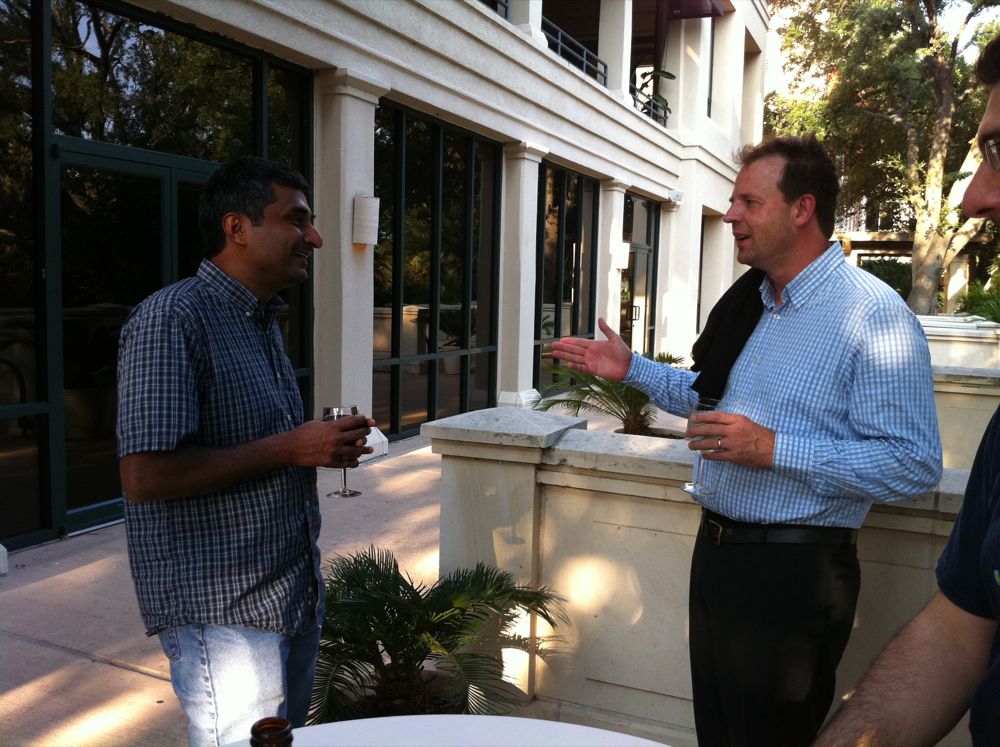
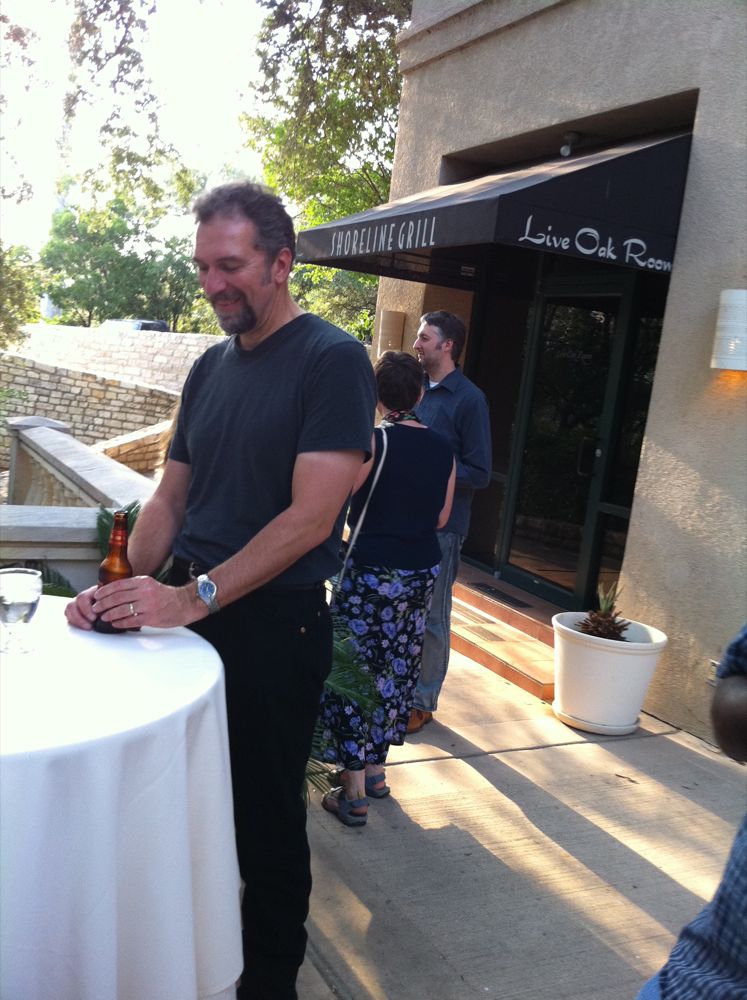
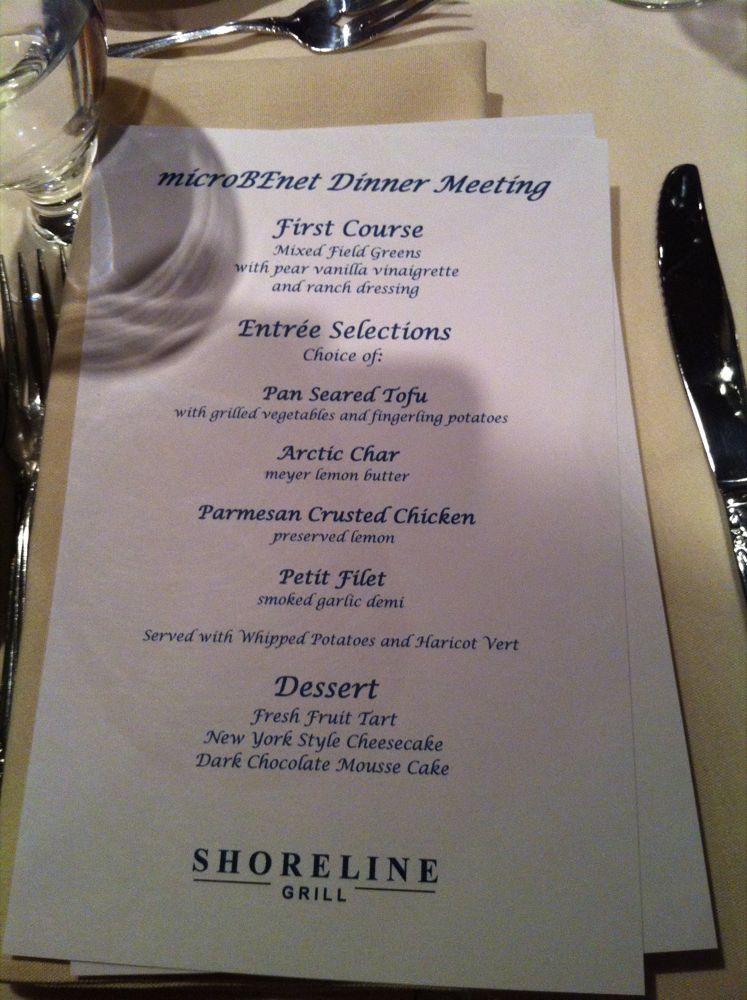
And then eventually I headed to dinner with Jason Stajich and took some more pics. We wandered around town a bit before ending up at the Shoreline Grill and David Coil, a post doc from my lab, showed up a bit later to meet us there.
Day 3
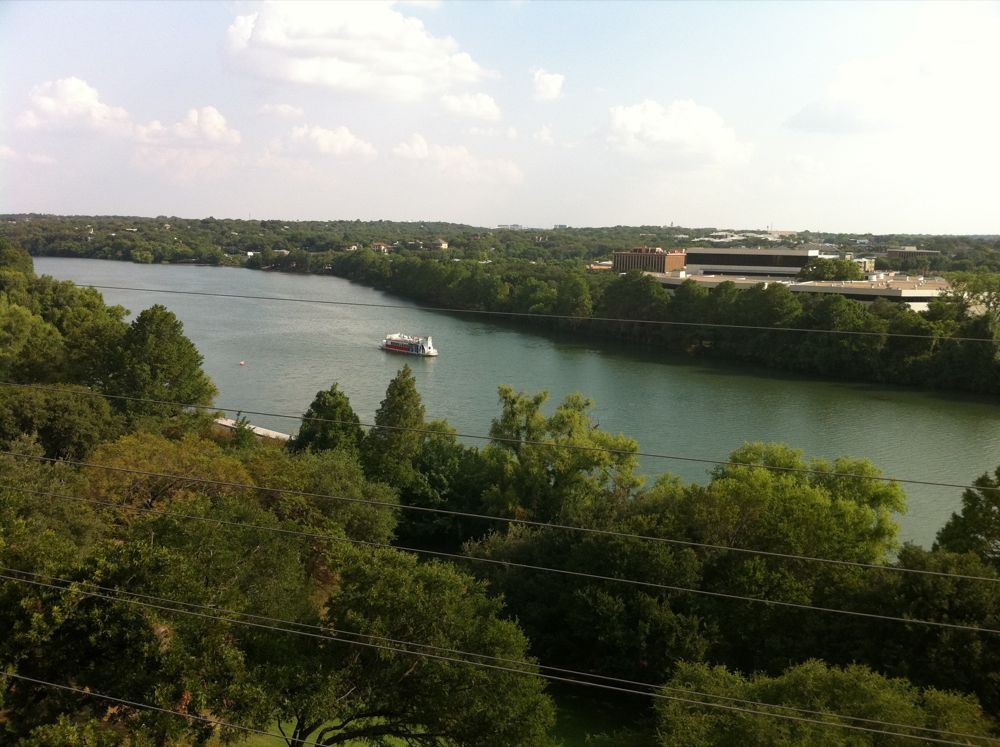
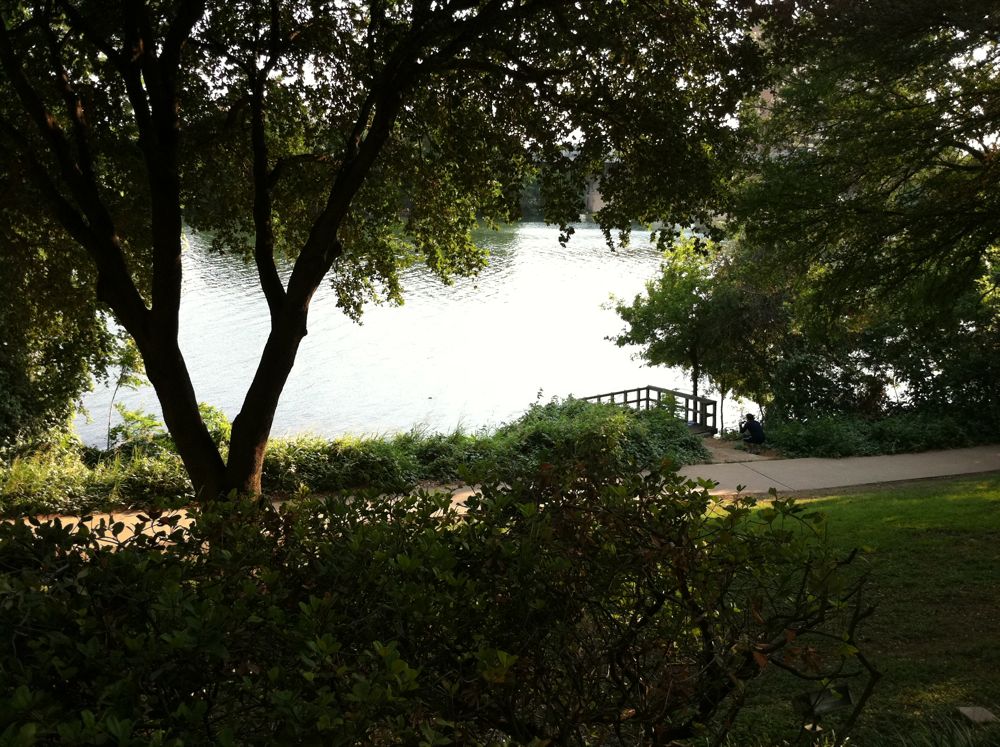
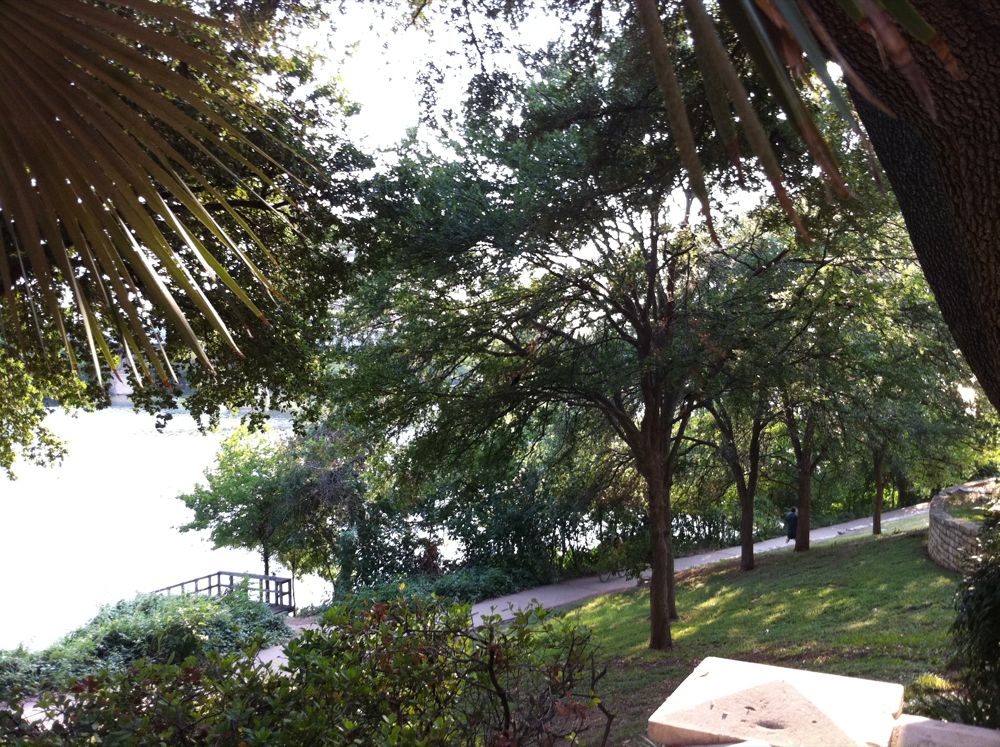
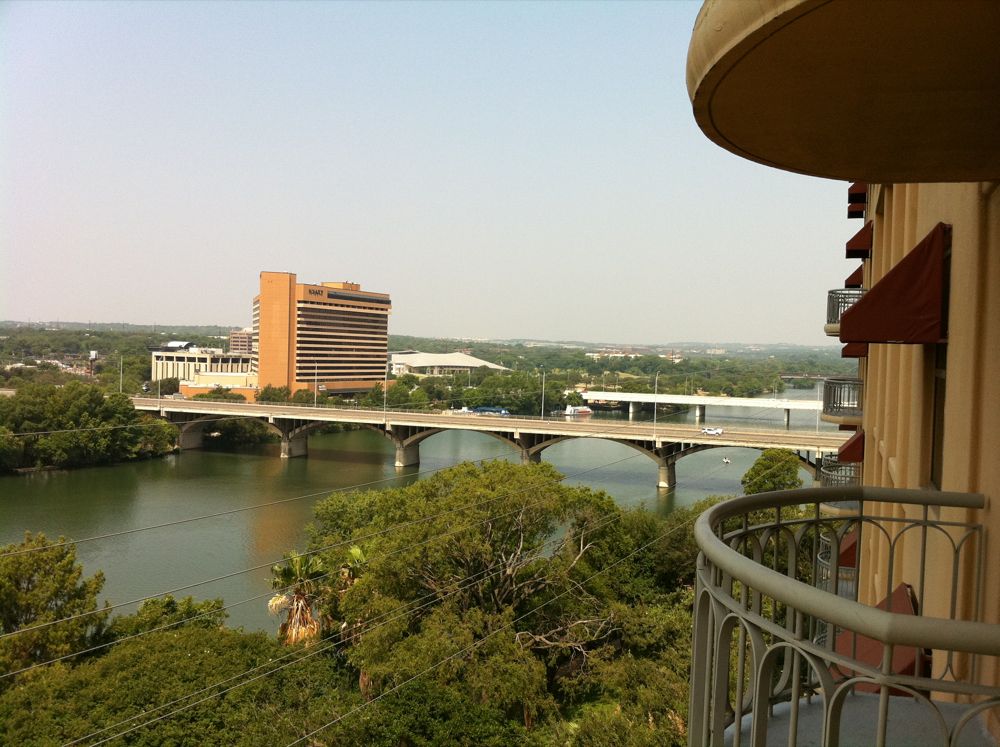
Got up reasonably early and took some pics from my room in the AM
Then headed over to the conference center as soon as I could because Craig Venter was on the agenda for the AM session.
- Crowd at #IndoorAir2011 patiently awaiting the arrival of J. Craig Venter who is giving the AM keynote twitpic.com/58nyl9
- J. Craig Venter has arrived for #IndoorAir2011 twitpic.com/58o01f twitpic.com/58o021
- Cool – at #IndoorAir2011 one can submit questions for the speakers on twitter
- Claudia Miller http://drclaudiamiller.com/disclaimer/ is introducing 1st Speaker: Beverly Wright #IndoorAir2011 from http://www.dscej.org/
- Beverly Wright says she is happy to see so many people here this early “I’m a sociologist we are not that much on time” #IndoorAir
- Beverly Wright showing pics fire from 1980s at refinery – common occurrence in Mississippi River “cancer corridor” #IndoorAir2011
- Speaker Beverly Wright is past winner of the Heinz Award: http://www.heinzawards.net/recipients/beverly-wright #IndoorAir2011
- At #IndoorAir2011 Beverly Wright revisiting the disaster of Katrina #OilSpills #Toxins #PersonalHorror #HomesDestroyed
- Beverly Wright: major problem in Katrina was agency double talk e.g., EPA said city was safe but their samples said otherwise #IndoorAir2011
- Beverly Wright: massive indoor and outdoor mold growth after Katrina; now showing how her own house was trashed #IndoorAir2011
- Beverly Wright: even before Katrina, New Orleans was a moldy city b/c old, wet; says smell in frenchQ is mold; #IndoorAir2011
- Beverly Wright discussing “Disaster Capitalism” e.g., plans to rebuild New Orleans w/o involving residents in the planning #IndoorAir2011
- Beverly Wright re: cleaning up after Katrina “Of course, whenever you do something good, politicians show up” for the pics #IndoorAir2011
- Wright in response to a ?? about lessons learned from Katrina “Put health above all else” #IndoorAir2011
- Next up at #IndoorAir2011, Craig Venter – as an aside his most recent pub is one w/ me on stalking the 4th domain http://tinyurl.com/64rtyvc
- Jesse Ausubel – says there must be meaning in the universe b/c speaker at Indoor Air meeting is named “Venter” #IndoorAir2011
- Ausubel says he is “an advertisement” for Craig Venter and gives a bit of an biography of Craig in 2 minutes #IndoorAir2011
- Ausubel gave a very glowing, flowing, comprehensive, yet remarkably short intro to Craig Venter #IndoorAir2011
- Venter: discussing converting the analog code of DNA into a digital code of data “digitizing DNA” #IndoorAir2011
- Venter used three slides to cover the history of genome sequencing #IndoorAir2011
- Venter predicts in the future companies will pay people to sequence their genomes to get the data #IndoorAir2011
- Venter discussing microbes in mouth says “think about that while the person next to you is coughing, or you are kissing them” #IndoorAir2011
- Venter suggesting that esophageal cancer samples have unique microbial composition – says cause vs effect not known #IndoorAir2011
- Venter: w/ metabolomics can track which chemicals in blood come from human metabolism vs. food vs. bacteria/microbes #IndoorAir2011
- Venter: you are not just who you are and what you eat but also what you feed your bacteria #IndoorAir2011
- Venter: some think his most brilliant discovery was figuring out how to sail around sea and do science at same time #IndoorAir2011
- Venter: emphasizes the #PLoSBiology collection on ocean metagenomics including his/my GOS papers ploscollections.org/article/browse… #IndoorAir2011
- Venter showing reference genome plots of Doug Rusch such as ploscollections.org/article/slides… #IndoorAir2011
- Venter showing Jeff Hoffman sampling frozen lakes in Antarctica – massive amounts of biomass and biodiversity #IndoorAir2011
- Venter saying very low diversity in microbes 1mile deep in ocean/crust — suggests that UV light may be driver of diversity #IndoorAir2011
- Venter: working on air microbes – it was much harder than anticipated and thanks Sloan foundation for their patience #IndoorAir2011
- Venter: very little biomass recovered from indoor air; have to run samplers for long time; but they get contaminated; #IndoorAir2011
- Venter: v. hard to get water clean enough (i.e., without DNA contamination) to use in studying samples w/ very little biomass #IndoorAir2011
- Note – I don’t buy the “UV light” connected to diversity explanation Venter just gave at #IndoorAir2011 – just reporting what he is saying
- @subsurface_life he was not talking about richness but variation among close relatives; says there is less genetic diversity w/in species
- Venter: now looking at samples from the Space Station #IndoorAir2011
- Venter: in New York Indoor Air – the major source of DNA is human; #2 is rodent; microbes are a small % #IndoorAir2011
- Venter: outdoor air in NYC most DNA is rodent, human a bit less than in indoor air #IndoorAir2011
- @subsurface_life millions of reasons other than UV – just posted a separate tweet saying I don’t believe it
- Venter: in NYC there is lots of iron in the outdoor air; “if you are anemic that might be good but otherwise probably not” #IndoorAir2011
- @pzmyers apparently, though unclear how they sampled — did say that at Scripps Pier the #1 signal was insect
- @Toxicpath @pzmyers unclear how the air sampling worked so not sure why they were getting so much rodent/human DNA vs. insect, bacterial
- Venter has now shifted to discussion synthetic biology #IndoorAir2011
- Venter shows a very very simple animation and says “We have this very sophisticated movie to show this” #ScienceHumor #IndoorAir2011
- Venter: creating prokaryotic chromosomes in yeast; waiting for Norm Pace to learn him about “just say no to prokaryote term” #IndoorAir2011
- Venter: says massive growth in population means that new biotech. dvlpmts (e.g., synthetic biology, fuels, etc) are needed #IndoorAir2011
- Venter ends with discussion of ethics and synthetic biology #IndoorAir2011
- They just asked Venter @ryneches twitter question “Can I have your boat?”#indoorair2011
- Now starting session on “Microbiomes of the Built Environment” supported by @SloanFoundation -1st speaker is Bill Nazaroff #IndoorAir2011
- Nazaroff “Newton meets Darwin and the Indoor Microbiome” discussing sociology of science #IndoorAir2011
- Nazaroff quoting John Harte from “Towards a synthesis of the Newtonian and Darwinian worldviews” #IndoorAir2011
- Here is a link to John Harte’s excellent paper on Newtonian vs Darwinian synthesis http://bit.ly/lBrK4C #IndoorAir2011
- Note I worked at RMBL for two summers when John Harte was there – I really like him – and lived w/ his son there #IndoorAir2011
- Nazaroff: successful collaborations come from small groups working on close contact rather than large teams #IndoorAir2011
- Nazaroff: finding ways to keep egos under control is a key issue in scientific collaborations #IndoorAir2011
- Nazaroff: DNA based methods are game changing in Indoor Microbiome studies but we still need to ask the right questions #IndoorAir2011
- Nazaroff discussing work w/ Jordan Peccia looking at microbial surveys in classrooms as well as BIMERC project at Berkeley #IndoorAir2011
- Now up, the one and only Norm Pace – discussing rRNA surveys of human occupied indoor environments #IndoorAir2011 #Oneofmyscienceheroes
- Pace: his job here is to help people transition from whatever microbiology they learned in a past life to modern microbiology #IndoorAir2011
- psgcom #indoorair2011 check out www.microbe.net for more on Sloan Foundation funded work on Microbes of the Indoor Environment #microbenet
- Pace: lots of microbes in tap water (good source of protein) but to understand those microbes you need to use sequences #IndoorAir2011
- Here is a list we made of Sloan Foundation projects on microbes in the built environment microbe.net/grantees/ #microBEnet #IndoorAir2011
- Pace: using fluid impingers to sample air – need ones with massive throughput #IndoorAir2011
- Pace: key point – for studying microbes via DNA cleanliness (i.e., no contaminating DNA) is more important than sterility #IndoorAir2011
- Pace: Indoor air microbiology is mostly about microbes shed by humans #IndoorAir2011
- Pace: key for future of IndoorMicro is bring together people from different fields; that’s why we created http://microbe.net #IndoorAir2011
- Next: M. Taubel on diversity and dynamics of bacteria in house dust #IndoorAir2011
- Taubel: Interested in “hygeine hypothesis” and how exposure to microbes affects asthma, allergy, automimmune dvlpmt #IndoorAir2011 #fb
- @Chris_Evelo Well, don’t forget each human cell has a lot more DNA than each microbial cell (well, for most microbes) #IndoorAir2011
- Taubel referencing bacteria-dust studies in BMC Microbiology 8:56 and J. Allergy Clin Immunol 124: 834 #IndoorAir2011
- Taubel: not going into details of methods b/c 90% of people understand methods and 10% only care about results #IndoorAir2011
- Taubel used a term I have not seen: SLOTUs – species level operational taxonomic units; though I note I 1st read it as SLUTS #IndoorAir2011
- Taubel: mattress dust has lower richness of bacteria (# of species) than floor dust #IndoorAir2011
- Taubel: most of what they find in house dust is similar to microbes found on people #IndoorAir2011
- Next up Denina Hospodsky on size fractionated emissions and microbial populations revealing sources of bacteria in indoor air #IndoorAir2011
- Hospodsky has excellent kids style cartoon showing their model for shedding bacteria from people #IndoorAir2011
- If interested in pubs on “Microbiology of the Built Environment” see (and join) this Mendeley Grp http://bit.ly/mn149p #IndoorAir2011
- Most talks I’ve seen on microbiology in air previously ignored the niches: at #IndoorAir2011 they care about particles, chemistry, etc #cool
- At #IndoorAir2011 the microbial diversity researchers casually switch back & forth between math #notcommonatmicrobiologymeetings
- I like taking pictures of people trying to sneakily take pictures of peoples slides #IndoorAir2011 twitpic.com/58q814
Lew Harriman
- Next speaker is Lew Harriman from a consulting company http://MasonGrant.Com: focused on water availability #indoorAir2011
- Harriman: buildings are designed to be dry, not damp; though I note damp doesn’t always mean bad #IndoorAir2011
- Harriman: measurements of relative humidity usually focus on air but probably should measure on surfaces #IndoorAir2011
- Now up Miia Pitkaranta from Finland: seasonal variation in microbes in buildings & affect of H20 biocenter.helsinki.fi/bi/dnagen/indo… #IndoorAir2011
- Miia Pitkaranta refs on Indoor Microbiology AEM 74:233 & BMC 8: 56 #IndoorAir2011
- Pitkäranta: species richness in dust is very high; ~ 10-20% of species cultivable; phylogenetic diversity of fungi high #IndoorAir2011
- Pitkäranta: spatial variation in microbes in dust from different parts of buildings very high #IndoorAir2011
- Next at #IndoorAir2011 Gunilla Bok: Identification of mould fungi by blast similarity searches and phylogenetic analysis
- Kudos to meeting organizers of #IndoorAir2011 for diversity of speakers: young -> old; diverse country, genders, etc
- Next & last this AM: Alina Handorean on phylogenetic analysis of microbes from bioaerosols from a flooded building #IndoorAir2011
- Hal Levin, my collaborator on #microBEnet http://microbe.net is now talking at #IndoorAir2011
- Hal Levin trying to determine what is known about environmental factors that influence indoor microbial ecology #microBEnet #IndoorAir2011
- Levin: some environmental factors affecting microbial ecology: humidity, temp, ventilation, surfaces, chem composition, pH #IndoorAir2011
- Nazaroff points out that human occupants have profound influence on microbial ecology #IndoorAir2011
- Another speaker suggested building age is important in microbial ecology indoors #IndoorAir2011
- Now up Mika Frankel discussing influence of season and sampling methods on inferred microbial composition #IndoorAir2011
- Frankel sampling in airborne and settled dust in four rooms in five homes #IndoorAir2011
- Personal opinion – I am not a big fan of very short talks at meetings – I like 20-30 minutes not 10-15 #IndoorAir2011
- Now up Brendan Bohannan – arguably one of the greatest speakers in the whole field of microbial ecology #IndoorAir2011
- Bohannan is involved in the BioBE center (Biology and the Built Environment Center) at U. Oregon biology.uoregon.edu/biobe/?p=124 #IndoorAir2011
- Bohannan discussing “How Communities Assemble”: two major categories – sampling & filtering #IndoorAir2011
- Bohannan: filtering in microbial ecology is fact that some environments support growth of some taxa over others #IndoorAir2011
- Bohannan: sampling in microbial ecology is the idea that in some cases microbes you see are just sampling from larger pool #IndoorAir2011
- Bohannan: microbes in buildings are mostly from sampling/filtering from two pools – outdoor air & human occupants #IndoorAir2011
- Bohannan: trying to understand how microbial communities assemble in a hospital #IndoorAir2011
- Bohannan: indoor air is different from outdoor air (he knows this is not surprising); outdoor much more diverse #IndoorAir2011
- Bohannan: are indoor samples subsets of the species found outdoors? No – appear to be very distinct types of microbes #IndoorAir2011
- Bohannan: comparing indoor & outdoor air microbes to those in soil, humans, etc; indoor air more like skin; outdoor like soil #IndoorAir2011
- Bohannan: microbes in some rooms like outdoor air/soil, in other rooms like people; #IndoorAir2011 differences may be due to ventilization
- Bohannan: higher the airflow in room, the lower the frequency of organisms closely related to human pathogens #IndoorAir2011
- Bohannan: suggests architects in future could design buildings with “microbial comfort” in mind and not just human comfort #IndoorAir2011
- Norm Pace points out that should be very careful w/ term pathogen esp. when we don’t know actual pathogenicity #IndoorAir2011
- Jordan Peccia discussing growth of Aspergillis spores #IndoorAir2011
- Note -before Pace said should say “organisms related to pathogens” I said “organisms closely related to human pathogens”#IndoorAir2011 #Ego
- Peccia – are all Aspergillis spores the same (in terms of allergenicity and other things)? #IndoorAir2011
- After talks the whole of #IndoorAir2011 is heading to the Salt Lick Bar-B-Que Restaurant saltlickbbq.com #NotVegetarianFriendly
- Peccia: culturability & qPCR can significantly (5-50x) underestimate allergenicity of A. fumigatus spores produced at low T° #IndoorAir2011
- If I had videos of Brendan Bohannan’s talks I have recently seen, I would make a mashup & use it for my talk tomorrow at #IndoorAir2011
- Last speaker today Ming-Ching Liang on “Essential knowledge of indoor microbial ecology” – a Sloan funded project #IndoorAir2011
- Liang studying how science is communicated w/ http://www.utexas.edu/opa/experts/profile.php?id=587 #IndoorAir2011
- Liang analyzing content of papers on “indoor microbiology” #keywords #topics #factors #IndoorAir2011
Then I headed back to my hotel for a bit and took a few more pics.
- Well off to sample microbes in Lady Bird Lake on Craig Venter’s new boat #IndoorAir2011 #metagenomics twitpic.com/58uu8h
- I am liking Austin … At Clive bar (@ Clive Bar w/ @jasonstajich) [pic]: http://4sq.com/jnWken
And then Shannon Williamson showed up and we eventually made it across the street to a little “cart” restaurant that was rated very highly called Cazamance.
- Of course I wants to eat here with a “Tree of Life” logo – Cazemance – food was great (@ Cazamance) [pic]: http://4sq.com/kUJDm6
- jasonstajich Well @phylogenomics wants to go hula hoop but we must eat dinner first at cazamance #FGC11img.ly/4R6vimg.ly/4R6A
- Cool art at/near G’Rah Mahal cafe in Austin #IndoorAir2011 twitpic.com/58xpuf twitpic.com/58xpuj
- Great dinner w/ @jasonstajich, Shannon Williamson shar.es/HYor9 & Shibu Yooseph shar.es/HYo2n @CazamanceAustin #IndoorAir2011
- @pathogenomenick and I never ever ver thought I would be tweeting from a conference called #IndoorAir2011 but there you go too
- Was joking w/ couple in bar re #IndoorAir2011 -we decided should look at microbes in churches; but alas it’s been done http://bit.ly/lV85UC
- Some type of helicopter search going in in Austin TX right now twitvid.com/E1XLC
Day 4
Got up early again. Headed out to breakfast and coffee and worked on my talk for a while. There was a session this AM in which I was speaking. The session was on microbiomes of the built environment and it was coorganized by Hal Levin as part of my microBEnet project.
- Now these are 2 things I didn’t expect at the newsstand at the Austin Convention Ctr #IndoorAir2011 twitpic.com/5948wg twitpic.com/5948wf
Posted my slides (which I had worked on over breakfast)
- Just uploaded ‘Eisen #microBEnet #IndoorAir2011‘ to SlideShare. http://slidesha.re/mDm4wT
- Here are the slides I plan to use for my talk at #IndoorAir2011 in a few minutes slidesha.re/mDm4wT #microBEnet
- Jesse Ausubel from Sloan Foundation up at #IndoorAir2011: the Known, Unknown & Unknowable (KUU) Framework to developing a research agenda
- Ausubel: Sloan Foundation started by ex-GM head- though no connection now, he notes maybe we should study microbes in cars #IndoorAir2011
- Ausubel: built environment of course critical to development – the more we understand it the better #IndoorAir2011
- Ausubel refs Josh Lederberg & his interest in biodefense – if we want to detect anthrax in air need to know the background #IndoorAir2011
- Sloan originally interested in general survey of microbes in the built environment & basic science in this area #IndoorAir2011
- Key to Sloan $$$: they are seed money/science venture capital – they hope it leads to “powerful organized gang” i.e. a field #IndoorAir2011
- Ausubel: what can Sloan do? funds specific projects as well as the “glue” to hold projects together e.g., http:microbe.net #IndoorAir2011
- Ausubel: Sloan Foundation very supportive of open science including #openaccess to literature and sharing in various ways
- Sloan has supported many #PLoS activities including the new PLoS Hubs in Biodiversity http://hubs.plos.org/
- Ausubel says we should think about “macroprojects” that need collaboration- asks if there are BigScience needs #IndoorAir2011
- Ausubel says it is the unknown that sets the research agenda for fields & allows for marketing to get more resources #IndoorAir2011
Aino Nevalainen
- Aino Nevalainen : introducing microbiology and the indoor environment #IndoorAir2011
- “I have feeling I have to do a 100 meter sprint on a distance that is a marathon” – i.e., too much to cover, too little time #IndoorAir2011
- Nevalainen: quoting Leviticus regarding leprous plague and what to do Leviticus 14: 33-38, 39-42, 43-47 #IndoorAir2011
- Nevalainen: priests were the first indoor air consultants, regarding quarantine and leprosy #IndoorAir2011
- Nevalainen refs. MH Gordon 1904 Bacterial test for estimating pollution of air. Sppl. for 32. Ann Rep of the Local Gvmt Board #IndoorAir2011
- Nevalainen refs Richards 1954 J. Allergy 25: 429 – Atmopspheric molds spores in and out of doors #IndoorAir2011
- Nevalainen refs JACI 62: 22-26 Hirsch et al. 1978, Ann Occup Hyg 27: 341-358 Ager and Tickner 1983, Lidwell and WC Noble 1975 #IndoorAir2011
- Nevalainen refs studies of humans as source of microbes in air: Sciple etal. ’67, Duguid & Wallace ’48, Noble & Davies ’65 #IndoorAir2011
- Nevalainen refs nice reivew of microbial ecology of skin by Roth and James 1988: IDs factors modifying normal flora #IndoorAir2011
- Nevalainen sources of indoor microbes: outdoor air, uses of buildings (people, pets, etc), microbial indoor habitats #IndoorAir2011
- Nevalainen does not mention plants as a source of indoor microbes – something I am interested in studying … #IndoorAir2011
- Nevalainen: aerosols in indoor air behave in same general way as those outdoors #IndoorAir2011
- Nevalainen: microbial exposure associated w/ health, both positive (e.g., protection agst allergy) negative (e.g., pathogens) #IndoorAir2011
- Nevalainen: microbes growing on building surfaces are “bad microbes” in the sense that they should be an area of concern #IndoorAir2011
- Nevalainen: the way ahead – more info on exposure & health; more info on whether culturable are good models for all microbes #IndoorAir2011
Then I gave my talk and we had multiple break out sessions which seemed to go well discussing the future of indoor microbiology studies.
- Eisen #microBEnet #IndoorAir2011 http://ff.im/-Flesi
- To a microbe, the human body must seem as varied and complex as a planet does for plants & animals
- All I can say is thank you Norm Pace – we will fix it #nocommentotherwise #donttellmybrother
- hyphaltip Hat trying on @phylogenomics is the deep coverage. img.ly/4TfIimg.ly/4TfJ
- ryneches This is what happens when using third gen sequencing technology to measure how many heads you have. twitpic.com/5996l5
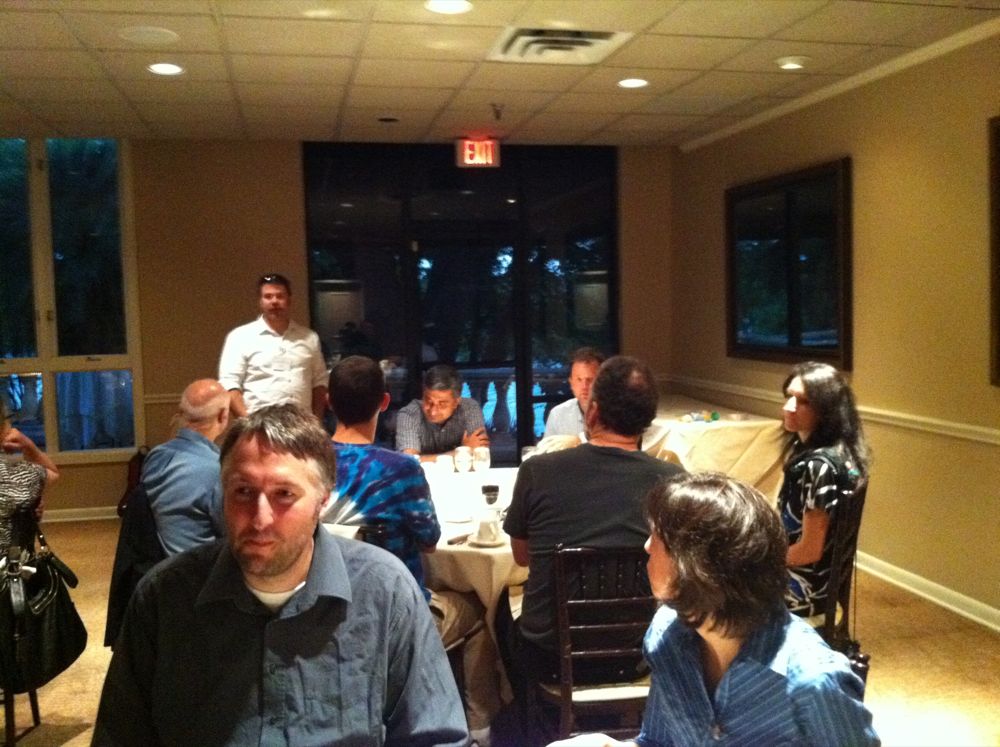
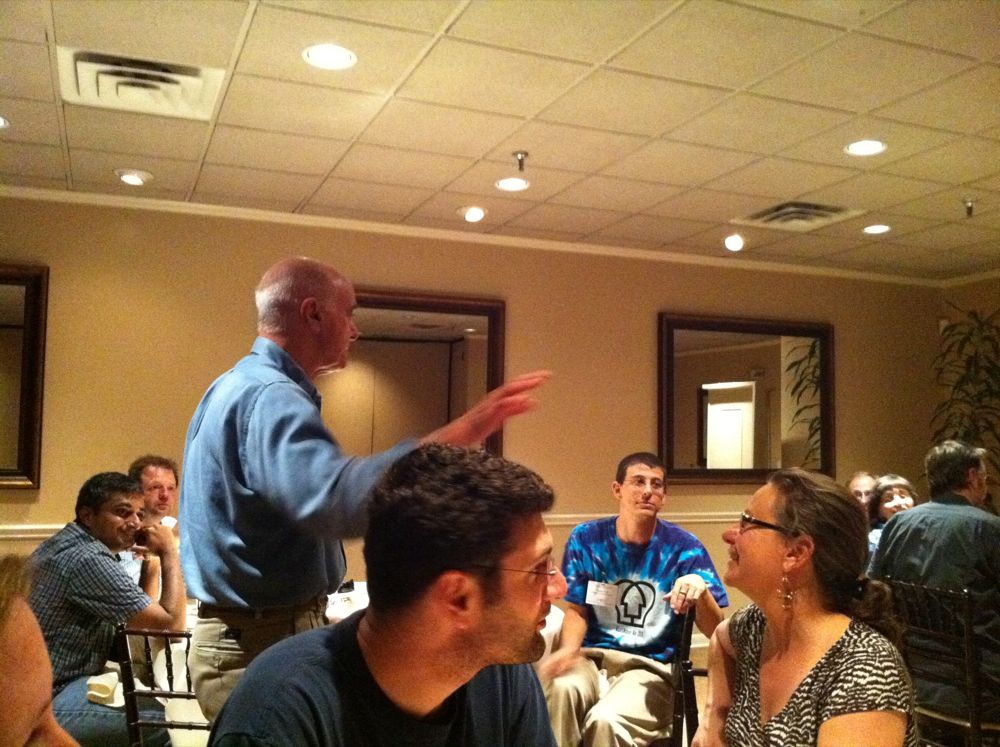
Then headed to a dinner I hosted for Sloan Funded researchers working on microbiology of the built environment. Again to the Shoreline Grill (I did not realize this is where we were going to have the big dinner when I had gone there a few days before)
- A bit early for my #microBEnet Dinner – #ILikeAustin twitpic.com/59b8ru twitpic.com/59b8sf twitpic.com/59b8s1
Then drinks and people started to show up
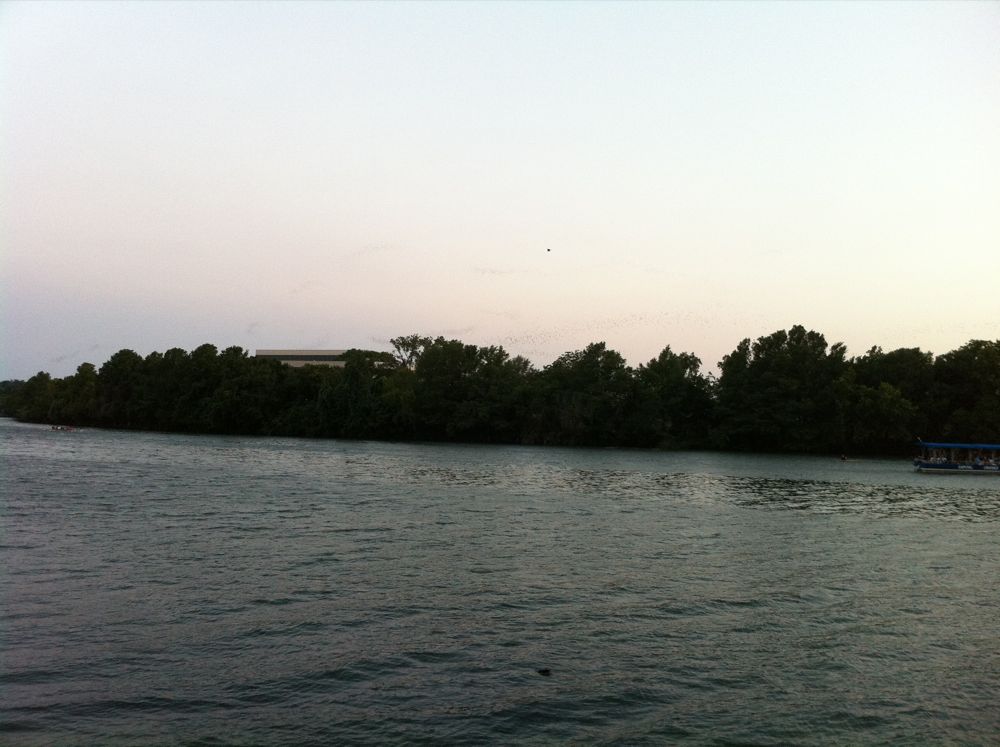
Then dinner with a mini break in the middle to see the bats which fly out from under this bridge nearby.
Then back to dinner and dessert:
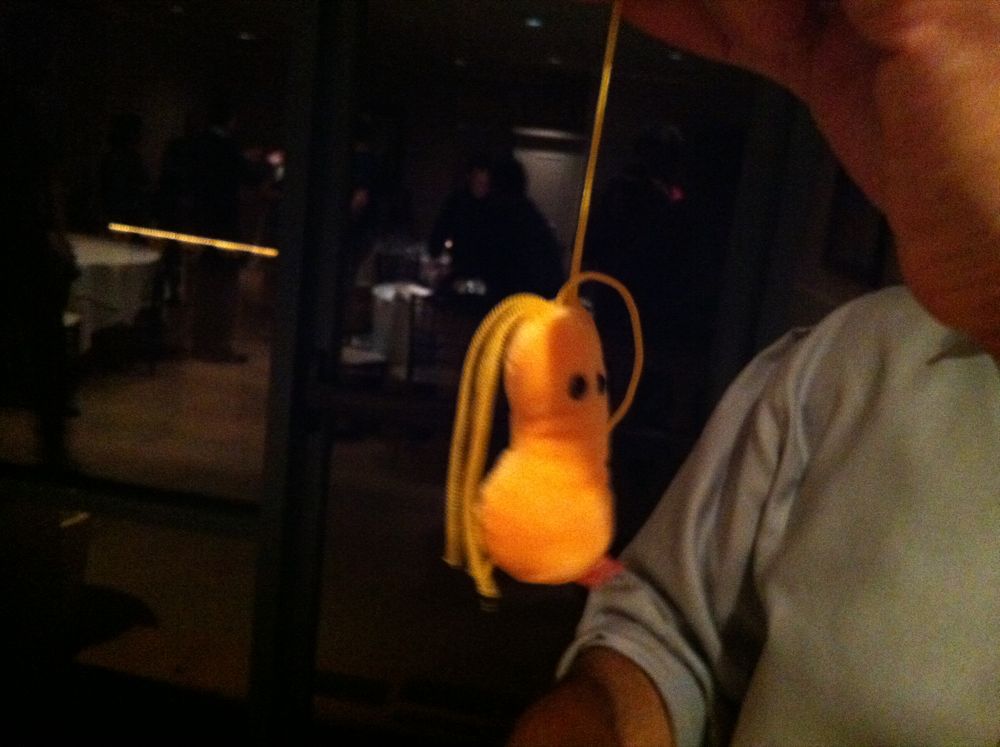
- Ooh – gmicroBEnet – giant microbes in the built environment twitpic.com/59cipg
- There goes @hyphaltip describing mobedac.org #microBEnet twitpic.com/59cjff
- Best question of the day “So what about the viruses” #microBEnet – don’t ignore the viruses
More dinner pics
Then to drinks at the Four Seasons and eventually to sleep:
- Cool – the Four Seasons in Austin has a cowboy boot vending machine twitpic.com/59euel
- @Theitemyouwant Not a real vending machine — just looks like one
- Well one of our dinner guests picked up Helicobacter pylori tonight #microBEnet #IndoorAir2011 twitpic.com/59f0t9
- I know this is Texas but the “small” latte at Austin airport is the size of my head – ps bye #IndoorAir2011 twitpic.com/59lyvw
At the airport I bumped into William Gunn from Mendeley:
- Saw @mrgunn at Austin Airport – discussed @mendeley_com and @David_Dobbs twitpic.com/59muov
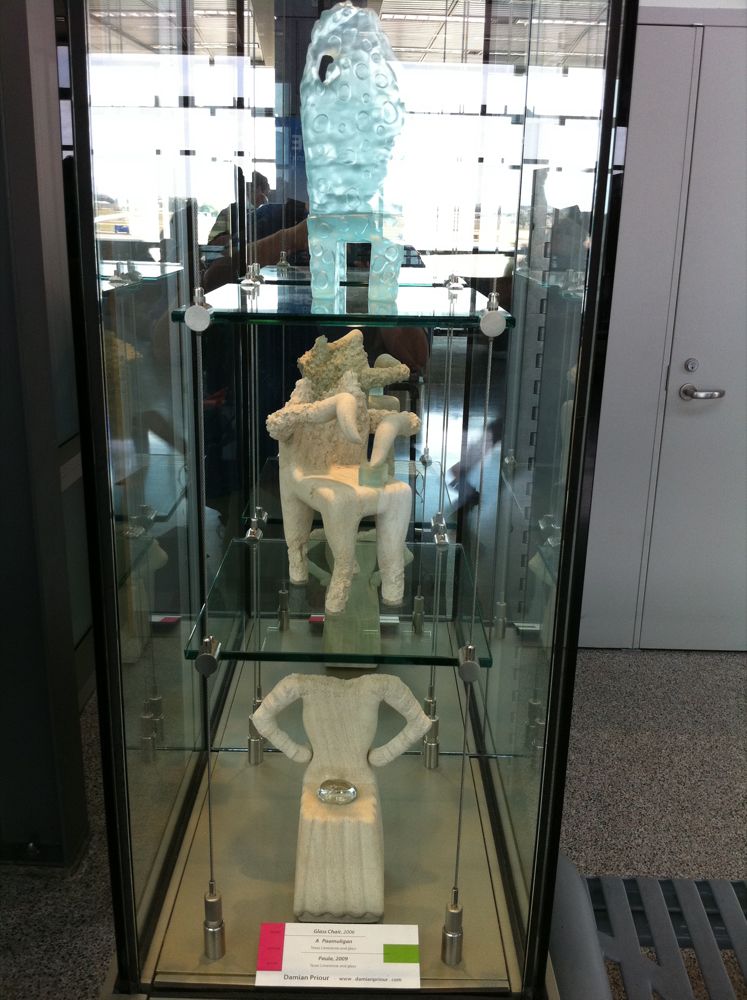
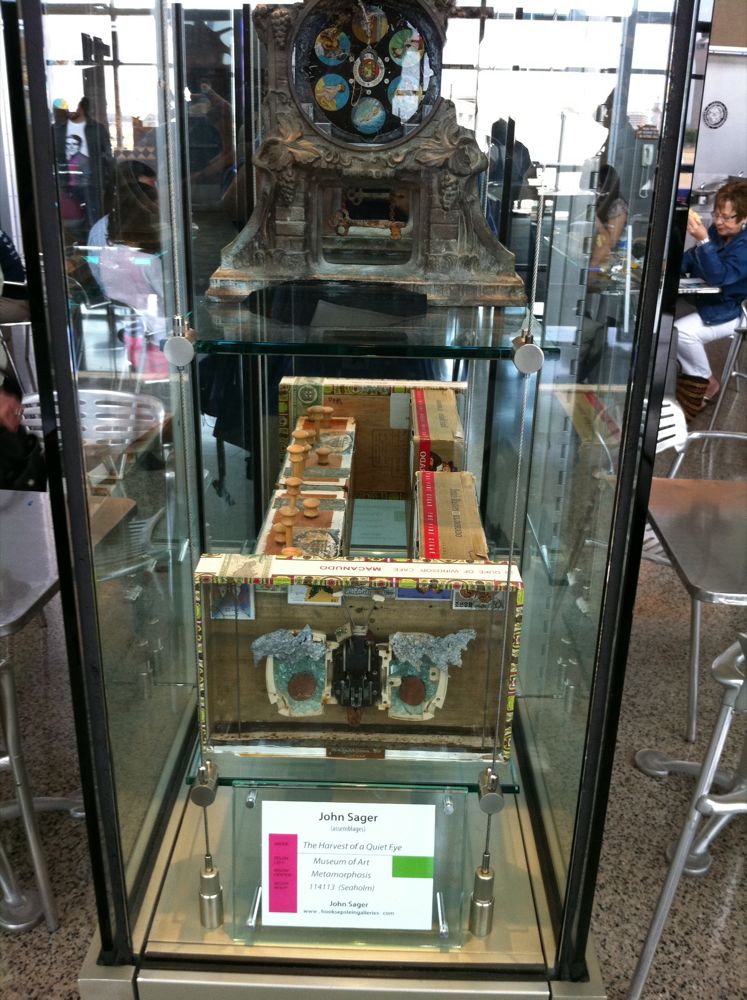
- Art at Austin Airport twitpic.com/59myl0 twitpic.com/59my2u twitpic.com/59mykg twitpic.com/59myx3 twitpic.com/59mzct
I made a few last posts:
- Austin -> Denver -> Sacramento – loved Austin but looking forward to home
- “Flock” of bats last night in Austin TX and people watching them #IndoorAir2011 twitpic.com/59muln twitpic.com/59muqt twitpic.com/59n5wg
- Bats in Austin youtube.com/watch?v=nEH0UD…
And headed home
To where I was greeted by my family and my cats:
- I missed you too Annapurna – good to be back in #DavisCa twitvid.com/JKUTC twitpic.com/59s7d0
Then I posted some final links:
- Video of bats in Austin TX #IndoorAir2011 twitvid.com/ZFDHW
- Biogeography of molds in homes in the US #ERMI; relevant to #IndoorAir2011; #Standards http://ff.im/-Fvmmn
- Photosynth panorama from my room in Austin, TX during trip for #IndoorAir2011 http://twitpic.com/5a53nt
- Quick update (pics, twitter feed) on #IndoorAir2011 in Austin, TX #microBEnet http://ff.im/-FvB9O
Some quick notes on #Synbio5: Synthetic Biology 5.0 at Stanford
1. Got invited by Natalie Kuldell in April to participate in an education workshop for the meeting. Eventually said yes, but only after deciding to not go to the Earth Microbiome Meeting in Beijing. I said yes in part b/c it was close by home but also b/c of the people Natalie invited to be on the panel. She wrote in the invitation email:
Other panelists who have confirmed their participation in this session are from Understanding Science/Understanding Evolution (Juday Scotchmoor), Nature Education (Ilona Miko), Science for Citizens (Darlene Cavalier), GenSpace (Ellen Jorgenson), and Hong Kong University of Science and Technology (King Chow).
And well, of the ones I knew on the list, they all were great.
2. Had a conference call (very brief) in June to discuss the session.
3. Headed out to Stanford very late Tuesday night – and thus missed the Slam session that night. I got to my hotel at about 1:30 AM.
4. I woke up early enough to hop on my bike and ride on over to the meeting. I was a PhD student at Stanford and had brought my bike in the hopes of going for some rides around town. I took some pics on the way in:
Got to the meeting and of course posted a few tweets
- RT @chofski: Follow coverage of Synthetic Biology 5.0 conference using the hashtag #synbio5
- RT @chofski: Apparently there is a live stream of SB5.0 over the Internet. Maybe check out the home page if you’re interested? #synbio5
- phylogenomics: Just got to #synbio5 at Stanford on my bike from my hotelhttp://t.co/9vhhN8t http://t.co/8FX6PAD
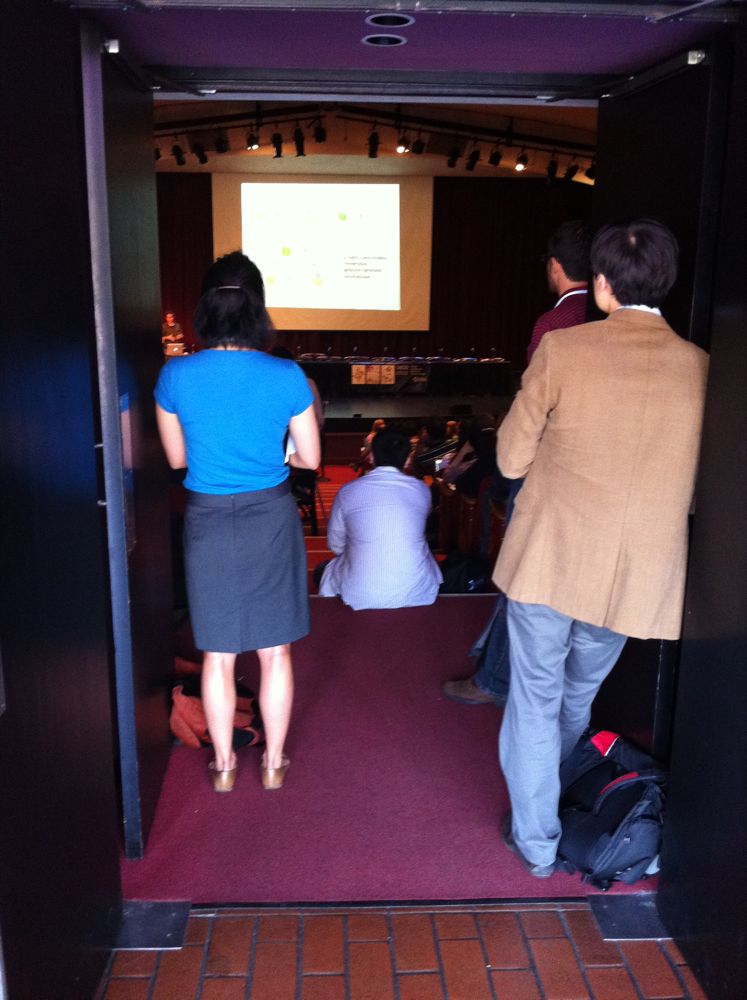
5. Then went in to the session. I went up to the front and said hello to Eric Lander and talked to him about my recent PhD student Amber Hartman who has taken a job in the White House Office of Science and Technology Policy. I then said hello to some of the others in the session and took a seat in the front row and started tweeting and taking pictures.
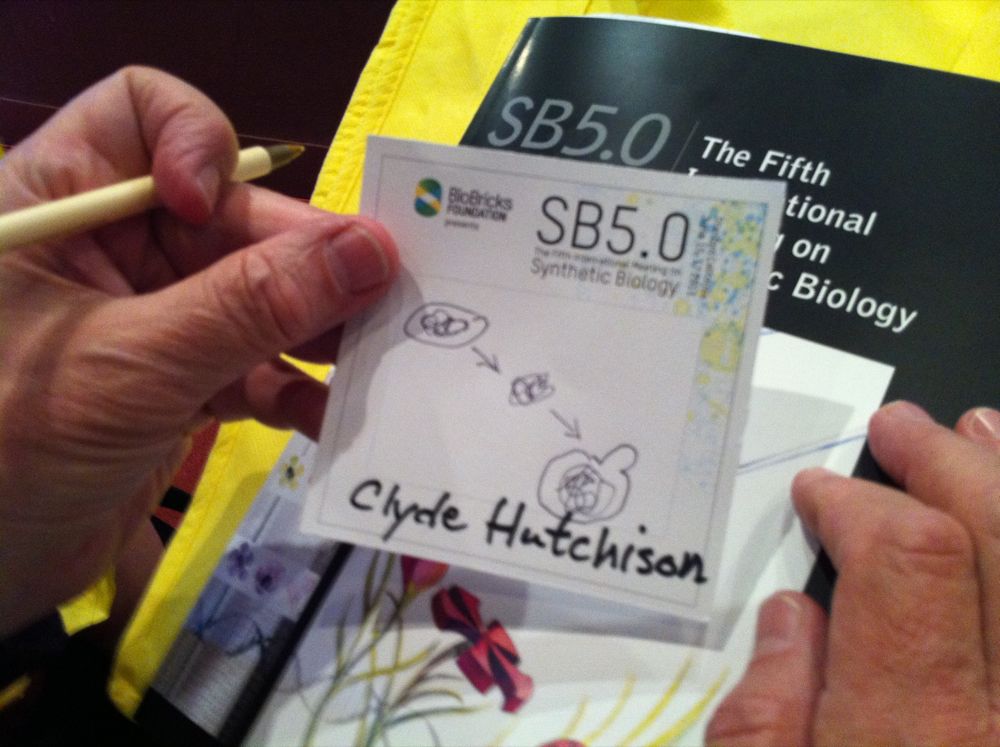
- phylogenomics: Drew Endy encouraging crowd to draw some pictures on their ID badges – here is Clyde Hutchison’s effort #synbio5 http://t.co/PfnADE9
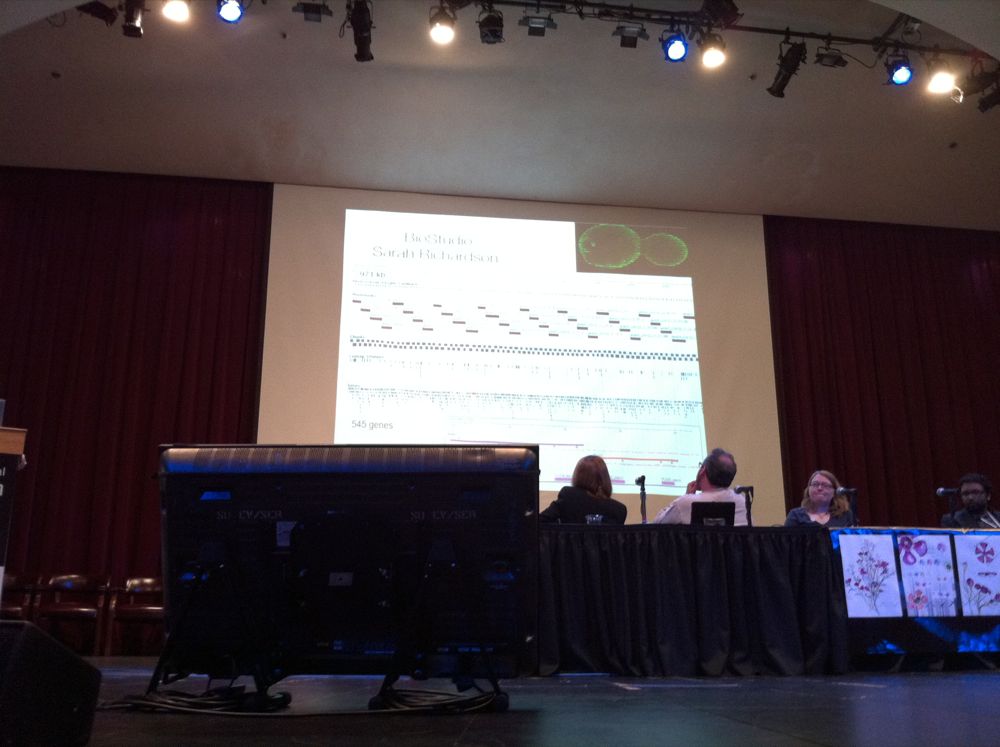
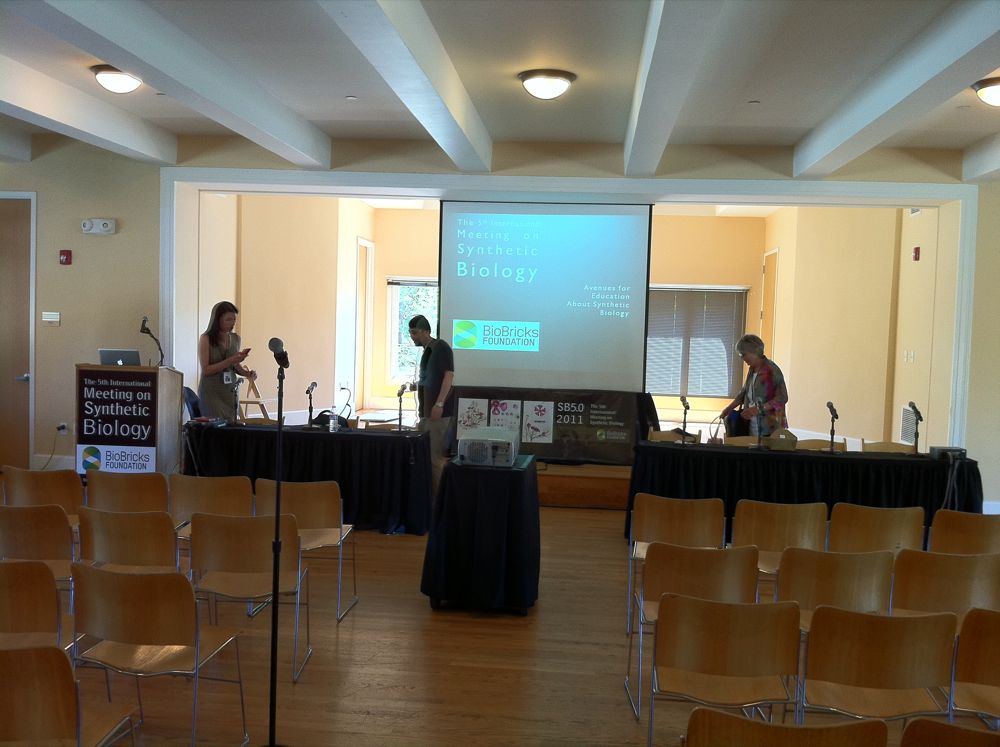
- phylogenomics: Arrived at #synbio5 – Drew Endy opening it all uphttp://t.co/o0IirDC http://t.co/jul8xLY
- phylogenomics: Saw Eric Lander – Ham Smith – Clyde Hutchison – Adam Arkin – Pam Silver all up front #synbio5 http://t.co/WpRmwHs
- phylogenomics: Endy refs quote of Eric Lander’s from after human genome proj: “Genome – bought the book – hard to read” twitpic.com/5bxgb7 #synbio5
- phylogenomics: John Glass: he is very proud of being involved in making 1st synthetic genome – if he were a goat he would infect himself w/ it #synbio5
- phylogenomics: Lander asks “What are the ret challenges of synthetic biology” – need a list like Hilbert’s math challenges to shape field” #synbio5
- phylogenomics: John Glass discussing history of synthetic genomics #synbio5and why they started working on mycoplasmas http://t.co/aVuNino
- phylogenomics: Lots of the people in this session at #synbio5 make spoof music videos http://t.co/uYE5WuP
- phylogenomics: RT @drtomellis: #synbio5 First shout out for Gibson Assembly for SB5.0. There will be many more this week. http://t.co/AgCSJnz
- phylogenomics: Pam Silver says big challenge of synthetic biology is to make it open to all #synbio5 – need to tolerate failure http://t.co/mKvX1m6
- phylogenomics: Lander refs Botstein comment on genome – like a book in foreign language – proof of understanding =writing a book in that language #synbio5
- phylogenomics: RT @Erika_Check: P Silver: syn bio needs to have “more of a tolerance for failure” than traditionally exists in other disciplines #synbio5
- phylogenomics: RT @drkahaynes: Loving Drew Endy’s earlier quote ‘Can write DNA, but not much to say.’ #synbio5
- phylogenomics: Maitreya Dunham suggests need to carry out horizontal transfer of genes on global scale to test all functions #synbio5 #metagenomics
- phylogenomics: Love how at #synbio5 Drew Endy is delivering panel ??s by walking index cards to Eric Lander http://t.co/1DjiWIQ http://t.co/bZePTBW
- phylogenomics: RT @peccoud: RT @synthaes: how do we keep synthetic genomics open source? vital – jef boeke #synbio5 So many aspects: data, software, sequences
- phylogenomics: Love how speaker at #synbio5 trying to push for power of synbiology and Eric Lander keeps saying “The genetics told us that” #gogenetics
- phylogenomics: Eric Lander is one of the best panel moderators I have ever seen – except maybe Robert Krulwich – #synbio5 – great job pushing discussion
- drkahaynes: ITA He’s great RT @phylogenomics: Eric Lander is one of the best panel moderators I have ever seen #synbio5
- phylogenomics: Pam Silver says that the virome is fascinating and needs more looking into #synbio5
- phylogenomics: Lander has just gone through effective population size Vs. Selective coefficients #math-at-9am #synbio5
- phylogenomics: RT @peccoud: #synbio5 John Glass, we have no idea how to design a genome? Would studying evolution help? Not sure.
- phylogenomics: The synthetic biology express – Drew Endy hand delivering questions to panel #synbio5 http://t.co/soIpd3c
- phylogenomics: Lander fo abstracts for future science – some awesome ones – Pam Silver says “photosynthetic humans developed for travel to mars” #synbio5
- phylogenomics: Alica Jackson from DARPA announcing DARPA is getting into synthetic biology in a big big big way w/ “Living Foundries Program” #synbio5
And then back in to the next session and more tweeting:
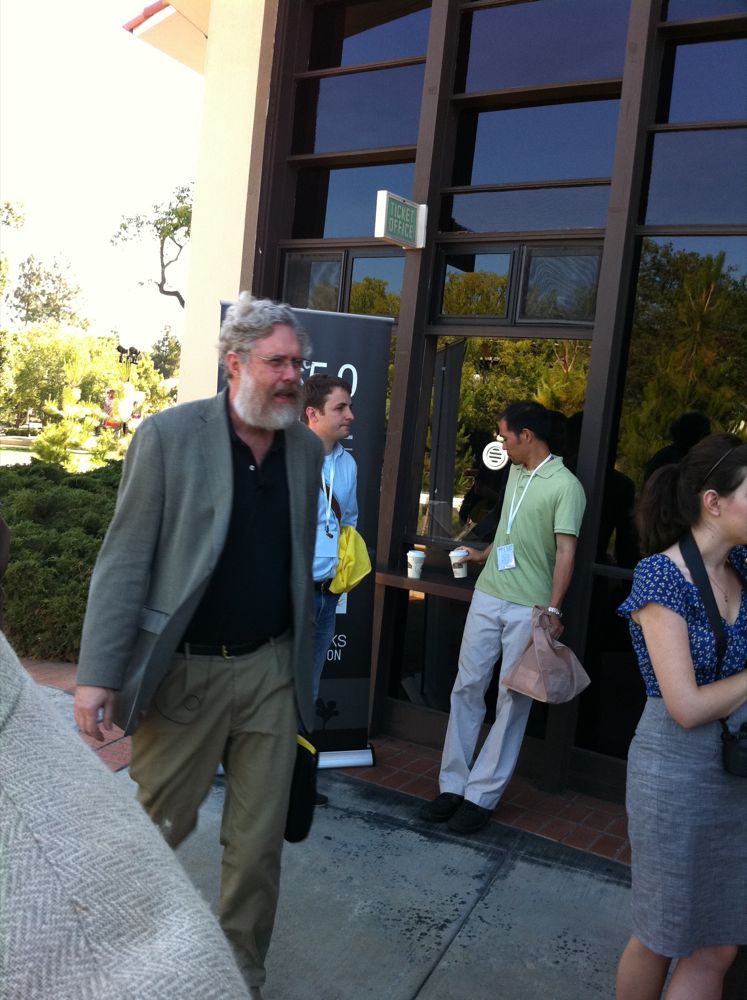
- phylogenomics: A RockStar of science George Church has arrived #synbio5http://t.co/ojGBgbo
- phylogenomics: George Church says this is his conflict of interest slide #synbio5http://t.co/pVSkeKg
- phylogenomics: George Church lists 35 next gen sequencing companies and says “they are all my favorite so I am not going to pick one to win” #synbio5
- phylogenomics: George Church discussing making antibody & antigen libraries from individual people #synbio5 – is there anything he doesn’t do? #synbio5
- phylogenomics: RT @Erika_Check: No funding details avail on DARPA Living Foundries prog; more may be released at “industry day” in DC area on June 28#synbio5
- phylogenomics: RT @rob_carlson: #synbio5 Alicia Jsckson announces DARPA Living Foundries Program “custom, distributed, on demand manufacturing”. Here comes the #bioeconomy.
- phylogenomics: Imagine something important for sequencing or synthetic biology: George Church almost certainly does it #synbio5
- phylogenomics: So many more tweeters at #synbio5 than at most meetings I go to – very interesting following stream – wish more meetings were like this
- phylogenomics: George Church creating an incredible diversity of synthetic sensors to detect all sorts of conditions #synbio5
- phylogenomics: Church: using caDNAno (see http://t.co/yFM24Qq) with aptamer and antibody based logic systems in leukemia therapy #synbio5
- phylogenomics: Church thinks Timothy Ray Brown leukemia Treatment will be landmark b/c it cured leukemia and made HIV resistant #synbio5
- phylogenomics: Church using TAL effectors as designer gene regulators – see Nature Biotech Zhang et al 2011 #synbio5
- phylogenomics: Church – working with Zhang and UCSD on sequencing hiPS lines from multiple labs #synbio5
- phylogenomics: Church thinks the ultimate is going to be full in situ characterization methods to study cancer- sounds like metagenomics to me #synbio5
- phylogenomics: Next gen reading and writing of omes is what Church is about#synbio5
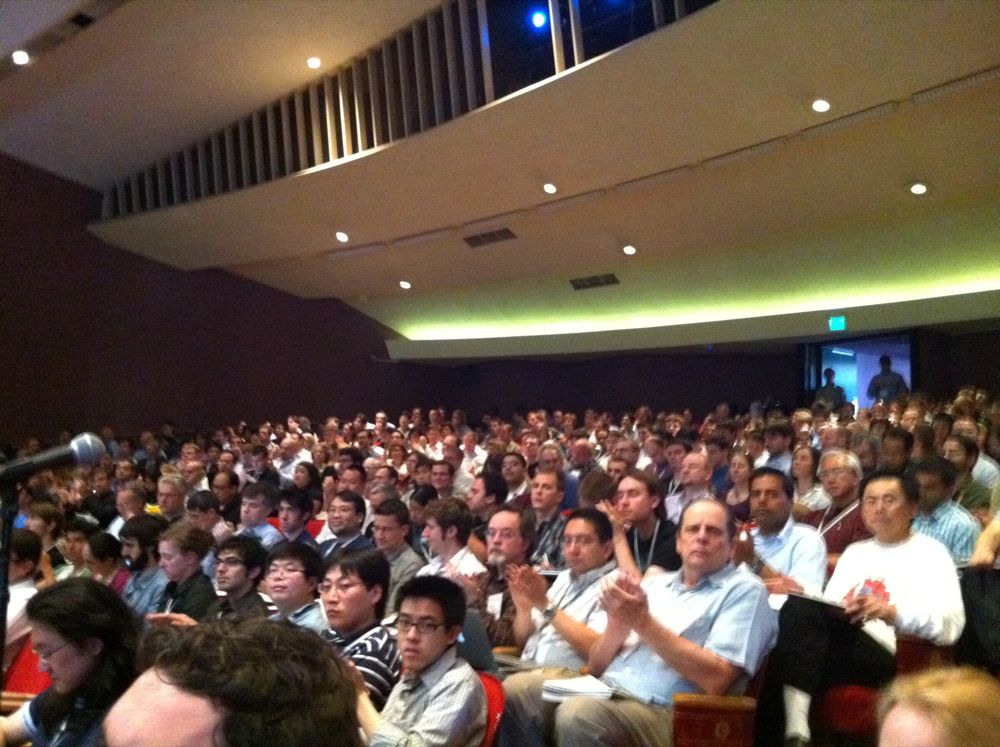
- phylogenomics: Crowd is packed here for #synbio5 http://t.co/iSd1ig6http://t.co/sD5Vxrh
- phylogenomics: Church wants to do fluorescent in situ RNA sequencing #synbio5– note he says this was original goal of his development of next gen methods
- phylogenomics: Now up Alice Ting from MIT discussing technologies for detecting and analyzing proteins in living cells #synbio5
- phylogenomics: Ting: there is a need for new protein labeling methods especially ones that add chemicals to specific amino acids of proteins #synbio5
- phylogenomics: Ting: developed probe incorporation mediated by enzymes method #synbio5
- phylogenomics: I’m not going to be able to keep up w/ Ting’s talk at #synbio5 so suggest looking here http://t.co/HxJvn9w
- phylogenomics: RT @rob_carlson: #synbio5 Alice Ting: Oh, cool: computational design of ligase for connecting fluorophore to recombinant tag in vivo (ref JBC Fujiwara 2010?)
- phylogenomics: RT @leonidkruglyak: At least it’s live-tweeted RT @DrewEndy: Ting’s talk not webcast due to IP issues. 100% appropriate to hassle me.@biobricks #synbio5
- phylogenomics: Ting’s work is fascinating – but talk a bit too focused on tech details & not the big picture of what this could be used for #synbio5
- phylogenomics: Ting targeting enzymes to one cellular compartment that allow biotin attachment to proteins nearby that enzyme #synbio5
- phylogenomics: Ting’s method allows one to biotin label all proteins in particular regions of a cell and then can purify these and do Proteomics #synbio5
- phylogenomics: RT @rob_carlson: @DrewEndy @biobricks #synbio5 “Ting’s talk not webcast due to IP issues.” How is this not a public talk that would count as a disclosure?
- phylogenomics: Now up Trent Nothern who says he views DNA as a bunch of goo that regulates interesting small molecules #synbio5
- phylogenomics: Northern: developing high throughput and cheap methods for characterizing small molecules #synbio5
- phylogenomics: Trent Northen doing very good job describing methods behind his work on metabolite analysis #synbio5 – also has good methods slides
- phylogenomics: Northen: feeding organisms various stable isotope containing molecules and then can watch uptake and use of these with mass spec #Synbio5
- phylogenomics: Lesson from #synbio5 one can have all the toys in the world, but all that gets you is data; turning that to knowledge is difficult
- phylogenomics: RT @ericmjl: In mass spec, the ‘colors’ are isotopes. #synbio5
- phylogenomics: Northen describing his development of NIMS which basically allows one to get 2D plot of mass spec data from sample #synbio5
- phylogenomics: RT @Erika_Check: for those following #synbio5: my curtain raiser on the meeting: http://bit.ly/iGd4AQ
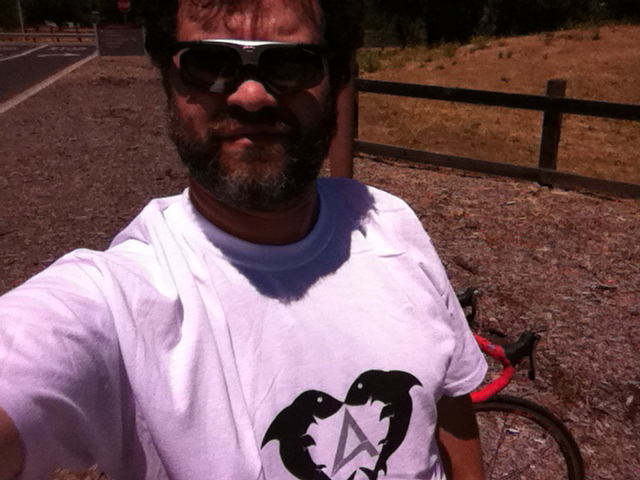
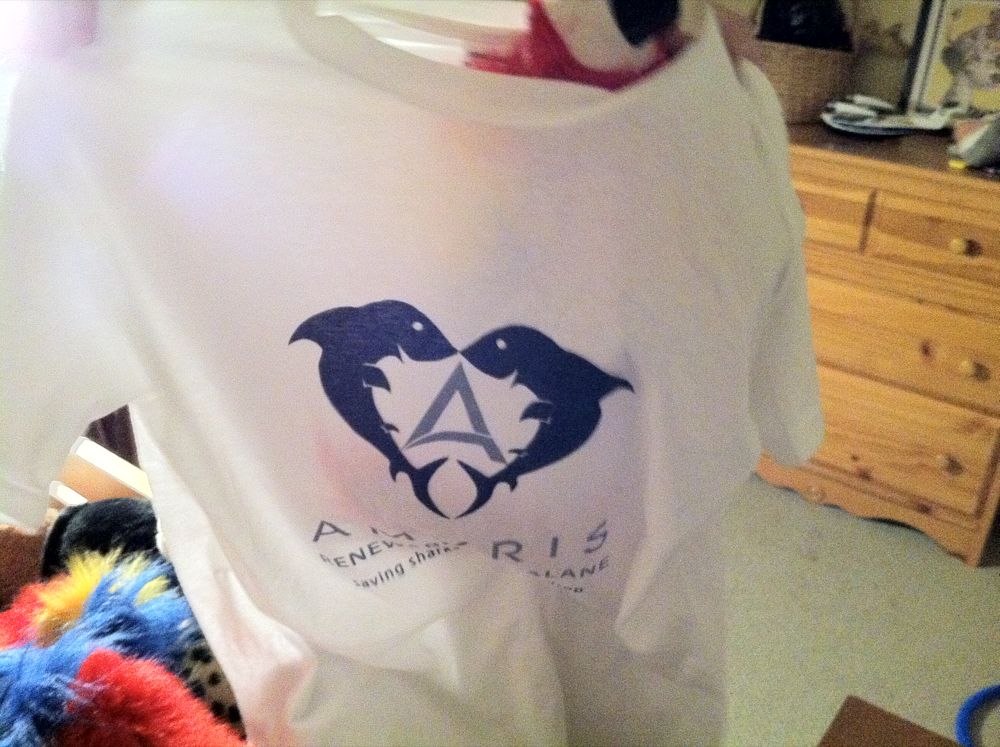
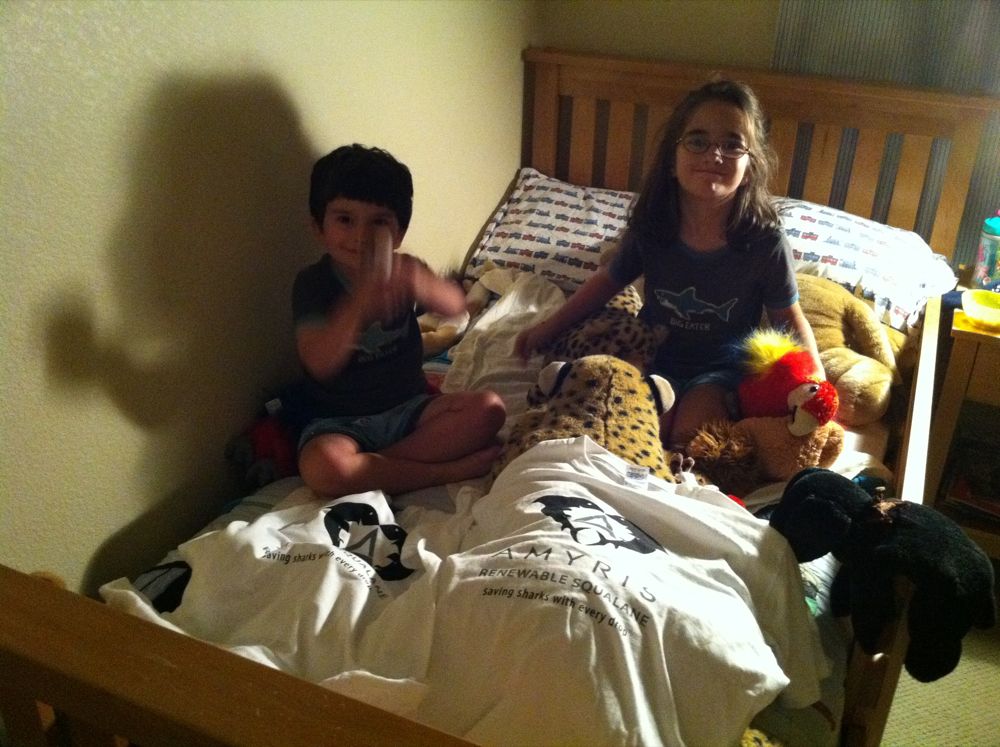
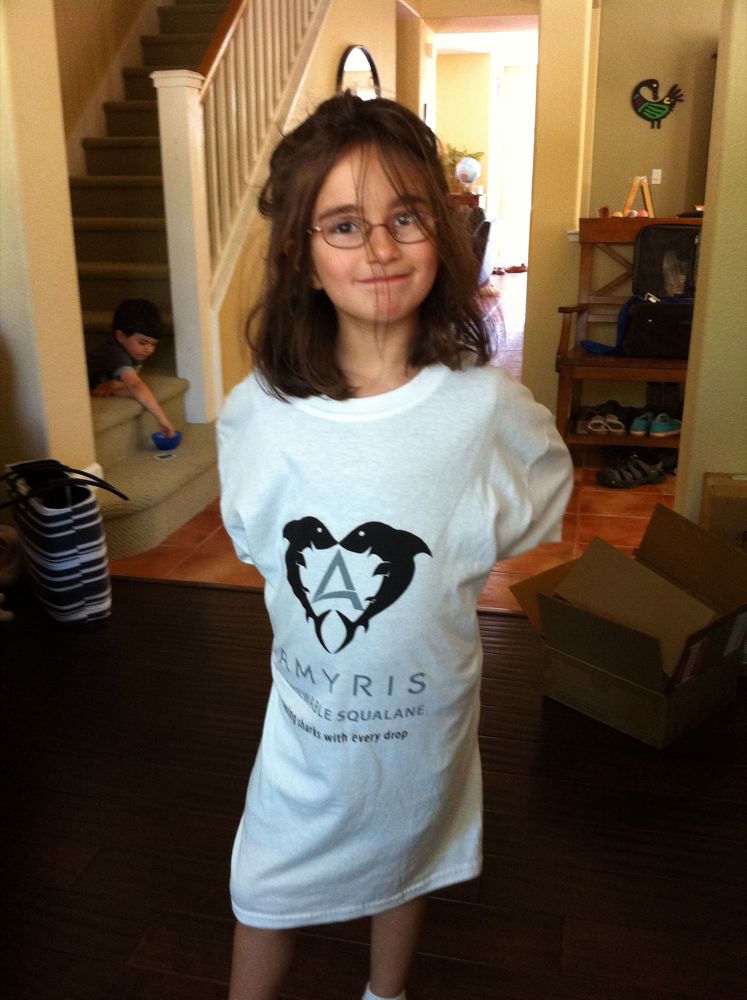
- phylogenomics: To skip out on part of #synbio5 for a bike ride I am wearing my schwag Amyris shirt http://t.co/092US3v http://t.co/7Rkscg8
- phylogenomics: RT @drtomellis: #synbio5 Growth Laws for bacteria talk is fantastic example of how a model-based talk can be pitched to a wide audience.
- phylogenomics: Pam Silver discussing carboxysomes in Cyanobacteria #synbio5says they are precursors of Chloroplast tho not true – modern cyanos are modern
- phylogenomics: Silver says cyanos require carboxysomes to grow and survive and wants to transfer carboxysomes to other taxa #synbio5
- phylogenomics: Silver using protein engineering and synthetic biology to try to get E. Coli to make hydrogen #synbio5
- phylogenomics: RT @rob_carlson: #synbio5 @pamsterdance shows hacked carbon fixing E coli
- phylogenomics: just discovered that speaker Pam Silver is on twitter :@pamsterdance h/t to @rob_Carlson #synbio5
- phylogenomics: Silver excited hydrogen production working better and better: says maybe “we will soon blow up my chairman’s lab next door” #synbio5
- phylogenomics: RT @bacteriality: @phylogenomics A functional carboxysome-like compartment won the best new part, natural 2010 iGEM: http://t.co/eyJqkwn#UMN #synbio5
- phylogenomics: Silver set up system where in mixed cultured growth of E. Coli depended on photosynthesis by a cyano #synbio5
- phylogenomics: Silver: lots of photosynthetic animals such as sea slug, Jellyfish, Jolly Green Giant (says size saying should have been small) #synbio5
- phylogenomics: Silver injected cyanos into zebrafish embryos and the cyanos do just fine #synbio5 though fish do not then grow on light alone
- phylogenomics: Speaker discussing MinE and MinD proteins in E. Coli … i always thought MinE should have been named MorK #synbio5 #geekhumor
- phylogenomics: RT @thisischristina: I propose that the remaining #synbio5sessions are all moderated by Eric Lander and take place at the pool.
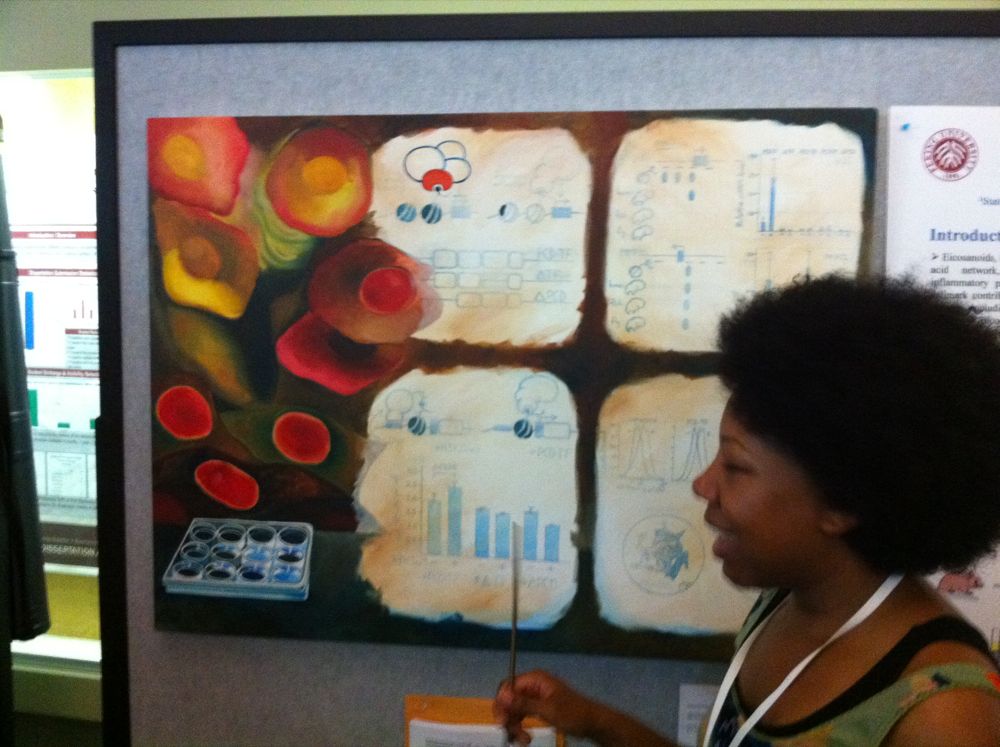
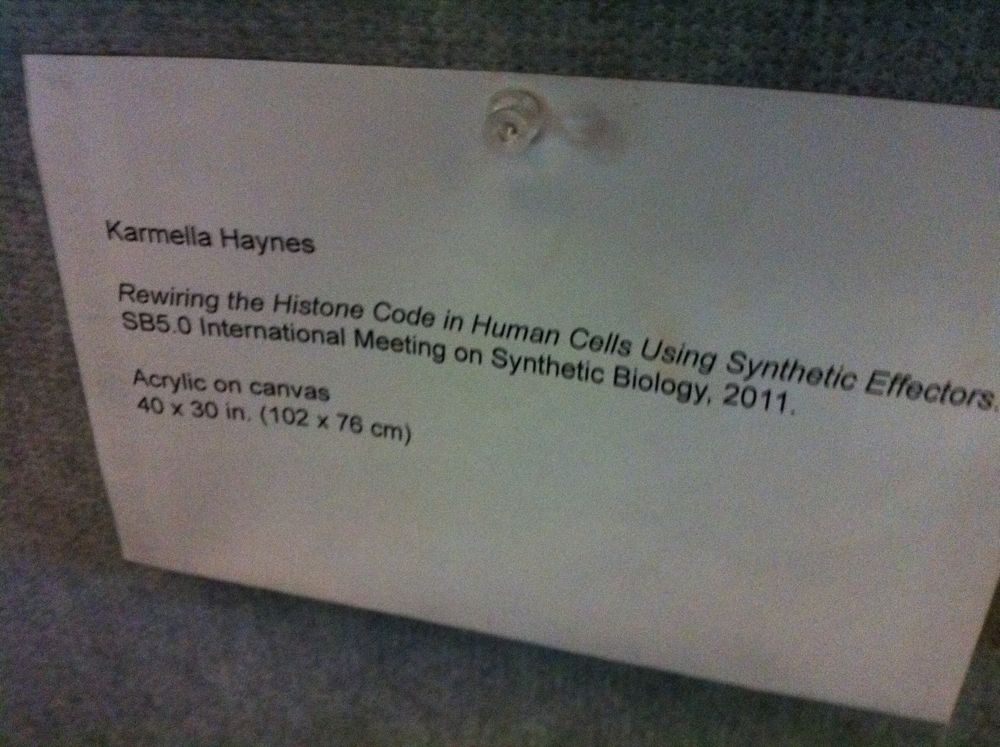
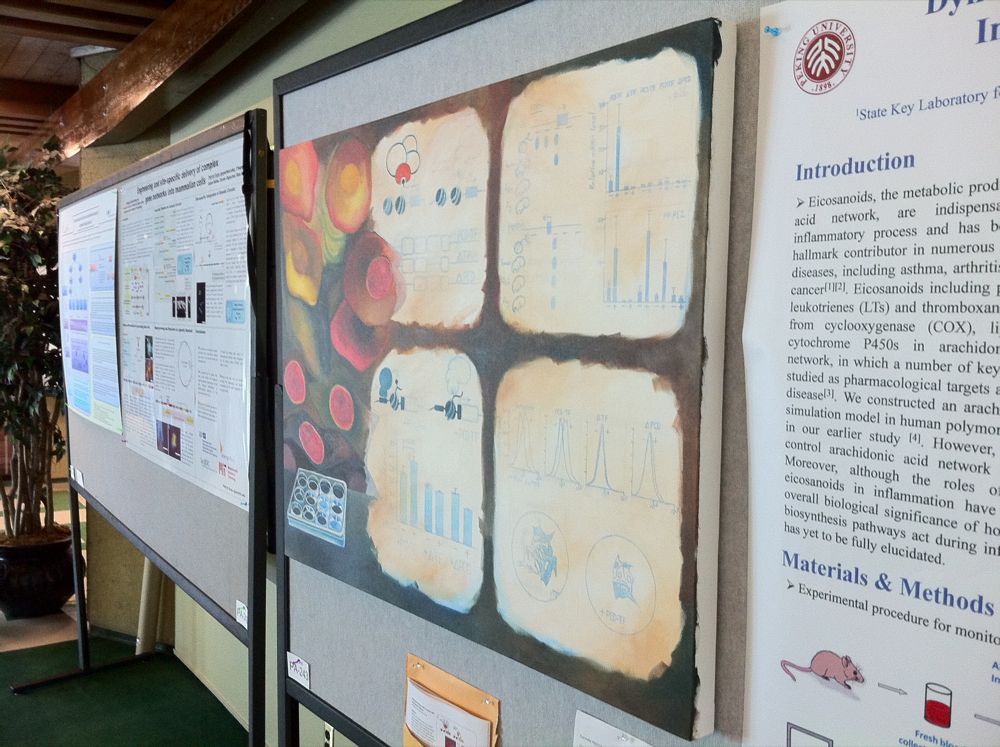
- phylogenomics: Ok this is brilliant #art-science – poster at #synbio5 Karmella Haynes #fb http://t.co/D5ubPP6 http://t.co/iwgzhqO
- phylogenomics: More art & science – hand painted poster at Synthetic Biology#synbio5 – by Karmella Haynes http://ff.im/-FT3Og
- phylogenomics: Thanks Westin in Palo Alto, the two false fire alarms at ~4 AM made my day; though one good thing:they did prove their alarms work #synbio5
- phylogenomics: More pics of hand painted poster from #synbio5 http://ff.im/-FUnFd
I then went to a talk or two and spent a bunch of time sitting outside talking to various people. I pretty much always like meeting and talking to people over going to talks in overheated conference rooms (note to Stanford – if you want to host meetings in June get some f*$&% air conditioning in your rooms). Also note – it may not be the best idea in the world to put out lunch boxes in the sun at 10:30 AM.
- phylogenomics: Overheard at #synbio5 “the gap between rockets and terraforming is enormous”
Eventually a group of us headed over to the side room where the Education session was going to be held:
- phylogenomics: Education session starting at #synbio5 …
- ASU_iGEM: Following @phylogenomics after discussion about open source science. Twitter can be more informative than pubmed! #synbio5
- phylogenomics: Learning about “The Network for Citizen Science Projects & Resources” http://t.co/K7ikebf #synbio5
- phylogenomics: Listening to @scicheer discussing recruiting people into science#synbio5 #cheerleaders #NFL #citizenscience
- phylogenomics: Learning about GenSpace NYC http://t.co/cnQEPk1 #synbio5#scienceoutreach
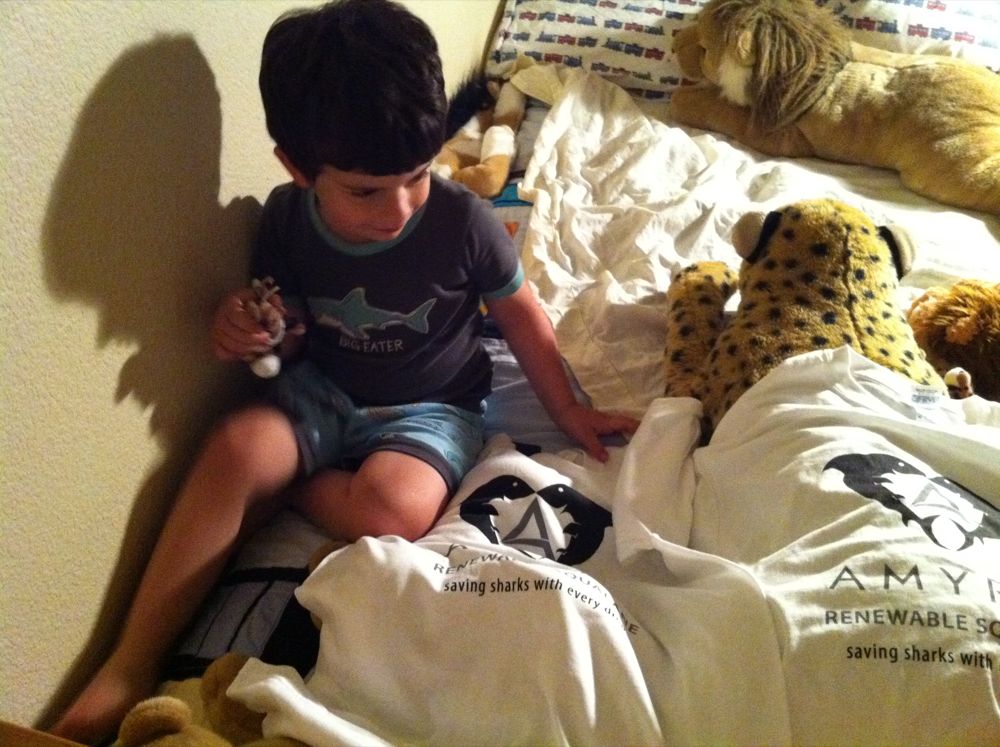
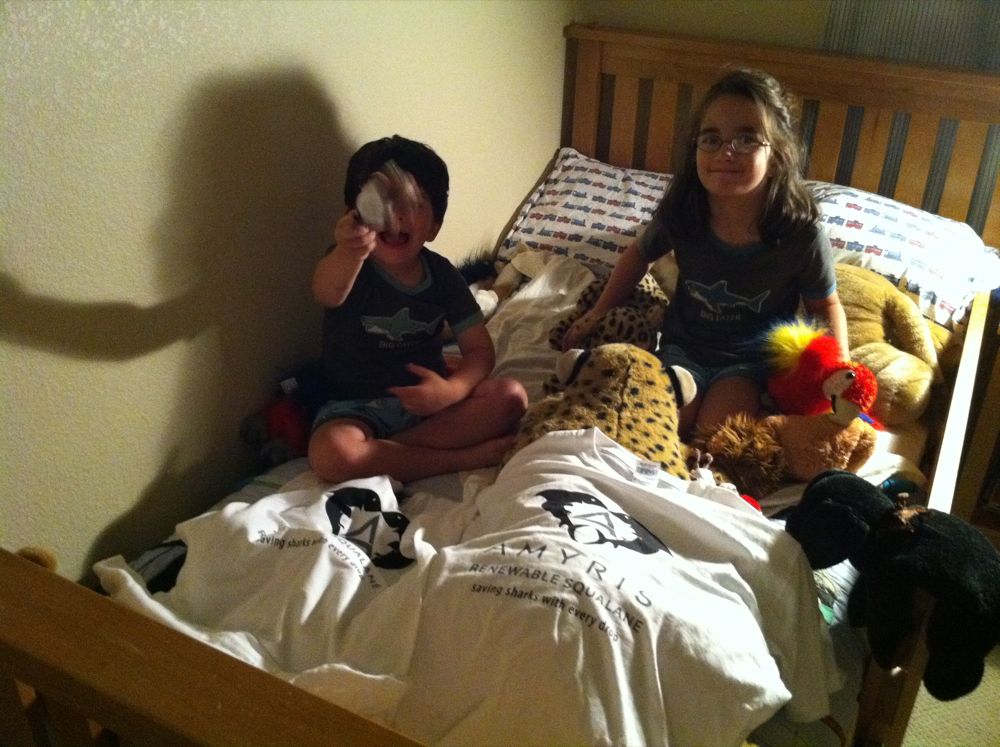
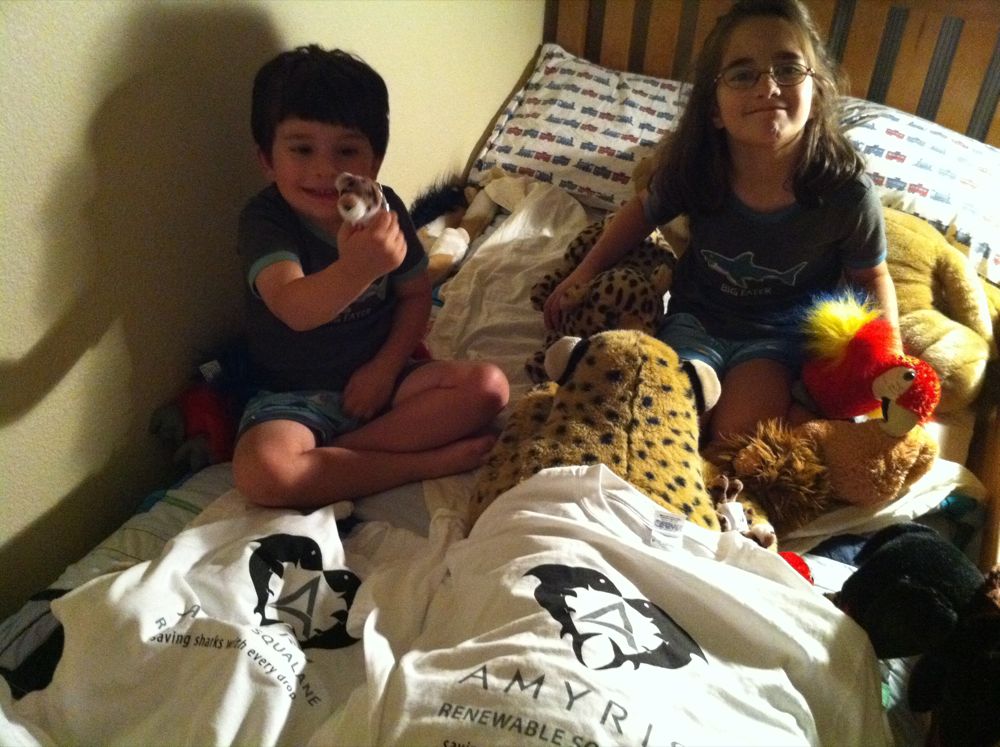
- phylogenomics: Schwag from #synbio5 very popular at home #Amyris #igemhttp://t.co/suZAzLX
Opening up one’s eyes to other fields (cross-posting from #microBEnet)
Cross-posting this: Opening up one’s eyes to other fields which I posted originally on the microBEnet blog.
I spend most of my time working on biology. I like to think I cover lots of breadth within biology and I probably do – microbes, evolution, ecology, human health, pathogens, symbioses, forensics, genomics, bioinformatics, and more. But nothing like really looking at other fields to realize how narrowly focused one is.
And that is what has happened to me since I took on the “microBEnet” project trying to foster communications and collaborations on microbiology of the built environment. I now pay much more attention to anything that might have a connection to “Building Science” in one way or another. Not only did I just go to an Indoor Air meeting, but I keep discovering more and more stuff right near home that I was not aware of before. For example – I just got sent this news link from Aaron Darling in my lab: UC Davis News & Information :: History of sciences in architecture subject of Mellon Foundation winner’s study. Previously, I would definitely not have been paying much attention to architecture and history of science. But now seeing other people at UC Davis working on the Built Environment just makes me think about how I can build connections with them and talk to them about buildings (and other built environments) and possibly, one day, about the microbes that are in them.
Which brings me to another story. At the Indoor Air meeting earlier in the week in Austin, Texas, when heading to the conference center I got into a conversation with someone looking for the registration desk. After showing her where to go she asked where I was from and I said “UC Davis.” And it turns out – she was too. Turns out, this was Deborah Bennett, who I had heard mentioned the evening before but had not heard the whole name. I just knew someone else at the meeting was from Davis. Deborah is at the UC Davis School of Public Health and works on some really interesting stuff. And since UC Davis is so big (some 2500 or so faculty I think) – it is not always easy or simple to find people even if you might have a connection to them.
So anyway, just a little commentary on how I find it fascinating to see for the first what was in a way right before my eyes.