Eisen Lab Blog

Twisted Tree of Life Award #16: Nature & Authors doing taxonomic alchemy converting an archaeon to a bacterium

Well, this is one of the bigger screw ups in terms of evolution I have seen at a major journal in a while.  See the following paper in Nature: The catalytic mechanism for aerobic formation of methane by bacteria : Nature. The paper discusses some functions of “the ocean-dwelling bacterium Nitrosopumilus maritimus.” Some of what is reported in the paper is perhaps interesting (alas I do not have access).  But painfully, there is one big big big big mistake – you see Nitrosopumilus maritimus is not a bacterium.  It is an archaeon (see for example this paper on its genome).


I got pointed to this by Uri Gophna (in an email and in a comment on my blog)(all see this on Twitter)  Sure – some people debate the structure of the tree of life.  But I am pretty certain the authors here  (Siddhesh S. Kamat, Howard J. Williams, Lawrence J. Dangott, Mrinmoy Chakrabarti & Frank M. Raushel) are not trying to make a statement about monophyly of bacteria or just what archaea are.  They just made what seems to be a colossal screw up.  And Nature not only let them, but added to it with things like their “Editors Summary”:

Novel bacterial biosynthesis of methane
Aerobic marine organisms produce significant quantities of the potent greenhouse gas methane, much of it via the cleavage of the highly unreactive carbon–phosphorus bonds of alkylphosphonates. In this study the authors explore the mechanism of PhnJ, an unusual radical S-adenosyl-L-methionine (SAM) enzyme that appears to use a cysteine-based thiyl radical to help catalyse the conversion of the alkylphosphonate substrate to methane and ribose-1,2-cyclic phosphate-5-phosphate. This reaction, not previously encountered in biological chemistry, establishes a novel mechanism for cleaving carbon–phosphorus bonds to form methane and phosphate via a covalent thiophosphate intermediate.

And for this taxonomic alchemy (converting an archaeon to a bacterium) I am awarding them and Nature my coveted “Twisted Tree of Life Award #16″.

UPDATE 5/28 7AM

I love the ad that came up while I was writing this post and searching for some information.  I think Nature could use the services from this ad:

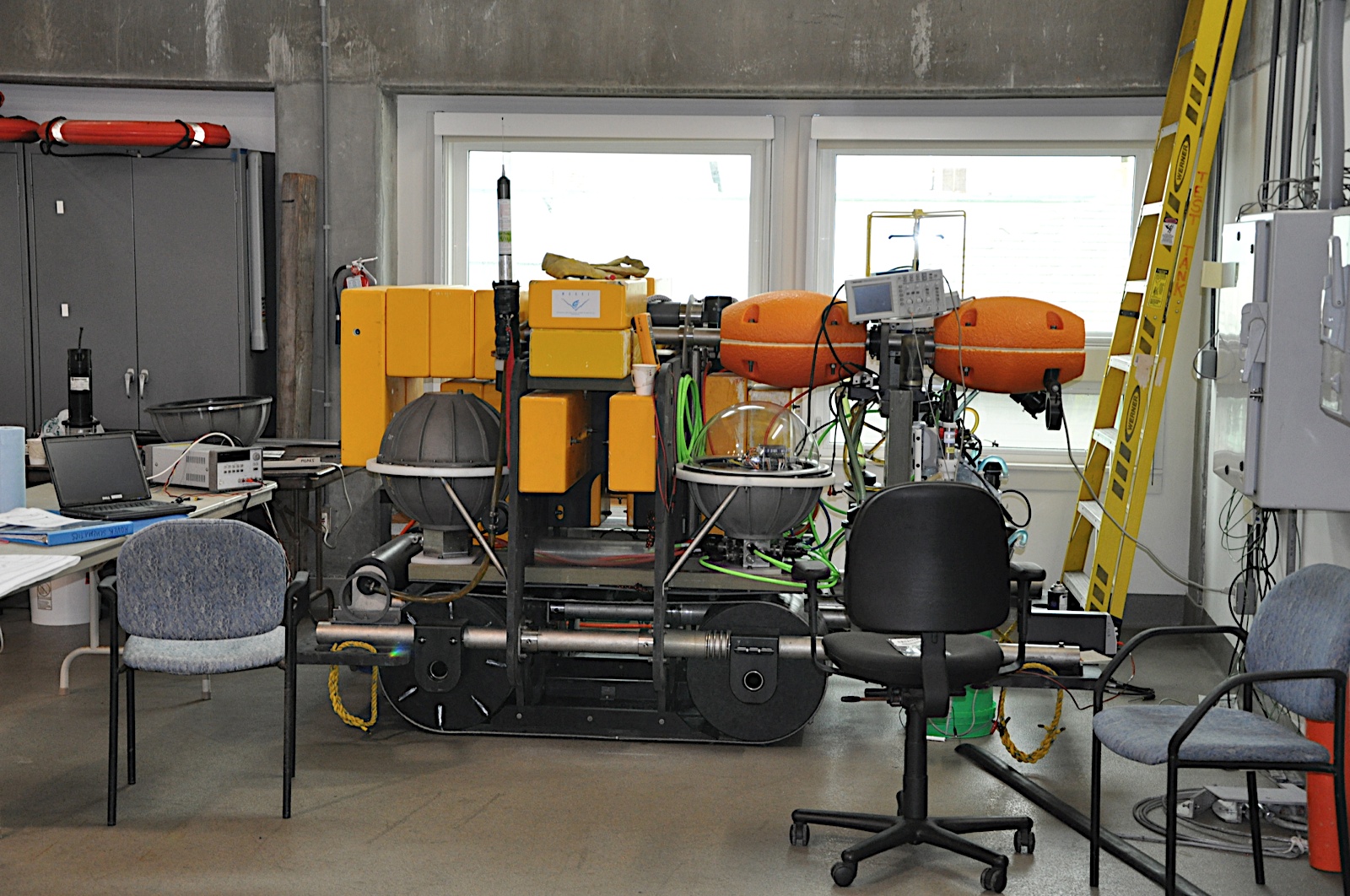
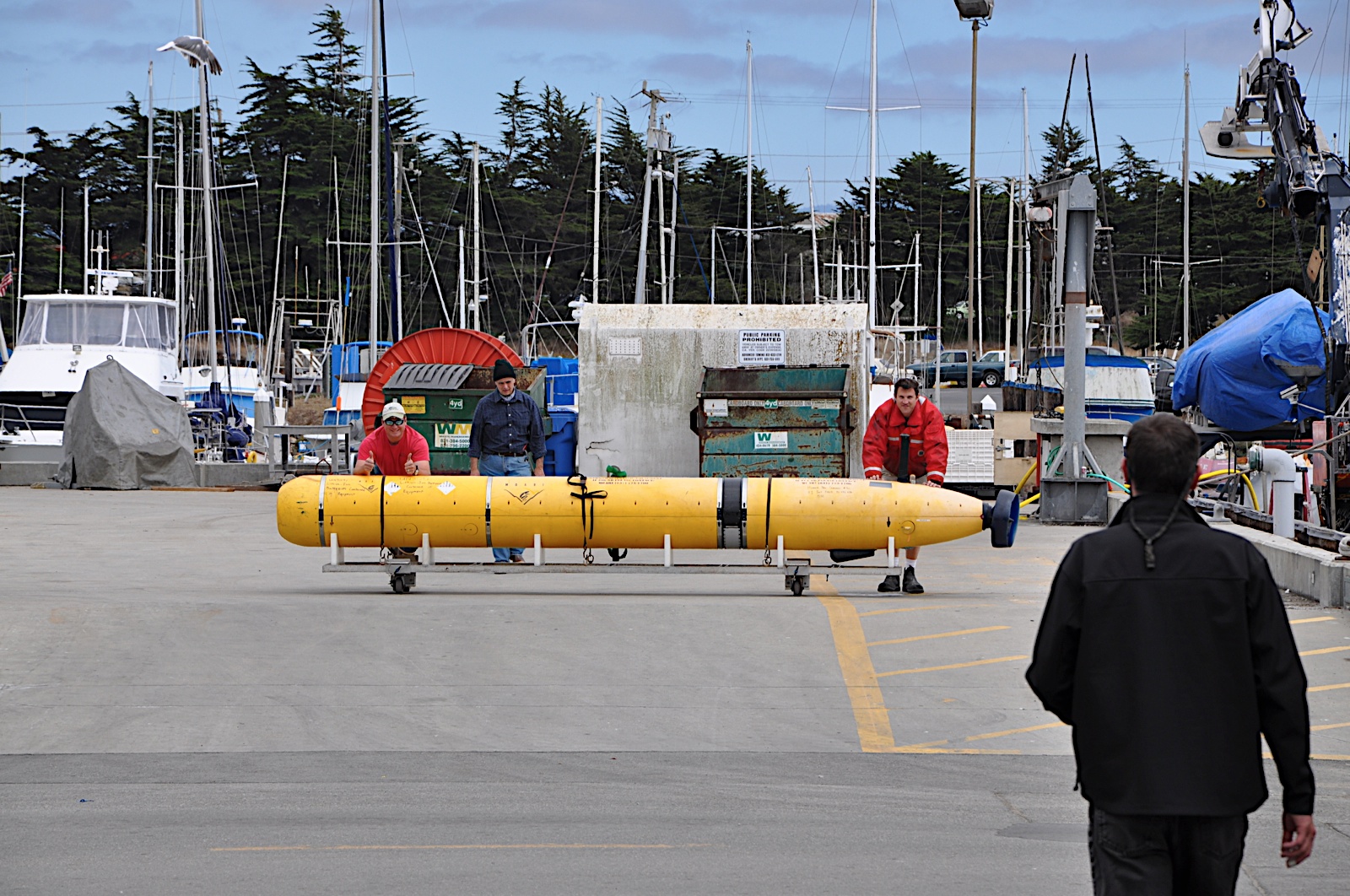
I so want a few 1000 of these: Mobile Robotic Laboratory from MBARI

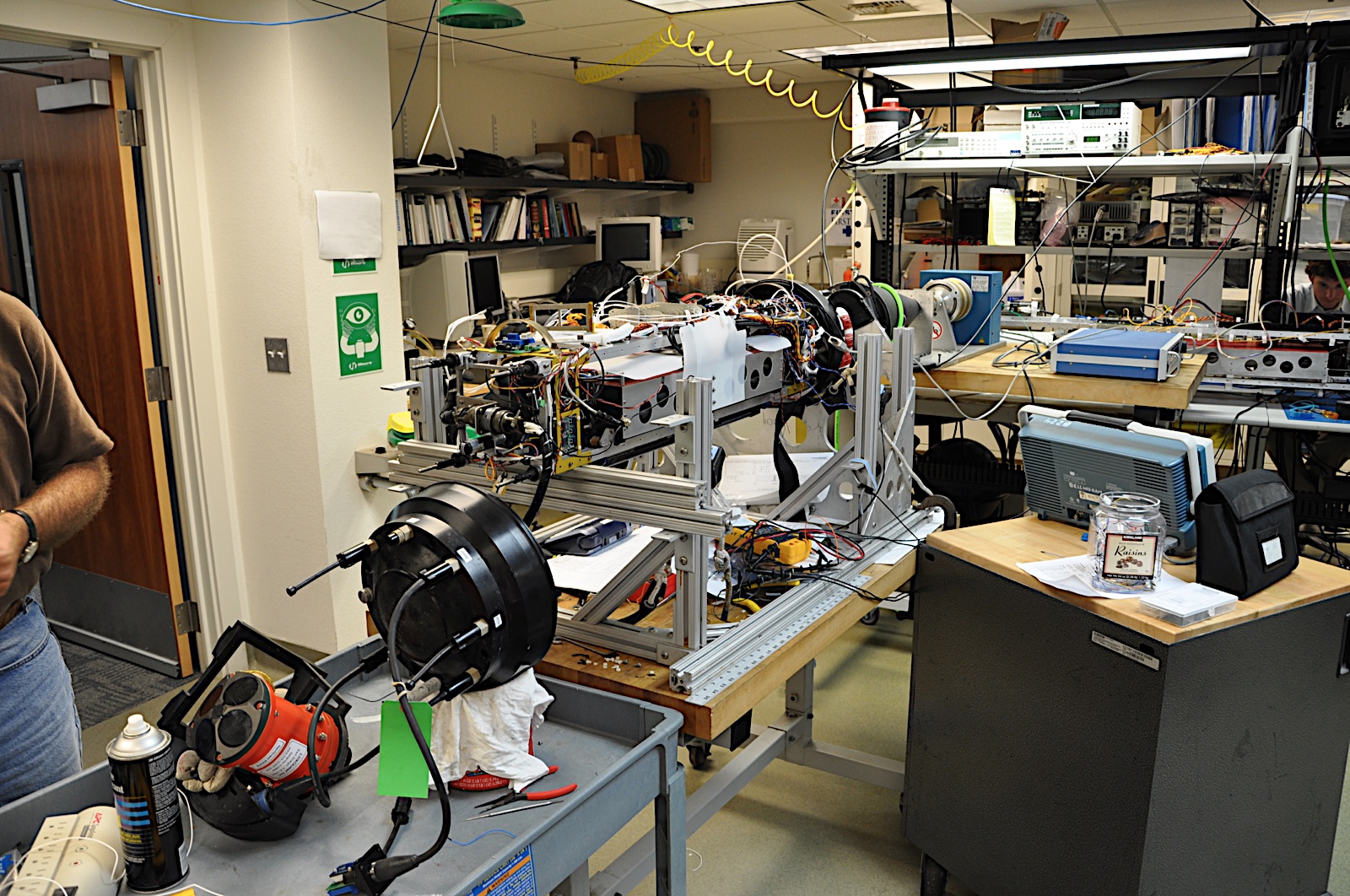
Thanks to Michael Ferrari for pointing me to this:: Mobile Robotic Laboratory Will Track Ocean Toxins – Popular Mechanics.  The article discusses some developments at MBARI for mobile sensor / sampler devices that could be used for various marine microbiology studies.  A few years ago I got a tour of MBARI from Alex Worden (see pics below) and got to see some of their toys but many of the developments in this article are new to me.  I can’t wait until it is possible to deploy a few hundred thousand of these and get massive amounts of data …

Phyloseminar June 27: Carl Woese’s grand view of life that just keeps getting grander” by Phil Hugenholtz June 27

Next phyloseminar (see http://phyloseminar.org for more information)

Next talk: Carl Woese’s grand view of life that just keeps getting grander"

Phil Hugenholtz (University of Queensland)

Most microorganisms cannot be grown in pure culture (or at least not
easily). This has been apparent for decades by comparing the number of
cells seen under a microscope to the fraction of those cells that will
grow into colony forming units (typically <1%). The objective
classification of cellular life by comparative rRNA analysis pioneered
by Carl Woese provided the first grand view of the tree of life and
also provided the reference framework upon which his friend and
colleague, Norman Pace, developed ways to directly survey microbial
communities via their rRNA sequences without the need to grow them.
This put our degree of ignorance of the microbial world into
perspective: dozens of major microbial lineages have emerged over the
last 20 years that lack even a single cultured representative. New
approaches, such as deep metagenomics and single cell genomics, are
now transforming the rRNA-based phylogenetic outlines of the tree of
life into a fully-fledged genome-based view of the tree. I will
present a recent snapshot overview of the genome tree of the bacterial
and archaeal domains and examples of functional insights in the
context of a more complete view of microbial evolution.

West Coast USA: 16:00 (04:00 PM) on Thursday, June 27
East Coast USA: 19:00 (07:00 PM) on Thursday, June 27
UK: 00:00 (12:00 AM) on Friday, June 28
France: 01:00 (01:00 AM) on Friday, June 28
Japan: 08:00 (08:00 AM) on Friday, June 28
New Zealand: 11:00 (11:00 AM) on Friday, June 28

ASM2013 – One of the best parts – meeting the "Young Ambassadors"

I attended the American Society for Microbiology (ASM) meeting in Denver last week.  It was a bit overwhelming as usual, with the 1000s of people there.  One surprise for me was an invitation to a after dinner party hosted by Nathan Wolfe and others from Metabiota.  I am not really a big fan of parties (as many who know me know) but this was small and even better it was mostly populated by the recipients of the ASM International Young Ambassador Award winners.  Wolfe was one of the keynote speakers at the ASM Meeting and I think he was hosting this party in part as a reception for the Young Ambassador’s.

For more on the winners see

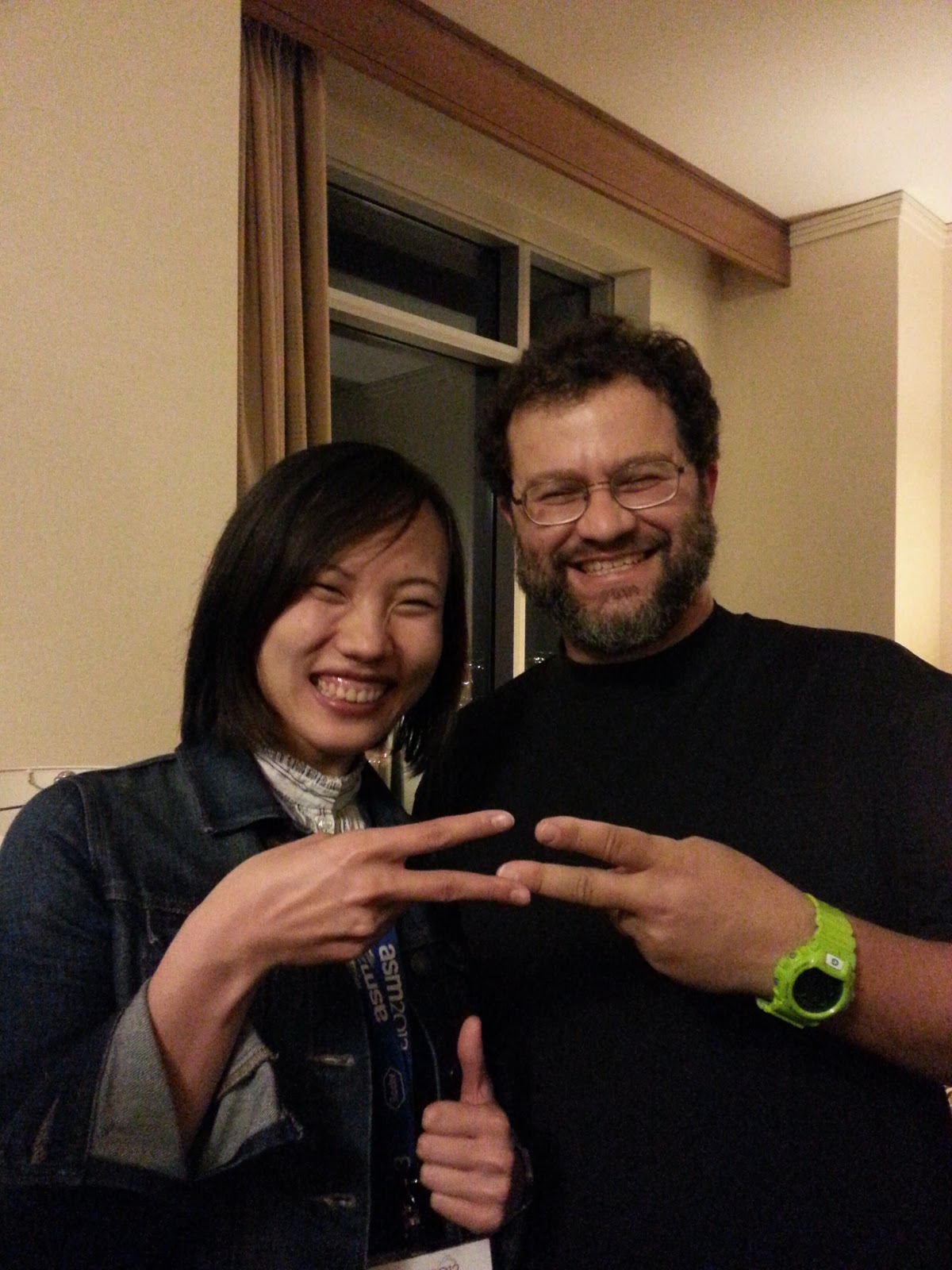
Anyway – it was very interesting to talk to many of them.  And I even got a picture with one of them – Yu Xia from Hong Kong (we were trying to form some sort of Tree of Life with our fingers).
All societies have their good and bad parts.  Sponsoring Young Ambassadors from other countries is definitely one of the very good things ASM does.

At #UCDavis 5/29 4 PM: Dr. Lora Hooper on “Circadian Regulation of Intestinal Immunity”

"Circadian Regulation of Intestinal Immunity"

Dr. Lora Hooper
Professor, Department of Immunology, University of Texas Southwestern Medical Center

Wednesday, May 29, 2013
4:10 pm in 1022 Life Sciences

LHooper_flyer.pdf

June 5 at #UCDavis – Nancy Moran (one of the best of the best in science) on “Two sides of symbiosis in the ecology and evolution of insect hosts”

Nancy Moran Flyer.pdf

Worth a look: PhyloFacts FAT-CAT web server: ortholog identification & function prediction

Quick post.  This seems like a potentially useful resource and tool: The PhyloFacts FAT-CAT web server: ortholog identification and function prediction using fast approximate tree classification

Abstract:
The PhyloFacts ‘Fast Approximate Tree Classification’ (FAT-CAT) web server provides a novel approach to ortholog identification using subtree hidden Markov model-based placement of protein sequences to phylogenomic orthology groups in the PhyloFacts database. Results on a data set of microbial, plant and animal proteins demonstrate FAT-CAT’s high precision at separating orthologs and paralogs and robustness to promiscuous domains. We also present results documenting the precision of ortholog identification based on subtree hidden Markov model scoring. The FAT-CAT phylogenetic placement is used to derive a functional annotation for the query, including confidence scores and drill-down capabilities. PhyloFacts’ broad taxonomic and functional coverage, with >7.3 M proteins from across the Tree of Life, enables FAT-CAT to predict orthologs and assign function for most sequence inputs. Four pipeline parameter presets are provided to handle different sequence types, including partial sequences and proteins containing promiscuous domains; users can also modify individual parameters. PhyloFacts trees matching the query can be viewed interactively online using the PhyloScope Javascript tree viewer and are hyperlinked to various external databases. The FAT-CAT web server is available at http://phylogenomics.berkeley.edu/phylofacts/fatcat/.

Story behind the paper: from Jeremy Barr on "Bacteriophage and mucus. Two unlikely entities, or an exceptional symbiosis? "

I am pleased to have a guest post in my “Story behind the paper” series.  This one is from Jeremy Barr in Forest Rohwer’s lab about a new PNAS paper. 
Bacteriophage and mucus. Two unlikely entities, or an exceptional symbiosis?

By Jeremy J. Barr

Our recent research at The Rohwer Lab at San Diego State University investigates a new symbiosis formed between bacteriophage, viruses that only infect and kill bacteria, and mucus, that slimy stuff coating your mouth, nose, lungs and gut.

Bacteriophage, or phage for short are ubiquitous throughout nature. They are found everywhere. So it shouldn’t surprise you to learn that these phage are also found within mucus. In fact, if you actually sat down and thought about the best place you would look for phage, you might have picked mucus as a great starting point. Mucus is loaded with bacteria, and like phage, is found everywhere. Almost every animal uses mucus, or a mucus-like substance, to protect its environmentally exposed epithelium from the surrounding environment. Phage in mucus is nothing novel.

But what if there were more phage in mucus? What if the phage, immotile though they may be, were actually sticking within it?

It turns out that there are more phage in mucus, over four times more phage, and this appears true across extremely divergent animal mucosa. But this apparent increase in phage could very simply be explained by increased replication due to access to increased bacterial hosts residing within mucus layers. But this assumption alone doesn’t hold up. Applying phage T4 to sterile tissue culture cells resulted in significantly more phage sticking to the cell lines that produced a mucus layer, compared to those that did not. There were no bacterial hosts for phage replication in these experiments. Yet still, more phage accumulated in mucus.

Surely the law of mass-action could explain this apparent accumulation. The more phage we apply to an aqueous external environment, the more phage will diffuse into and enter the mucus layer, being slowed in the process due to the gel-like properties, and eventually resulting in an apparent accumulation of phage in mucus. But when we removed mass-action from the equation, and simply coated mucus-macromolecules onto a surface, still more phage stuck. Our assumptions were too simple.
Phage are ingenious. They have evolved, traded, and disseminated biological solutions to almost every biological problem, whether we are aware of it or not. So in order to solve the phage-mucus quandary, we needed to look to one of the most ubiquitous and populous families of proteins found in nature: the immunoglobulin superfamily. This protein fold is so ubiquitous that it appears in almost every form of life. Within our own bodies, it is the protein that affords us immunological protection. Bacteria utilize the protein fold to adhere to each other, to surfaces, and as a form of communication. And as it would turn out, phage make an innovative use of the same protein fold to stick to mucus.

Immunoglobulin, phage and mucus, are all pervasive throughout environments. The interaction between these three entities forms a new symbiosis between phage and their animal hosts. This symbiosis contributes a previously unrecognized immune system that reduces bacterial numbers in mucus, and protects the animal host from attack. We call this symbiosis/immunity, Bacteriophage Adherence to Mucus, or BAM for short.

Our work is open access and available through PNAS .

If you would like to read further about BAM and its implications see these two commentaries by Carl Zimmer at National Geographic  and by Ed Yong at Nature News

Cool bacterial art makes gizmodo #MicrobialArt

Quick post – cool bacterial art project has made Gizmodo.  See Bacteria Never Looked So Beautiful.  From an Art of Science competition at Princeton.  I wonder what Artologica – my favorite microbial art artist – thinks of this.

For some other posts about microbial art see:

Citizen (Funded) Science

As evidenced by the buzz around the Citizen Science session at ASM yesterday, microbial ecologists are increasingly looking for ways to engage “Citizen Scientists” to participate in large-scale projects, often by crowd-sourcing sample collection. This concept is not new; in fact, citizen scientists have been counting birds every year for over 100 years!

A recent price drop in high-throughput sequencing technology has enabled the ginormous scale of current citizen science projects. Anyone who is interested can participate by swabbing their homes or their poop! This same price drop also enables a different sort of citizen scientist. This sort of citizen scientist is not tied to any pre-existing project, but is free to imagine his own. If he can convince the right person that his project is interesting, he can fund it himself with relatively little cash.

Dan Prater is exactly this sort of citizen scientist! He was curious about the microbial succession taking place in the compost tea that he was brewing on his family’s organic farm in Indiana. So, he asked Jonathan Eisen to help him figure it out! Dan collected a time series of samples from two different batches of compost tea. He shipped the samples to UC Davis, and I prepared 16S rRNA PCR libraries from them. We went from sample collection, through a MiSeq run, to a poster at ASM (with data) in a month! <sound of my horn tooting>

If you are at ASM, you can check out this poster tomorrow, Tuesday, May 21 from 1:00-2:45pm! It’s poster #2402, entitled Phylogenetic Analysis of and Actively Aerated Compost Tea.