Most of the lab is attending ASM, we will not be having lab meeting this week.
Eisen Lab Blog
Thoughts on Citizen Microbiology and upcoming session at #ASM2013
I am sitting on a Southwest Airlines flight heading to Denver for the American Society for Microbiology 2013 meeting. At 3 PM today I am scheduled to co-chair (with David Coil from my lab) a session on “Citizen Microbiology” (well the full title is Citizen Microbiology: Enhancing Microbiology Education and Research with the Help of the Public). The schedule of the session is at the bottom of this post but it promises to be very interesting and exciting (no bias here at all).
As far as I know, this is the first session ever on “Citizen Microbiology” at a large meeting of any kind. We held a small workshop at UC Davis in January of 2012 on Citizen Microbiology but that was quite small. I note – I use a very broad definition for Citizen Microbiology including basically any project that engages the public in some way to participate in a research project relating to microbes. This is the perfect time to have such a session at a large meeting and the ASM General Meeting is an ideal setting. There are a series of converging forces that makes this timing ideal including:
There is a growing appreciation of microbes and the role they play on the planet. Some of this appreciation is broad – covering all microbes – all the time – everywhere. But much of it is due to a growing interest in the microbes closer to us – those that live in and on us (the human microbiome) – those that live in and on plants and animals and other organisms we care about – and those that live in the places where we spend much of our time (the microbes of the built environment). I mean – come on – everyone is talking about fecal transplants now in public – in cover stories of the NY Times Magazine and in Ted talks.
- Technological and scientific advances have made it possible to better sample the microbes found in any particular location. Clearly, DNA sequencing technology and associated analytical tools are a central component of these advances, but other factors are important too.
- The world is becoming more and more digital which makes the sharing of information (which is key to Citizen Science) easier and better. And social media has made it easier to communicate and discuss actions like Citizen Microbiology.
- Citizen Science is growing by leaps and bounds in other areas (e.g., check out http://www.scistarter.com).
- Crowdsourcing (not the same thing as Citizen Science – more on this another time perhaps) is also growing in leaps and bounds.
- Crowdfunding is providing new ways to fund scientific activities.
- Sensors of all kinds are getting cheaper and easier to use and are being deployed widely.
- Many people are becoming more and more interesting in recording information about themselves and sharing it with others.
- The “open science” movement is making the literature, software, methods and data and more available to everyone with no or few restrictions thus allowing for more people in diverse environments to become engaged in research.
- Microbiology education and outreach is spreading with some great journalists and diverse other sources of information including hundreds of microbiology blogs and many other forms of social media being used.
These are but a few of the reasons why I believe the time is right for Citizen Microbiology. But there are also what I would call somewhat negative reasons why the time is right too. These include
- Germophobia is rampant and fueled by media hype and marketing forces.
- We have done, and continue to do, serious harm to our microbial world. Antibiotics are overused. Antimicrobials are in everything. More and more children and missing out on vaginal birth. And so on
- Although our understanding of the importance of microbes is everywhere, there are also many who are overselling what we know – claiming that probiotics will cure all ailments for example.
- Some information about microbes that is out there on the web is, well, less that ideal
- The ethics of engaging the public in studies of microbes are not fully appreciated by some and not completely understood by most.
So this is both an exciting and a critical time for microbes and microbiology. And I hope that this session will not only help launch the field of Citizen Microbiology, but will help get everyone to think about the bigger issues and how to move the field forward in the right directions. For there is so much we need to do and think about including
- Ethics
- Funding
- Openness and sharing
- Visualization
- Analysis tools
- Communication
- Outreach
And of course – the people at the session are not the only ones engaged in Citizen Microbiology or related activities (see a list we made a while back here). If you are doing a project please post something about it here. And if you are not doing a Citizen Microbiology project – well – why not? Get your act together.
Anyway – got to put away the computer as we land in Denver soon and I will rush off to the conference center, hopefully on time, to chair this exciting session. And I hope to see you there or have you follow online (check out the Twitter hash tag #ASM2013). And keep your eyes open for more excitement in this area.
————————-
Today’s session at ASM 2013:
(Division W Lecture) Authentic Research for Novice Scientists: Phage Discovery and Genomics by Undergraduate Students
Graham Hatfull;
Univ. of Pittsburgh, Pittsburgh, PA.
Understanding Human Influence on Microbial Distribution Patterns in the United States: A Citizen Science Approach
G. Barguil Colares1, J. Marcell1, D. Smith1,2, J. A. Eisen3, J. Gilbert1,2;
1Argonne Natl. Lab., Lemont, IL, 2Univ. of Chicago, IL, 3UC Davis, Davis, CA.
The Home MIcrobiome Project: Learning the Lessons of Citizen Science and Communication
J. A. Gilbert, D. Smith;
Argonne Natl. Lab., Lemont, IL.
The New National Lab: How Citizen Science is Transforming American Research
Darlene Cavalier;
Sci. Starter, Sci. Cheerleader, Philadelphia, PA.
Sequencing the Human Microbiome with Citizen Science
Z. Apte1, J. Richman2, W. Ludington3;
1uBiome, Inc, San Francisco, CA, 2Oxford Univ., Oxford, UNITED KINGDOM, 3Univ. of California, Berkeley, Berkeley, CA.
The American Gut Project: Challenges and opportunities for crowdsourcingmicrobial ecology
Antonio Gonzalez Peña;
Univ Colorado at Boulder, Boulder, CO.
Public Science in Private Places: A Study of the Microbial Ecology of One Thousand Houses in Fifty States and Five Countries
Rob Dunn;
NC State Univ., Raleigh, NC.
UPDATE: Notes from the Session Added 5/23
Here are some notes from the meeting:
Meeting Report: ASM 2013 in Denver, Day 1
ASM 2013, Day 1: From Oceans to Guts
Citizens doing Science, or Science on Citizens? (ASM 2013: Post 1)
Symbionticism: ASM 2013 LINKS
Storify by SPONCH
My storify embedded below
Excellent piece in the NY Times Magazine by @michaelpollan "Some of my best friends are germs" #ASM2013
Quick post here. There is a really nice piece on in the New York Times Sunday Magazine by Michael Pollan on the human microbiome: Say Hello to the 100 Trillion Bacteria That Make Up Your Microbiome. In it he discusses how he had his microbiome typed by the American Gut Project and he discusses browsing through the output. He also discusses a diversity of issues in the microbiome and work of various folks. People featured include Justin Sonnenburg, Rob Knight, Burce German, Catherine Lozupone, Stanley Falkow, Jeffrey Gordon, Michael Fischback, Maria Gloria Dominguez-Bello, Martin Blaser, Ruth Ley, Andrew Gewirtz, Patrice Cani, Erica Sonnenburg, and Stephen O’Keefe. The article does a really good job of highlighting why the microbiome is important yet does not oversell what we know at this point.
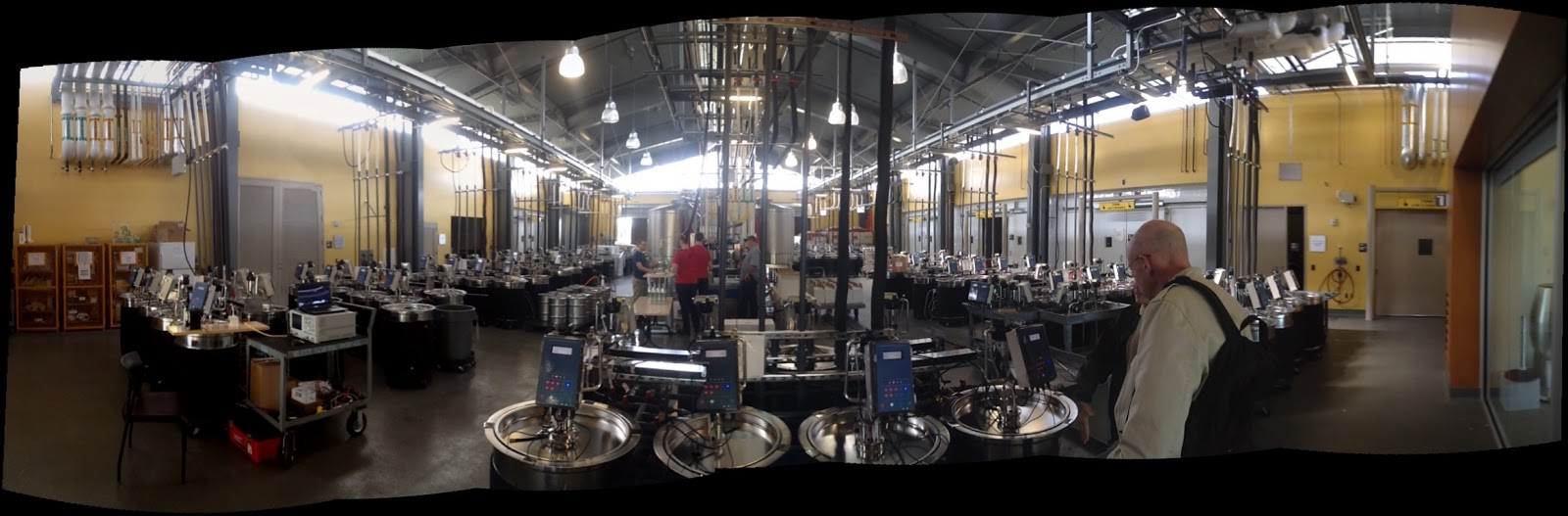
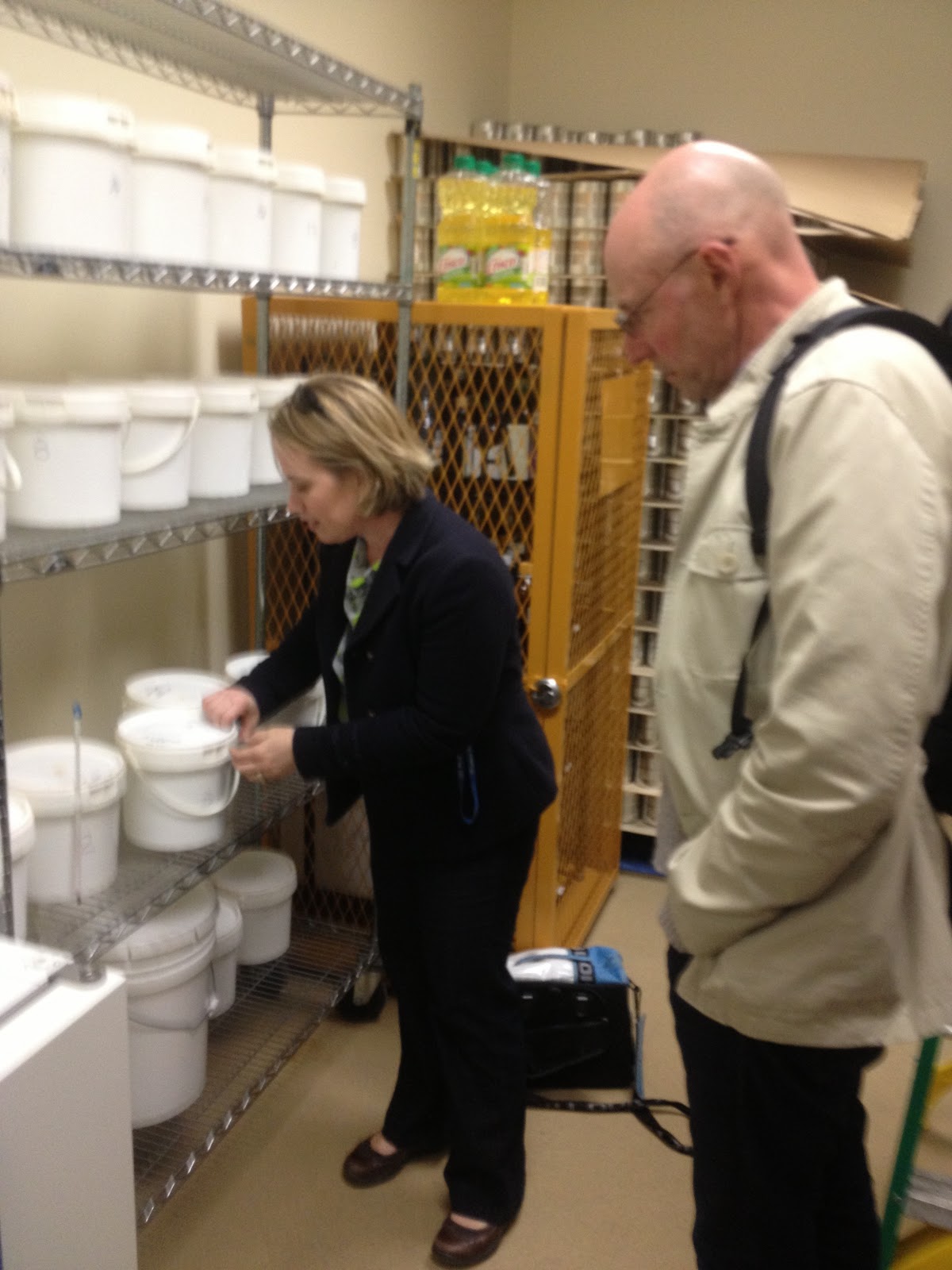
I note – Pollan came to UC Davis as part of his research for the article a little while back. Below are some pics of him getting a tour of the UC Davis LEED Platinum brewing facility. Anyway the article is definitely worth a look. And just in time for the ASM 2013 Meeting which I am about to head to this AM.
Just in time for #ASM2013 – FDA adding regulations for fecal transplants #microbiome
Well, I guess this could be good news or bad news or both. The FDA has sniffed the winds of microbiome studies and decided that it wants some more regulation on fecal transplants (aka fecal bacteriotherapy). See for example Fecal Transplant: FDA Wants Regulation. Fecal transplants are spreading like crazy these days and every where I go in real life and online I hear and see more about them. For more on fecal transplants see some of my previous posts such as More (you know you wanted it) on fecal transplants and the microbiome and Fecal transplants in the news and Transfaunation and Fecal Transplants: What Goes Around Comes Around, Literally and Figuratively.
I guess the FDA feels like they have to do something given the spread of FT. Given how many scam artists and oversellers of the microbiome are out there I think some sort of increased protection or regulation is probably a good thing. But I am not sure what the best way to do this is. Clearly some are unhappy with the FDA sticking their noses into fecal transplants (e.g., see here). But given how little we know about FTs other than as treatment for Clostridium dificile infections it seems like one could make a reasonable argument for more regulation or caution. It seems strange though that we can do just about anything and everything we want to kill all the microbes around us with very little regulation and yet attempting to manipulate the microbes in and on us or add a few here and there is being regulated more.
What do others think? Do we need more regulation from the FDA on fecal transplants?
UPDATE – some links to other discussions of this:
- The kibosh (from Controversies in hospital infection prevention)
- Fecal transplants to treat C. diff now need FDA approval
- FDA halts US poop transplants pending further review (Raw Story).
- FDA: Fecal Transplants Need Investigational New Drug Application … (JWatch blog)
- Oversight for Fecal Transplants | The Daily Scan | GenomeWeb
- Many Years Young: Fecal Transplant: FDA Wants Regulation
- FDA Declares Stool a Drug — Not kidding! @ TigerDroppings.com
- Fecal Transplant: FDA Wants Regulation – Digestive Health Center – Everyday Health – EverydayHealth.com
Curtobacterium flaccumfaciens paper out (Jennifer Flanagan)
The second-to-last undergraduate genome paper is out. Curtobacterium flaccumfaciens by Jennifer Flanagan.
Thanks to Software Carpentry (@swcarpentry) for coming to #UCDavis
Quick post here. Jenna Lang in my lab has a post at microBEnet about the recent workshop that the Software Carpentry folks ran at UC Davis: Software Carpentry comes to UC Davis! | microBEnet: The microbiology of the Built Environment network. It was a major success. For those who don’t know Software Carpentry’s mission is is to build basic computing skills among researchers. From their web site:
Software Carpentry helps researchers be more productive by teaching them basic computing skills. We run boot camps at dozens of sites around the world, and also provide open access material online for self-paced instruction. The benefits are more reliable results and higher productivity: a day a week is common, and a ten-fold improvement isn’t rare.
A great idea and done really well. Others out there should consider hosting or attending one of their Boot Camps and checking out their materials on their web site. See for example their videos and their reading list and their lessons. They really do great things …
Seminar at #UCDavis: Michelle Smith, Wash U, “From the clinic to the bench: Using gnotobiotic mouse models uncovers a role for the gut microbiota in malnutrition”
Michelle Smith from Wash U in St. Louis
Meyer Hall, Room 1138. Noon. 5/16/2013
"From the clinic to the bench: Using gnotobiotic mouse models uncovers
a role for the gut microbiota in malnutrition"Abstract from recent Science paper:
Kwashiorkor, an enigmatic form of severe acute malnutrition, is the
consequence of inadequate nutrient intake plus additional
environmental insults. To investigate the role of the gut microbiome,
we studied 317 Malawian twin pairs during the first 3 years of life.
During this time, half of the twin pairs remained well nourished,
whereas 43% became discordant, and 7% manifested concordance for acute
malnutrition. Both children in twin pairs discordant for kwashiorkor
were treated with a peanut-based, ready-to-use therapeutic food
(RUTF). Time-series metagenomic studies revealed that RUTF produced a
transient maturation of metabolic functions in kwashiorkor gut
microbiomes that regressed when administration of RUTF was stopped.
Previously frozen fecal communities from several discordant pairs were
each transplanted into gnotobiotic mice. The combination of Malawian
diet and kwashiorkor microbiome produced marked weight loss in
recipient mice, accompanied by perturbations in amino acid,
carbohydrate, and intermediary metabolism that were only transiently
ameliorated with RUTF. These findings implicate the gut microbiome as
a causal factor in kwashiorkor.
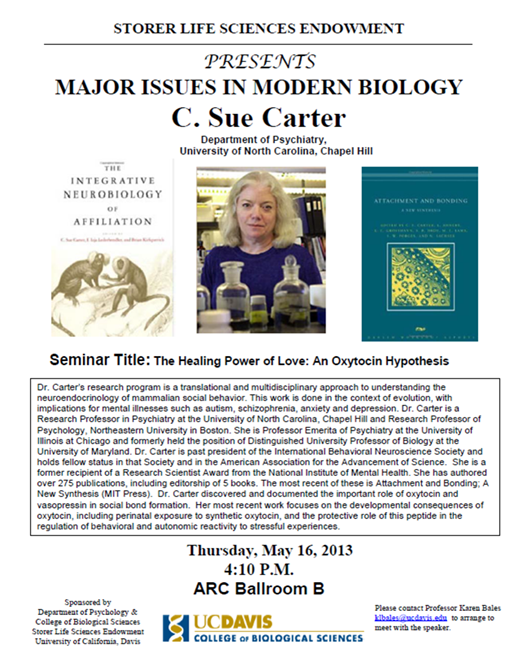
Seminar at #UCDavis: C. Sue Carter “The healing power of love: an oxycontin hypothesis”
Seminar 5/14 4PM: Gideon Bradburd Disentangling effects of geographic & ecological isolation on genetic differentiation
CPB Seminar Series: Spring 2013
When: Tuesdays, 4:10 – 5:30PM
Where: 1022 Life Sciences Building
May 14: Gideon Bradburd, Graduate Student
Center for Population Biology, UC Davis
Title: “Disentangling the effects of geographic and ecological isolation on genetic differentiation”
ICG Europe starts w/ "Omics & the future of man" & sticks to men the rest of the time
Fun. Another day. Another YAMMGM (yet another mostly male genomics meeting). This one is the International Conference on Genomics Europe 2013. I have copied the program as it is now here and then highlighted the men and women as far as I can tell. And, well, it is not very balanced. It starts off, ironically, with “Omics and the future of man” and then stays on both omics and alas, men, for most of the meeting. The first woman does not talk until 5 pm on the first day. Nothing against BGI per se. But they seem to be repeat offenders in having meetings with mostly male speakers. A difference between countries? Perhaps. But unfortunate and unpleasant nevertheless.
Sessions with speakers:
- 09:00-09:10: Opening ICG-Europe 2013 & Welcome: Hans Galjaard, Chairman of the Department of Clinical Genetics at Erasmus University
- 09:10-09:55: Talk 1: Huanming Yang, BGI, China
- 9:55-10:25: Talk 2: Jeremy Nicholsen, Head of the Department of Surgery and Cancer, Imperial College London, UK
- Topic: Molecular Phenotyping and Systems Medicine Approaches in Personalised and Public Healthcare
Chairman: Prof.Huanming Yang, BGI, China
Plenary Session 2 :
- 11:00-11:30: Talk 1 (30 min): Jun Wang, CEO, BGI, China
- 11:30-12:00: Talk 2 (30 min): Karsten Kristiansen, Head of the Department of Biology, University of Copenhagen, Denmark
- 12:00-12:30: Talk 3 (30 min): Nils Brunner, Director of the Sino-Danish Breast Cancer Research Centre, University of Copenhagen, Denmark
- Topic: Docetaxel resistance in vitro: Known mechanisms and novel pathways in breast cancer
- Chairman: Prof. Jun Wang, BGI, China
Plenary Session 3: Plant and Animal Genomics
- 13:30-13.55: Talk 1: Rajeev K. Varshney, Director-Centre of Excellence in Genomics, ICRISA, Hyderabad, India
- Topic: “Little” is “more” for chickpea and pigeonpea
- 13.55-14.20: Talk 2: Michael Bevan, Genomics and Functional Genomics of Bread Wheat for Crop Improvement, John Innes Centre, Norwich, UK
- Topic: Genomics and Functional Genomics of Bread Wheat for Crop Improvement
- 14.20-14.45: Talk 3: Michel Georges, Unit of Animal Genomics, University of Liège, Belgium
- 14.45-15.15: Talk 4: Tomas Marques, ICREA Research Professor, Universitat Pompeu Fabra, Spain
- Topic: Great Ape genetic diversity
- 15.15-15.35: Talk 5: TBC
- Chairman: Prof. Marc Van Montagu , VIB, Belgium
Session 4: Cancer genomics and Transcriptional Regulation
- 16:00-16:20: Talk 1(20 min): Stein Aerts, Heading the Laboratory of Computational Biology, K.U.Leuven, Belgium
- Topic: Probing into the genome, transcriptome, and regulatory network of T-cell acute lymphoblastic leukemia
- 16:20-16:40: Talk 2(20 min): Lars Bullinger, Assistant Professor, University of Ulm, Germany
- Topic: Genomics in acute myeloid leukemia (AML) – clinical translation of findings
- 16:40-17:00: Talk 3(20 min): Diether Lambrechts, Assistant Professor, K.U.Leuven & VIB, Belgium
- Topic: Mutation signatures of mismatch repair deficiency in cancer genomes
- 17:00-17:20: Talk 4(20 min): Lynnette Fernandez-Cuesta, University of Cologne, Germany
- Topic: Characterization of lung neuroendocrine tumors
- 17:20-17:40: Talk 5(20 min): Henrik Ditzel, University of Southern Denmark, Denmark
- Chairman: Dr. Jan Cools (K.U.Leuven, VIB)
Workshop:Innovation-Entrepreneurship and Venture creation-1
- 14:30-14:50: Talk 1 (20 min): Boo Edgar, Program Director, Innovation and entrepreneurship; The Sahlgrenska Academy, University of Gothenburg
- 14:50-15:10: Talk 2 (20 min): Martin Bonde, Chairman of Danish Biotech association
- 15:10-15:30: Talk 3 (20 min): Søren Møller, Managing Investment Director, Novo Seeds
- Chairman: Johan Cardoen
- 16:00-16:20: Talk 1(20 min): Johan Cardoen, Managing Director VIB
- 16:20-16:40: Talk 2(20 min): Patrick Van Beneden, GIMV
- 16:40-17:00: Talk 3(20 min): Ann De Beuckelaer, Flanders Bio
Session 5: Human Disease- Structural Genomic Variation and Function
- 09:00-09:30: Talk 1 (30 min): Wigard Kloosterman, UMC Utrecht, The Netherlands
- Topic: Cause and Consequence of Complex Genomic Rearrangements
- 09:30-10:00: Talk 2 (30 min): Michael Talkowski, Instructor, MGH, Harvard University, USA
- Topic: Sequencing unique human genomes reveals novel loci in autism and predictive phenotypes in prenatal diagnostics
- 10:00-10:30: Talk 3 (30 min): Thierry Voet, K.U.Leuven
- Chairman: Prof. Edwin Cuppen , Hubrecht Institute
Session 6: Metagenomics
- 09:00-09:30: Talk 1 (30 min): Hui Wang, The Centre for Ecology & Hydrology, UK
- Topic: Virus discovery by using deep sequencing data
- 09.30-10:00: Talk 2 (30 min): TBC
- 10:00-10:30: Talk 3 (30 min): Bjoern Textor, New England Biolabs GmbH
- Topic: Direct Selection of Microbiome DNA from Host DNA
- 11:00-11:30: Talk 1 (30 min): Jeroen Raes, Scientific Collaborator, VUB&VIB
- 11:30-12:00: Talk 2 (30 min): Rob Knight, Associate Professor, Colorado University
- Topic: Characterizing microbial effects of family structure, including our furry family members?
- 12:00-12:30: Talk 3 (30 min): Ruth Ley, Cornell University
- Topic: Host control of the microbiome
- Chairman: Dr. Jeroen Raes (VUB, VIB)
Session 7(3 talks: include Q&A 5 mins): Human Disease – Clinical Genetics
- 11:00-11:35: Talk 1(35 min): Han Brunner, Department of Human Genetics, Radboud University Nijmegen Medical Centre, The Netherlands
- Topic: Clinical Genetic Diagnostics by Genome Sequencing.
- 11:35-12:05: Talk 2(30 min): Wang Wei, BGI Health, Shenzhen, China
- Topic: Non-invasive prenatal testing (NIPT): Current clinical application and future outlook
- 12:05-12:45: Talk 3(30 min): Gabor Vajta, BGI Europe, Copenhagen, Denmark and Central Queensland University, Rockhampton, Australia in concert with Du Yutao, BGI Health, Shenzhen, China
- Topic: Pre-implantation Diagnostics by Blastocyst Biopsy, Vitrification and Genome Sequencing
- Chairman: Prof. Lars Bolund, Aarhus University
Session 8: Health and Translational Medicine-1
- 13:30-13:55: Talk 1(25 min): Vince Gao, BGI
- Topic: Development of Clinical Service at BGI Health
- 13.55-14:20: Talk 2(25 min): Attila Lorincz, UK
- Topic: Clinical Validation of Genomic and Epigenomic Biomarker Panels
- 14:20-14:45: Talk 3(25 min): Maurizio Ferrari, Director of Clinical Molecular Biology and Cytogenetics Laboratory, and Head of Genomic Unit for the Diagnosis of Human Pathologies, Center for Translational Genomics and Bioinformatics, IRCCS San Raffaele, Milan, Italian
- Topic: From bench to bedside: new advanced molecular techniques for genetic diagnosis
- 14:45-15:10: Talk 4(25 min): Carlos Simón Vallés, Board Certified and Full Professor of Obstetrics and Gynecology at the University of Valencia,Spain
- Topic: Clinical Application of the endometrial receptivity array
- 15:10-15:35: Talk 5(20 min): To be selected from submitted abstracts
- Chairman: Dr. Vince Gao , BGI
Session 9: Human disease
- 13:30-13:55: Talk 1(25 min): Lars Bolund, Professor of Clinical Genetics at Aarhus University, Denmark, and Adjunct Professor of Human Genetics at Copenhagen University, Denmark
- Topic: Chronic Disorders, Rare Genetic Variants and Pig Models of Degenerative Disease Processes
- 13:55-14:20: Talk 2(25 min): Tao Dong, Head of anti-viral T cell immunology group, MRC Human Immunology Unit, Oxford University, UK
- 14:20-14:45: Talk 3(25 min): Hartmut Wekerle, Honorary Professor, Max Planck Institute of Neurobiology, Martinsried, Germany
- 14:45-15:10: Talk 4(20 min): Ramneek Gupta, The Technical University of Denmark, Danmark
- 15:10-15:30: Talk 5(20 min): Anders Børglum, Professor, Aarhus University, Denmark
- Chairman: TBC
Session 10: Health and Translational Medicine-2
- 16:00-16:20: Talk 1(20 min): Diana M Eccles, Academic Vice President of the Clinical Genetics Society, Southampton General Hospital, UK
- 16:20-16:40: Talk 2(20 min): E. Gomez Garcia, Maastricht University, the Netherlands
- 16:40-17:00: Talk 3(20 min): Pascal Pujol , Chu Montpellier, France
- 17:00-17:20: Talk 4(20 min): Atocha Romero, Hospital Clinico San Carlos, Spain
- 17:20-17:40: Talk 5(20 min): Ian Campbell, Peter MacCallum Cancer Centre, Australia
- Topic: Identification and validation of familial cancer susceptibility genes using massively parallel sequencing
- Chairman: Prof. Yves-Jean Bignon, Centre Jean Perrin
Workshop: Ethical, Legal and Social Implications (ELSI)
- 16:00-16:20: Talk 1(20 min): Lone Frank, Denmark
- 16:20-16:40: Talk 2(20 min): Pascal Borry, K.U.Leuven, Belgium
- 16:40-17:00: Talk 3(20 min): TBC
- Chairman: Prof. Huanming Yang, BGI
Session 11: Biobanks
- 08:00-08:30: Talk 1 (30 min): Zhang Yong, BGI, China
- 08:30-09:00: Talk 2 (30 min): Kristian Hveem, Chief Scientific Officer, Nord-Trondelag County, Norway
- 09:00-09:30: Talk 3 (30 min): Shaoliang Peng, National University of Defense Technology, China
- Topic: Bioinformatics and Computational Biology on TianHe Supercomputer
- Chairman: Dr. Zhang Yong, BGI
Workshop: Use of Omics Technology for Personalized Medicine
- 08:00-08:30: Talk 1 (30 min): Jenny Wei, R&D Information China, AstraZeneca global R&D
- Topic: Genomics for Personalized Medicine: From Discovery to Clinic
- 08:30-09:00:Talk 2 (30 min):André Rosenthal, CEO, Signature Diagnostics AG
- Topic: Next-Gen Sequencing Tests for Prognosis and Prediction of Response to Therapy of Patients with Colorectal Cancer Using Somatic Mutation Signatures
- 09:00-09:30: Talk 3 (30 min):Radoje Drmanac, Complete Genomics, Inc. Mountain View, California, U.S.A.
- Topic: Accurate whole genome sequencing as the ultimate genetic test enabling personalized disease prevention and treatment
- Chairman: TBC
Session 12: Bioinformatics
- 10:00-10:30: Talk 1 (30 min): Nathaniel Street, Assistant professor, Umea University
- Topic: Sequencing the Norway spruce genome reveals a unique history of repeat expansion
- 10:30-11:00: Talk 2 (30 min): Sofie Van Landeghem, Ghent University, VIB, Belgium
- Topic: Mining the literature to enhance integrative network biology
- 11:00-11:30: Talk 3 (30 min): Mario Caccamo, Acting Director at The Genome Analysis Centre, Norwich, UK
- Topic: Next Generation Genomics for Complex Crops
- Chairman: Prof. Yves Van De Peer (U.Ghent, VIB)
- YAMMGM: Yet another mostly male genomics meeting #2: Beyond the Genome 2013
- YAMMGM: Yet another mostly male genomics meeting
- Crosspost from PLOS Biologue: Working to increase diversity of PLOS Biology Academic Editors and Advisory Board members
- Lake Arrowhead Microbial Genomes Meeting 2012 Speaker Gender Ratio #LAMG12
- Q-Bio conference in Hawaii, bring your surfboard & your Y chromosome b/c they don’t take a XX
- Winner of the “genome conference speakers should be male” award …
- “Genomics: the Power and the Promise” meeting – could be called “Men Studying Genomics” instead
- Diversity (of speakers, participants) at meetings: do something about it