Eisen Lab Blog

Bay Area Microbiology themed events

Posting this email I received from Chuck Bevins:

Hi everyone. There are two special events coming up that may be of interest. They are both outstanding opportunities, and they are FREE! Don’t miss out.

BAMPS (Bay Area Microbial Pathogenesis Symposium)
The 15th annual Bay Area Microbial Pathogenesis Symposium (BAMPS XV) will take place on Saturday March 24, 2014 at Genentech Hall on the Mission Bay Campus of UCSF from 8:30 a.m. to 5:00 p.m. The keynote speaker this year will be Scott Hultgren, PhD. from Washington University (St Louis). As always, the conference is FREE. Breakfast, lunch, and a wine and hors d’ oeuvres reception will be provided free of charge. This symposium will feature a series of 15 to 30-minute talks by students, postdocs, and PI’s and a poster session at lunchtime by Bay Area researchers in microbial pathogenesis. The conference is FREE, but you "must" register. http://bamps.ucsf.edu<http://bamps.ucsf.edu/> Registration closes March 1, 2012.

If you wish to be considered for a short talk, please upload a one-paragraph abstract and provide a tentative title. The deadline for submitting an abstract is February 24, 2011 (TOMORROW!). If your abstract is not selected for an oral presentation, we will automatically schedule you for a poster presentation. If you wish to present a poster only, please enter the tentative title. The deadline for submission of a poster title is March 1, 2012. If necessary, the title of your poster can be changed.

The Annual Microbiology Student Symposium at UC Berkeley
Please mark your calendars. The 13th annual MSG symposium is scheduled for Saturday April 14th, 2011 from 9am to 4pm (http://pmb.berkeley.edu/news/microbiology-student-symposium). The program will include talks by students, poster presentations, and two keynote addresses: Dr. Eduardo Groisman and Dr. Diane Newfield. Registration will be FREE and location has not been finalized. The symposium registration includes a catered lunch and coffee breaks.

The XIII MSG symposium is an excellent opportunity to interact with microbiology researchers from the entire region. Last year, attendees included 150 students, postdoctoral fellows, and faculty from UC Davis, UC Merced, UC San Francisco, Stanford, twelve departments at UC Berkeley, The Joint Genome Institute, the US Department of Agriculture, and the Lawrence Livermore and Lawrence Berkeley National Labs.

Again, you won’t want to miss these great opportunities!

BAMPS2012.pdf

Notes from my trip to #AAASMtg #EarthMicrobiomeProject #Storify

I am hoping to write up some more notes from my trip to the AAAS meeting in Vancouver. But for now these pics and this Storification of tweets and related posts will have to do … https://picasaweb.google.com/s/c/bin/slideshow.swf

Slideshow version of Storification http://storify.com/phylogenomics/jonathan-eisen-at-aaas-2012.js?template=slideshow[&amp;amp;amp;amp;amp;amp;amp;amp;amp;amp;amp;amp;amp;amp;amp;amp;amp;amp;lt;a href=”http://storify.com/phylogenomics/jonathan-eisen-at-aaas-2012&#8243; target=”_blank”&amp;amp;amp;amp;amp;amp;amp;amp;amp;amp;amp;amp;amp;amp;amp;amp;amp;amp;gt;View the story “Jonathan Eisen at AAAS 2012” on Storify&amp;amp;amp;amp;amp;amp;amp;amp;amp;amp;amp;amp;amp;amp;amp;amp;amp;amp;lt;/a&amp;amp;amp;amp;amp;amp;amp;amp;amp;amp;amp;amp;amp;amp;amp;amp;amp;amp;gt;]

Second video of the week: Mackenzie Smith on Open Licenses

Video of the week: Rosie Redfield on the Arsenic Life story #ILoveRosie

Interesting piece by John Rennie at Smartplanet: What comes after antibiotics?

Interesting piece by John Rennie at Smartplanet: What comes after antibiotics? | SmartPlanet. It discusses a variety of topics including antiomicrobial peptides, nanotechnology, Kary Mullis, Michael Zasloff, DARPA, Maryn McKenna, and more. Definitely worth checking out.

Notes for talk by Mackenzie Smith – candidate for #UCDavis University Librarian position

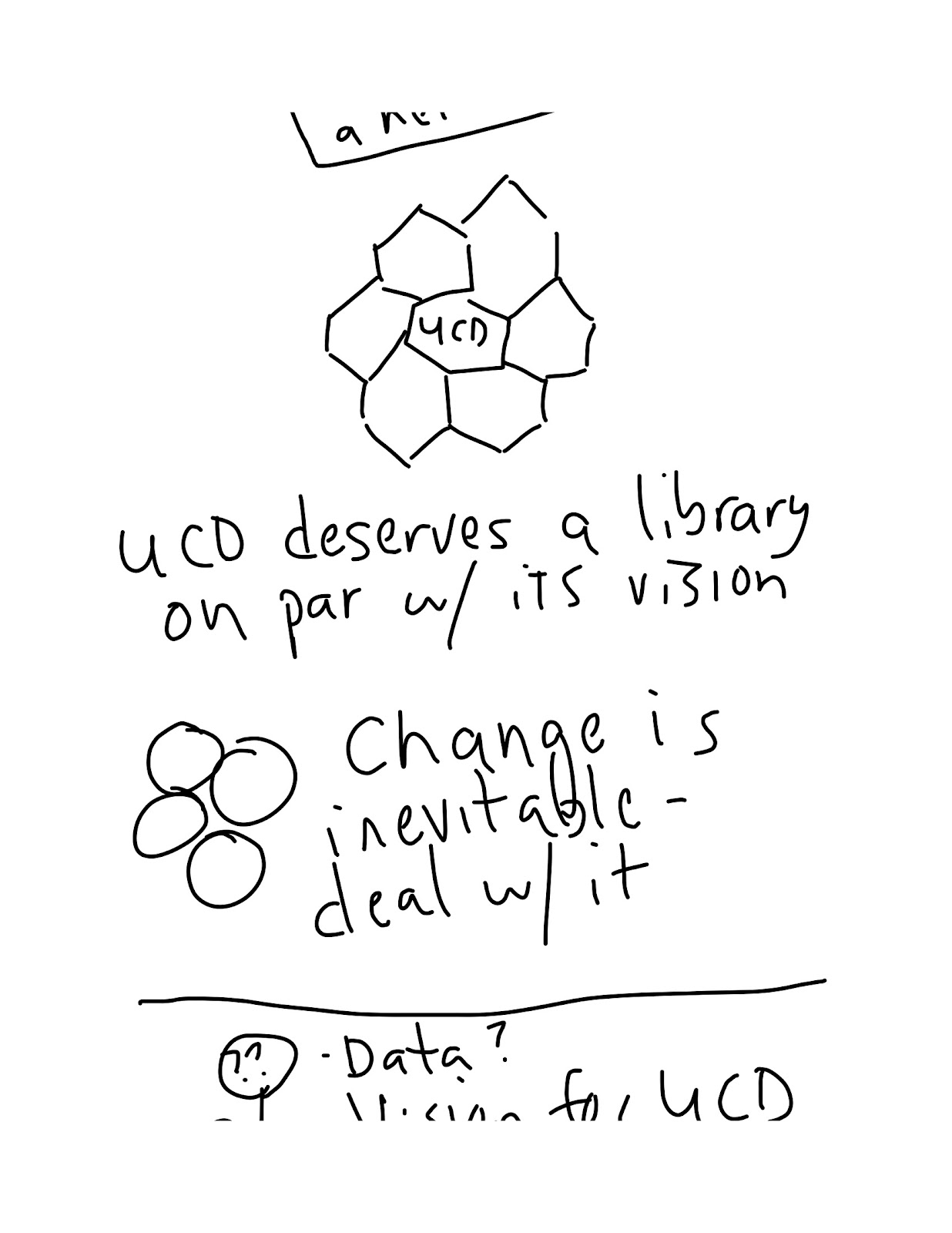
Here are some notes I took using my iPAD for a talk by Mackenzie Smith about libraries: Note Feb 21, 2012
She is a candidate for the UC Davis University Librarian position for which I am on the committee.  This is the first time I have taken and posted notes from a talk using my iPAD – so please bear with me – it is an experiment of sorts. Note to do this I used an iPAD2, a Bamboo Stylus and the Notability App. I then exported to PDF and posted it (the Note above).  For the images below I then had to export single pages to JPGs.  If anyone knows an easy way to export a multipage PDF as a single JPG I would appreciate information … Inspiration provided by Kosta.

http://storify.com/phylogenomics/mackenzie-smith-talk-at-ucdavis.js?template=slideshow[&amp;amp;amp;amp;amp;amp;amp;amp;amp;amp;amp;amp;amp;lt;a href=”http://storify.com/phylogenomics/mackenzie-smith-talk-at-ucdavis&#8221; target=”_blank”&amp;amp;amp;amp;amp;amp;amp;amp;amp;amp;amp;amp;amp;gt;View the story “Mackenzie Smith talk at #UCDavis” on Storify&amp;amp;amp;amp;amp;amp;amp;amp;amp;amp;amp;amp;amp;lt;/a&amp;amp;amp;amp;amp;amp;amp;amp;amp;amp;amp;amp;amp;gt;]

Antibiotic use in animals (may) lead to superbugs in people #mBIO

New paper in mBIO of potential interest from Lance Price et al.:  Staphylococcus aureus CC398: Host Adaptation and Emergence of Methicillin Resistance in Livestock.  For those not in the know, mBIO is a relatively new Open Access journal from the American Society for Microbiology.  The paper discusses genomic studies of MRSA which has led the authors to conclude that antibiotic use in animals may contribute to the rise and spread of superbugs in people.

From here. Maximum-parsimony tree of the 89 CC398 isolates (including ST398SO385) based on 4,238 total SNPs, including 1,102 parsimony-informative SNPs with a CI of 0.9591. Clades and groups of importance are labeled in a hierarchical fashion to facilitate description in the text. The tree was rooted with clade I based on an iterative selection process that identified this group as the most ancestral (see Materials and Methods). COO, country of origin; AT, Austria; BE, Belgium; CA, Canada; CH, Switzerland; CN, China; DE, Germany; DK, Denmark; ES, Spain; FI, Finland; FR, France; GF, French Guiana; HU, Hungary; IT, Italy; NL, The Netherlands; PE, Peru; PL, Poland; PT, Portugal; SI, Slovenia; US, United States; P, pig; H, human; R, horse; T, turkey; B, bovine; MET, methicillin susceptibility; R, resistant; S, susceptible.

The figure above is the only figure in the main text of the paper.  There are others in supplemental information which seems a bit strange to me – why put anything in supplemental information when the paper is only released online?  Or at least have thumbnail images for all figures in the main text …

Anyway, the paper and press release got picked up by many newsy places.  See for example:

I note – the Press Release is MUCH better than the last one that was about a paper by Price that I wrote about here: The Tree of Life: #PLoSOne paper keywords revealing: (#Penis #Microbiome #Circumcision #HIV); press release misleading …  Lance was awesomally quick to respond to my complaints about that PR.  The PR for this paper is not so bad — a bit over the top in some of the quotes – but no need for comments I think. 
Citation:
Price LB, et al. 2012. Staphylococcus aureus CC398: host adaptation and emergence of methicillin resistance in livestock. mBio 3(1):e00305-11. doi:10.1128/mBio.00305-11.

UPDATE 2/21 5:30 PM: an alternative (and much more pleasing) press release from ASM is here.

Lab meeting Feb, 22nd 2012

Jenna Morgan Lang will be presenting this week’s lab meeting in room 5206 from 1:30 to 3:30 pm.

Slideshow w/ audio of my talk on "A Field Guide to the Microbes" from the AAAS Meeting #AAASMtg

I recorded the audio of my talk on “Towards a field guide to the microbes” from the AAAS meeting on Saturday AM. Here is a slideshow of the talk with audio synched to the slides (I did this using Keynote on a Mac with the “record Slideshow” function).

My slides from the talk are available at Slideshare.

Jack Gilbert @gilbertjacka clarifies comments at #AAASMtg re: opening windows, cleanliness & microbes

Just got this to post from my college colleague Jack Gilbert in regard to some comments he made to the press at the AAAS Meeting a few days ago.  He sent this in part in response to some news stories that came out of the press conference we had at the meeting (e.g., see Florence Nightingale approach ‘could help fight infection in …Open hospital windows to stem spread of infections, says … and others).  And I encouraged him to consider whether or not he needed to clarify some of his comments – and here is his response.


A confession, lesson and retraction
By Jack A. Gilbert

At the AAAS 2012 annual meeting on Friday, I was involved in a press conference to announce the initial results and ideology for the Earth Microbiome Project (http://www.earthmicrobiome.org). Following the press conference we went to another room, where we were openly discussing these concepts with the reporters. Several reporters asked me to comment on the potential impact of this research in the medical sphere. At which point I started to discuss some excellent research by Jessica Green (http://biology.uoregon.edu/people/green) regarding her recent evidence that improved ventilation in hospital wards reduced the airborne abundance of organisms that were related to pathogens. I showed these reporters the paper
(http://www.nature.com/ismej/journal/vaop/ncurrent/full/ismej2011211a.html) and asked them to discuss this with Jessica Green.

I then proceeded to discuss some current research we are doing at University of Chicago that is looking at the impact of having a natural microbial community on surfaces to reduce the likelihood that pathogens can establish in that environment. Specifically we are exploring whether ‘good bacteria‘ can be used as a barrier to outcompete ‘bad bacteria’, I suggested that this was testing the hypothesis outlined by Florence Nightingale.

To this end I said, that maybe instead of sterilizing every surface in a hospital we could explore a different strategy. There is however currently only circumstantial evidence to support my claims, and I could have done a much better job in making clear that I was discussing an idea – not something for which there was evidence.

I am sorry for my indiscretion and hyperbole, and hope that I didn’t cause any groups or individuals concern or worry about this topic. These were concepts being discussed, specifically that by using the EMP we could explore ecological dynamics that could lay the groundwork to help determine if a community could play the role of a barrier against infection.

I want to stipulate that I believe hospitals should be cleaning, and I believe that surgeons should scrub and use the sterile method. To be clear, I wanted to state that ‘good’ bacteria could in the future play a role in reducing the instances of hospital borne infection, and that this is something we should investigate. People should wash their hands after the toilet, and wash their hands when they are sick; there is nothing wrong with being clean.