Eisen Lab Blog

Notes from a trip to Woods Hole, MA to teach #genomics at the MBL Microbial Diversity Course

Here are some notes from my recent trip to Woods Hole, MA where I went to give a talk for the Marine Biological Lab “Microbial Diversity Course”.

Day 1:  Thursday

My trip started quite poorly.  I wrote a whole post on the first day so if you want more detail go here: A squatter’s journey to the Marine Biological Lab (MBL).  I posted (of course) to twitter along the way.  Here are some of my posts:

  • Heading to Woods Hole/MBL-giving talk for symposium for the Microbial Diversity Class  
  • Anyone out there recommend best way to get from Logon to Woods Hole after 10:30 PM (no Peter Pan bus) w/o renting car? 
  • Thank you Delta for out early arrival in MSP- not so many thanks for sitting on runway for 20 minutes ad more waiting for gate
  • Yhgtbfkm – we finally got to a gate at MSP and the gate agents keep missing our door with jetway
  •  maybe I’ll see you as I head to my connection
    • Had a long twitter conversation with her about the fact that both of our flights were becoming disasters
  • Plane was very late bit now in a nice Prius from Green Shuttles on way to Woods Hole  
  • UGGGH – arrived Woods Hole/MBL; got dorm room key at 1am; woman in room not very happy; finally got other hot crummy dorm room; Ahh MBL

Day 2: Friday: Hanging out at MBL

Woke up at the Swope Dorms and, thanks to the lovely reception I got from the Housing Staff (see A squatter’s journey to the Marine Biological Lab (MBL) again for more detail) I was not very happy.  I went in to town to get a latte and something to eat and then made it over to the Microbial Diversity Course to hear a few talks and see some of the folks there.  Then I went back to my dorm room, packed up my stuff and abandoned Swope and went to the Sleepy Hollow Motor Inn just up the road, a bit out of town.  I had already called and they held a room for me (I tried the one place actually in town but they were full).  So I checked in, dumped my stuff and then walked back in to town.  I eventually ended up going to dinner with some of the course TAs and other personnel.

Here are some tweets from the day

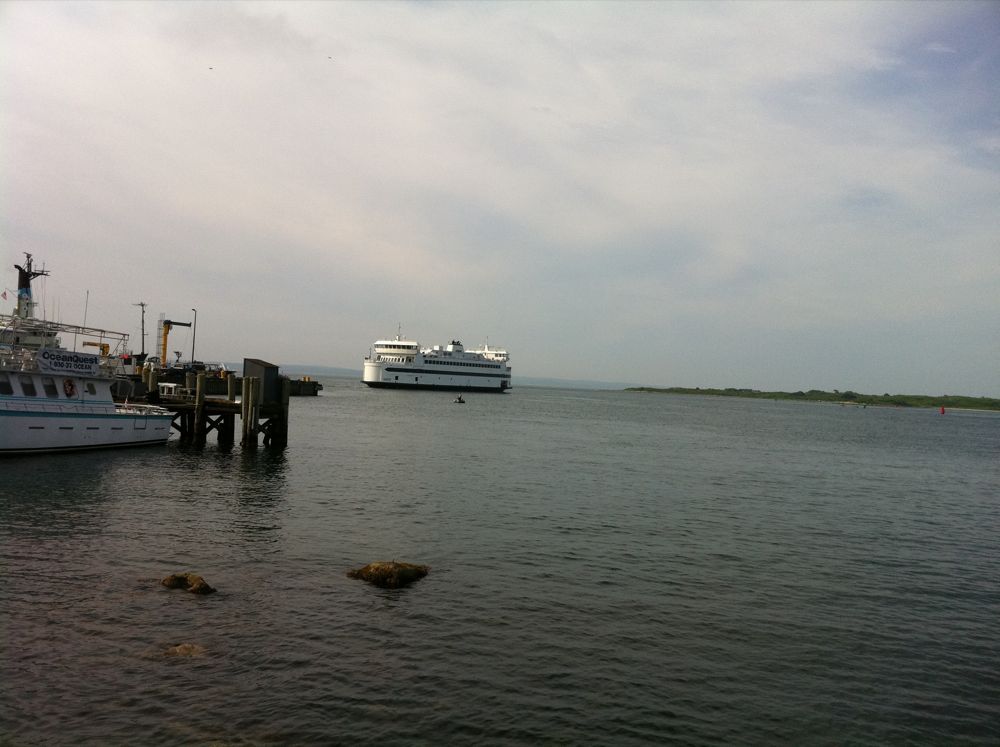
Alas, was quite a bit tired from the horrible trip and bad housing experience so did not tweet much the whole day.  Here are some pics from the day:
View from my second room at Swope
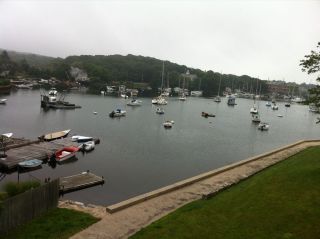
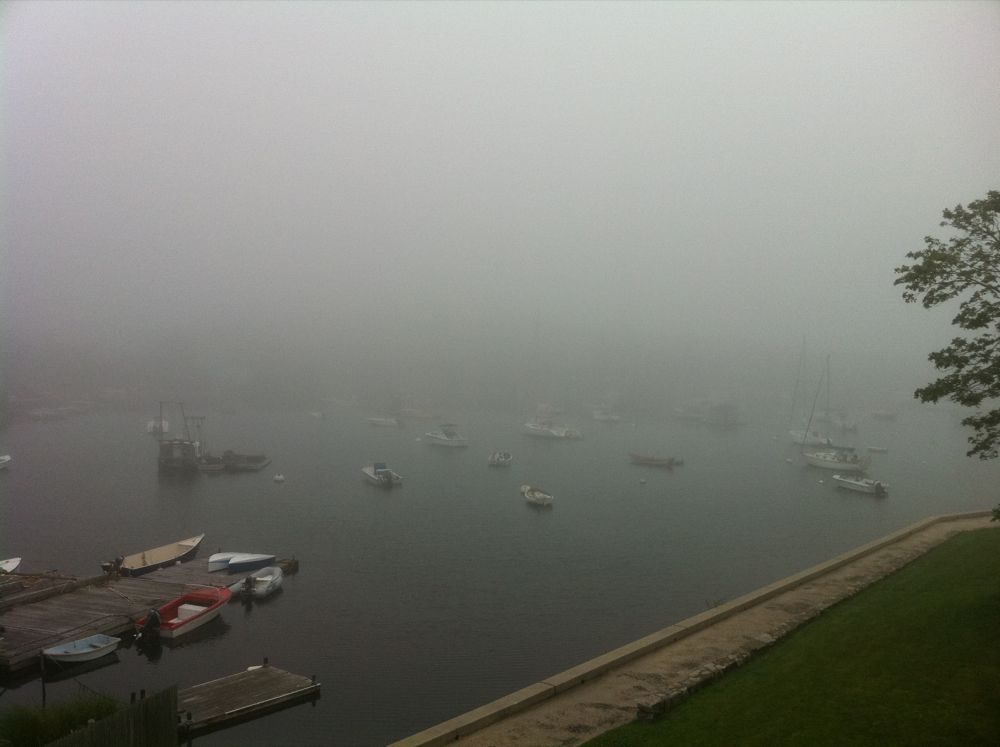
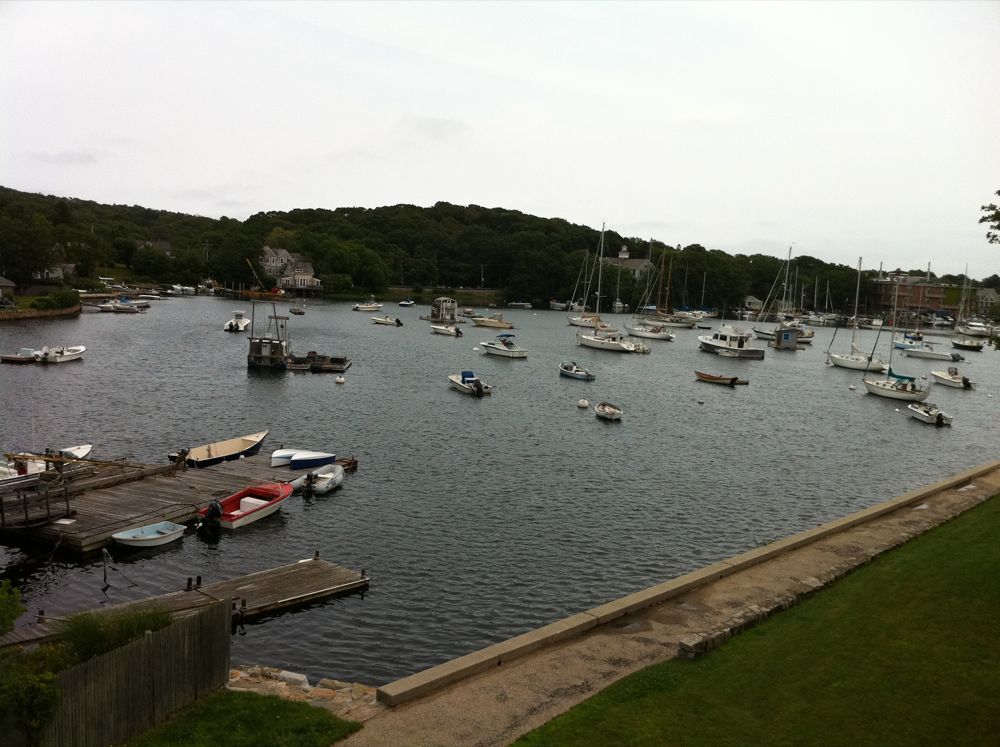
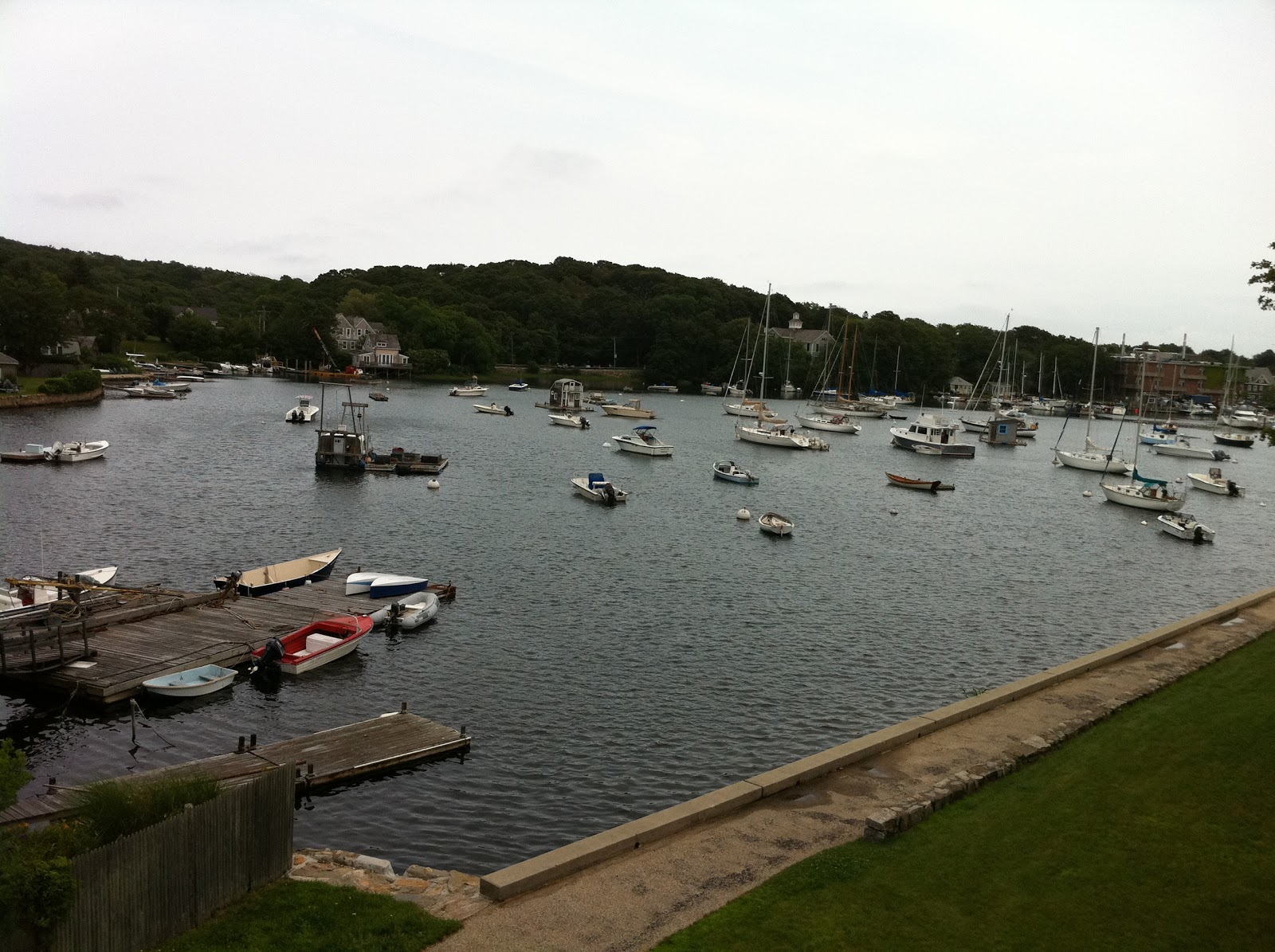
View from my room of Eel Pond
View from my room – nice view – but room was unbearably
hot even on a cool day.
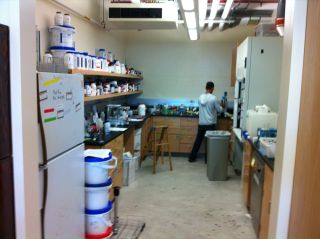
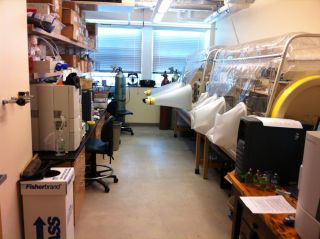
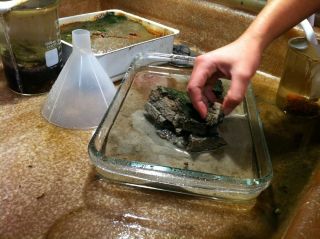
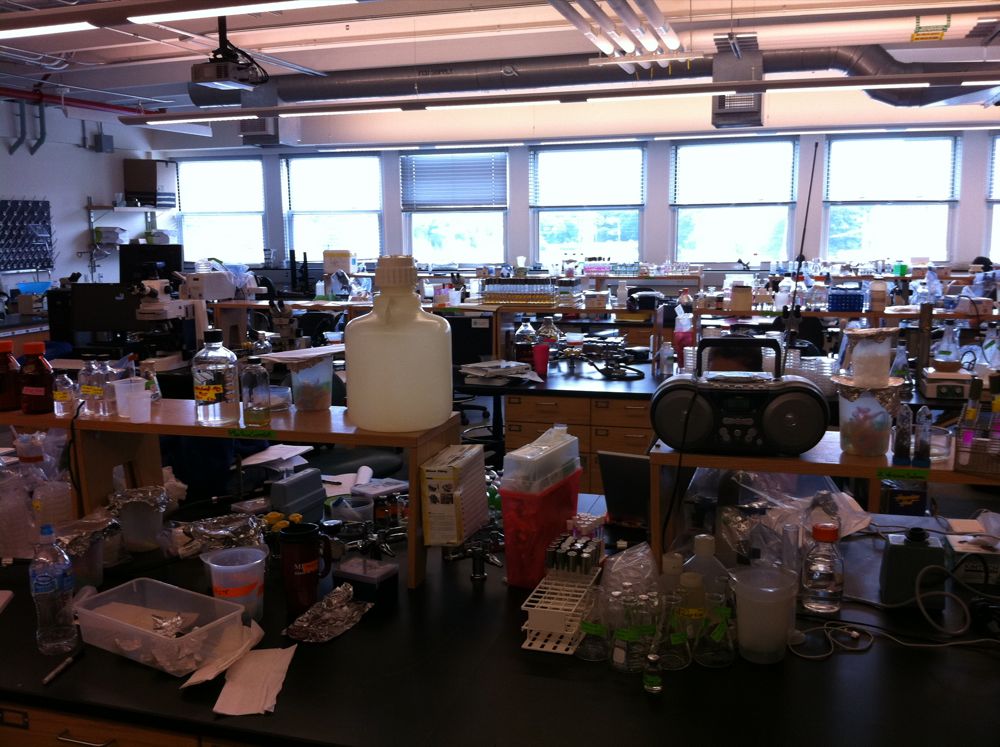
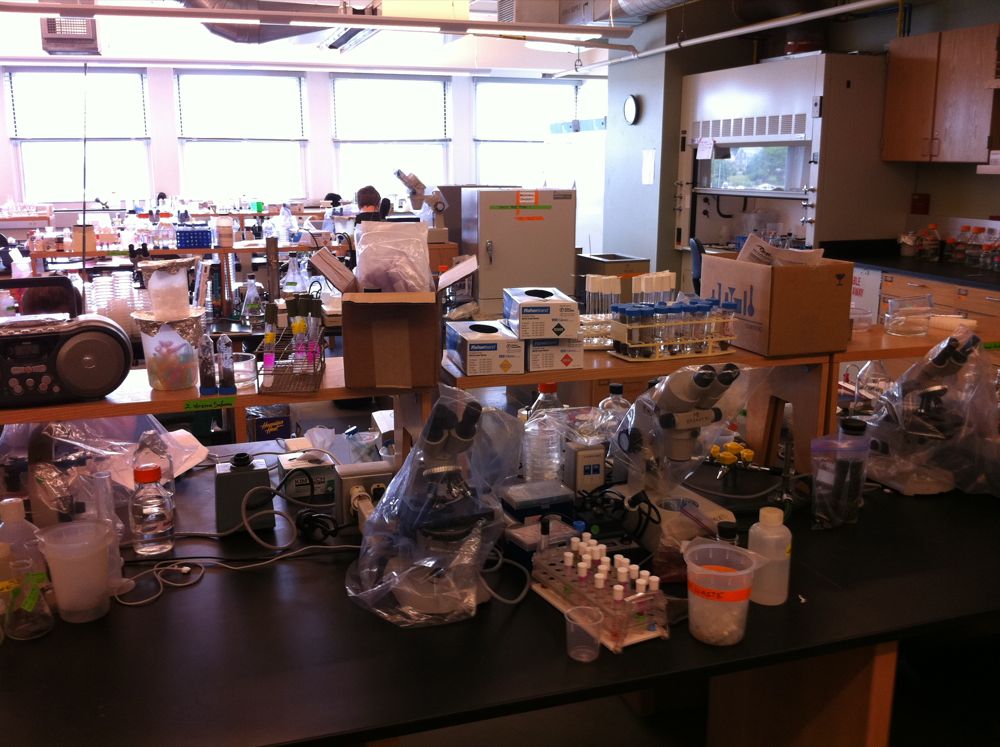
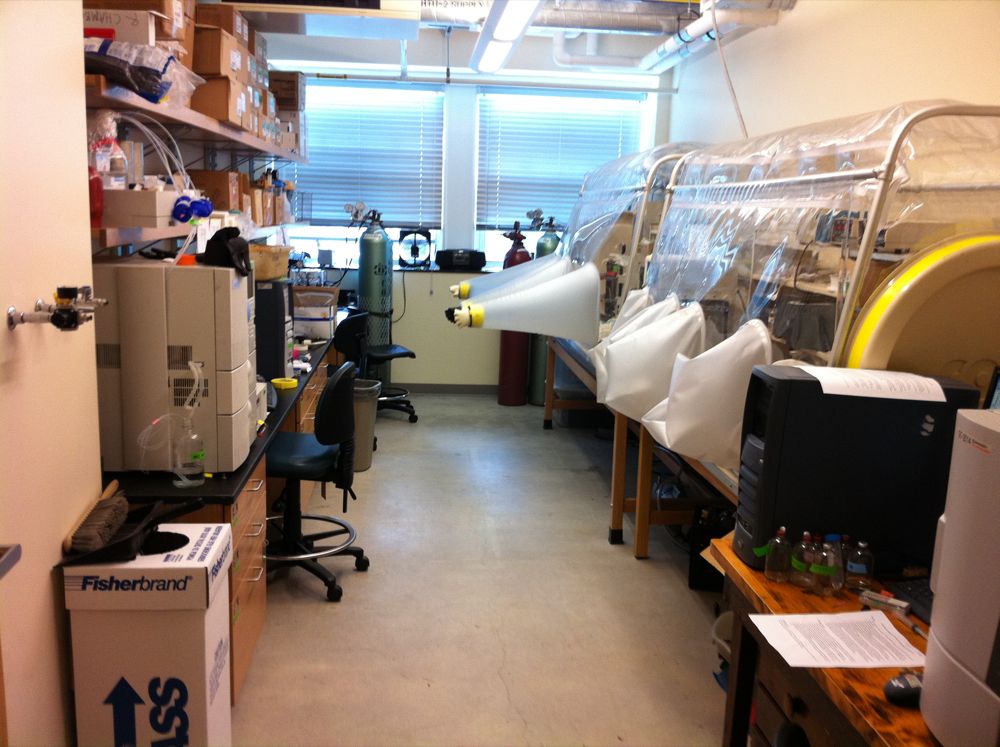
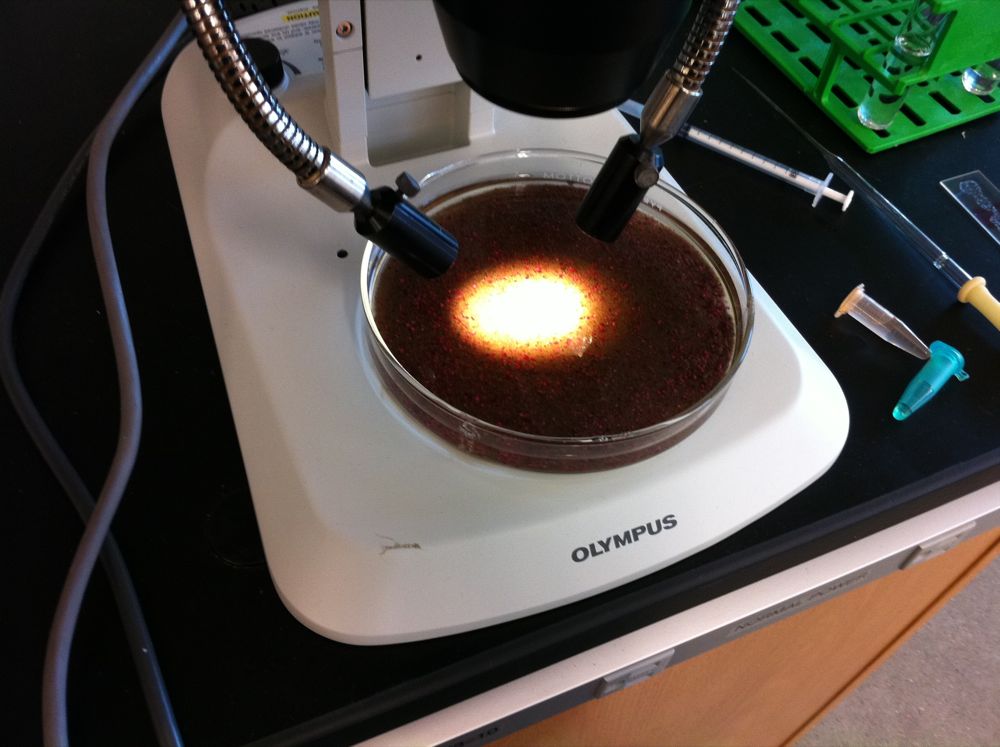
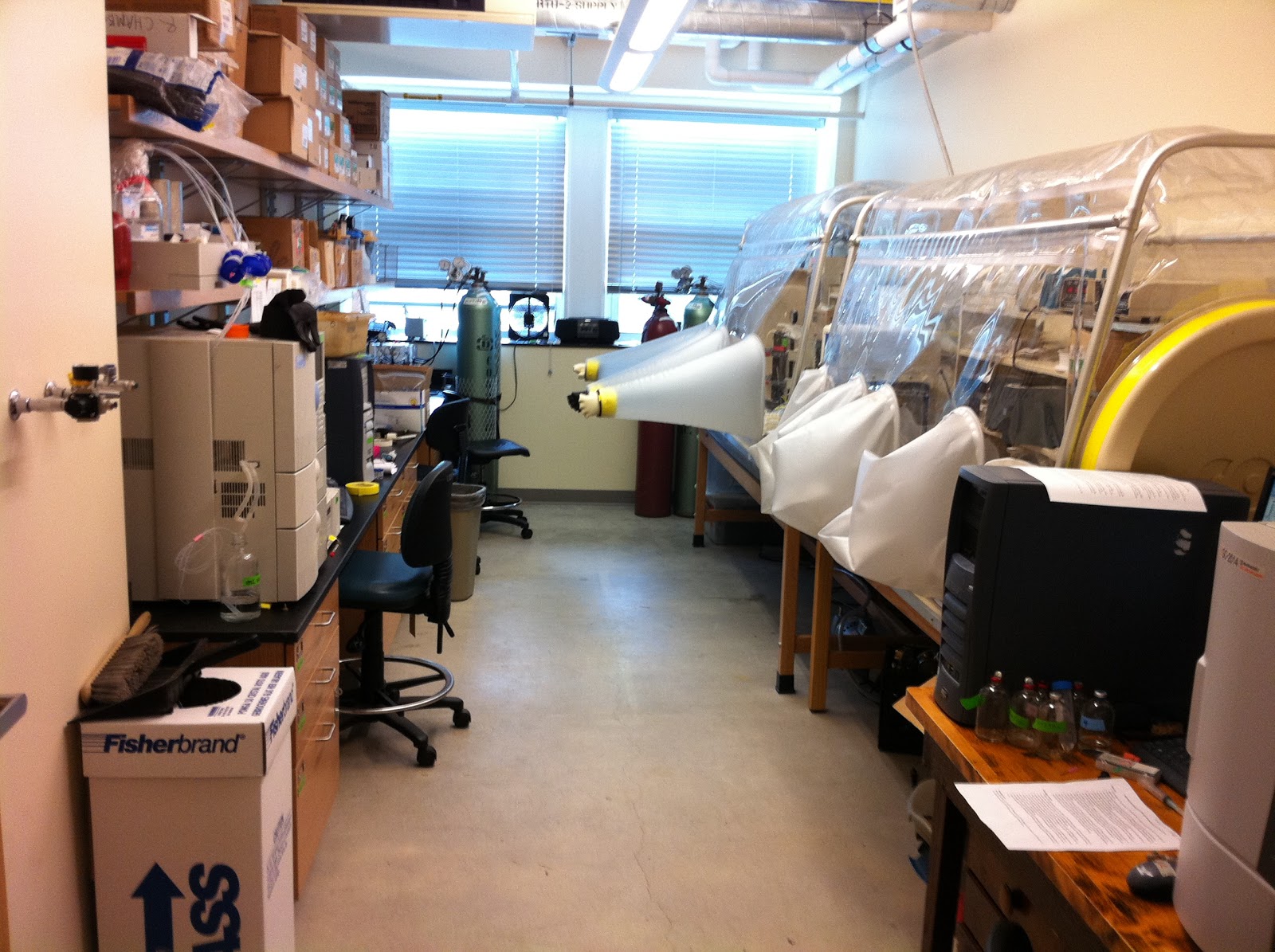
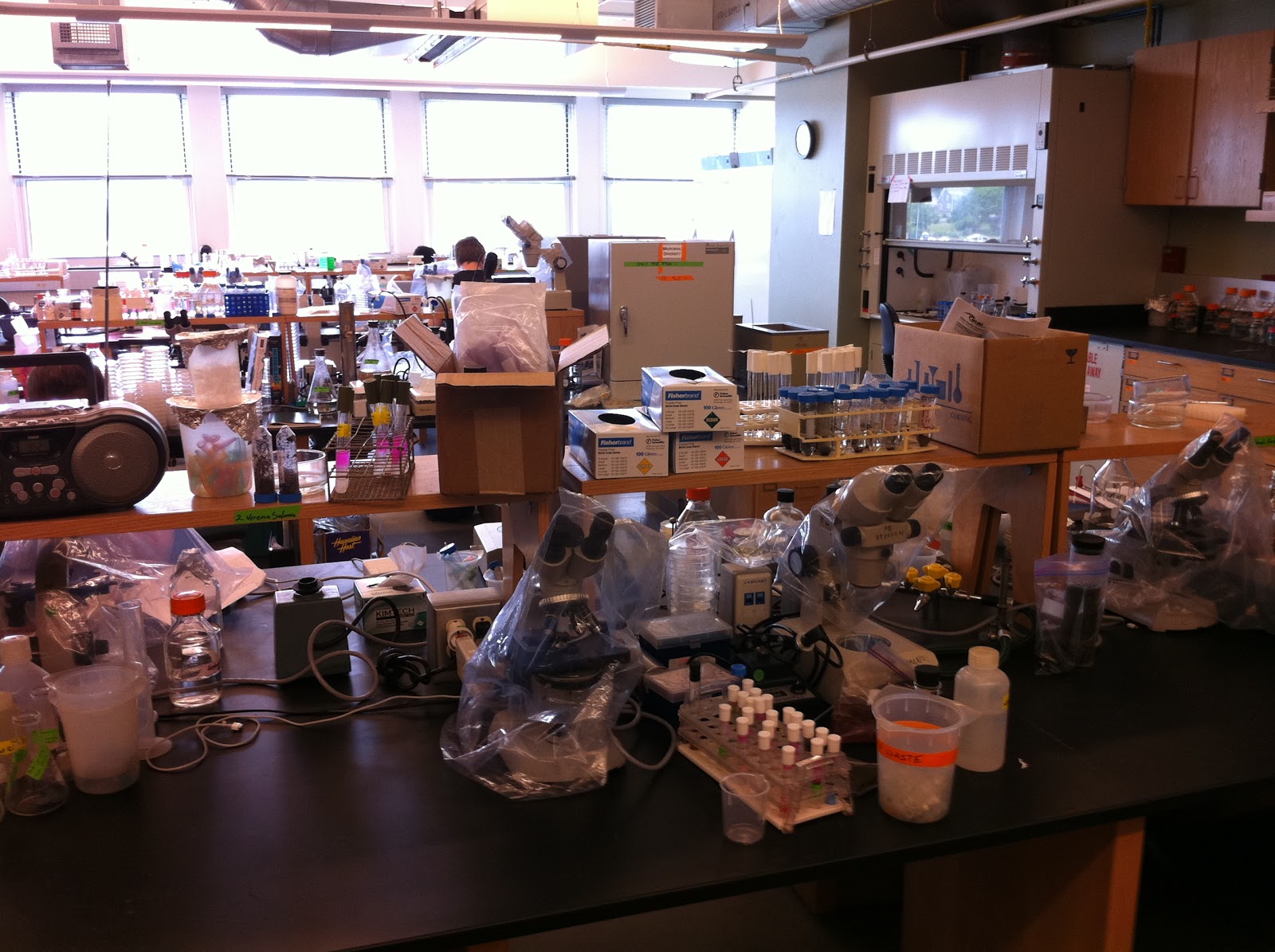
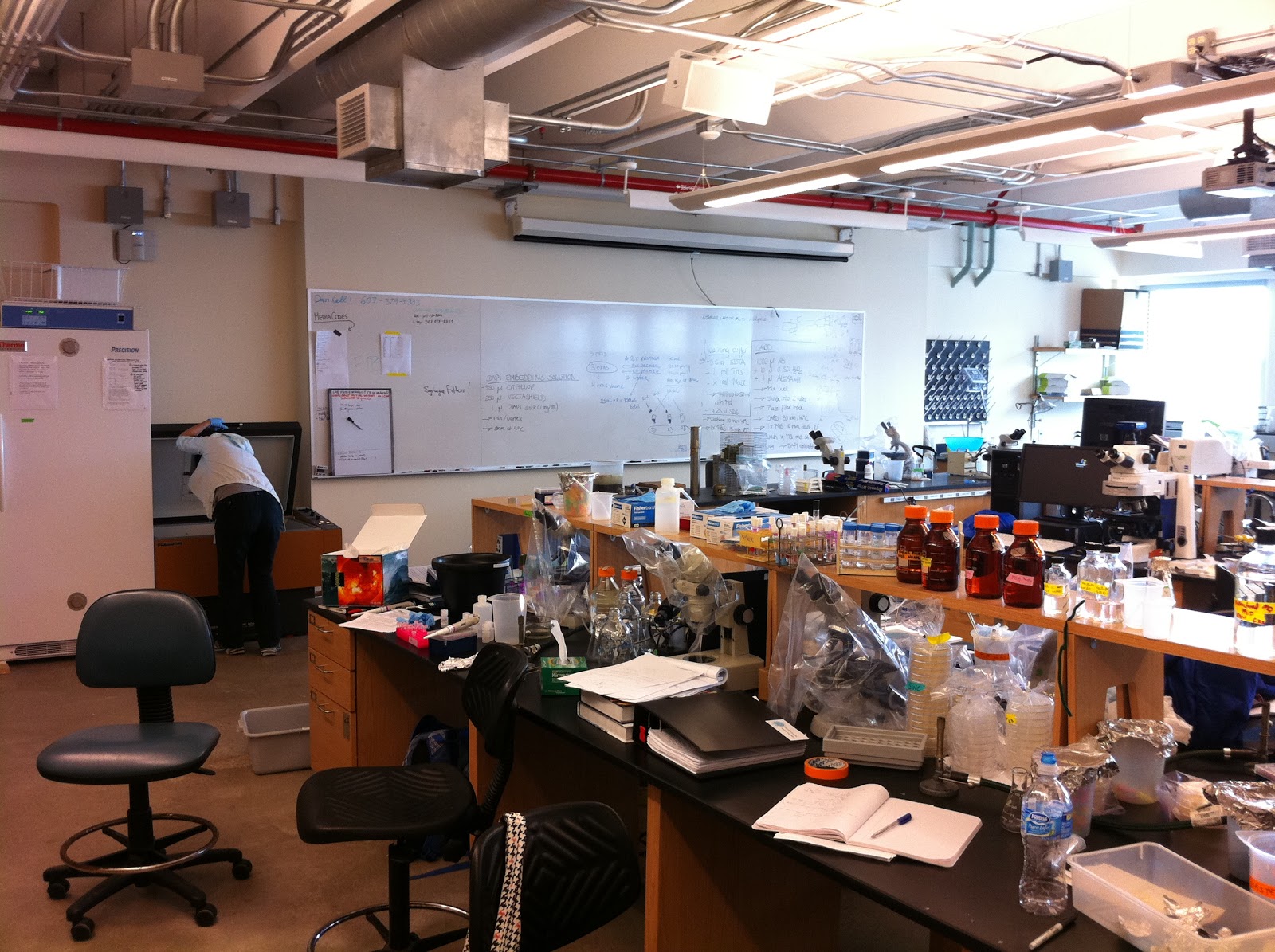
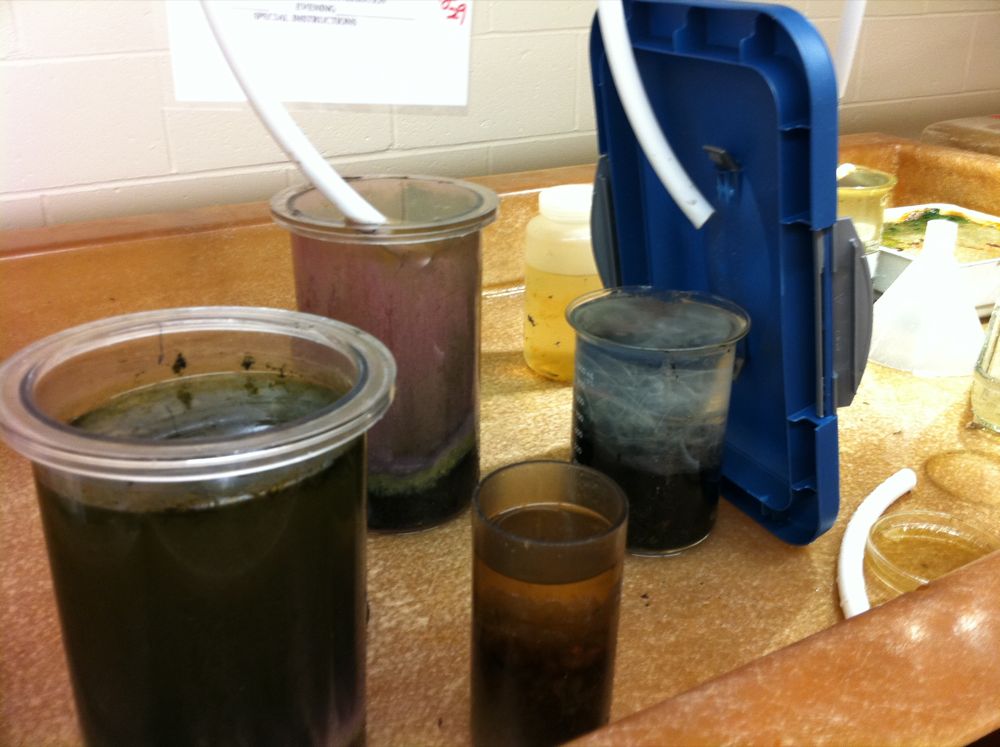
Microbial Diversity course lab

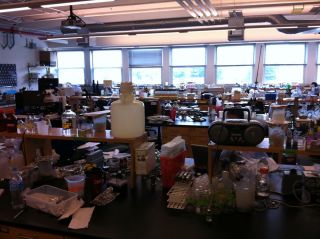
Microbial Diversity course lab

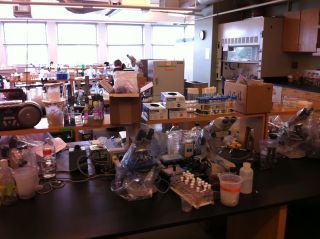
Microbial Diversity course lab

Microbial Diversity course lab
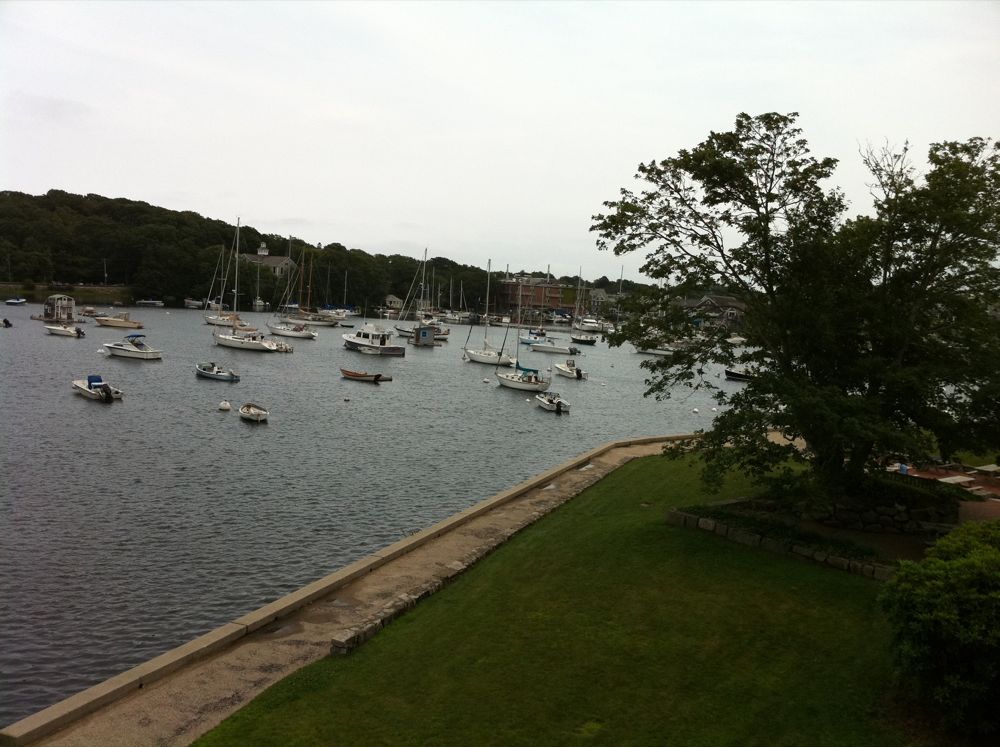
Eel Pond again
Eel Pond again
The Kidd
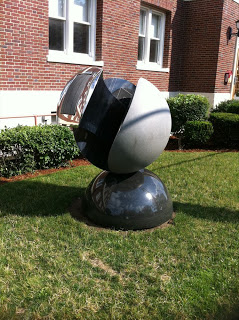
Art around MBL

Art around MBL
Art around MBL
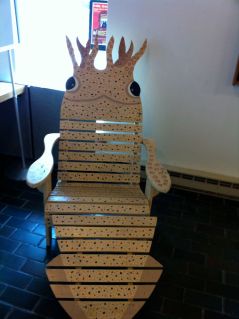
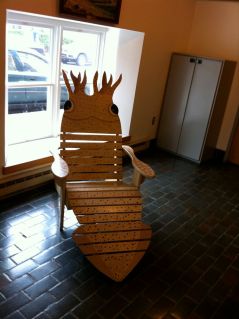
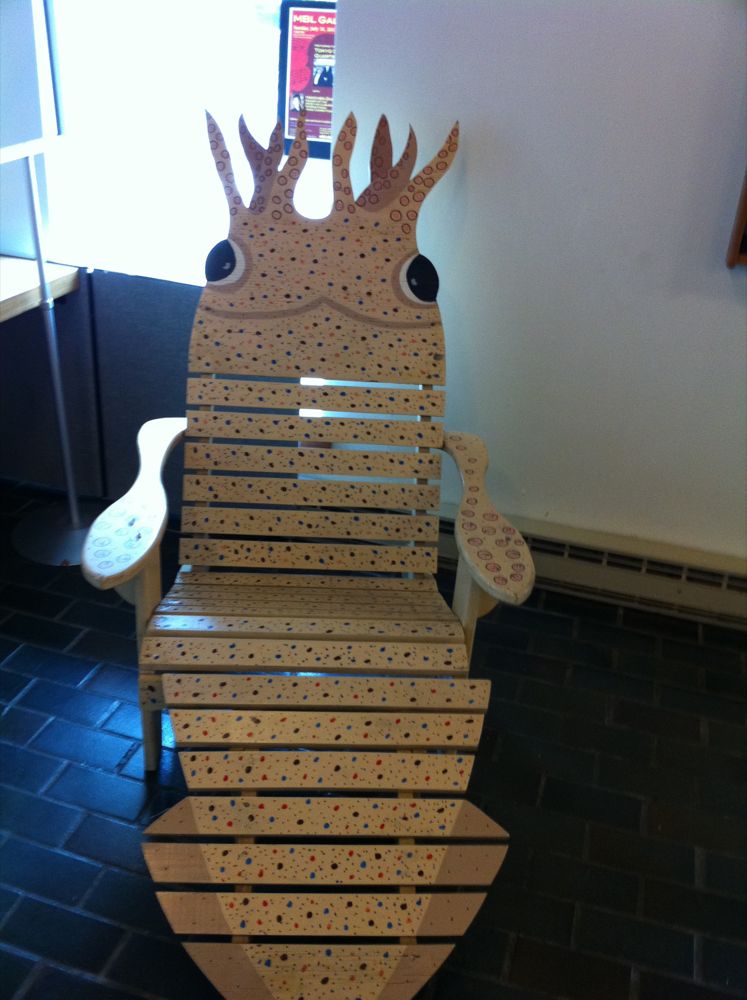
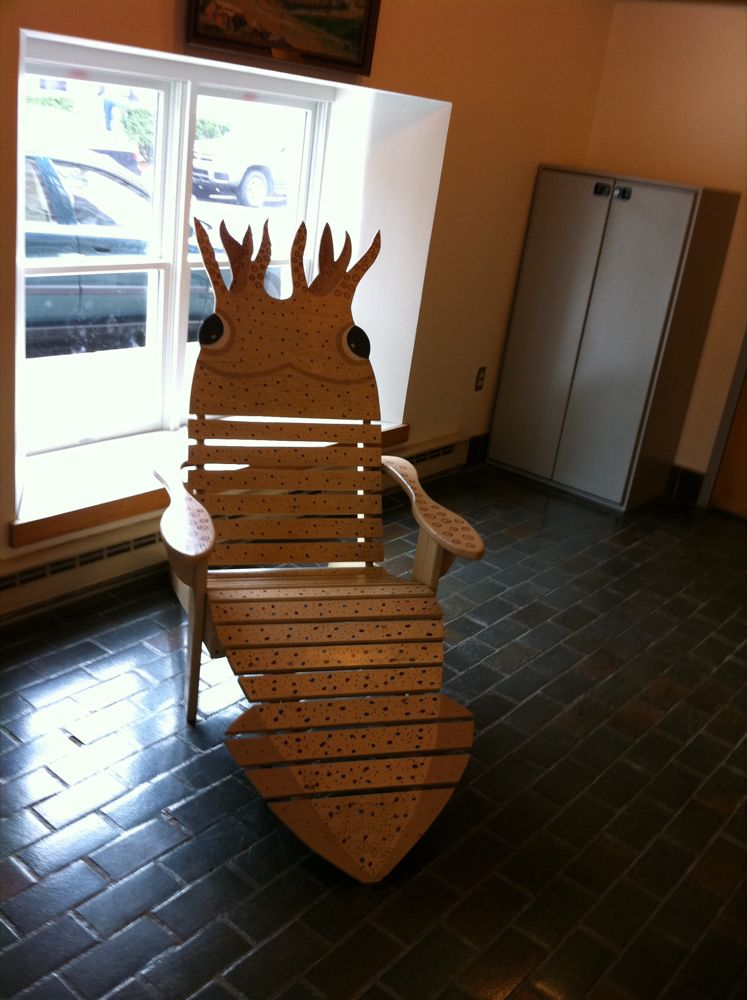
Fun chairs in the Candle House
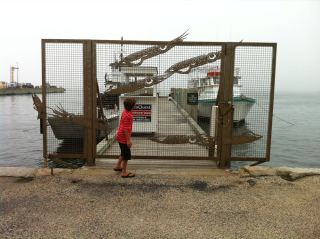
Squid on a fence
Squid on a fence
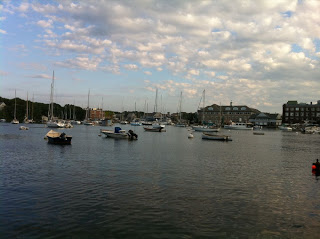
More eel pond
Magical berries
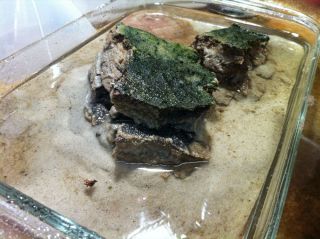
Microbial mat

Microbial mat
Magical berries
Magical berries
Magical berries

Microbial mat 
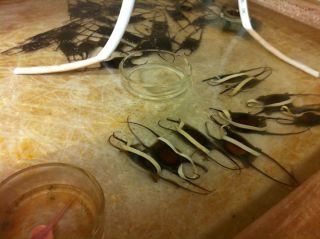
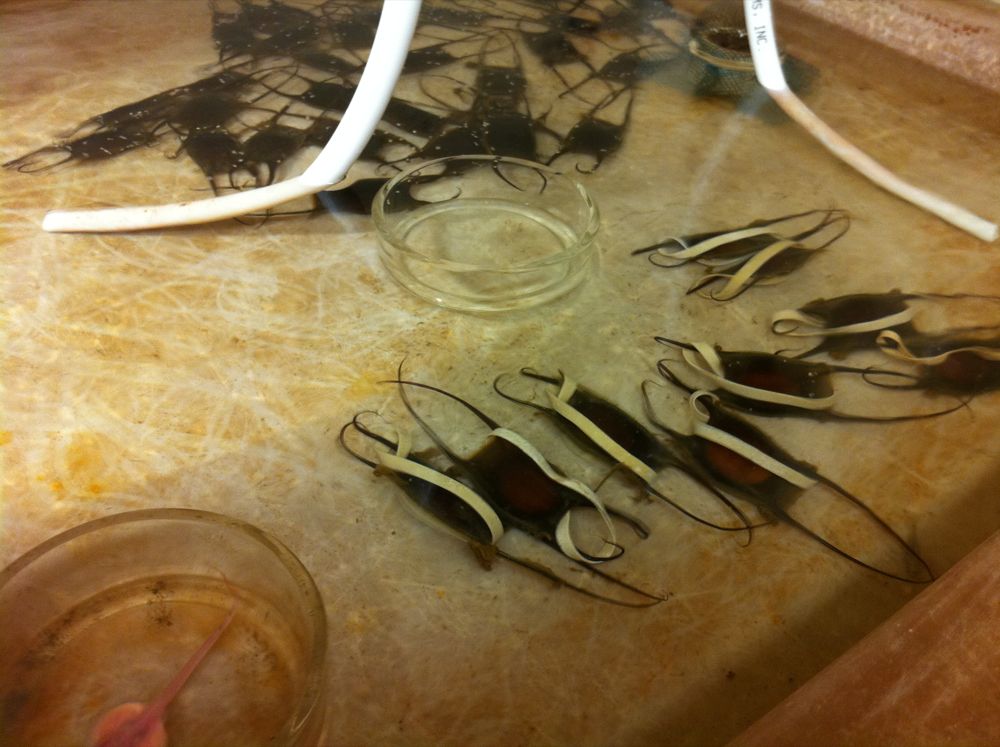
Skate babies

Day 3: Symposium

Saturday was the day for the genomics symposium I had come for.  The symposium was hosted by the Microbial Diversity Course and was focused on microbial genomics.  There were four speakers – me, Howard Ochman, Nancy Moran and Eugene Koonin.  I thought the symposium went quite well — each speaker did a good job of not both complimenting and complementing the other speakers.   I hope the students liked it.

I spent many hours the night before and in the AM working on my talk, trying to fine tune it for the audience.  I grabbed a latte in the morning at a nice Woods Hole place, and eventually walked on over towards the lab.
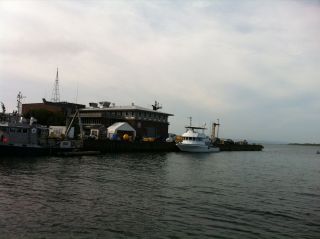
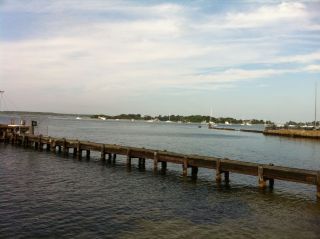
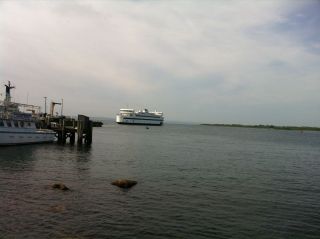
I headed over to Swope and fortunately found a person from the course who told me where the talks were.  I gabbed some breakfast in the dining hall and then went to the room next door where the Symposium was going to be held.  I set up my laptop and alas noticed I had forgotten my Apple remote.  So I did a App store search to see if my iPhone could serve as a remote for Keynote and it can (for 99 cents).  So I downloaded the App and got it working and was ready to go.
I got a nice introduction from Dan Buckley, one of the Course organizers and then gave my talk.  I think I went a bit fast in parts but people seemed to like it.  I got some good questions and then it was time for a break.  Anyway – here are my slides, which I posted on Slideshare: Eisen Talk for MBL Microbial Diversity Course
View more presentations from Jonathan Eisen Then Howard Ochman gave a talk.  Here are some tweets from his talk:

  • Done with my talk at MBL for the Microbial Diversity course Symposium on Microbial Genomics – now listening to Howard Ochman
  • Howard Ochman discussing how genes in a bacterial genome w/ atypical composition are considered likely to have entered by lateral transfer
  • Ochman referencing classic paper by Sueoka “ON THE GENETIC BASIS OF VARIATION & HETEROGENEITY OF DNA BASE COMPOSITION” 
  • Ochman showing time course of the plot of genome size vs. # of genes for bacteria – all looked good 1kb=1 gene until M. leprae genome
  • Ochman quotes “Less than half of the genome contains functional genes but pseudogenes …. abound” 
  • Ochman: Why aren’t there lots of pseudogenes in most bacterial genomes? B/c there is a mutation bias towards deletions
  • Ochman referencing “Bacterial genome size reduction by experimental evolution”  re: deletion bias
  • Ochman making genetic drift personal: sometimes you pull out just the blue M&Ms, which of course you really don’t like 
  • Ochman referencing “The consequences of genetic drift for bacterial genome complexity” 
  • Ochman: an increase in genetic drift from reduced effective population size can lead to increase in Ka/Ks
  • Ochman discussing how effect of drift on bacterial genome size is opposite trend predicted in Lynch and Conery 2003

Then there was a little break for Lunch.  After lunch I had an entertaining conversation with Howard Ochman about various topics.  And then we were back to talks.

Nancy Moran.  Here are my tweets:

  • Listening to talk by Nancy Moran about tiny bacterial genomes – she is discussing her work w/ now retired  prof. Paul Baumann 
  • Moran – discussing work of Allison Hansen in her lab on bacterial gene expression in bacteria containing cells in aphid gut
  • Moran discussing incredible diversity of insect symbionts that help hosts obtain nutrients from nutrient poor diets 
  • Moran discussing the Tremblaya genome which has recently shown up in Genbank 
    • : @phylogenomics Tremblaya is awesome. John McCutchoen is the man – hope this is published soon.
    • : @phylogenomics 58% GC in an insect symbiont – simply weird. McCutcheon talked about this at SGM Insect Symbiosis in Harrogate, UK in April.
    •  yes, high GC but it is related to organisms with even higher GC

Then Eugene Koonin. Here are my tweets from his talk:

  • Now listening to the one and only Eugene Koonin discussing evolution of archaea/bacteria at MBL Microbial Diversity course 
  • I note my start in genome evolution really came from reading papers by Koonin on helicases
  • Koonin showing figures from one of my favorite papers of his: … the emerging dynamic view of the prokaryotic world 
  • Koonin: Archaeal genomes are even more gene dense than bacterial genomes
  • Koonin: the majority of genes in bacterial and Archaeal genomes are part of conserved families
  • Koonin: most gene families show patchy phyletic patterns across bacterial and Archaeal genomes
  • Note – Koonin has more than 500 papers listed in Pubmed
  • Koonin : most of the universal genes in bacteria and archaea are involved in translation
  • Koonin describes “bureaucratic ceiling” to genome size b/c of exponential incr. in regulators vs. genome size – can’t get too big
    •  @phylogenomics Limit on “genome size”. He means gene number (which does correlate in bact/arch but not euk)
    •  Sorry .. He is only discussing bacteria and archaea … So here it does correlated w/ genome size
    •  indeed .. He was using gene number as his key feature
  • Koonin describing 1998 Aravind et al paper on Aquifex which was 1st report of massive gene transfer between bacteria / archaea
  • Side story: when Thermotoga genome paper came out (I was buried as middle author) Koonin called me, POd that we had not refd Aquifex paper
    •  yes but this was a bit of a big deal … Press coverage … Nature paper, etc etc …
    •  The funny part was . He was POd at me even though I was buried in the middle b/c he said I should know better …
  • I must say Koonin is giving a damn excellent talk on bacteria and Archaeal evolution
  • Koonin discussions how there is a central tree-like structure in the “forest of life” of trees of conserved genes
  • Koonin discussions this: Comparison of phylogenetic trees and search for a … 
  • Koonin: there is a strong signal of vertical evolution even among much lateral gene transfer, b/c transfer is mostly random
  • ATGC: a DB of orthologous genes from closely related prokaryotic genomes & a research platform for microevolution
  • Koonin: “There is such a thing as a prokaryote” (gives many reasons)
  • Koonin discussing my favorite topic these days: CRISPR-CAS system
  • Koonin discussing his paper on early finding of crispr elements
  • Prediction: A Nobel in the near future will go for work on CRISPR/CAS system of adaptive immunity in bacteria / archaea
  • Koonin discussing the journal he helped start called Biology Direct which is both  and has open review
  • Koonin has a new Book: The Logic of Chance: The Nature and Origin of Biological Evolution: ProQuest Tech Books

After Koonin was done, everyone dispersed.  I wandered around and took some pics:
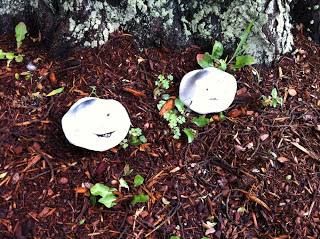
Magical mushrooms
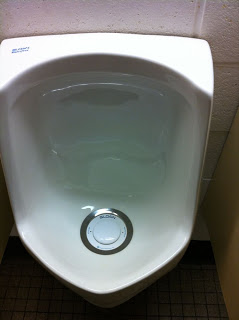
Sloan Urinal (inside joke about http://microbe.net
????

I went back to my motel room for a little bit and then headed down to Eel Pond for a Course BBQ.
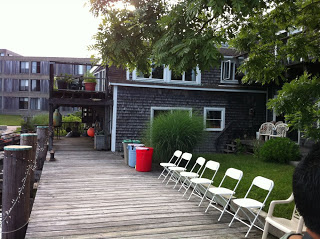
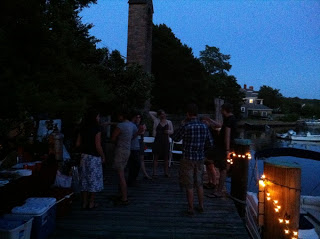
Deck for party
Deck for party

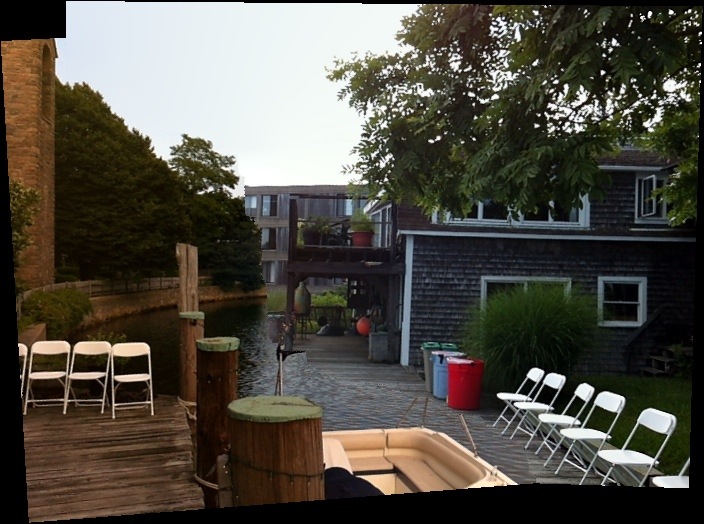
Photosynth stiched together pic
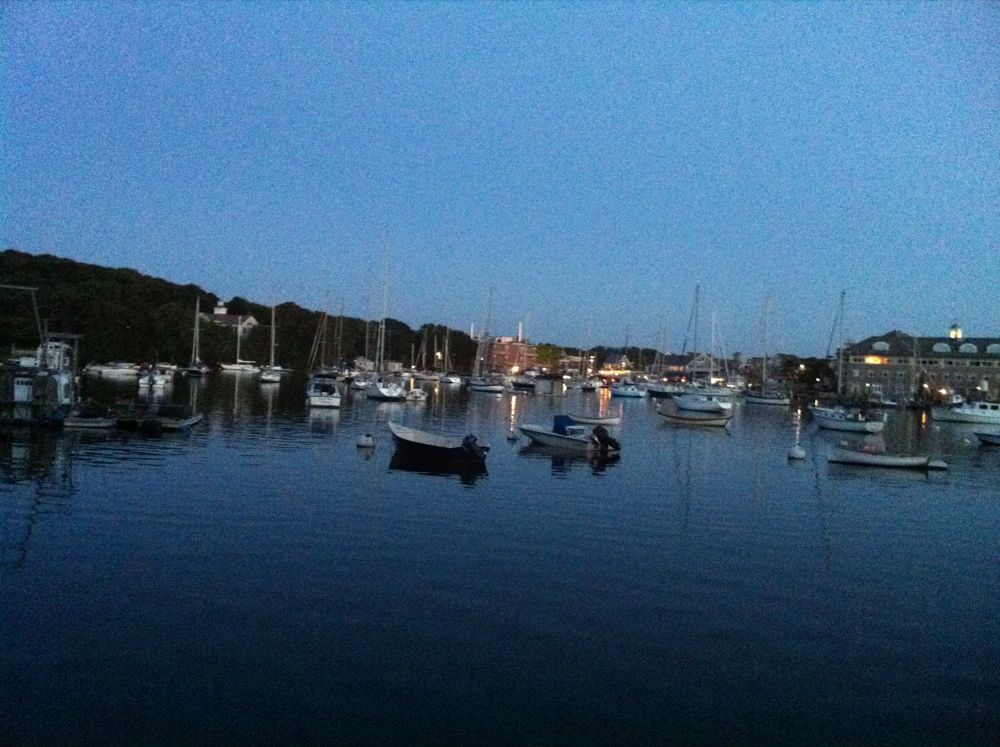
Eel pond

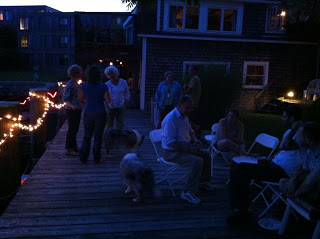
Party
Party
Party

I then headed in to town where my friend Nipam Patel was having a party for the Embryology Course he was teaching.  And I hung out as his house for a bit and then went back to my room.

Day 4: Home

Got up late.  Checked out.  Wandered into town with my suitcase.  Took some pics.
And after some internal debate, decided to switch my flight to return that day rather than go visit relatives in Boston (sorry Diana, Hal — just wanted to get home).  So I took the Bonanza Bus to Logan – discovered that Karl Stetter was also going on the bus to Logan.  I tried to watch the US-Brasil women’s soccer game on my iPad using the wireless they have on the bus but it was choppy.  So I just followed updates on the game – and even that was exciting.

Here are my tweets from the day:

"Yeast in Spaaaaaaaaaaaaaaaaace" – good to have some microbiology on the last Space Shuttle mission

Well, this is a good story lead in
“Chefs across the globe may not know it yet, but their baker’s yeast just left the kitchen and blasted off into low Earth orbit”.

This is from a NASA press release: NASA – Yeast Rising to the Space Station

Sure – NASA has had some issues with their press released in the recent past. But I like this one. Funny. Interesting. And the science seems, well, worth doing. They are putting the yeast deletion constructs into orbit — and they are going to use them to study what genes might be involved in survival in microgravity. Sure the connections they try to make to humans are a big big stretch (though I love the “yeastnaut” term), but that didn’t bother me for some reason – maybe since it is done in a light hearted way.

Hat tip to Corey Nislow, one of the researchers behind the Yeast in Space project, for pointing me to this story. 

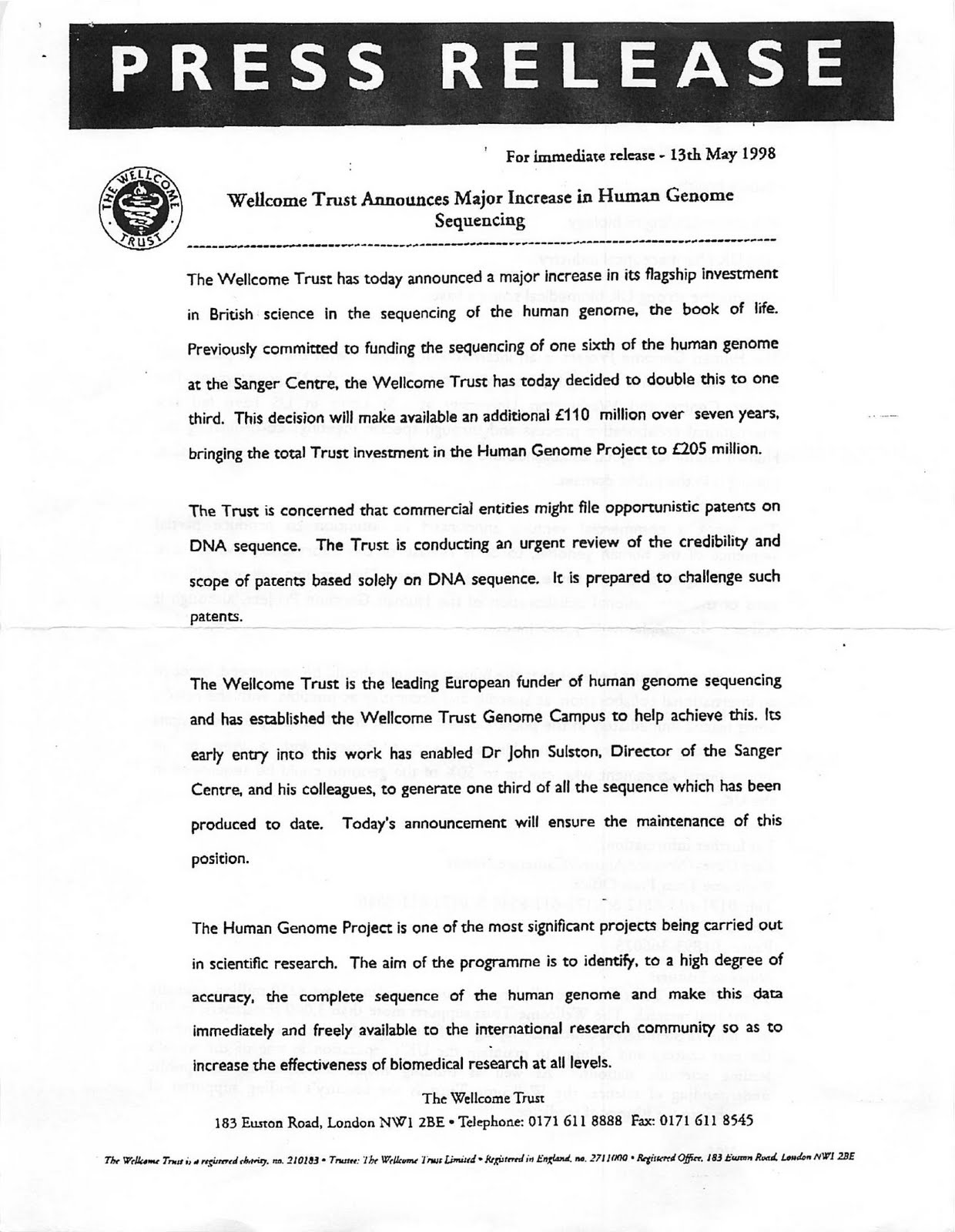
Fun with a scanner – 1998 press release from Wellcome Trust re: Celera

Just found this in an old folder on a different topic.  It is a press release from the Wellcome Trust that was handed out at the Cold Spring Harbor Genomes Meeting in 1998 in response to the announcement from Venter et al. that they were starting a company to sequence the human genome.

Ahh … Pubmed Central. I love you. In many ways. But alas, not today. #openaccess

Been having some challenges with Pubmed Central recently.  What is Pubmed Central?  If you don’t know, and you have anything to do with the life sciences in any way, you should learn.  A good place to learn is on their info page here.   Here is the summary:

PubMed Central (PMC) is a free archive of biomedical and life sciences journal literature at the U.S. National Institutes of Health’s National Library of Medicine (NIH/NLM). In keeping with NLM’s legislative mandate to collect and preserve the biomedical literature, PMC serves as a digital counterpart to NLM’s extensive print journal collection. Launched in February 2000, PMC was developed and is managed by NLM’s National Center for Biotechnology Information (NCBI).

It is a fantastic resource.  Alas, there is one major limitation.  Mostly it is an archive of papers submitted by publishers.  Some publishers do not submit their material there.  Fortunately, there is now a way around this.  Author’s can submit their own papers to PMC.  However, there is some caveats to this — there are severe restrictions on what one can submit.  In the past I was aware of one of these caveats – the work in the manuscript has to have been at least partially supported by NIH funds (well, there is a way to submit if supported by the Wellcome Trust to).  To submit NIH supported work, you have to use the NIH manuscript submission system.  Why they won’t take papers supported by other funding agencies I do not know.  Imagine if Genbank only took sequences inferred with NIH funds?  Imagine if libraries only took books supported by rich Europeans.  I am sure Pubmed does this because other agencies don’t pay for the archive but still — I think this is shortsighted.

And today I discovered a new caveat.  A few days ago I used the NIH manuscript submission form to submit author versions of a few of my past papers supported by NIH funds.  And one of them was rejected today because

Your submission to the NIHMS system cannot be processed because the NIH Public Access Policy does not apply to this material. The NIH Public Access Policy does not apply to book chapters, editorials, letters, or conference proceedings. As such, we are sorry that we cannot process your submission.

And though my paper was not one of these things, it is marked in such a way that it seems to be an editorial.  And thus apparently they won’t take it.  I find this a bit surprising since PMC is actually filled with things like editorials including ones by me like PLoS Biology 2.0 and Genomics of Emerging Infectious Disease: A PLoS Collection and meeting reports like Meeting Report: The Terabase Metagenomics Workshop and the Vision of an Earth Microbiome Project. 
and letters (none of mine but I found many of others including even responses to letters to the editor). I have run this through my brain over and over and I cannot figure out why (or in fact how) they would exclude these types of materials.   I am going to ask around and see if anyone knows more detail about this but I am not convinced there will be a simple explanation.  Most likely it will have something to do with trying to cover “research” but not opinion.  But in my opinion, research and opinion are not always distinct.

Anyway – I am a bit annoyed by all of this because really, all I want to do is find these best way to share all of my past publications and this seemed like a useful addition to posting them on my website and/or in Mendeley as well as in UC sponsored archives.  And it would be great to have all my papers in PMC.  I note – the vast vast majority of my recent work is in PMC because I basically only publish in Open Access journals that deposit their material there.  But a lot of my old work is not in PMC.  And that is too bad.  Someone, somewhere might find it useful …

A squatter’s journey to the Marine Biological Lab (MBL)

Well, I have arrived at the Marine Biological Lab in Woods Hole after a pretty disastrous journal.  I am here to talk in a Symposium that is part of the “Microbial Diversity” summer course: Microbial Diversity – Mbl.edu.  I am hoping all goes better in the next few days than it did yesterday.  I flew from Sacramento to Minneapolis and the plane arrived early.  Then we sat on the runway for 30 or so minutes because first, we did not have an open gate to go to and then second, because the gate staff could not get the walkway to connect to our plane.  Then I thought I was going to barely make my connection to Boston.  Alas, my flight to Boston was delayed due to engine trouble.  I discovered via twitter than some others were also stuck waiting for Delta to fix their planes.

Finally, we boarded and then we sat in the plan for an extra 20 minutes to load luggage and cargo.  Finally I got to Boston – about an hour late – and got picked up by a nice Prius from GoGreenShuttle (thanks Julie Huber for the suggestion) and got to Woods Hole at about 1:30 AM.  I called Lizzie Wilbanks, a Phd student in my lab who is one of the TAs for the course this summer, and she came down with what were supposed to be my keys to one of the dorm rooms in Swope Hall.  She went back to her room and I went to open mine.  Alas, the key did not work.  It was late and I kept trying to get it to work, when a very unhappy woman opened the door and said, in essence “WTF?”  I said, well, this is supposed to be my room.  And she said basically “I don’t think so” and shut the door.  Fun.
So I called Lizzy again and she came back down and we called the night security who eventually got me keys to another room.  It was quite excessively warm in the room, and stuffy.  But it was a room.  Eventually, at about 3AM I got to sleep.  Then I was woken up by the cleaning crew coming to clean the room.  I think perhaps they were surprised anyone was in the room but they said they would come back.  Then I think they ratted me out with the housing staff, and the phone started ringing off the hook.  I was at this point awake.  So I went to take a shower and use the facilities.  There is no pleasant way to put this, so just here goes.  While I was on the can, the phone kept ringing off the hook.  And then, amazingly, someone simply opened the door, without knocking, to my room, with me in the bathroom on the toilet.  Lovely.  And fortunately, the bathroom door was mostly closed.  And I said “Umm … hello”.  And they said “Are you supposed to be here?”  And I said someone had been in my room the night before and I was given this room.  And then they kept asking “Who are you?”  “What room were you supposed to be in?”  So basically, I, as a faculty guest for this course, was now being viewed as a squatter.  And in a way, I was a squatter but I suppose that is TMI.

Anyway, they finally left.  I puttered around for a bit and enjoyed the view.

And when I went downstairs later they did apologize for the “mixup”.  Eventually I made it over to the course to catch the end of a talk on Archaeal ammonia oxidizers and then I went to lunch with some of the students and saw Julie Huber and others.  I got a mini tour of the course lab area which looks very very very nice.

And then I called up a motel and reserved a room.  And I grabbed my stuff and walked a mile to the motel and checked in.  I am there now.  Not sure what else can go wrong on this trip, but who knows.  Now I have to prepare my talk for tomorrow which is a bit daunting.  I am the first speaker in a symposium featuring Nancy Moran, Howard Ochman and Eugene Koonin.  Anyway – just a mini update.  More on MBL later.  I note – I have lots of personal connections here as I did undergraduate research with Colleen Cavanaugh including some trips out here and also have done work with various other folks at MBL and WHOI so am looking forward to seeing lots of folks here and reminiscing.

New #openaccess journals welcome; competition good; not sure how they know it is "top tier" though

Great news from HHMI, The Wellcome Trust and the Max Planck: http://www.hhmi.org/news/20110627.html

Leading Research Organizations Announce Top-Tier, Open Access Journal for Biomedical and Life Sciences


The Howard Hughes Medical Institute, the Max Planck Society and the Wellcome Trust announced today that they are to support a new, top-tier, open access journal for biomedical and life sciences research.

The three organizations aim to establish a new journal that will attract and define the very best research publications from across these fields. All research published in the journal will make highly significant contributions that will extend the boundaries of scientific knowledge.

A team of highly regarded, experienced and actively practicing scientists will ensure fair, swift and transparent editorial decisions followed by rapid online publication. The first issue of the journal, whose name has yet to be decided, is expected to be published in the summer of 2012.

The three research organizations developed their plans following a workshop in 2010 at HHMI’s Janelia Farm Research Campus attended by a number of leading scientists. The participants concluded that there was a need for a model of academic publishing that better suits the needs of the research community.

Dr. Robert Tjian, President of the Howard Hughes Medical Institute, says: “The message from the research community was clear: we are fortunate to have many excellent journals, but there is need for a different, more appropriate and efficient publishing model.”

Professor Herbert Jäckle, Vice President of the Max Planck Society, says: “A journal which aims to represent and publish the very best research outcomes needs an editorial team of experienced – and, crucially, actively practicing – scientists. It must also be editorially independent of those who provide the financial support.”

Sir Mark Walport, Director of the Wellcome Trust, says: “We will attract the most outstanding science for publication by establishing a journal in which researchers have confidence in robust editorial decisions taken by their scientific peers. This will be a journal for scientists edited by scientists. The ethos of the journal will be to avoid asking authors to make extensive modifications or perform endless additional experiments before a paper can be published.”

Recruitment is under way for an Editor-in-Chief who – together with the journal’s editorial team – will be an experienced, active scientist. The editorial team will be editorially independent of the funders. They will rely on their scientific expertise and active research experience to identify the best papers, make scientifically-based judgments and exercise leadership in steering these papers through peer review.

The journal will employ an open and transparent peer review process in which papers will be accepted or rejected as rapidly as possible, generally with only one round of revisions, and with limited need for modifications or additional experiments. For transparency, reviewers’ comments will be published anonymously.

As the journal will only exist online, it offers an opportunity to create a journal and article format that will exploit the potential of new technologies to allow for improved data presentation. The journal will be an open access journal, i.e. the entire content will be freely available for all to read, to reproduce and for unrestricted use. This open access system will also enhance opportunities to share content and to more directly engage the reader.

The three organizations have made a commitment to cover costs of launching the journal to ensure its success. The long-term business model will be developed by the incoming Editor-in-Chief and the team they build.

This is great news.  The more #openaccess journals we have the better.  Clearly some of the text here is a dig at existing journals, including PLoS Biology.  PLoS Biology definitely needs to work on some things – like transparency (e.g., if your article is rejected, the Academic Editor who advised the professional editors is not names).  PLoS Biology is also run by professional editors.  Thus it is not run by “active scientists” which is another one of the comments in this press release.  Personally I think it would be better if PLoS Biology was run by active scientists.  But that is not the system there.  I have a strange role at PLoS Biology – “Academic Editor in Chief” for a journal not run by academics.  In essence I am a senior advisor to the professionals who run the journal.  I personally would prefer it if academics ran the journal, probably for the same reasons that HHMI, Wellcome, and Max Planck make such a big deal out of it here.  But the professionals do run PLoS Biology.  And overall, they do a good job.  I think the journal could certainly be better – and thus this new competition should be good.  We will have to wait and see just how much competition it is.  It seems a bit weird for them to call this a “top tier” journal before it exists.  Maybe they should have said “aiming to be a top tier journal” or something like that.  But I think it probably will become one if HHMI and Wellcome and MaxPlanck scientists start publishing their good papers there.  I hope this helps catalyze some beneficial changes at PLoS Biology, but we will have to wait and see.
It is a good time for #OpenAccess when major organizations start to compete to create the best “top tier” open access journal.  In the end, this can only be good for science and scientists. 

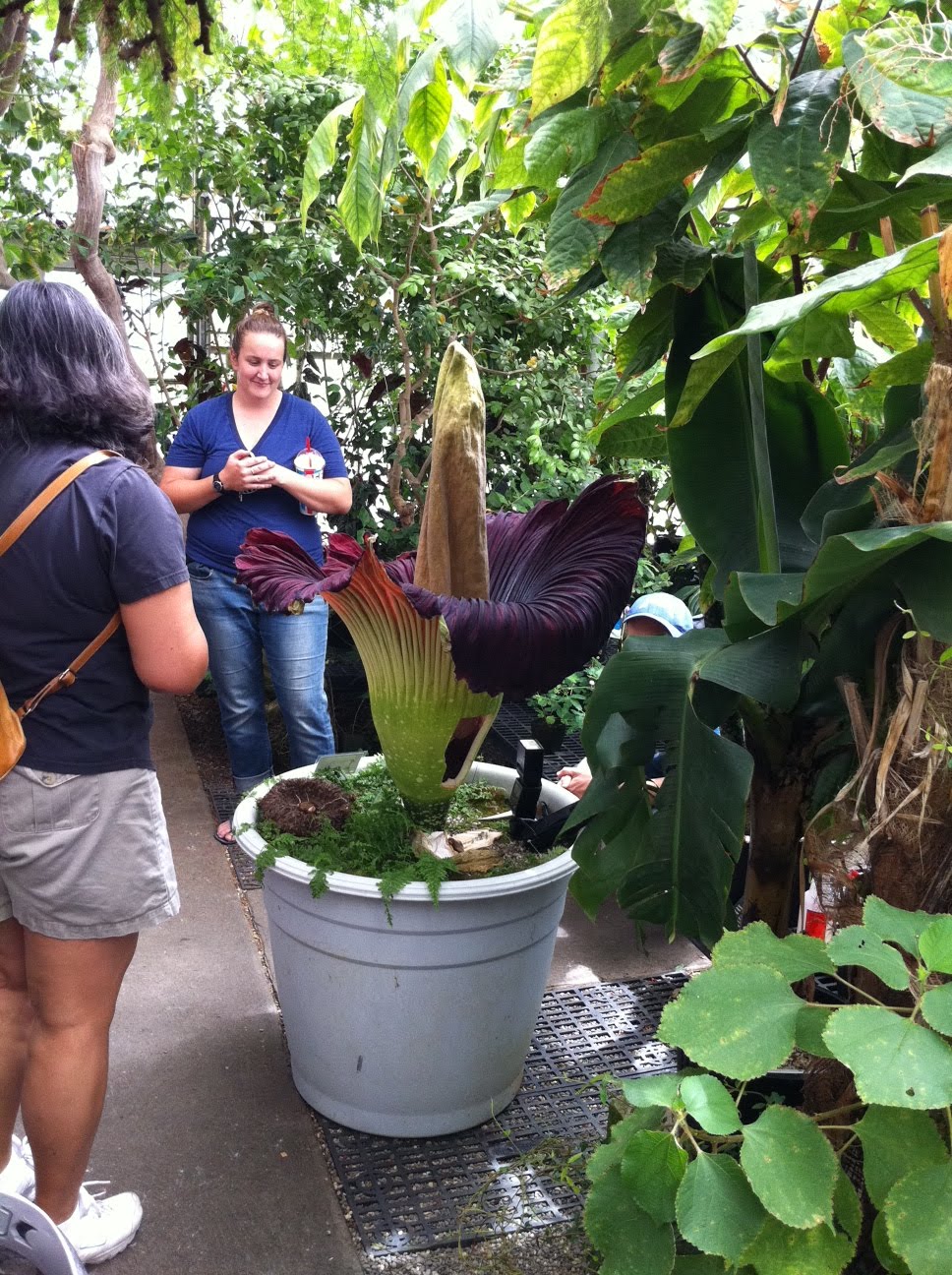
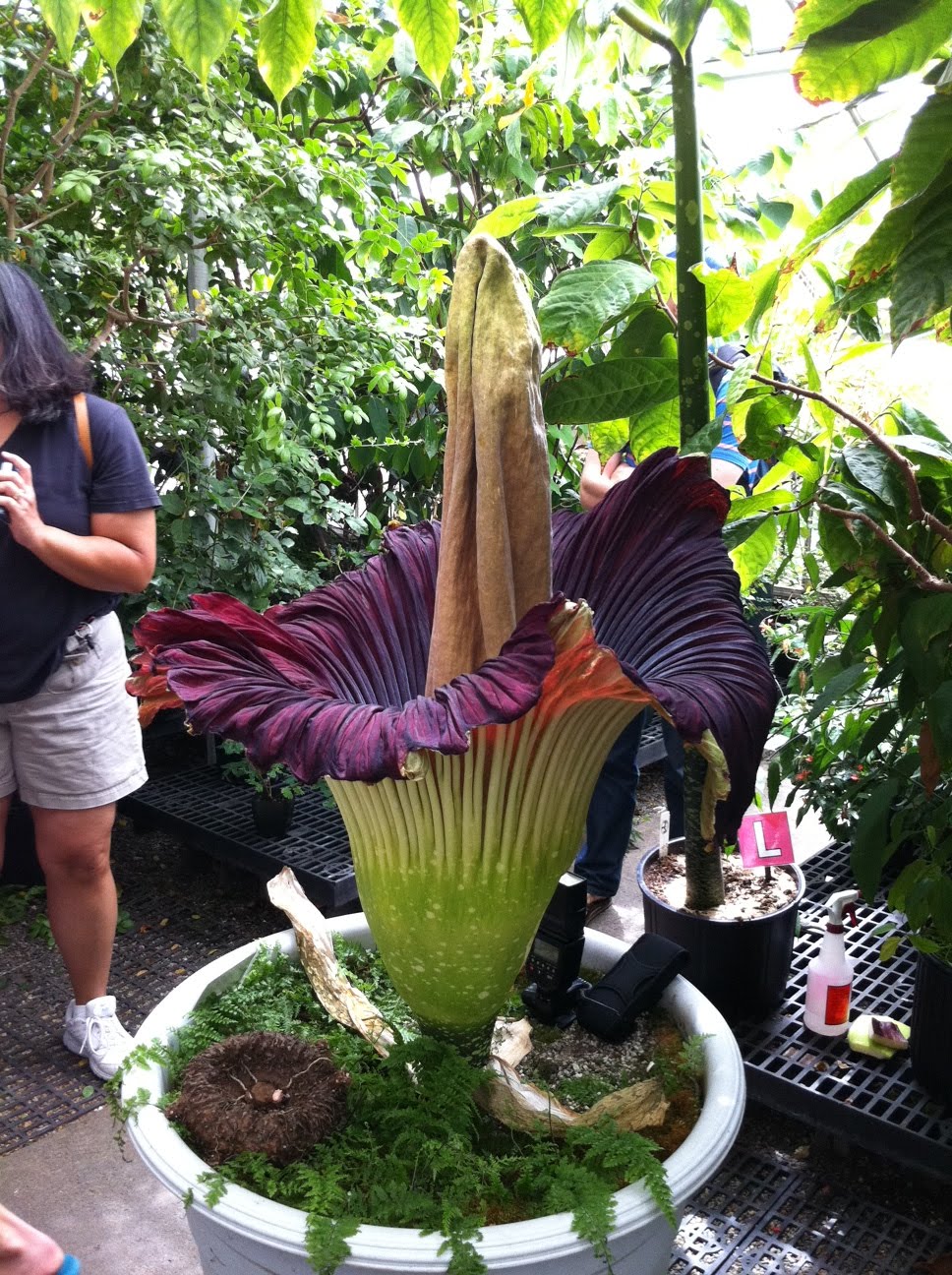
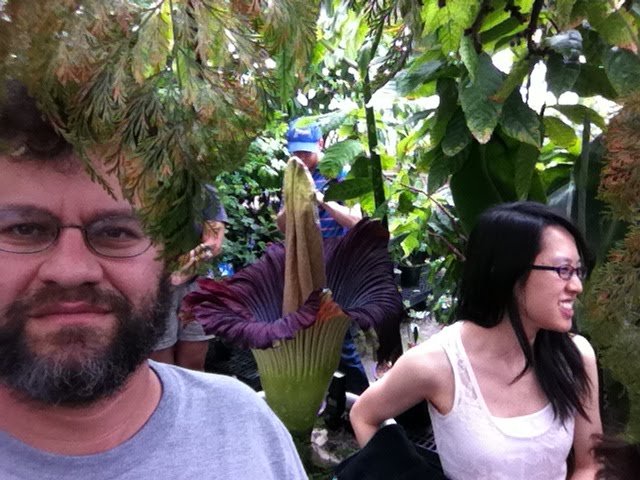
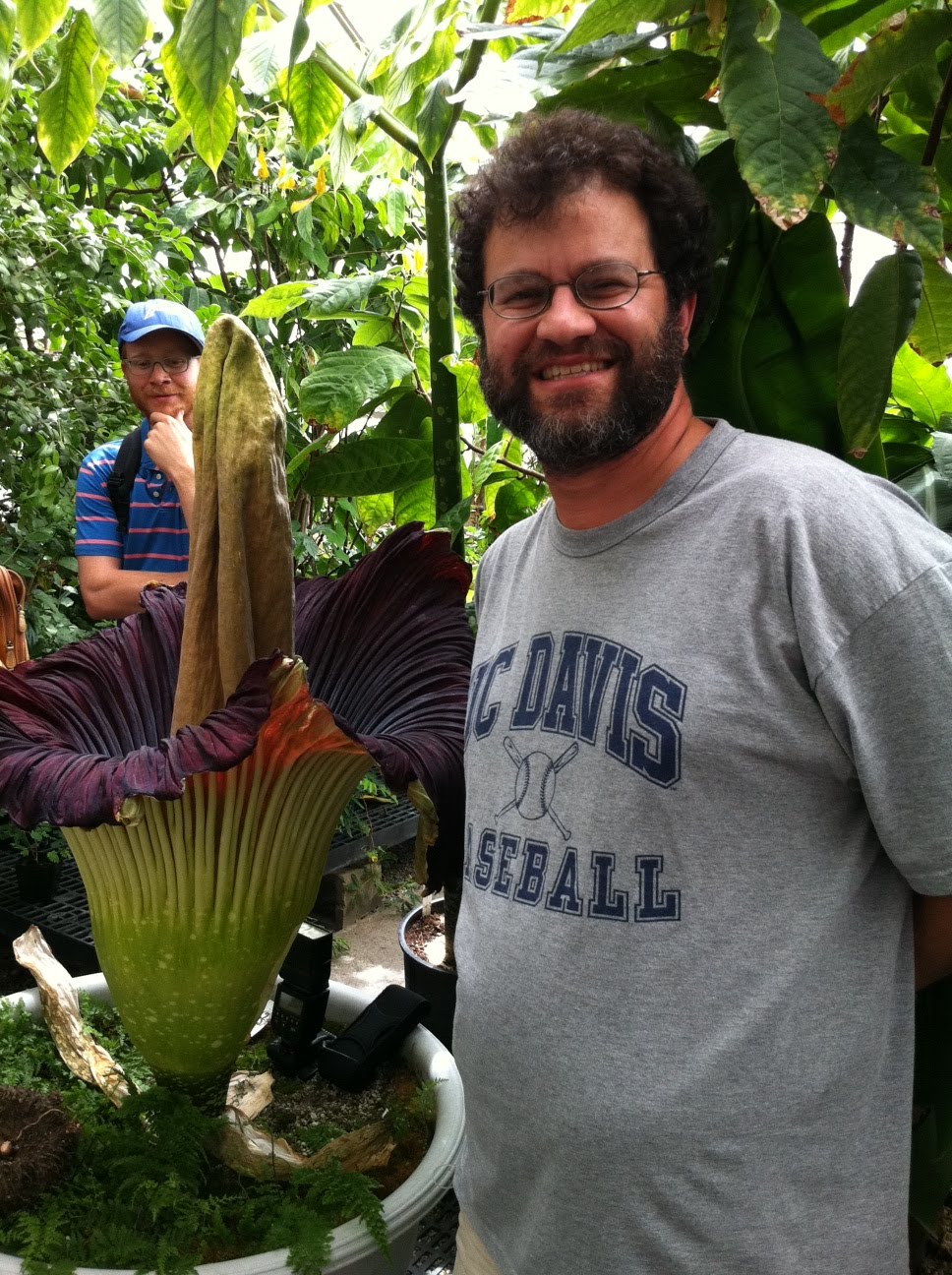
Some pics of Ted the Titan Arum "Corpse Flower"

Here are some pics I already posted to twitter of Ted the Titan Arum corpseflower. I took them a few days ago at the UCDavis Botanical Conservancy.

New #ucdavis store open on 2nd street

Pleased to see the new UCD store is open in town

Disclosures – we have disclosures – 23&me paper in PLoS Genetics

Well, I must say, this is the first time I have seen something reasonably interesting in the Funding and Competing interests sections of a paper in a while. I saw a tweet about the new Parkinson’s disease paper from 23 & me: PLoS Genetics: Web-Based Genome-Wide Association Study Identifies Two Novel Loci and a Substantial Genetic Component for Parkinson’s Disease

And opening up the paper revealed some interesting material before one even gets to the meat of the paper:

Funding: This study was funded by the participants, by 23andMe, and by a grant from Sergey Brin. Company CEO and co-author AW, wife of SB, has provided financial support to 23andMe for its general operational needs. The funders had no role in study design, data collection and analysis, decision to publish, or preparation of the manuscript.

Competing interests: CBD, JYT, ED, AKK, EMD, UF, JLM, AW, and NE are or have been employed by 23andMe and own stock options in the company. 23andMe CEO AW has provided general guidance, including guidance related to the company’s research undertakings and direction. PLoS co-founder Michael B. Eisen is a member of the 23andMe Scientific Advisory Board.

Some fascinating stuff there – and I did know some of it even though my brother, as mentioned above, is a member of the 23 and me Scientific Advisory Board. Interesting that they mention funds from Sergey Brin, stock options, and multiple roles of Anne Wojcicki. Kudos to PLoS for pushing for more disclosures – something we desperately need in science. And Kudos to 23 and me for disclosing the details here and publishing in PLoS Genetics.
Oh, and the paper seems pretty interesting too. But since I do have a bit of a conflict of interest there (with my brother and all) I am not sure I am going to write about the paper itself just yet.

I still love Dropbox – but maybe a little bit less right now

Just got this email

Hi Jonathan,

On June 19, 2011, we had a software bug that caused authentication issues. You can read more about it in our blog post. Our records show that your account wasn’t improperly logged into during this time.

We are writing to you because one or more users you share a Dropbox folder with logged into their account during that period. We have no reason to believe that the login was improper, but in the unlikely event it was, there could have been access to the information in the following shared folder:

  • (Name withheld by me)

We are very sorry as this never should have happened. We are implementing additional safeguards to prevent this from happening again. If you have any questions please contact us at support@dropbox.com

– The Dropbox Team


See The Dropbox Blog » Blog Archive » Yesterday’s Authentication Bug for more detail