Eisen Lab Blog

Travel and meeting notes from #IndoorAir2011 in Austin Texas #microBEnet

Here are some quick notes from my trip to Austin Texas for the Indoor Air 2011 meeting.

About the meeting:
I got involved in helping organize a session at this conference as part of my microBEnet project.  More on the planning and the meeting later but here are some quick notes just to get them out there.  I wrote a bit about the run up to the meeting in the following posts:

The meeting.
Below are some notes about the trip with twitter posts, pictures, and a few comments.  I will post later with some more “scientific lessons learned” and such.  But wanted to get this out there before I forgot details.

Headed out June 6.
Was going to head out June 7 but decided to head out late on June 6 so I could get to the meeting a bit earlier.  I am posting my tweets below as a guide to the trip.  Tweets are highlighted in yellow.

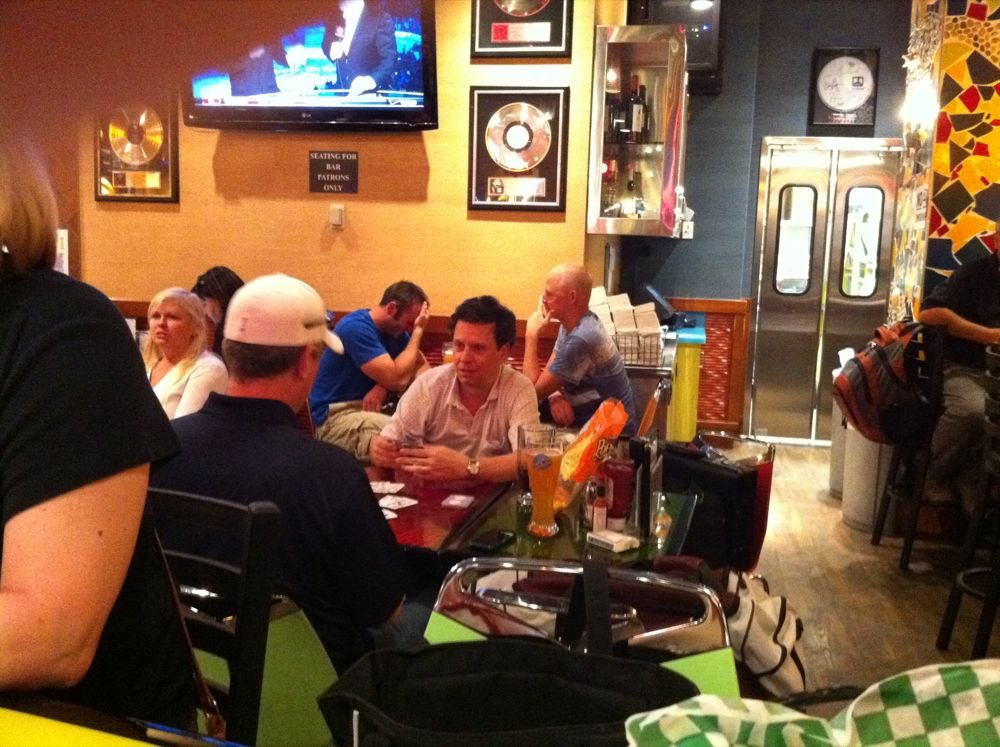
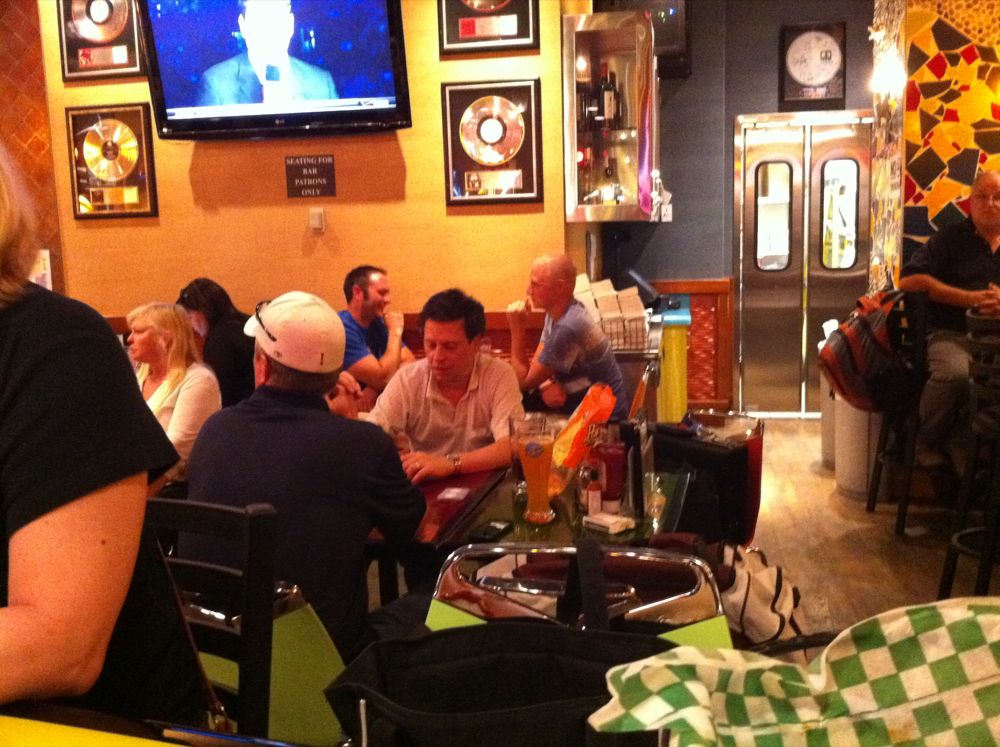
Had a two plus hour layover in Las Vegas airport.  What a horrible place with all the noise, the slot machines, and such.  So I finally found a place that was reasonably quiet for dinner.  Plus it had the hockey game on so I was happy.

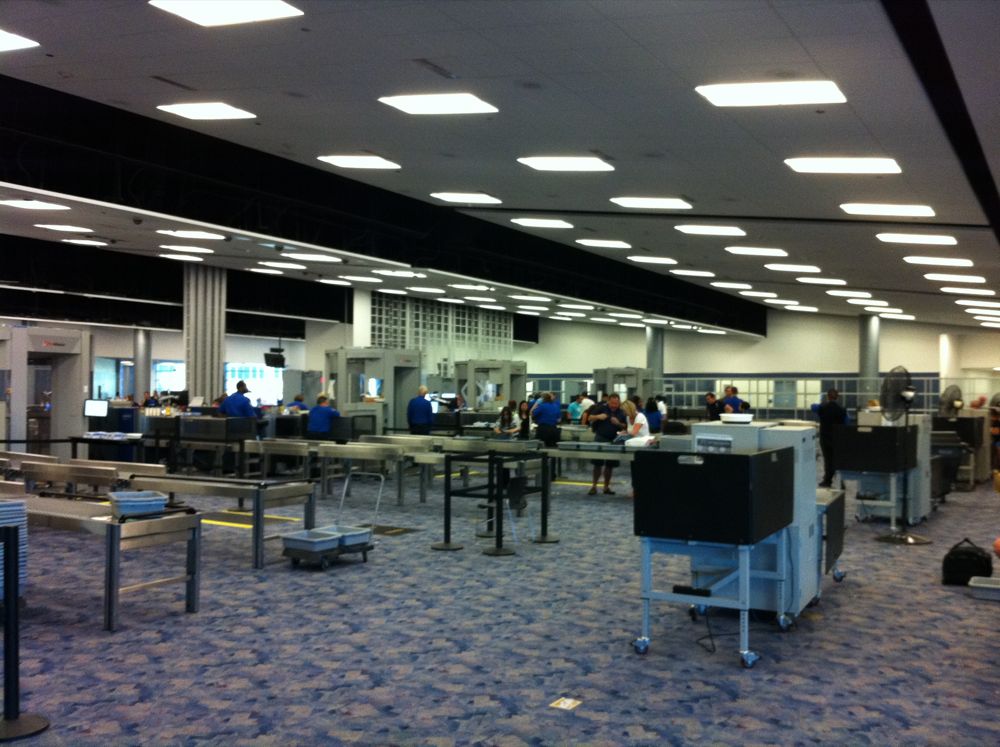
  • How to have fun at Vegas airport – sit near security & watch ; apparently what happens in Vegas stays at security
  • @PsiWavefunction sorry – you missed the hidden joke – I can’t tell story because what happens at security …. twitpic.com/582r4r

When I got on the plane to Austin, I got the window seat in the emergency exit row that has the most room.  And eventually someone came to sit in the middle seat.  And he seemed, well, a bit off.  I did not realize why until a Southwest attendant came to ask people if they could ha\ndle the duties of the exit row and the attendant started asking this person when he had his last drink.  And then they decided he was drunk and nicked him out of the exit row. 
  • Wow, on plane about to leave for Austin; southwest attendant moved person out of exit row next to me b/c he was drunk twitpic.com/582uko
  • Good call Southwest – keeping planes safe (see last post)
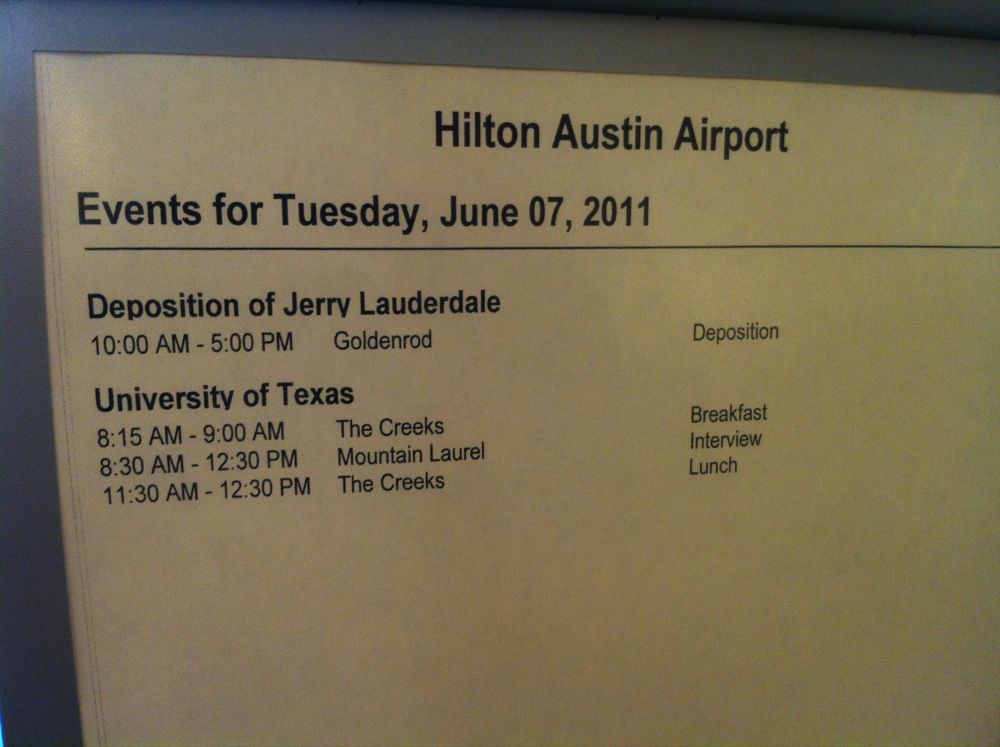
Arrived in Austin.  Had to wait a bit for a shuttle to the “Airport Hilton” which was weird to me because they told me it was in the terminal.  Liars.  So I snooped around at the pet bathroom area:

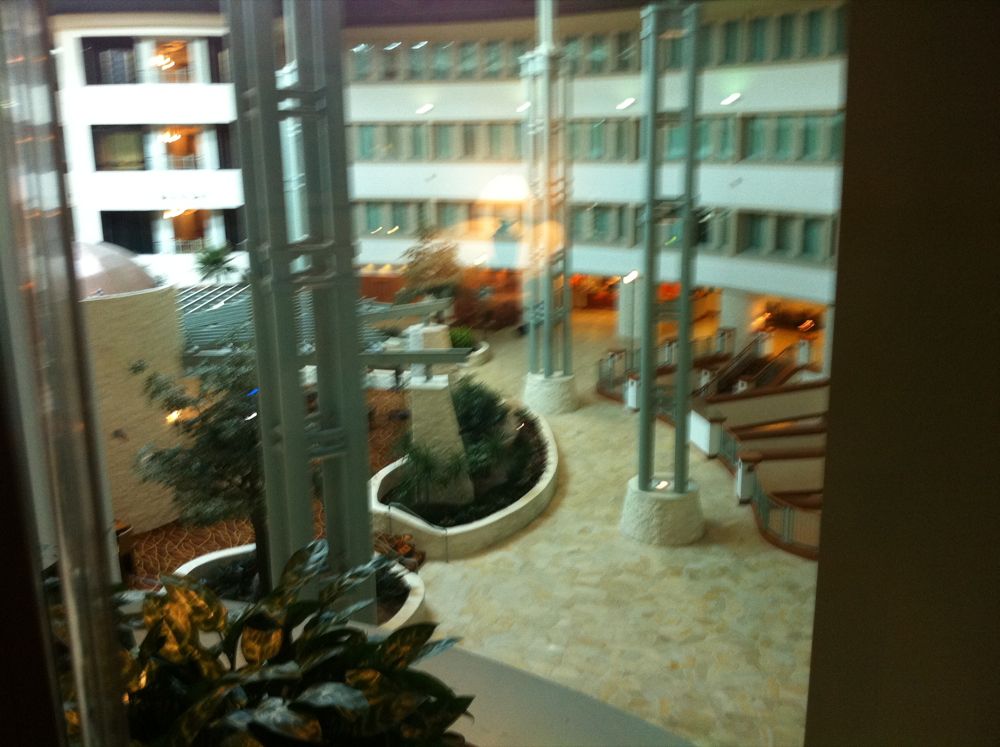
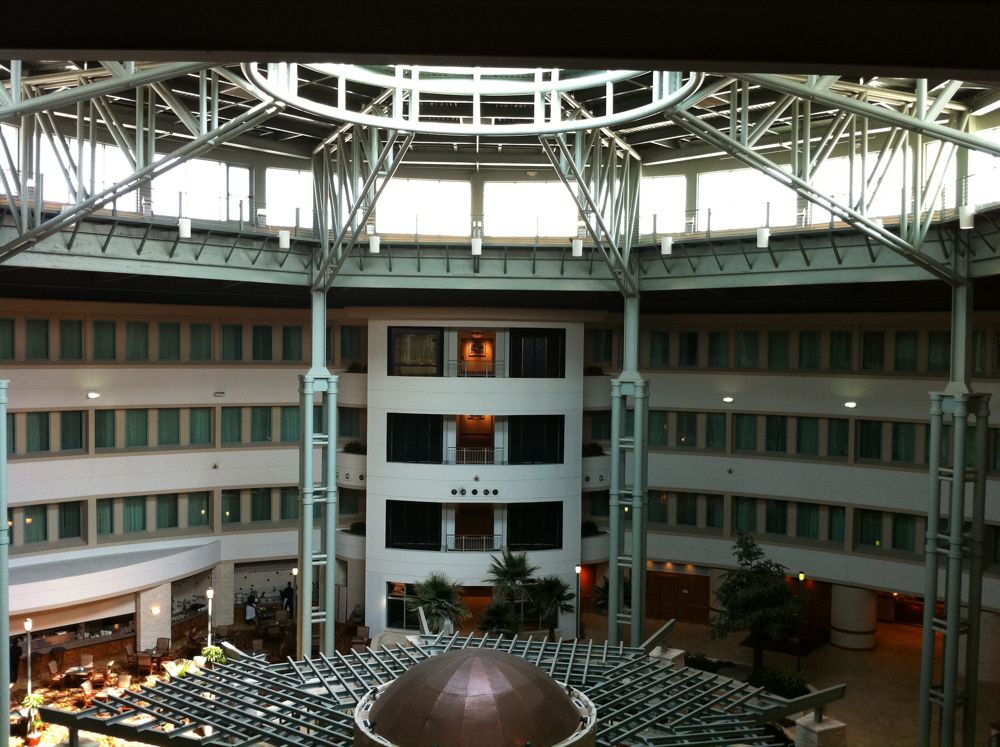
Finally got to the hotel – was very very tired.  And I took some pics and went to sleep.

Day 2: 
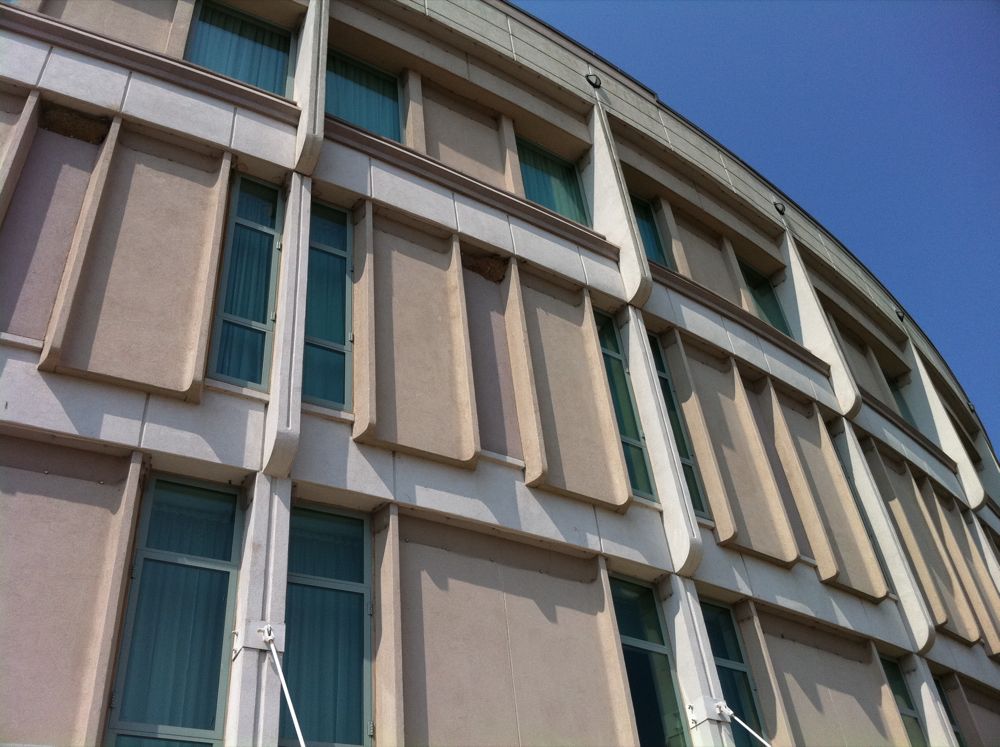
Got up pretty late and had some coffee in the cafe in the lobby and took some pictures

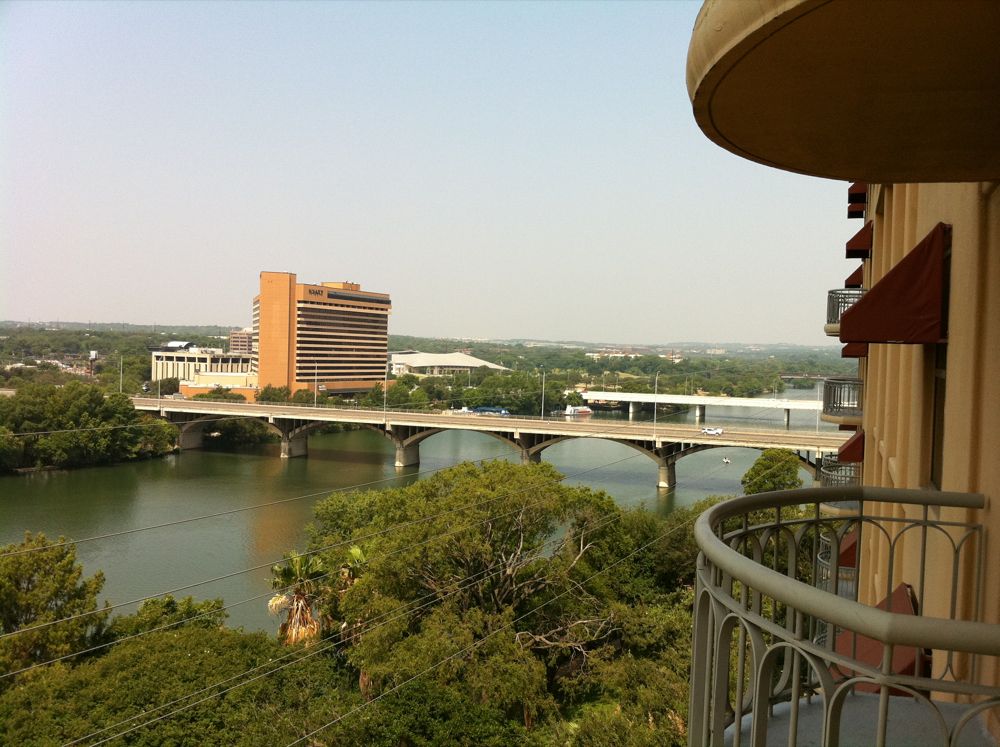
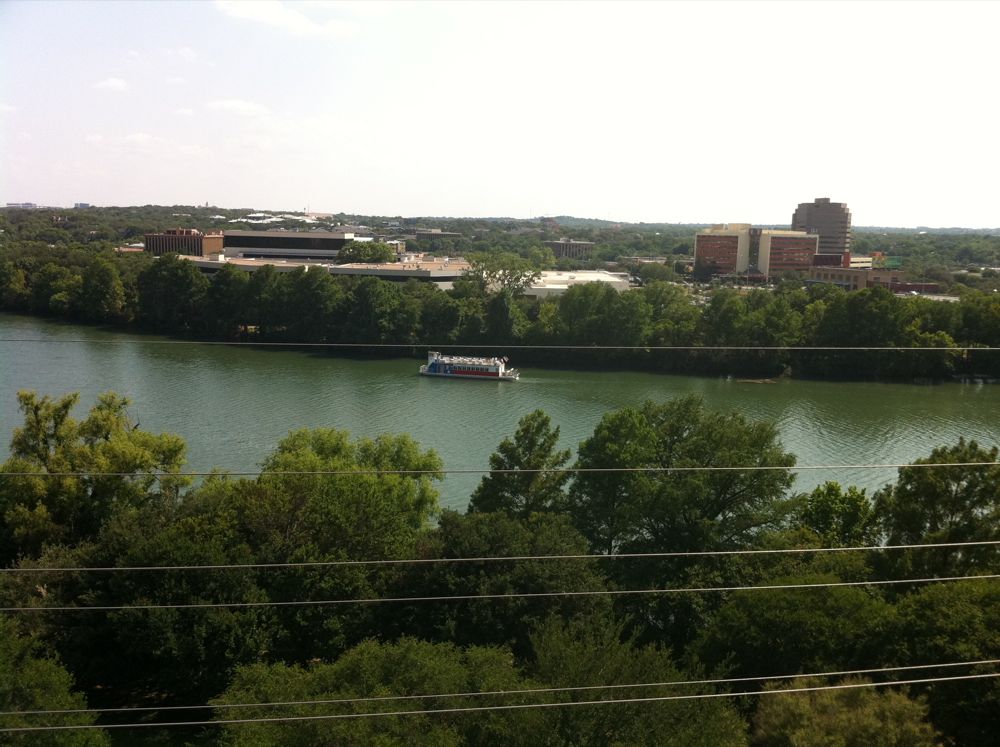
Then I headed out to downtown to my new hotel.  Nice view from my room.

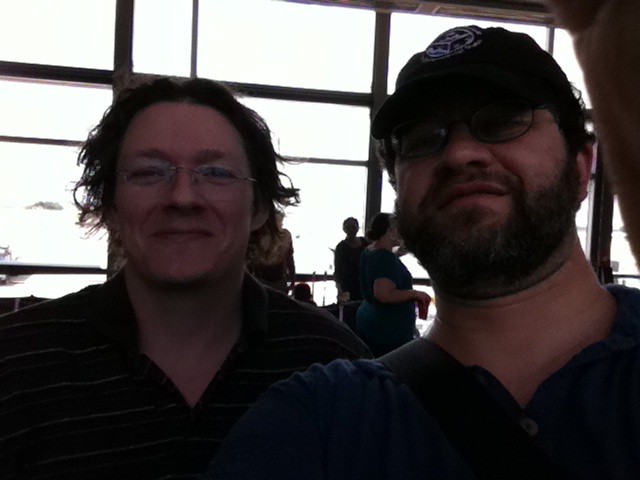
And I met Jason Stajich at the hotel and then David Hillis from UT Austin picked us up to go to lunch (well, David came to pick me up but I had met up with Jason and invited him, assuming it would be OK with Hillis).  Hillis is truly one of my favorite people in all of science.  He took us to a good Mexican place nearby.  And we talked about all sorts of things over lunch.  Hillis wrote a funny post about this on Facebook but since it is not “public” I cannot link to it here.  Mostly he was commenting on the strange looks we got when talking about microbes living in and on people. 
And then Hillis dropped us off and Jason came by my room while I grabbed some stuff to take over to the convention center. 

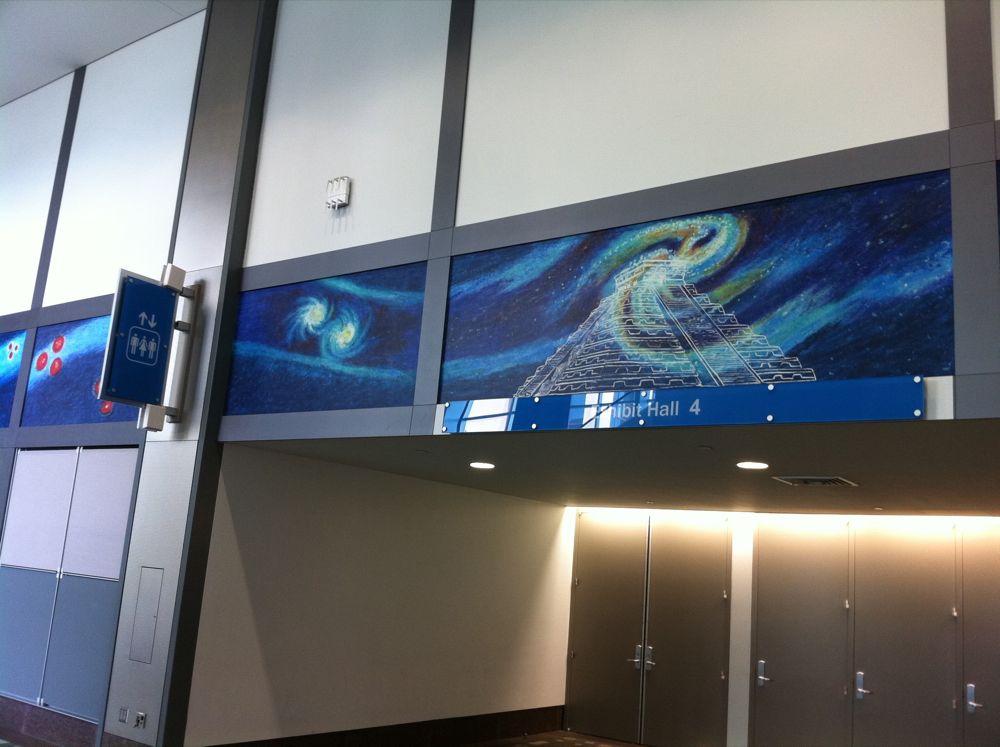
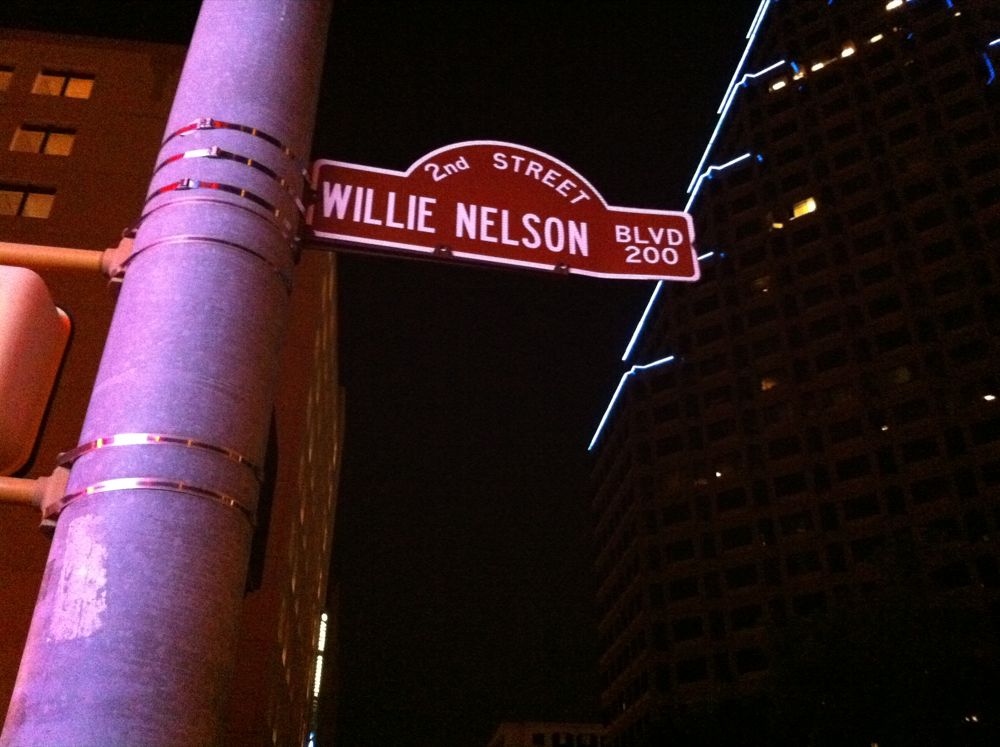
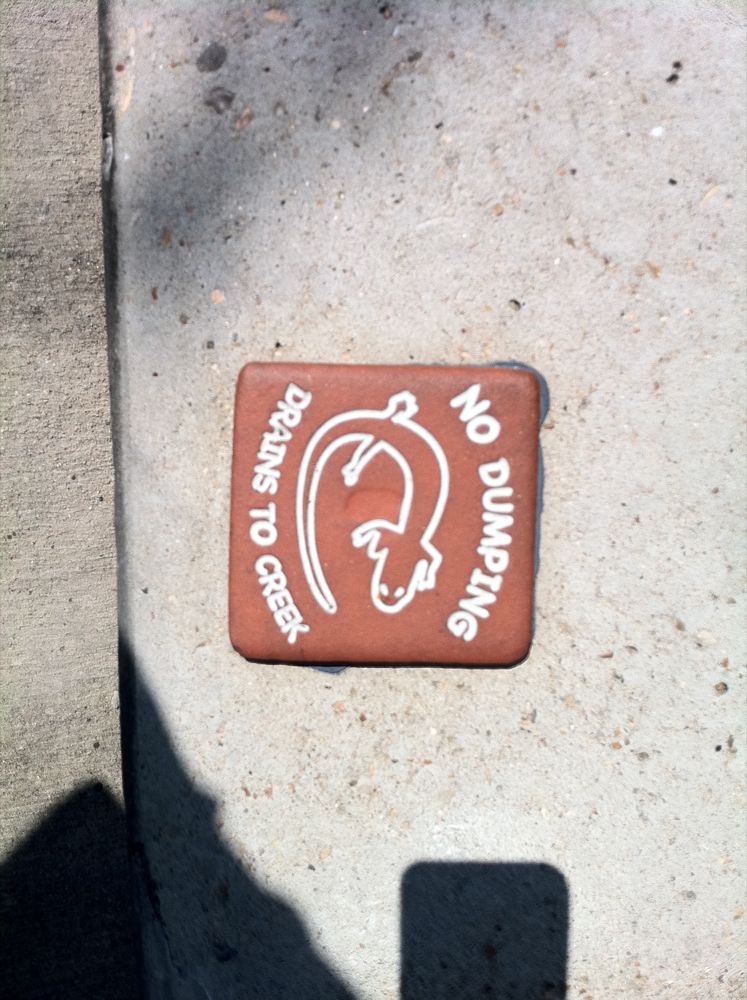
We then walked on over to the Convention Center and as always I took some pics of the interesting stuff along the way:

I registered and dropped in on some talks:
  • Learning about affect of copper vs Aluminum surfaces in HVACs on microbial growth: copper seems to control growth better #IndoorAir2011
Did not post much since I did not yet know the rules about twitter usage at the meeting.  I ran back to my hotel to get something I forgot and then headed back to the Convention Center again.  This is one reason I like staying in hotels right next to meetings.

On my way out I bumped into Norm Pace who was on his way in.
After a few minutes at my hotel I returned to the Convention Center for more talks and meeting people:
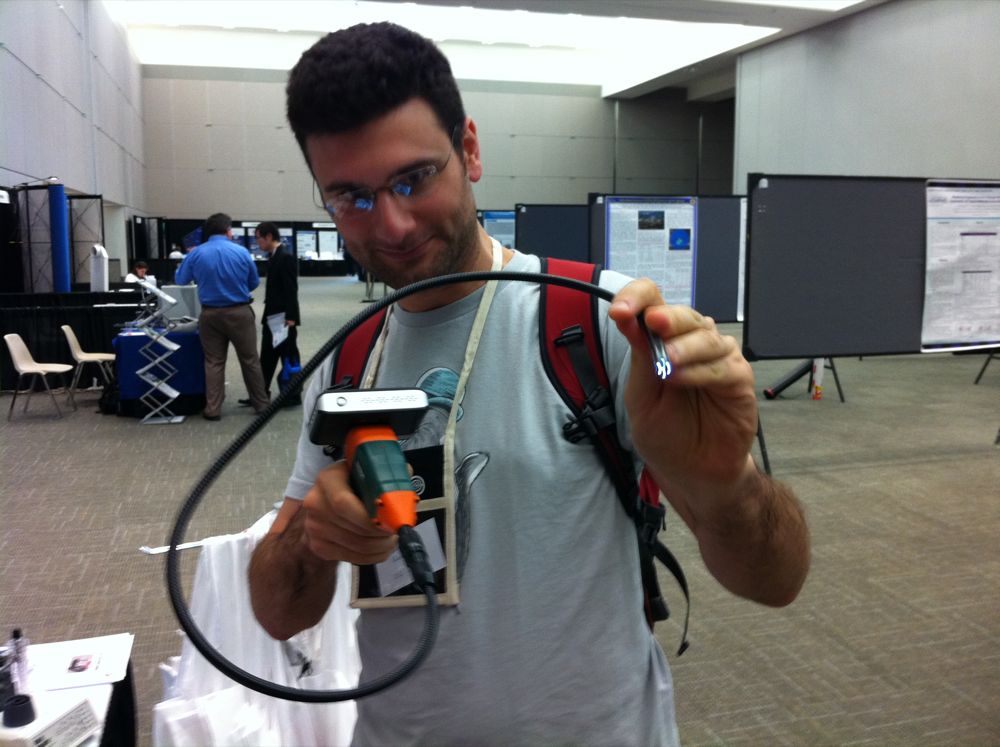
I went to a talk or two but did not last long.  Not enough on microbes this day. And so I headed to the product show with Russell Neches a PhD student in my lab.  

Finally there was a session that appealed to me:
  • Yuguo Li, Bill Nazaroff, Hal Levin, Charlie Weschler &; Jan Sundell now discussing continuity between indoor & outdoor air #IndoorAir2011
  • Charlie Weschler “Outdoor measurements are useless in exposure analysis? No! Ozone” When outdoor ozone up so is indoor #IndoorAir2011
  • Weschler: Why care about ozone? Morbidity and mortality go up when ozone does #IndoorAir2011
  • Bill Nazaroff discussing indoor vs outdoor exposures and a tutorial on particles which come in a whole zoo of forms #IndoorAir2011
  • Nazaroff working on models to predict indoor exposure from measures of outdoor air #IndoorAir2011
  • Having serious jargon/context #fail issues at talks at #IndoorAir2011 tho Nazaroff from Berkeley nearly flawless in being jargon free #wow
  • RT @IAQnerd: “43 chemicals found in virtually every pregnant woman” #indoorair2011 #TSCA #NAGP #holisticmoms #healthychild
  • My collaborator on microbe.net #microBEnet Hal Levin now discussing microbes indoor/outdoor #IndoorAir2011
  • It is funny that at the #IndoorAir2011 sessions there have been troubles with WindowsOS – do indoor air researchers dislike windows?
  • Funny notion from speaker at #IndoorAir2011 – windows define buildings as much as doors so why not say we are “Inwindows”
  • Speaker at #IndoorAir2011 “Indoor air is much more important than outdoor air” but $$ is in outdoor air – though I & others don’t agree
  • @phylogenomics VIA @ryneches Richard Corsi has given us permission to tweet, advises against emulating congressmen. #indoorair2011
  • @B_EMC Yuguon Li
  • @B_EMC actually I think it was Jan Sundell who said that

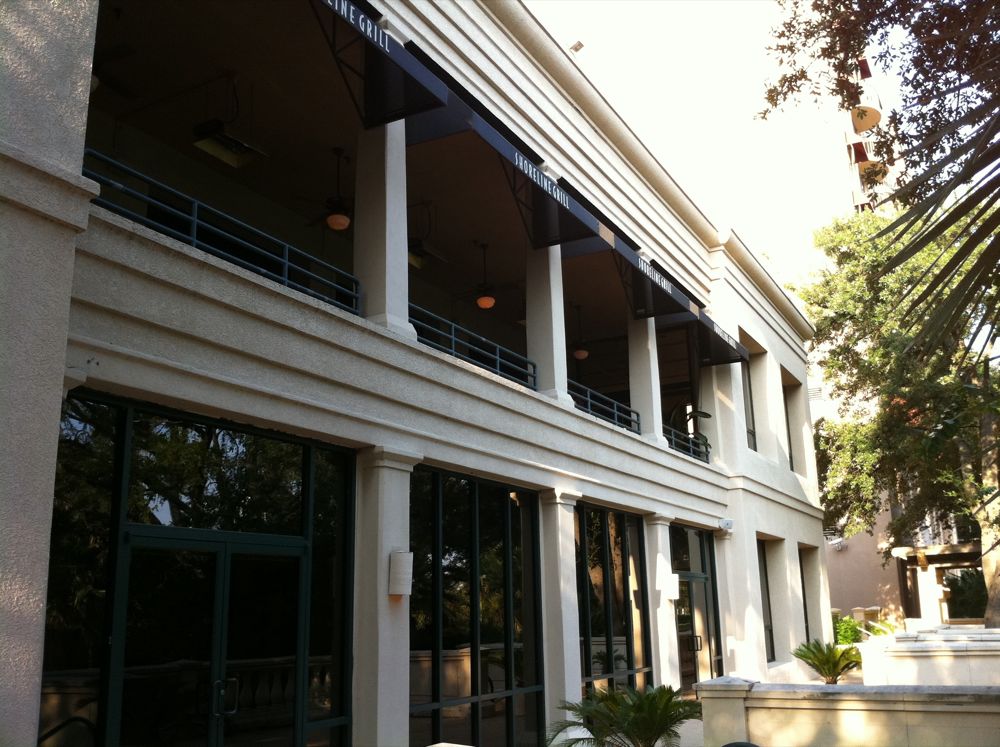
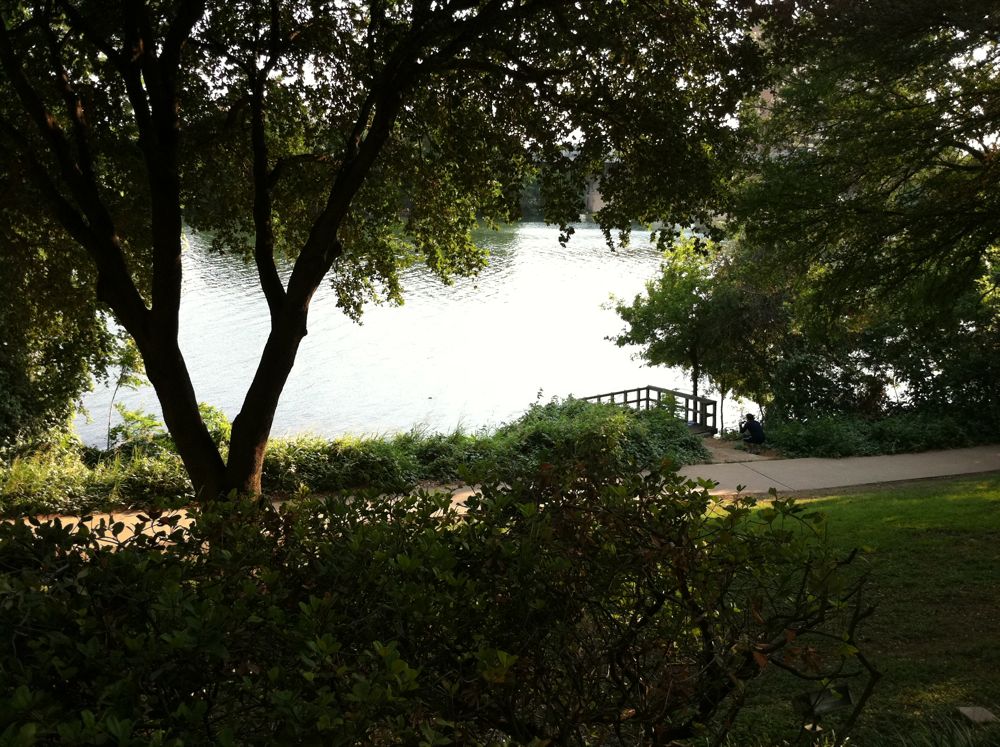
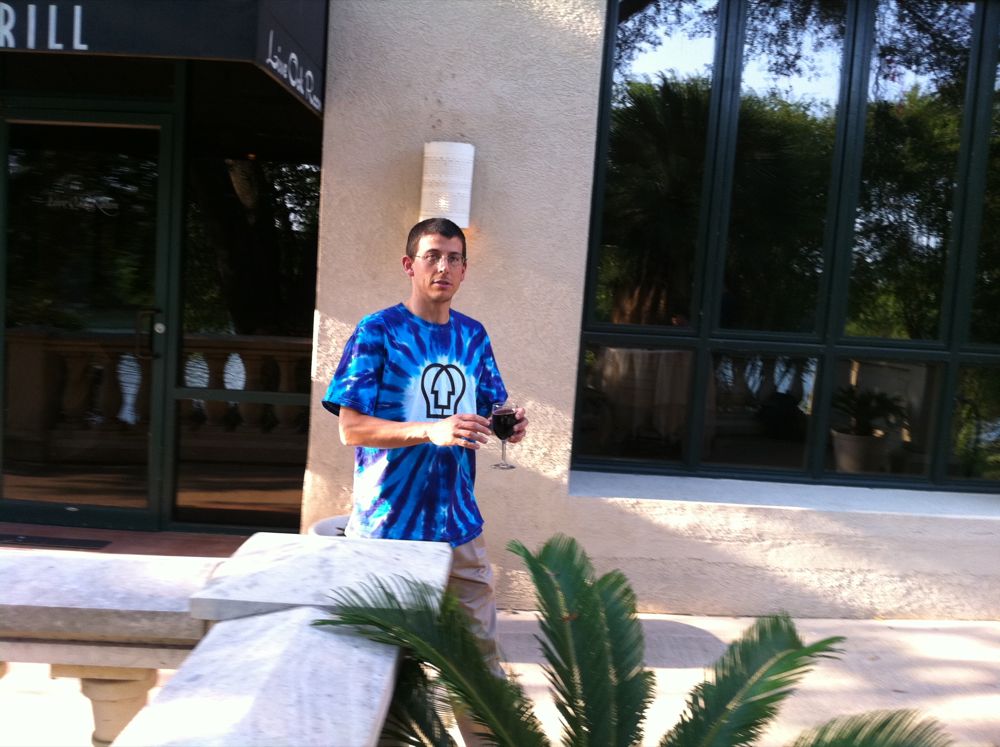
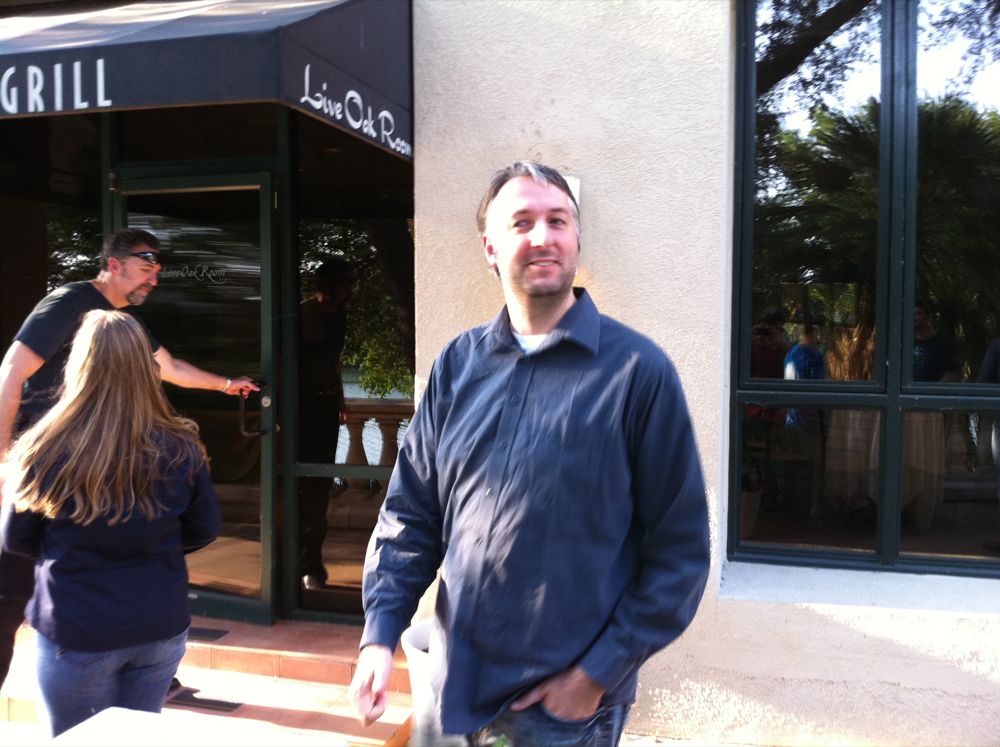
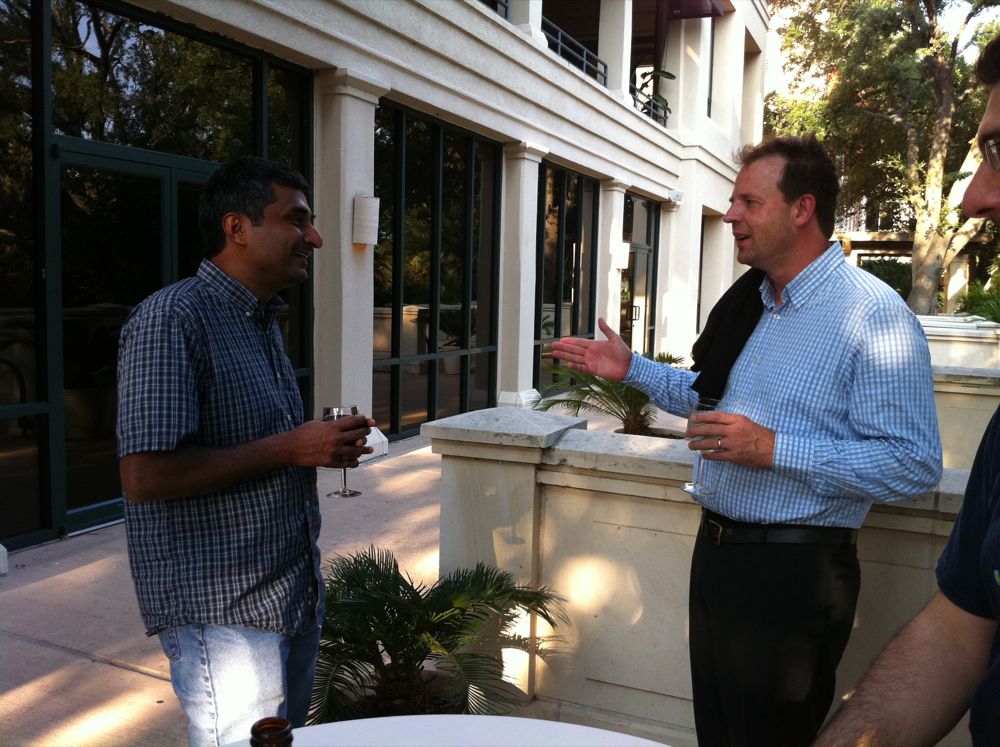
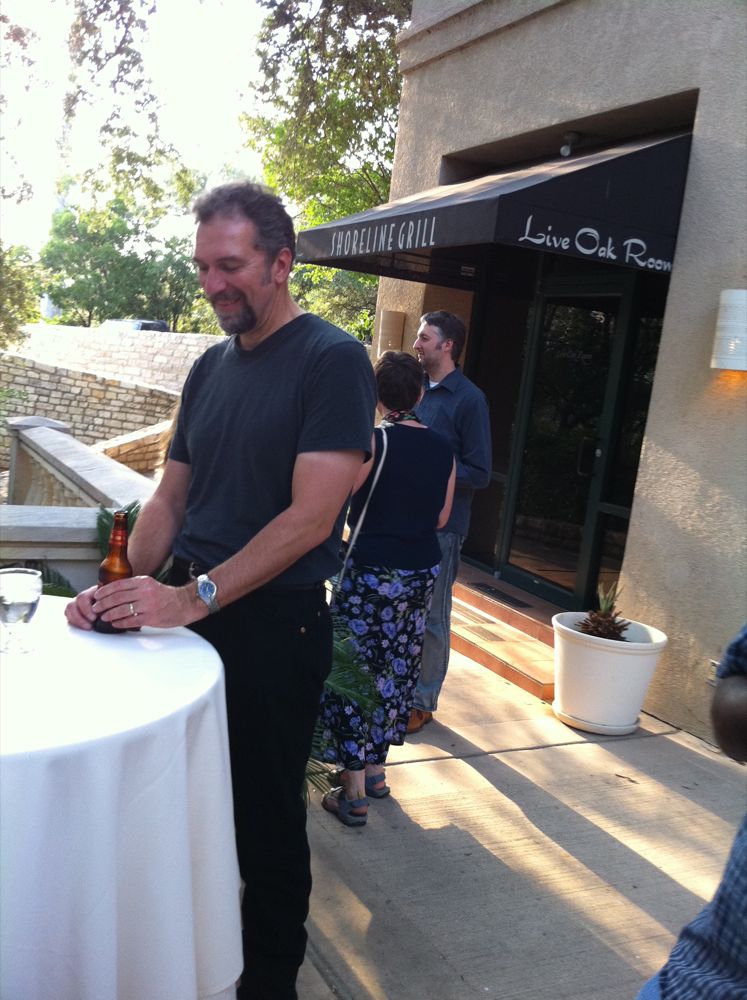
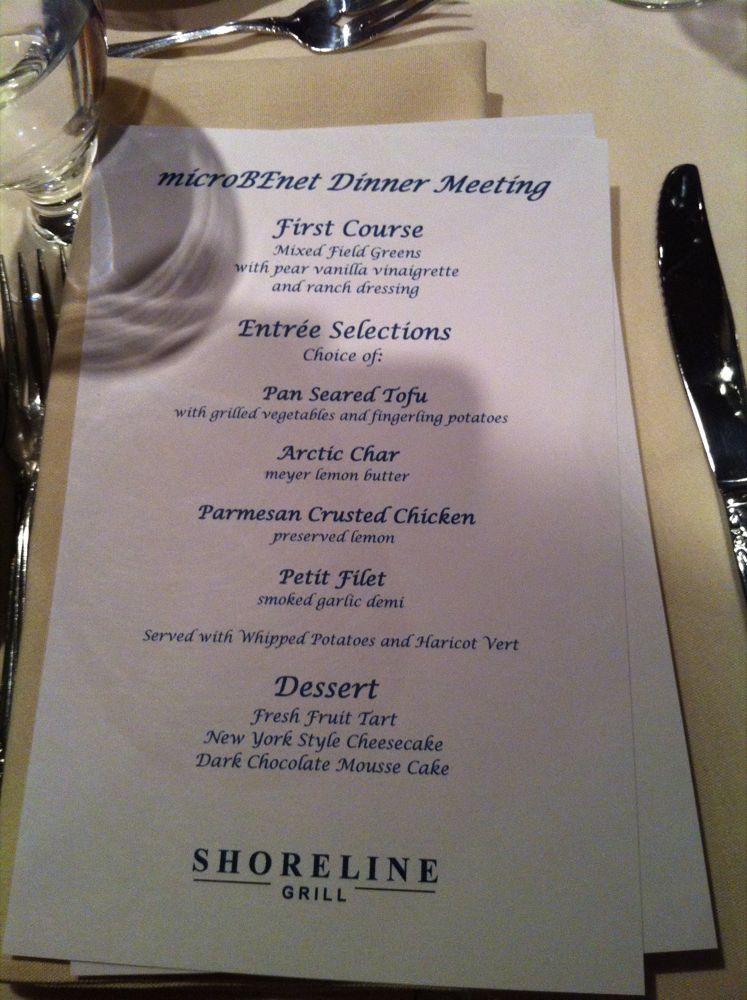
And then eventually I headed to dinner with Jason Stajich and took some more pics.  We wandered around town a bit before ending up at the Shoreline Grill and David Coil,  a post doc from my lab, showed up a bit later to meet us there.

Day 3

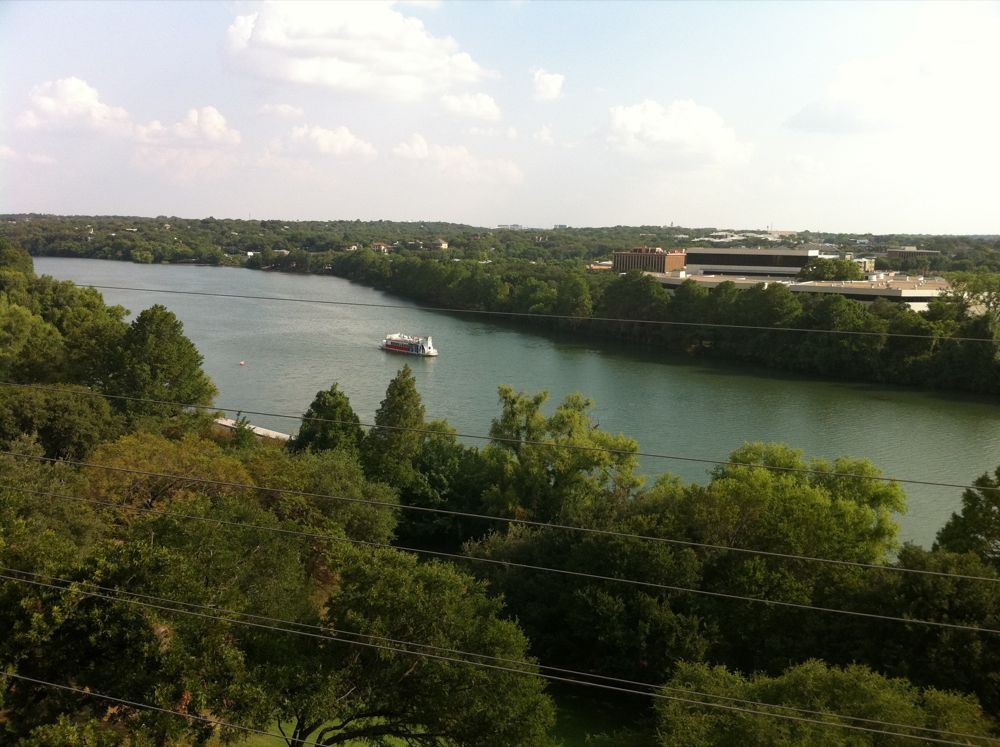
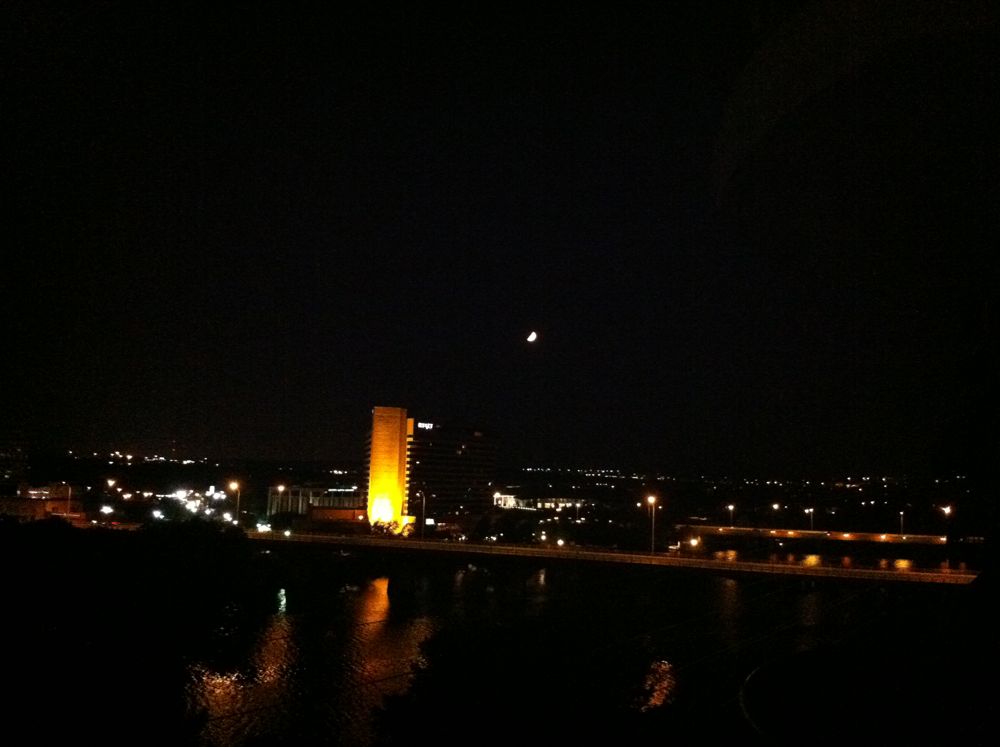
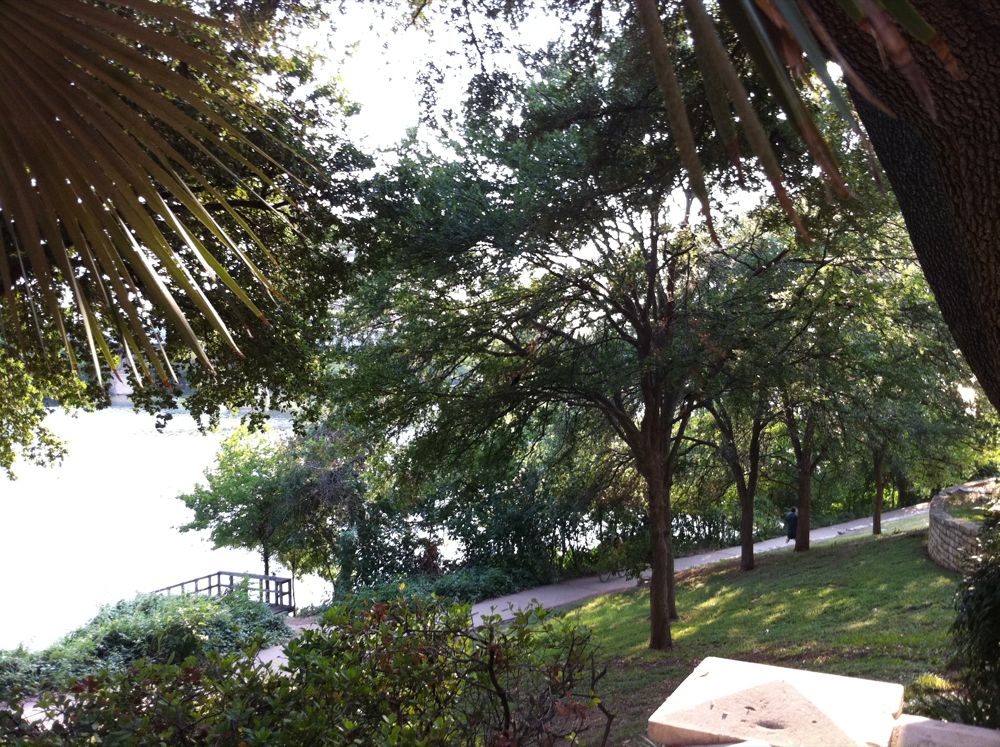
Got up reasonably early and took some pics from my room in the AM

Then headed over to the conference center as soon as I could because Craig Venter was on the agenda for the AM session.

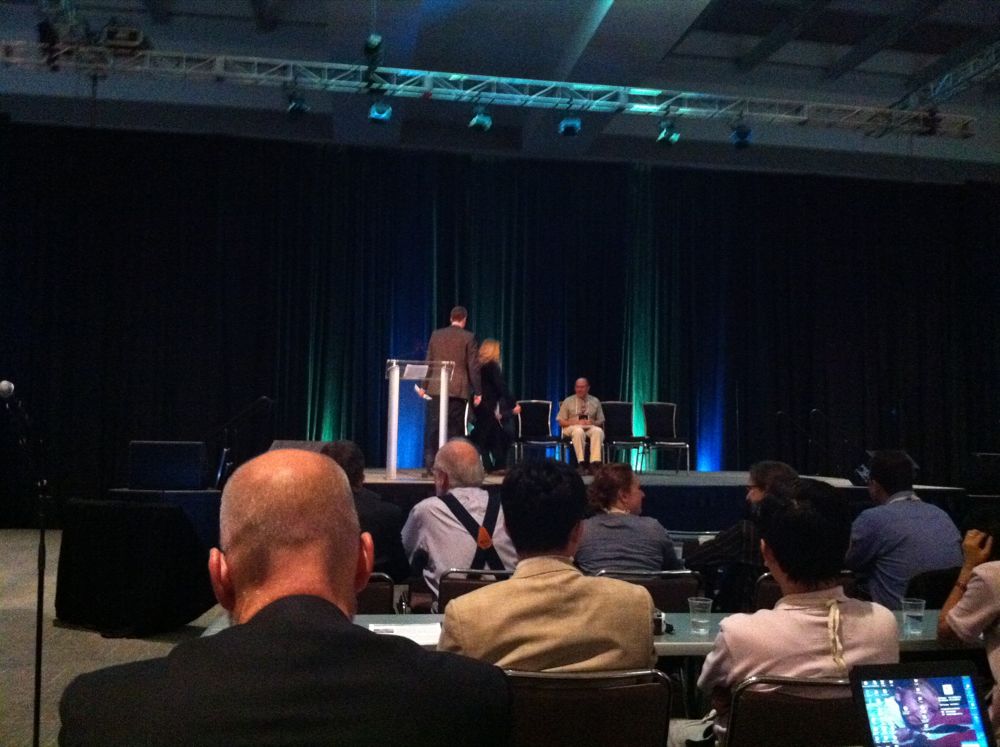
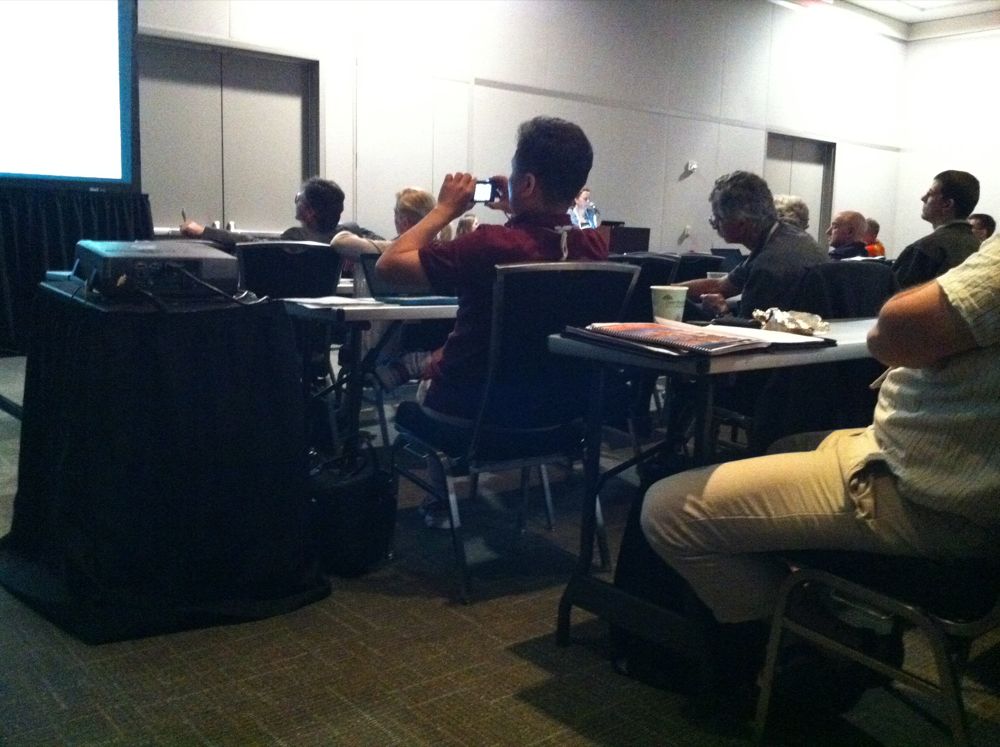
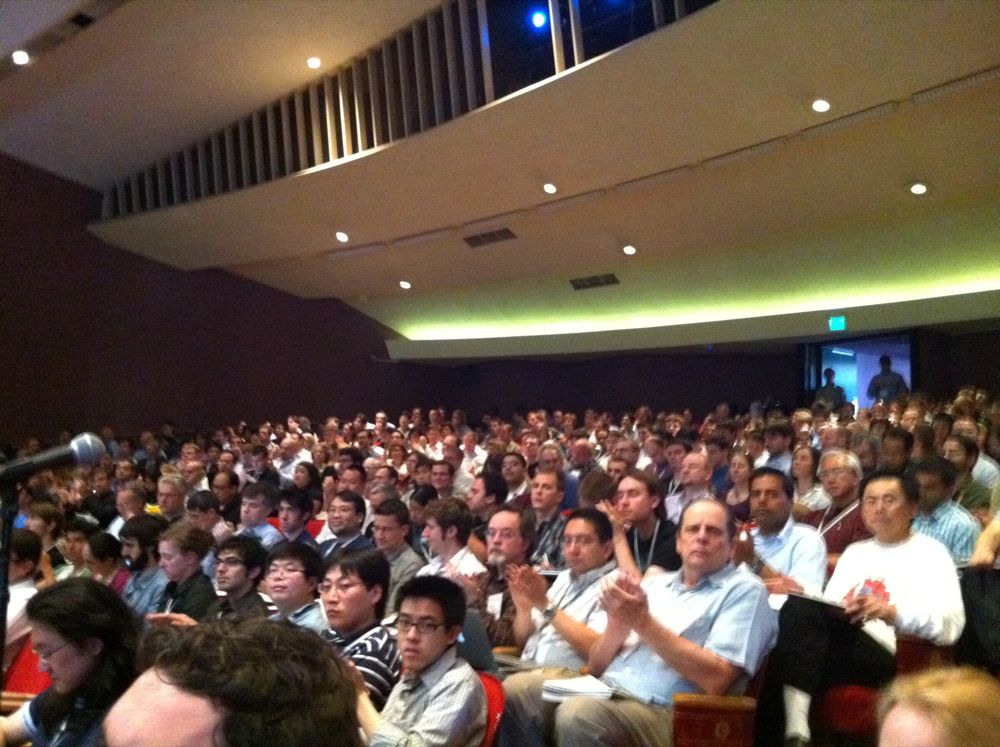
Session on Microbiomes of the Built Environment.  First speaker – Beverly Wright.
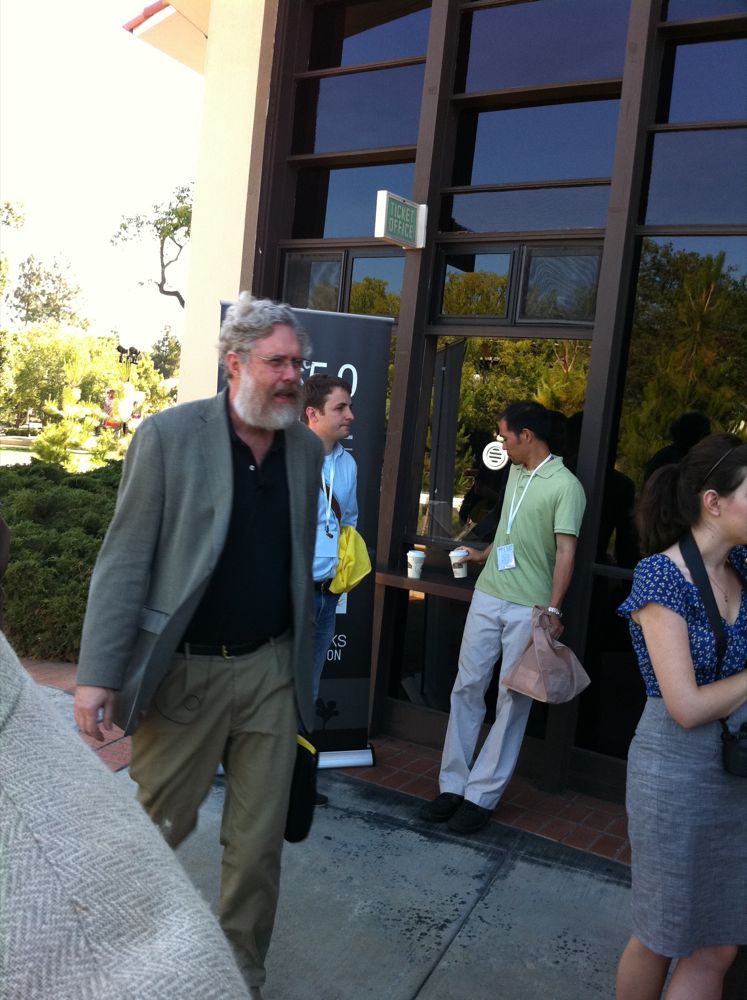
Next speaker – J. Craig Venter.
  • Next up at #IndoorAir2011, Craig Venter – as an aside his most recent pub is one w/ me on stalking the 4th domain http://tinyurl.com/64rtyvc
  • Jesse Ausubel – says there must be meaning in the universe b/c speaker at Indoor Air meeting is named “Venter” #IndoorAir2011
  • Ausubel says he is “an advertisement” for Craig Venter and gives a bit of an biography of Craig in 2 minutes #IndoorAir2011
  • Ausubel gave a very glowing, flowing, comprehensive, yet remarkably short intro to Craig Venter #IndoorAir2011
  • Venter: discussing converting the analog code of DNA into a digital code of data “digitizing DNA” #IndoorAir2011
  • Venter used three slides to cover the history of genome sequencing #IndoorAir2011
  • Venter predicts in the future companies will pay people to sequence their genomes to get the data #IndoorAir2011
  • Venter discussing microbes in mouth says “think about that while the person next to you is coughing, or you are kissing them” #IndoorAir2011
  • Venter suggesting that esophageal cancer samples have unique microbial composition – says cause vs effect not known #IndoorAir2011
  • Venter: w/ metabolomics can track which chemicals in blood come from human metabolism vs. food vs. bacteria/microbes #IndoorAir2011
  • Venter: you are not just who you are and what you eat but also what you feed your bacteria #IndoorAir2011
  • Venter: some think his most brilliant discovery was figuring out how to sail around sea and do science at same time #IndoorAir2011
  • Venter: emphasizes the #PLoSBiology collection on ocean metagenomics including his/my GOS papers ploscollections.org/article/browse… #IndoorAir2011
  • Venter showing reference genome plots of Doug Rusch such as ploscollections.org/article/slides… #IndoorAir2011
  • Venter showing Jeff Hoffman sampling frozen lakes in Antarctica – massive amounts of biomass and biodiversity #IndoorAir2011
  • Venter saying very low diversity in microbes 1mile deep in ocean/crust — suggests that UV light may be driver of diversity #IndoorAir2011
  • Venter: working on air microbes – it was much harder than anticipated and thanks Sloan foundation for their patience #IndoorAir2011
  • Venter: very little biomass recovered from indoor air; have to run samplers for long time; but they get contaminated; #IndoorAir2011
  • Venter: v. hard to get water clean enough (i.e., without DNA contamination) to use in studying samples w/ very little biomass #IndoorAir2011
  • Note – I don’t buy the “UV light” connected to diversity explanation Venter just gave at #IndoorAir2011 – just reporting what he is saying
  • @subsurface_life he was not talking about richness but variation among close relatives; says there is less genetic diversity w/in species
  • Venter: now looking at samples from the Space Station #IndoorAir2011
  • Venter: in New York Indoor Air – the major source of DNA is human; #2 is rodent; microbes are a small % #IndoorAir2011
  • Venter: outdoor air in NYC most DNA is rodent, human a bit less than in indoor air #IndoorAir2011
  • @subsurface_life millions of reasons other than UV – just posted a separate tweet saying I don’t believe it
  • Venter: in NYC there is lots of iron in the outdoor air; “if you are anemic that might be good but otherwise probably not” #IndoorAir2011
  • @pzmyers apparently, though unclear how they sampled — did say that at Scripps Pier the #1 signal was insect
  • @Toxicpath @pzmyers unclear how the air sampling worked so not sure why they were getting so much rodent/human DNA vs. insect, bacterial
  • Venter has now shifted to discussion synthetic biology #IndoorAir2011
  • Venter shows a very very simple animation and says “We have this very sophisticated movie to show this” #ScienceHumor #IndoorAir2011
  • Venter: creating prokaryotic chromosomes in yeast; waiting for Norm Pace to learn him about “just say no to prokaryote term” #IndoorAir2011
  • Venter: says massive growth in population means that new biotech. dvlpmts (e.g., synthetic biology, fuels, etc) are needed #IndoorAir2011
  • Venter ends with discussion of ethics and synthetic biology #IndoorAir2011
  • They just asked Venter @ryneches twitter question “Can I have your boat?”#indoorair2011
Then Bill Nazaroff
  • Now starting session on “Microbiomes of the Built Environment” supported by @SloanFoundation -1st speaker is Bill Nazaroff #IndoorAir2011
  • Nazaroff “Newton meets Darwin and the Indoor Microbiome” discussing sociology of science #IndoorAir2011
  • Nazaroff quoting John Harte from “Towards a synthesis of the Newtonian and Darwinian worldviews” #IndoorAir2011
  • Here is a link to John Harte’s excellent paper on Newtonian vs Darwinian synthesis http://bit.ly/lBrK4C #IndoorAir2011
  • Note I worked at RMBL for two summers when John Harte was there – I really like him – and lived w/ his son there #IndoorAir2011
  • Nazaroff: successful collaborations come from small groups working on close contact rather than large teams #IndoorAir2011
  • Nazaroff: finding ways to keep egos under control is a key issue in scientific collaborations #IndoorAir2011
  • Nazaroff: DNA based methods are game changing in Indoor Microbiome studies but we still need to ask the right questions #IndoorAir2011
  • Nazaroff discussing work w/ Jordan Peccia looking at microbial surveys in classrooms as well as BIMERC project at Berkeley #IndoorAir2011
Then Norm Pace
  • Now up, the one and only Norm Pace – discussing rRNA surveys of human occupied indoor environments #IndoorAir2011 #Oneofmyscienceheroes
  • Pace: his job here is to help people transition from whatever microbiology they learned in a past life to modern microbiology #IndoorAir2011
  • psgcom #indoorair2011 check out www.microbe.net for more on Sloan Foundation funded work on Microbes of the Indoor Environment #microbenet
  • Pace: lots of microbes in tap water (good source of protein) but to understand those microbes you need to use sequences #IndoorAir2011
  • Here is a list we made of Sloan Foundation projects on microbes in the built environment microbe.net/grantees/ #microBEnet #IndoorAir2011
  • Pace: using fluid impingers to sample air – need ones with massive throughput #IndoorAir2011
  • Pace: key point – for studying microbes via DNA cleanliness (i.e., no contaminating DNA) is more important than sterility #IndoorAir2011
  • Pace: Indoor air microbiology is mostly about microbes shed by humans #IndoorAir2011
  • Pace: key for future of IndoorMicro is bring together people from different fields; that’s why we created http://microbe.net #IndoorAir2011
M. Taubel.
  • Next: M. Taubel on diversity and dynamics of bacteria in house dust #IndoorAir2011
  • Taubel: Interested in “hygeine hypothesis” and how exposure to microbes affects asthma, allergy, automimmune dvlpmt #IndoorAir2011 #fb
  • @Chris_Evelo Well, don’t forget each human cell has a lot more DNA than each microbial cell (well, for most microbes) #IndoorAir2011
  • Taubel referencing bacteria-dust studies in BMC Microbiology 8:56 and J. Allergy Clin Immunol 124: 834 #IndoorAir2011
  • Taubel: not going into details of methods b/c 90% of people understand methods and 10% only care about results #IndoorAir2011
  • Taubel used a term I have not seen: SLOTUs – species level operational taxonomic units; though I note I 1st read it as SLUTS #IndoorAir2011
  • Taubel: mattress dust has lower richness of bacteria (# of species) than floor dust #IndoorAir2011
  • Taubel: most of what they find in house dust is similar to microbes found on people #IndoorAir2011
Denina Hospodsky

Lew Harriman

  • Next speaker is Lew Harriman from a consulting company http://MasonGrant.Com: focused on water availability #indoorAir2011
  • Harriman: buildings are designed to be dry, not damp; though I note damp doesn’t always mean bad #IndoorAir2011
  • Harriman: measurements of relative humidity usually focus on air but probably should measure on surfaces #IndoorAir2011
  • Now up Miia Pitkaranta from Finland: seasonal variation in microbes in buildings & affect of H20 biocenter.helsinki.fi/bi/dnagen/indo… #IndoorAir2011
  • Miia Pitkaranta refs on Indoor Microbiology AEM 74:233 & BMC 8: 56 #IndoorAir2011
  • Pitkäranta: species richness in dust is very high; ~ 10-20% of species cultivable; phylogenetic diversity of fungi high #IndoorAir2011
  • Pitkäranta: spatial variation in microbes in dust from different parts of buildings very high #IndoorAir2011
Gunilla Bok
  • Next at #IndoorAir2011 Gunilla Bok: Identification of mould fungi by blast similarity searches and phylogenetic analysis
  • Kudos to meeting organizers of #IndoorAir2011 for diversity of speakers: young -> old; diverse country, genders, etc
  • Next & last this AM: Alina Handorean on phylogenetic analysis of microbes from bioaerosols from a flooded building #IndoorAir2011
Hal Levin
  • Hal Levin, my collaborator on #microBEnet http://microbe.net is now talking at #IndoorAir2011
  • Hal Levin trying to determine what is known about environmental factors that influence indoor microbial ecology #microBEnet #IndoorAir2011
  • Levin: some environmental factors affecting microbial ecology: humidity, temp, ventilation, surfaces, chem composition, pH #IndoorAir2011
  • Nazaroff points out that human occupants have profound influence on microbial ecology #IndoorAir2011
  • Another speaker suggested building age is important in microbial ecology indoors #IndoorAir2011
Mike Frankel
  • Now up Mika Frankel discussing influence of season and sampling methods on inferred microbial composition #IndoorAir2011
  • Frankel sampling in airborne and settled dust in four rooms in five homes #IndoorAir2011
  • Personal opinion – I am not a big fan of very short talks at meetings – I like 20-30 minutes not 10-15 #IndoorAir2011
Brendan Bohannan
  • Now up Brendan Bohannan – arguably one of the greatest speakers in the whole field of microbial ecology #IndoorAir2011
  • Bohannan is involved in the BioBE center (Biology and the Built Environment Center) at U. Oregon biology.uoregon.edu/biobe/?p=124 #IndoorAir2011
  • Bohannan discussing “How Communities Assemble”: two major categories – sampling & filtering #IndoorAir2011
  • Bohannan: filtering in microbial ecology is fact that some environments support growth of some taxa over others #IndoorAir2011
  • Bohannan: sampling in microbial ecology is the idea that in some cases microbes you see are just sampling from larger pool #IndoorAir2011
  • Bohannan: microbes in buildings are mostly from sampling/filtering from two pools – outdoor air & human occupants #IndoorAir2011
  • Bohannan: trying to understand how microbial communities assemble in a hospital #IndoorAir2011
  • Bohannan: indoor air is different from outdoor air (he knows this is not surprising); outdoor much more diverse #IndoorAir2011
  • Bohannan: are indoor samples subsets of the species found outdoors? No – appear to be very distinct types of microbes #IndoorAir2011
  • Bohannan: comparing indoor & outdoor air microbes to those in soil, humans, etc; indoor air more like skin; outdoor like soil #IndoorAir2011
  • Bohannan: microbes in some rooms like outdoor air/soil, in other rooms like people; #IndoorAir2011 differences may be due to ventilization
  • Bohannan: higher the airflow in room, the lower the frequency of organisms closely related to human pathogens #IndoorAir2011
  • Bohannan: suggests architects in future could design buildings with “microbial comfort” in mind and not just human comfort #IndoorAir2011
Jordan Peccia
  • Norm Pace points out that should be very careful w/ term pathogen esp. when we don’t know actual pathogenicity #IndoorAir2011
  • Jordan Peccia discussing growth of Aspergillis spores #IndoorAir2011
  • Note -before Pace said should say “organisms related to pathogens” I said “organisms closely related to human pathogens”#IndoorAir2011 #Ego
  • Peccia – are all Aspergillis spores the same (in terms of allergenicity and other things)? #IndoorAir2011
  • After talks the whole of #IndoorAir2011 is heading to the Salt Lick Bar-B-Que Restaurant saltlickbbq.com #NotVegetarianFriendly
  • Peccia: culturability & qPCR can significantly (5-50x) underestimate allergenicity of A. fumigatus spores produced at low T° #IndoorAir2011
  • If I had videos of Brendan Bohannan’s talks I have recently seen, I would make a mashup & use it for my talk tomorrow at #IndoorAir2011
Ming-Ching Liang

Then I headed back to my hotel for a bit and took a few more pics.

I decided not to go to the Salt Lick BBQ party mostly because I wanted to stay near the water.  And so eventually a few of us gathered together and I found a place near the hotel/convention center.  Jason Stajich and I got there early and went to Clive Bar which was very nice. 

And then Shannon Williamson showed up and we eventually made it across the street to a little “cart” restaurant that was rated very highly called Cazamance.

  • Of course I wants to eat here with a “Tree of Life” logo – Cazemance – food was great (@ Cazamance) [pic]: http://4sq.com/kUJDm6

I had a bit of insomnia as usual when travelling and was then woken up when I finally fell asleep by a helicopter nearby:

Day 4

Got up early again.  Headed out to breakfast and coffee and worked on my talk for a while.  There was a session this AM in which I was speaking.  The session was on microbiomes of the built environment and it was coorganized by Hal Levin as part of my microBEnet project.

Posted my slides (which I had worked on over breakfast)

Jesse Ausubel gave the opening talk:
  • Jesse Ausubel from Sloan Foundation up at #IndoorAir2011: the Known, Unknown & Unknowable (KUU) Framework to developing a research agenda
  • Ausubel: Sloan Foundation started by ex-GM head- though no connection now, he notes maybe we should study microbes in cars #IndoorAir2011
  • Ausubel: built environment of course critical to development – the more we understand it the better #IndoorAir2011
  • Ausubel refs Josh Lederberg & his interest in biodefense – if we want to detect anthrax in air need to know the background #IndoorAir2011
  • Sloan originally interested in general survey of microbes in the built environment & basic science in this area #IndoorAir2011
  • Key to Sloan $$$: they are seed money/science venture capital – they hope it leads to “powerful organized gang” i.e. a field #IndoorAir2011
  • Ausubel: what can Sloan do? funds specific projects as well as the “glue” to hold projects together e.g., http:microbe.net #IndoorAir2011
  • Ausubel: Sloan Foundation very supportive of open science including #openaccess to literature and sharing in various ways
  • Sloan has supported many #PLoS activities including the new PLoS Hubs in Biodiversity http://hubs.plos.org/
  • Ausubel says we should think about “macroprojects” that need collaboration- asks if there are BigScience needs #IndoorAir2011
  • Ausubel says it is the unknown that sets the research agenda for fields & allows for marketing to get more resources #IndoorAir2011

Aino Nevalainen

  • Aino Nevalainen : introducing microbiology and the indoor environment #IndoorAir2011
  • “I have feeling I have to do a 100 meter sprint on a distance that is a marathon” – i.e., too much to cover, too little time #IndoorAir2011
  • Nevalainen: quoting Leviticus regarding leprous plague and what to do Leviticus 14: 33-38, 39-42, 43-47 #IndoorAir2011
  • Nevalainen: priests were the first indoor air consultants, regarding quarantine and leprosy #IndoorAir2011
  • Nevalainen refs. MH Gordon 1904 Bacterial test for estimating pollution of air. Sppl. for 32. Ann Rep of the Local Gvmt Board #IndoorAir2011
  • Nevalainen refs Richards 1954 J. Allergy 25: 429 – Atmopspheric molds spores in and out of doors #IndoorAir2011
  • Nevalainen refs JACI 62: 22-26 Hirsch et al. 1978, Ann Occup Hyg 27: 341-358 Ager and Tickner 1983, Lidwell and WC Noble 1975 #IndoorAir2011
  • Nevalainen refs studies of humans as source of microbes in air: Sciple etal. ’67, Duguid & Wallace ’48, Noble & Davies ’65 #IndoorAir2011
  • Nevalainen refs nice reivew of microbial ecology of skin by Roth and James 1988: IDs factors modifying normal flora #IndoorAir2011
  • Nevalainen sources of indoor microbes: outdoor air, uses of buildings (people, pets, etc), microbial indoor habitats #IndoorAir2011
  • Nevalainen does not mention plants as a source of indoor microbes – something I am interested in studying … #IndoorAir2011
  • Nevalainen: aerosols in indoor air behave in same general way as those outdoors #IndoorAir2011
  • Nevalainen: microbial exposure associated w/ health, both positive (e.g., protection agst allergy) negative (e.g., pathogens) #IndoorAir2011
  • Nevalainen: microbes growing on building surfaces are “bad microbes” in the sense that they should be an area of concern #IndoorAir2011
  • Nevalainen: the way ahead – more info on exposure & health; more info on whether culturable are good models for all microbes #IndoorAir2011

Then I gave my talk and we had multiple break out sessions which seemed to go well discussing the future of indoor microbiology studies.

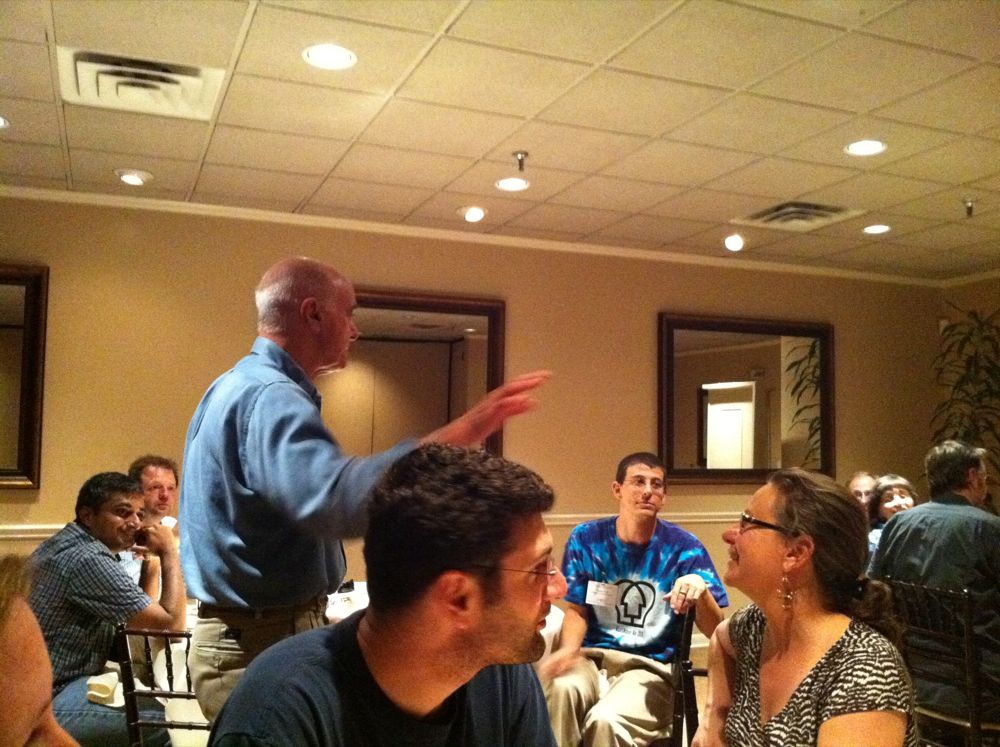
Then headed to a dinner I hosted for Sloan Funded researchers working on microbiology of the built environment.  Again to the Shoreline Grill (I did not realize this is where we were going to have the big dinner when I had gone there a few days before)

Then drinks and people started to show up

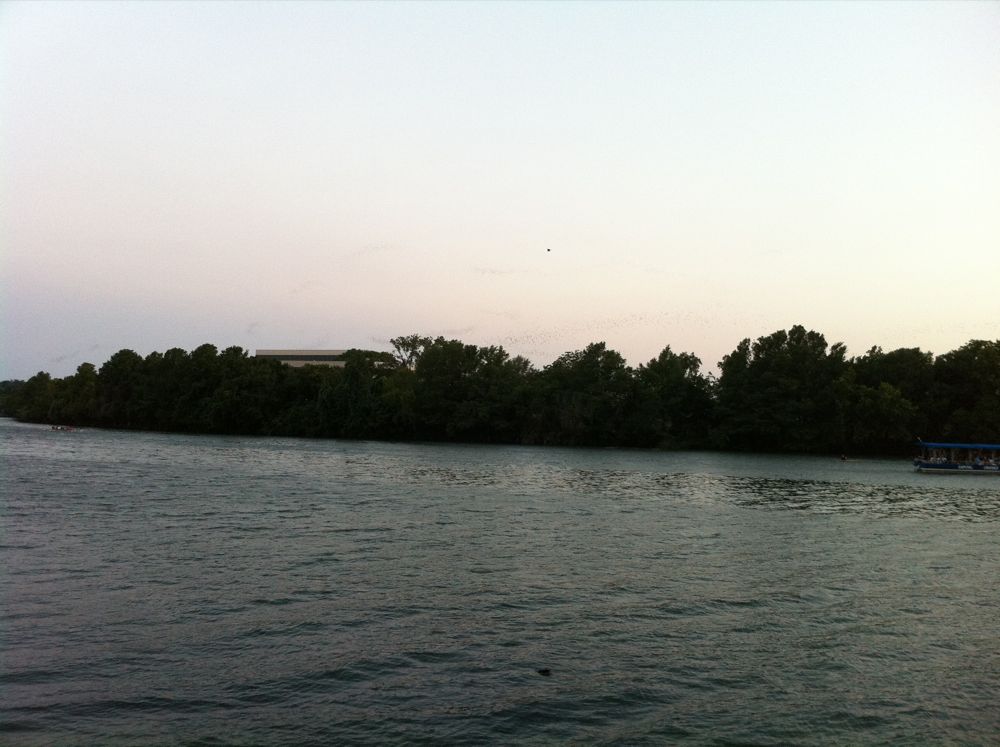
Then dinner with a mini break in the middle to see the bats which fly out from under this bridge nearby.

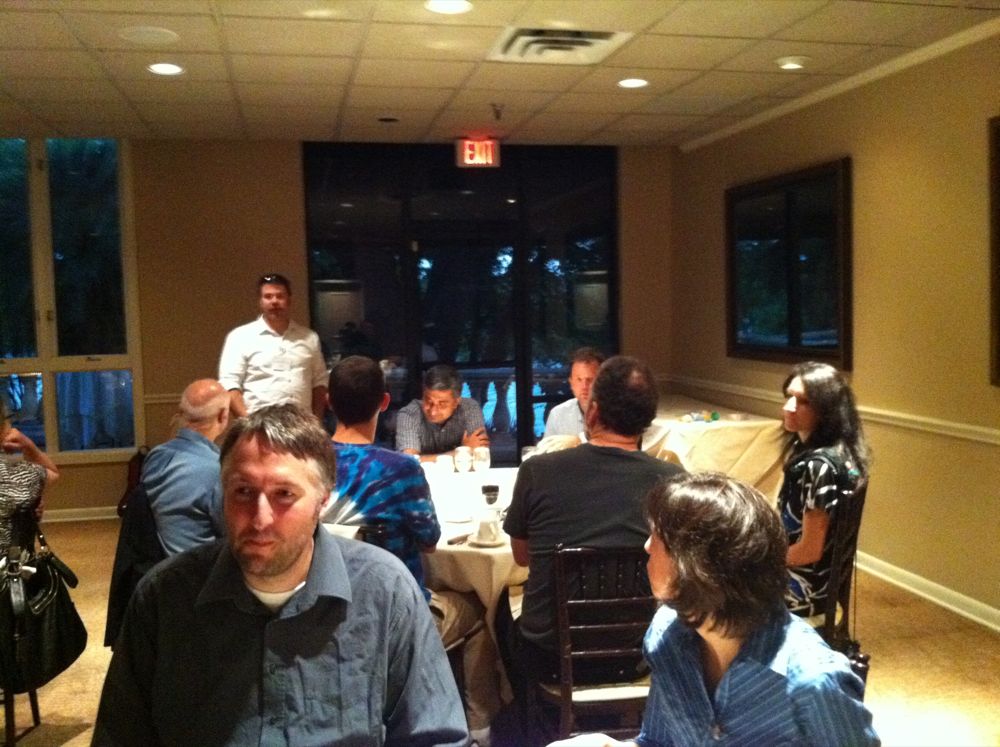
Then back to dinner and dessert:

  • Best question of the day “So what about the viruses” #microBEnet – don’t ignore the viruses

More dinner pics

Then to drinks at the Four Seasons and eventually to sleep:

  • Cool – the Four Seasons in Austin has a cowboy boot vending machine twitpic.com/59euel

At the airport I bumped into William Gunn from Mendeley:

I made a few last posts:

And headed home

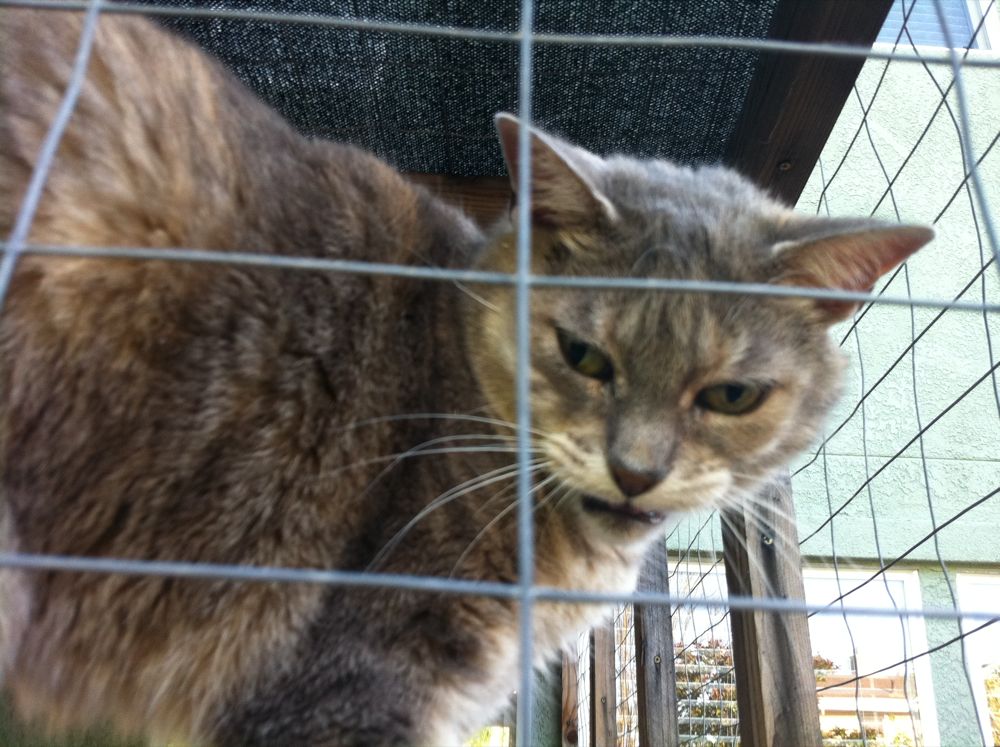
To where I was greeted by my family and my cats:

Then I posted some final links:

A great moment for plant sciences: winners of HHMI-GBMF competition for Plant Science Program Investigators announced

This is truly the golden era for plant sciences. One key sign of this is the announcement of the winners of the competition to become HHMI Investigators in Plant Sciences.
HHMI, the Howard Hughes Medical Institute, has for many years picked HHMI Investigators in Biomedical Research. Those picked get guaranteed funds for 5 years and become technically employees of HHMI in order to get them out of miscellaneous burdensome university activities. It’s a win win situation for universities because HHMI pays for space and salaries for the Investigators. I myself tried to get me one of these “Uncle Howie” types of positions a few years ago but did not win out. My brother, Michael, did. The other people they picked the year they picked Michael and not me were all very good, so I actually did not feel so bad about not getting it.
HHMI has also invested in other areas related to biomedical research including funding Janelia Farm, and Early Career Scientist program, as well as many educational activities.
The GBMF, aka the Gordon and Betty Moore Foundation has itself made major contributions to science and medicine in various ways. One example is the Marine Microbiology Initiative (MMI) (which funded the iSEEM project for which I am PI) and cool work out of many top marine labs. In fact, the MMI program did something rarely seen outside of HHMI – they funded “people not projects” by creating MMI Investigators who got a good chunk of money to do pretty much whatever they wanted.
Thus it was great to hear some time ago that GBMF and HHMI were coming together to create a Plant Sciences Investigator program. I confess even though I am not a real plant biologist I considered applying for this because I have shifted much of my work recently into studies of plant associated microbiomes. But I did not apply. And I kept wondering – who would emerge from the competition as winners. Would they be people I respected/had heard of?
Well the wait is over. Last week the winners were announced: HHMI News: 2011 Plant Science Program HHMI-GBMF Investigators. And it is quite an incredible crew. The press release from HHMI-GBMF is quite useful (unlike many press releases in the sciences). Here is a list of the winners with some additional details (taken from the HHMI site – I hope they do not mind).



JUNE 16, 2011
2011 Plant Science Program 
HHMI-GBMF Investigators

dashed line
Philip Benfey, Ph.D.
Duke University
Durham, NC

Benfey is studying how plants control the form and function of their root systems. Moresmall arrow
dashed line
Dominique Bergmann, Ph.D.
Stanford University
Palo Alto, CA

By studying the formation of the structures plants use to control the exchange of water and carbon dioxide, Bergmann is making fundamental discoveries about how cells acquire their fates and establish the patterns needed to build a complete organism. Moresmall arrow
dashed line
Simon Chan, Ph.D.
Simon Chan, Ph.D.
University of California, Davis
Davis, CA

By studying basic chromosome biology, Chan has made discoveries that have practical implications for making crop plants easier to breed. Moresmall arrow
dashed line
Xuemei Chen, Ph.D.
Xuemei Chen, Ph.D.
University of California, Riverside
Riverside, CA

Chen’s lab has two overlapping goals: deciphering the molecular programs that control flower formation, and determining how small RNAs control gene activity in plants. Moresmall arrow

dashed line
Jeff Dangl, Ph.D.
Jeff Dangl, Ph.D.
University of North Carolina at Chapel Hill
Chapel Hill, NC

Plants are confronted by a daunting range of bacteria, fungi, and viruses. Dangl is working to understand how plants recognize beneficial versus pathogenic microbes. Moresmall arrow
dashed line
Xinnian Dong, Ph.D.
Xinnian Dong, Ph.D.
Duke University
Durham, NC

Dong is investigating how plant defense genes promote resistance to pathogens. Moresmall arrow
dashed line
Jorge Dubcovsky, Ph.D.
University of California, Davis
Davis, CA

Dubcovsky’s investigations of wheat genetics have enabled him to boost the plant’s nutritional content, increase yield, and optimize the growing cycle for particular climates. Moresmall arrow
dashed line
Joseph Ecker, Ph.D.
Joseph Ecker, Ph.D.
Salk Institute for Biological Studies
La Jolla, CA

Ecker is trying to understand how plants perceive and respond to gases required for stress protection, seed germination and fruit ripening. Moresmall arrow
dashed line
Mark Estelle, Ph.D.
Mark Estelle, Ph.D.
University of California, San Diego
La Jolla, CA

Estelle is investigating how hormones help plants respond to alter their growth in response to changes in including light, temperature, water, and nutrient availability. Moresmall arrow
dashed line
Sheng Yang He, Ph.D.
Michigan State University
East Lansing, MI

He works to identify the techniques that bacteria use to attack plants and make them more susceptible to disease, which has implications for both crops and human health. Moresmall arrow
dashed line
Robert Martienssen, Ph.D.
Cold Spring Harbor Laboratory
Cold Spring Harbor, NY

The gene silencing methods studied in Martienssen’s lab keep mobile genetic elements under control and are critical to normal plant reproduction and development. Moresmall arrow
dashed line
Elliot Meyerowitz, Ph.D.
California Institute of Technology
Pasadena, CA

One of the questions that interests Meyerowitz is how plant cells recognize and respond to chemical and mechanical signals. Moresmall arrow
dashed line
Krishna Niyogi, Ph.D.
University of California, Berkeley
Berkeley, CA

Niyogi has spent two decades delving into photosynthesis and has made fundamental discoveries that help scientists understand the strategies plants use to adapt to their environment. Moresmall arrow
dashed line
Craig Pikaard, Ph.D.
Indiana University at Bloomington
Bloomington, IN

One of the major research interests in Pikaard’s lab is understanding how plant genes are silenced. Moresmall arrow
dashed line
Keiko Torii, Ph.D.
Keiko Torii, Ph.D.
University of Washington
Seattle, WA

Torii’s lab studies how plant cells coordinate proliferation and differentiation during organ morphogenesis to generate beautiful, orderly patterns. Moresmall arrow

It is a phenomenal crew. I know many of them personally and professionally and there is no doubt they are among the most creative and productive in life sciences, let alone in plant biology. Philip Benfey at Duke has been involved in this massive DARPA project in which I have also been involved on the “Fundamental Laws of Biology” and he in part is what inspired me to get more into plant – microbe interaction studies. I have known Jeff Dangl at UNC for many years and in addition to always being impressed with his science his recent shift to working on “microbiomes” of plant roots has inspired me to do more experiments in model genetic hosts. This is part of why my lab is now involved in studies of microbes associated with rice and corn. I have also known Joe Ecker for many years too (I worked on the Arabidopsis thaliana genome sequencing paper in which he was involved) and every time I see him I end up wanting to do another plant associated project. And I have seen him and Jeff Dangl a lot since they have both been outside advisors to a variety of DOE-JGI projects in which I am involved.  I worked with Elliot Meyerowitz on a National Academy of Science panel that came out with a report on the future of the life science “The New Biology for the 21st Century”.  Elliot was a steadfast defender of basic science and small scale science in that panel.  I interacted with Craig Pikaard many years ago regarding the finding of a novel RNA polymerase homolog (RNA pol IV) in the Arabidopsis genome.   I could go on and on but won’t. Suffice it to say, I am very impressed with the collection of people that are the winners of the competition.
I will however go on and on a bit about one other thing. Two of the winners are from UC Davis: Simon Chan and Jorge Dubcovsky. Both are phenomenal and great to have on campus. In fact, Davis is one of only two places that has two winners. Duke is the other one. UCSD sort of has two if you include Joe Ecker from Salk which is around the corner. This makes me proud to be at UC Davis which is a hotbed for good plant biology research.
Anyway, I think it is great that both HHMI and GBMF are getting more into plant sciences – especially now that federal funding programs are hurting a bit.

As a last little bit here, here are some fully open access papers by this crew:

There are many many more – yet another thing I like about this group. 

Some quick notes on #Synbio5: Synthetic Biology 5.0 at Stanford

Well, just got back from Synthetic Biology 5.0 at Stanford.  I don’t really have time to do a thorough job with a blog post but I will try to fill in some details here.

1. Got invited by Natalie Kuldell in April to participate in an education workshop for the meeting.  Eventually said yes, but only after deciding to not go to the Earth Microbiome Meeting in Beijing. I said yes in part b/c it was close by home but also b/c of the people Natalie invited to be on the panel.  She wrote in the invitation email:

Other panelists who have confirmed their participation in this session are from Understanding Science/Understanding Evolution (Juday Scotchmoor), Nature Education (Ilona Miko), Science for Citizens (Darlene Cavalier), GenSpace (Ellen Jorgenson), and Hong Kong University of Science and Technology (King Chow).

And well, of the ones I knew on the list, they all were great.

2. Had a conference call (very brief) in June to discuss the session.

3. Headed out to Stanford very late Tuesday night – and thus missed the Slam session that night.  I got to my hotel at about 1:30 AM.

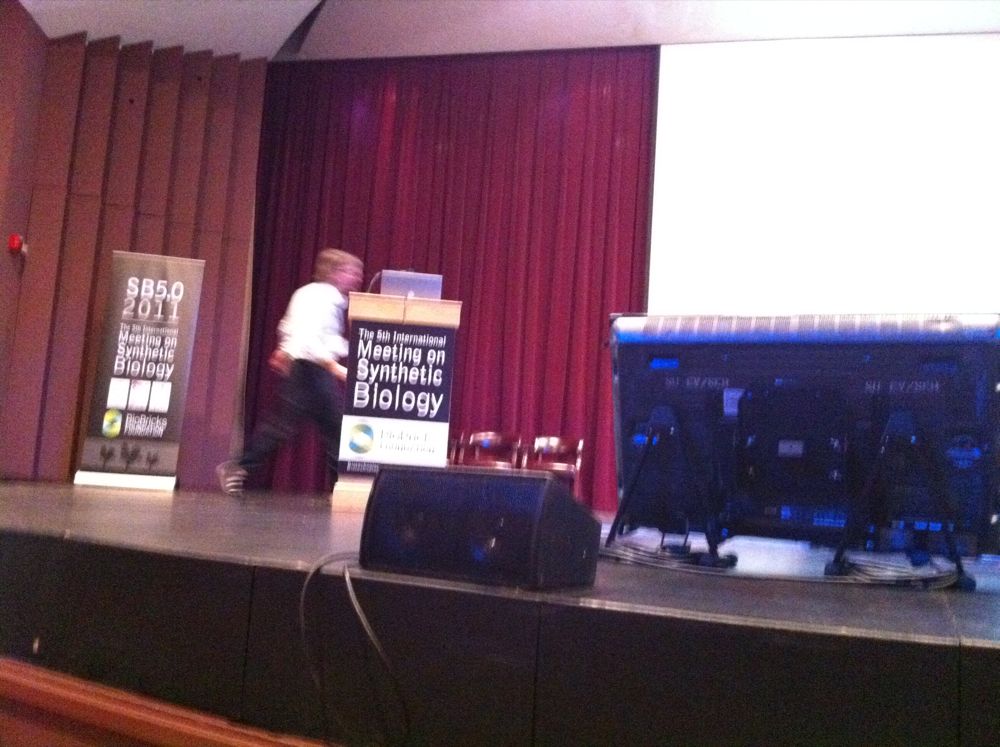
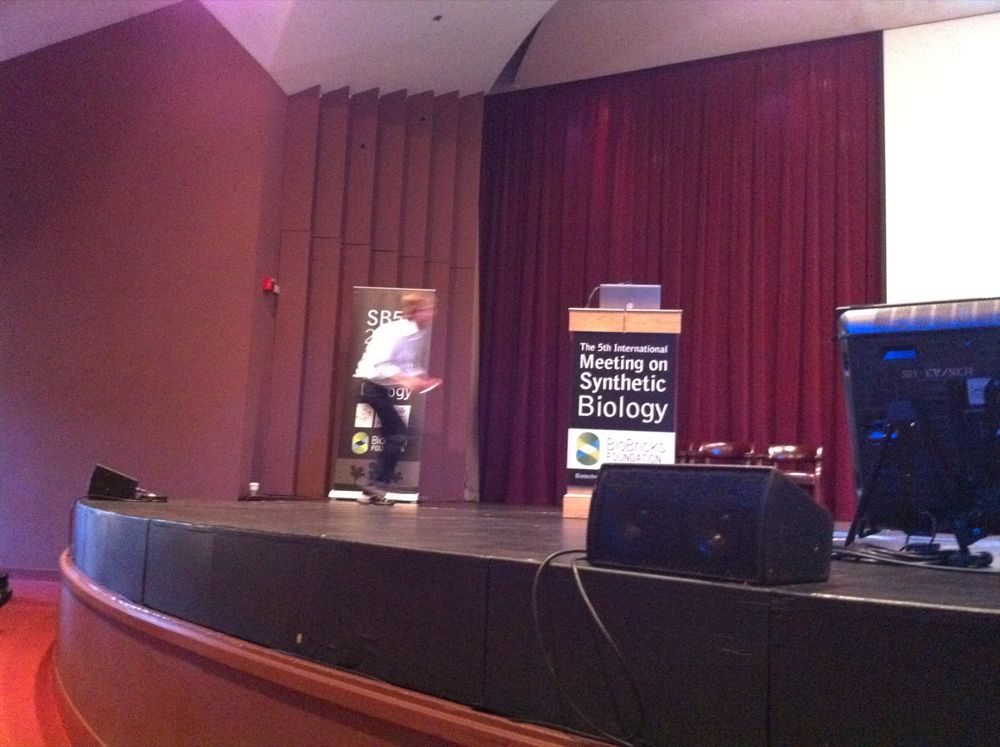
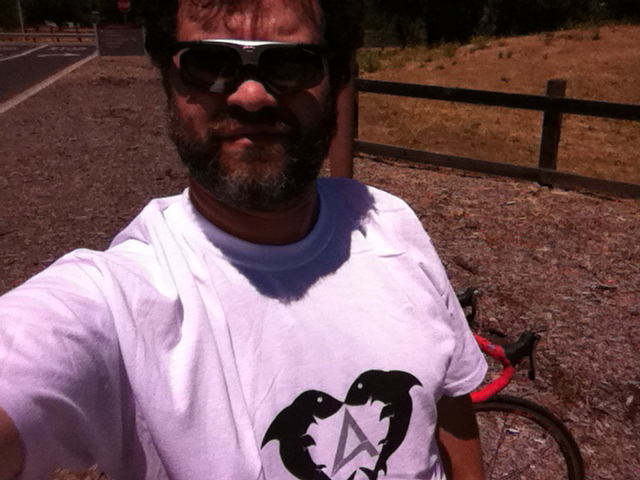
4. I woke up early enough to hop on my bike and ride on over to the meeting.  I was a PhD student at Stanford and had brought my bike in the hopes of going for some rides around town.  I took some pics on the way in:

Got to the meeting and of course posted a few tweets

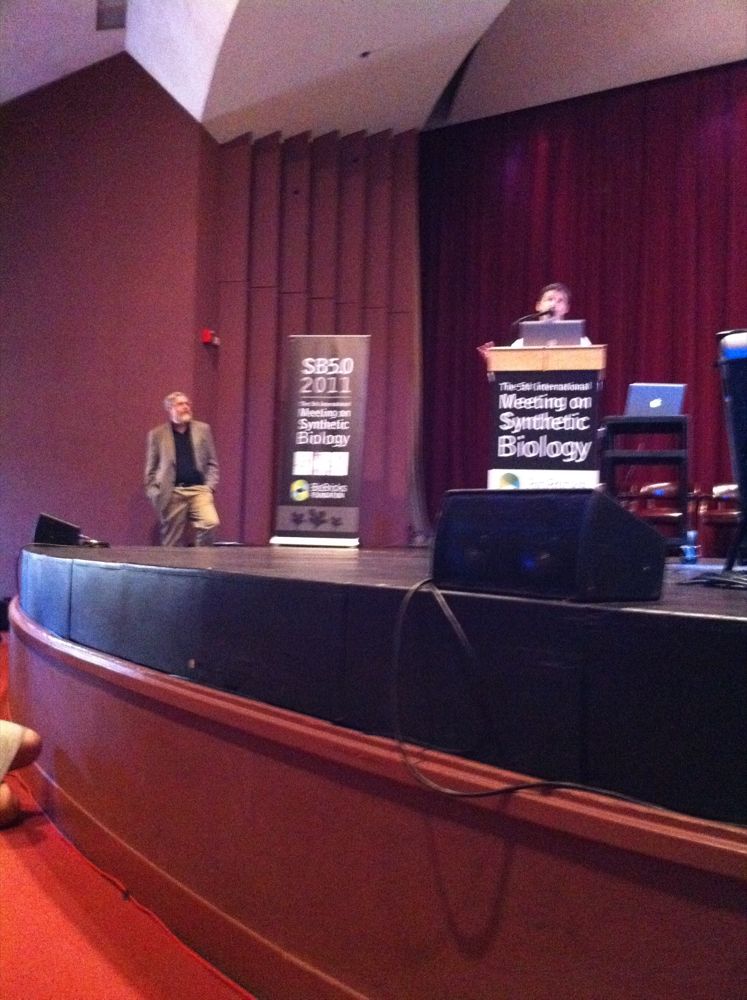
5. Then went in to the session.  I went up to the front and said hello to Eric Lander and talked to him about my recent PhD student Amber Hartman who has taken a job in the White House Office of Science and Technology Policy.  I then said hello to some of the others in the session and took a seat in the front row and started tweeting and taking pictures.


  • phylogenomicsEndy refs quote of Eric Lander’s from after human genome proj: “Genome – bought the book – hard to read” twitpic.com/5bxgb7 #synbio5
  • phylogenomicsJohn Glass: he is very proud of being involved in making 1st synthetic genome – if he were a goat he would infect himself w/ it #synbio5
  • phylogenomicsLander asks “What are the ret challenges of synthetic biology” – need a list like Hilbert’s math challenges to shape field” #synbio5
  • phylogenomicsJohn Glass discussing history of synthetic genomics #synbio5and why they started working on mycoplasmas http://t.co/aVuNino


  • phylogenomicsRT @peccoud: RT @synthaes: how do we keep synthetic genomics open source? vital – jef boeke #synbio5 So many aspects: data, software, sequences
  • phylogenomicsLove how speaker at #synbio5 trying to push for power of synbiology and Eric Lander keeps saying “The genetics told us that” #gogenetics
  • phylogenomicsEric Lander is one of the best panel moderators I have ever seen – except maybe Robert Krulwich – #synbio5 – great job pushing discussion
  • drkahaynesITA He’s great RT @phylogenomics: Eric Lander is one of the best panel moderators I have ever seen #synbio5
  • phylogenomicsPam Silver says that the virome is fascinating and needs more looking into #synbio5
  • phylogenomicsLander has just gone through effective population size Vs. Selective coefficients #math-at-9am #synbio5
  • phylogenomicsRT @peccoud#synbio5 John Glass, we have no idea how to design a genome? Would studying evolution help? Not sure.
  • phylogenomicsThe synthetic biology express – Drew Endy hand delivering questions to panel #synbio5 http://t.co/soIpd3c
  • phylogenomicsLander fo abstracts for future science – some awesome ones – Pam Silver says “photosynthetic humans developed for travel to mars” #synbio5
  • phylogenomicsAlica Jackson from DARPA announcing DARPA is getting into synthetic biology in a big big big way w/ “Living Foundries Program” #synbio5
Then there was a break and I got to talk to a few key people including Alicia Jackson from DARPA who I have been playing a bit of phone tag with.  I also got to meet some people I only knew online/via twitter like Erika Hayden.  


And then back in to the next session and more tweeting:


  • phylogenomicsChurch wants to do fluorescent in situ RNA sequencing #synbio5– note he says this was original goal of his development of next gen methods
  • phylogenomicsNow up Alice Ting from MIT discussing technologies for detecting and analyzing proteins in living cells #synbio5
  • phylogenomicsTing: there is a need for new protein labeling methods especially ones that add chemicals to specific amino acids of proteins #synbio5
  • phylogenomicsTing: developed probe incorporation mediated by enzymes method #synbio5
Then I did indeed go for a bike ride (at lunch time)


I rode up alpine road – not too far – maybe 8-9 miles up and then 8-9 miles back.  But it was nice to get out and back on the roads of my semi-youth. 

And then back to the meeting (after changing shirts …) where I caught Pam Silver talking (note – Silver is one of my favorite people in biology – brilliant – really funny – down to Earth – etc; second note – she grew up in the area near the meeting and told some good stories outside in the breaks about skateboarding around Stanford Campus).

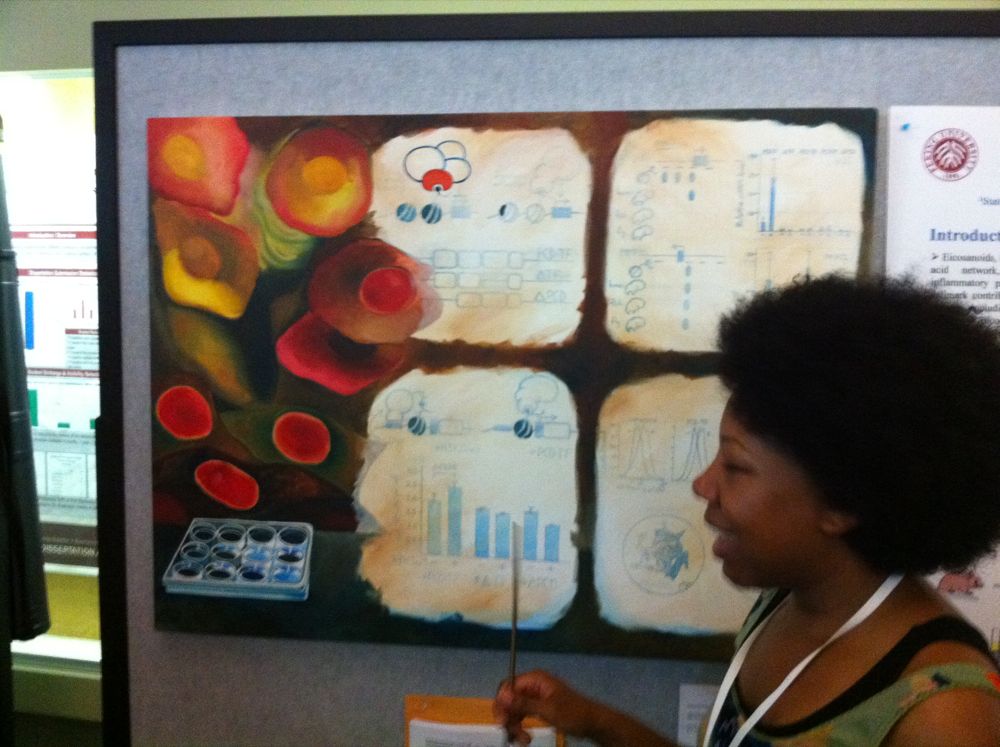
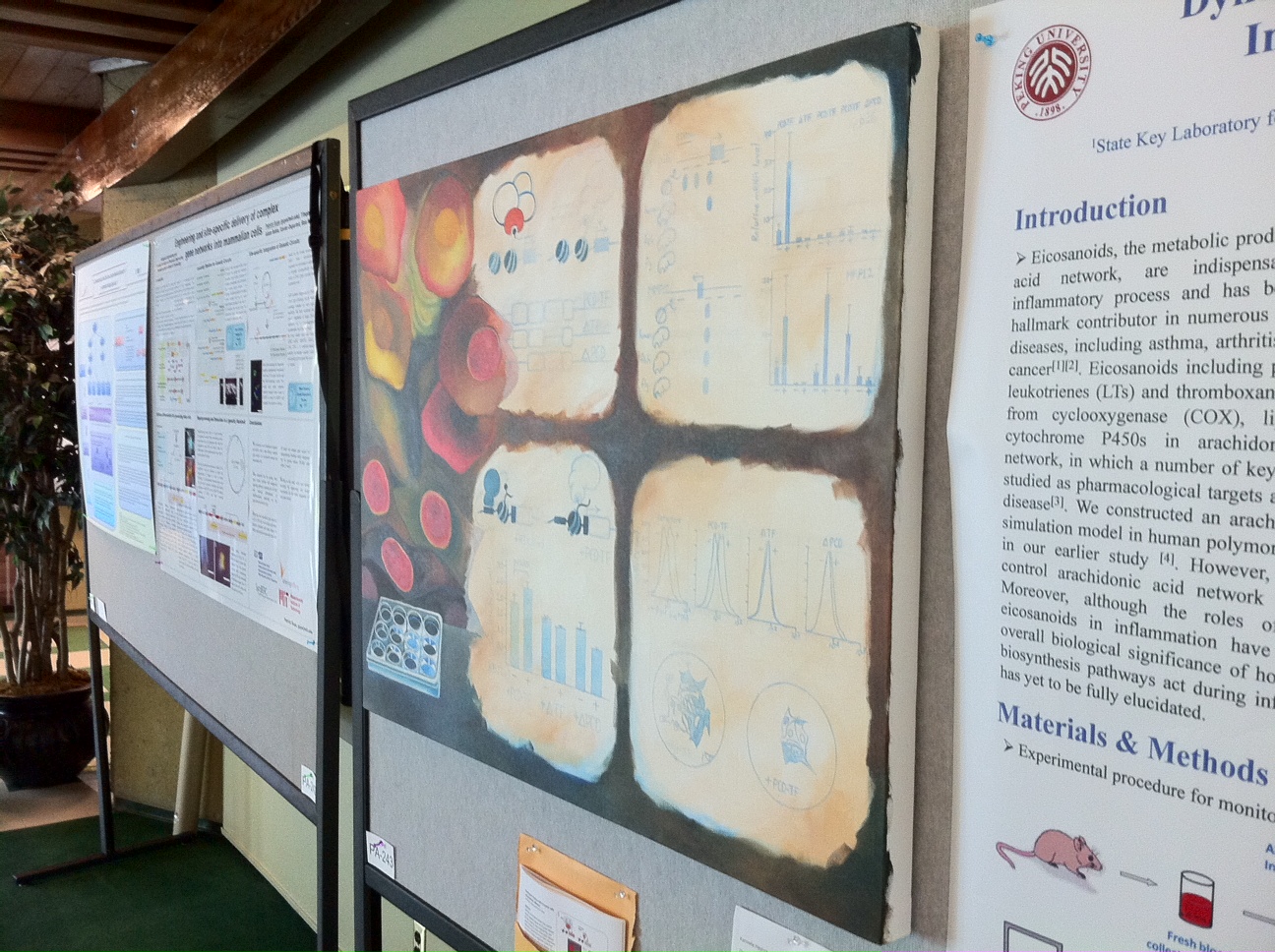
I then stopped tweeting because my phone battery died and I had to get back to my hotel to take a shower.  So I took a little break.  And then returned for the poster session where I really only ended up seeing one poster, because it was so awesome:


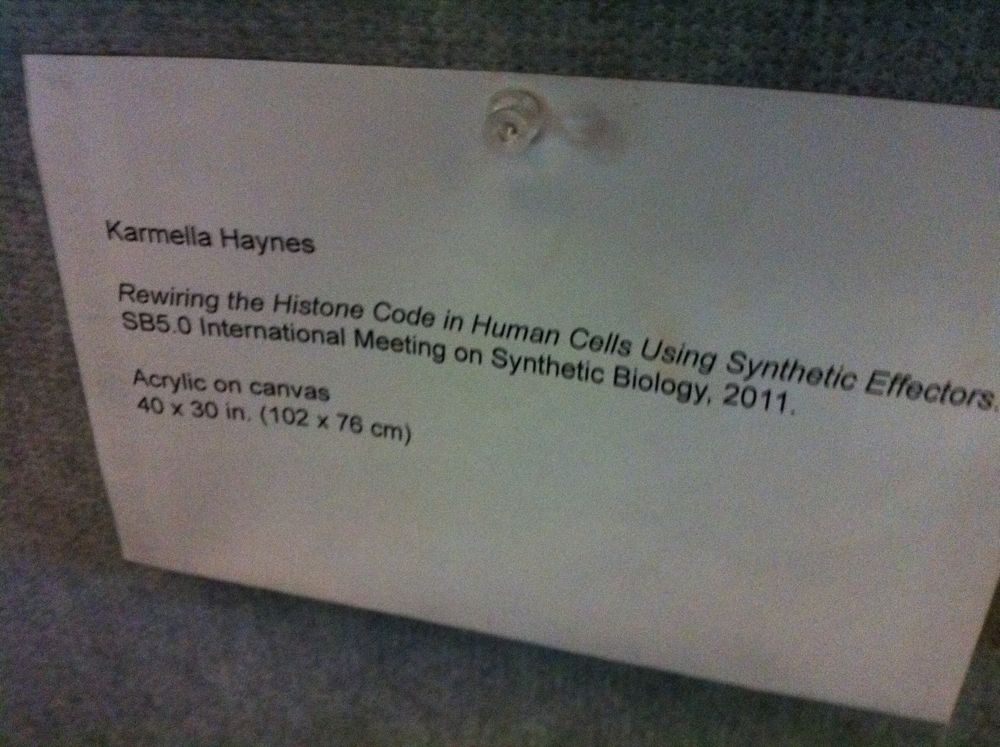
I spoke to Karmella for a while and then to some others.  And eventually I headed back to the hotel to crash because I was pretty beat.  I had dinner and then went back to my room and blogged about Karmella:
And went to sleep.

Then, at 4 AM the hotel alarm went off waking me up.  It eventually went off again while I was still trying to get my act together to get out of the room. And then it went off again a few minutes later.  I did not really get back to sleep.  So of course I posted something
  • phylogenomicsThanks Westin in Palo Alto, the two false fire alarms at ~4 AM made my day; though one good thing:they did prove their alarms work #synbio5
I eventually went downstairs and decided to check out of the hotel and skip the Friday part of the meeting because I was just dragging.  So I checked out and complained about the alarm and got a free breakfast.  So I left my bike and suitcase at the front desk and went to breakfast where I saw Eric Lander also eating.  I did not want to bother him too much but I stopped by and said hello and then asked if he has seen the painted poster and he had not.  So I showed him pics and he asked if I could email him more detail because he wanted to invite Karmella to display her work at the Broad.  Eventually I drove on to campus to go to the AM talks.

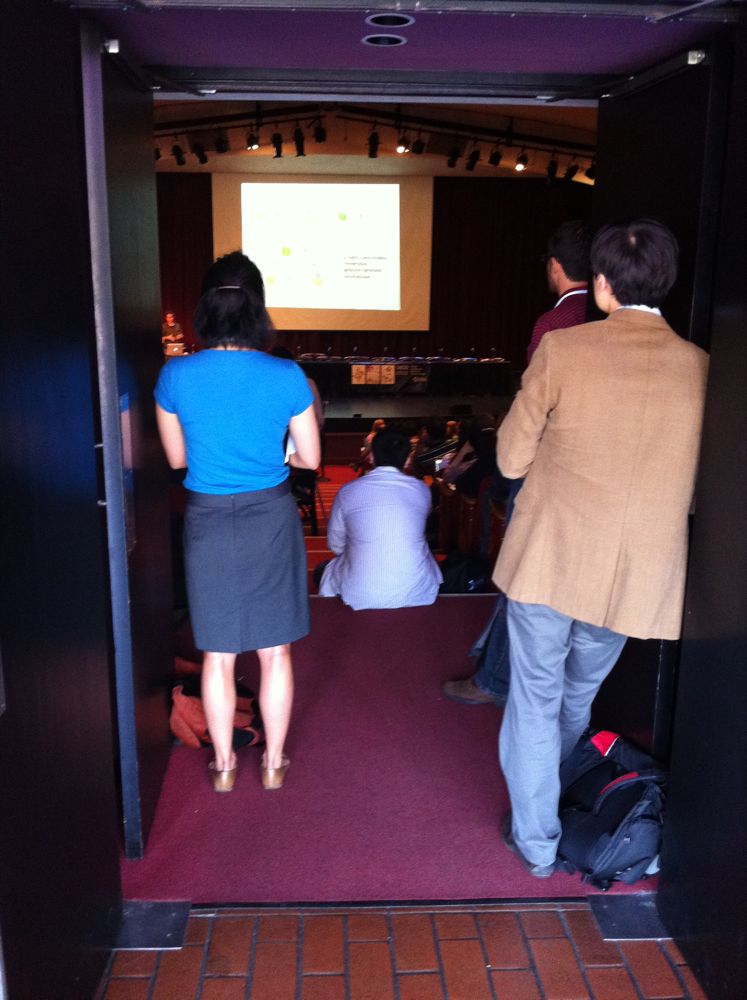
I got there in the middle of a talk


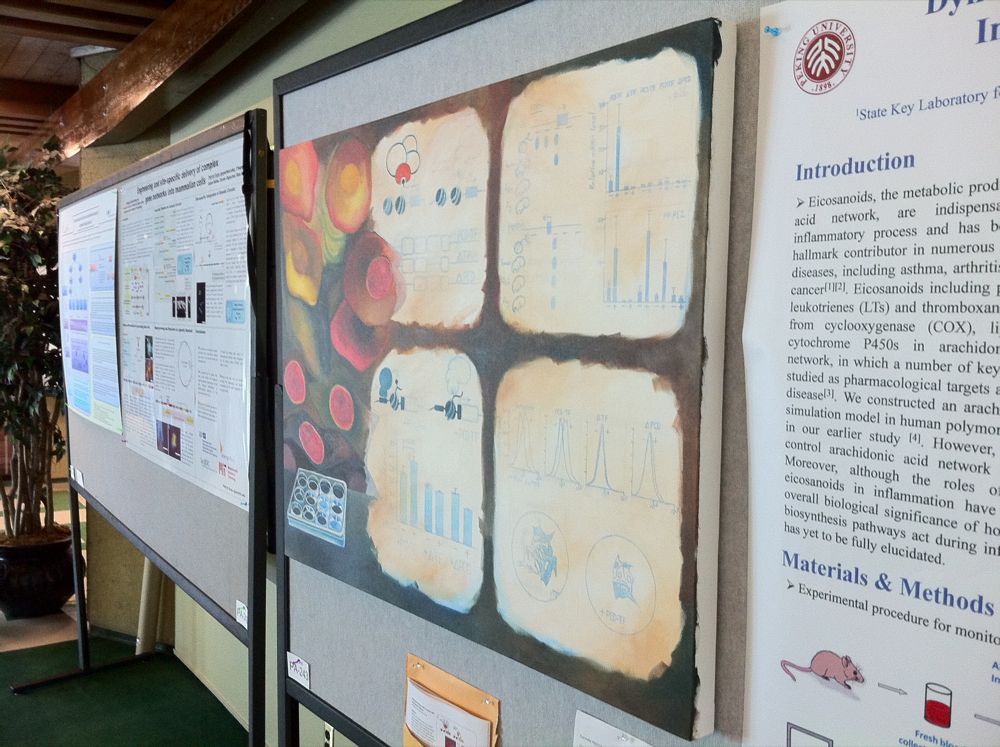
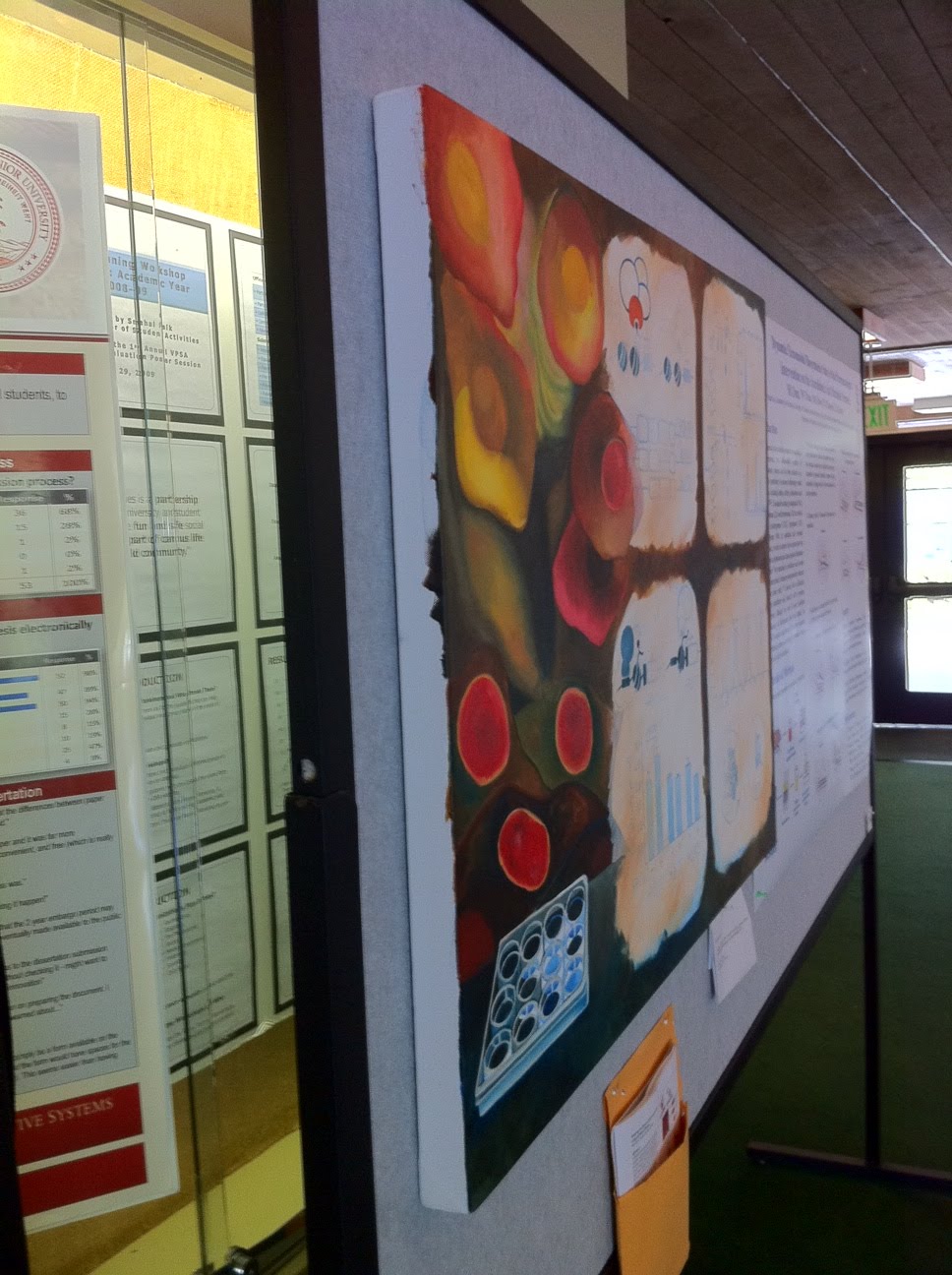
So I went to the posters again and took some more pics of Karmellas poster so you could see the canvas.


I also got a picture of someone taking pictures of all the posters – which seemed a little lame.  I note I asked for permission from Karmella before taking pictures of her poster.


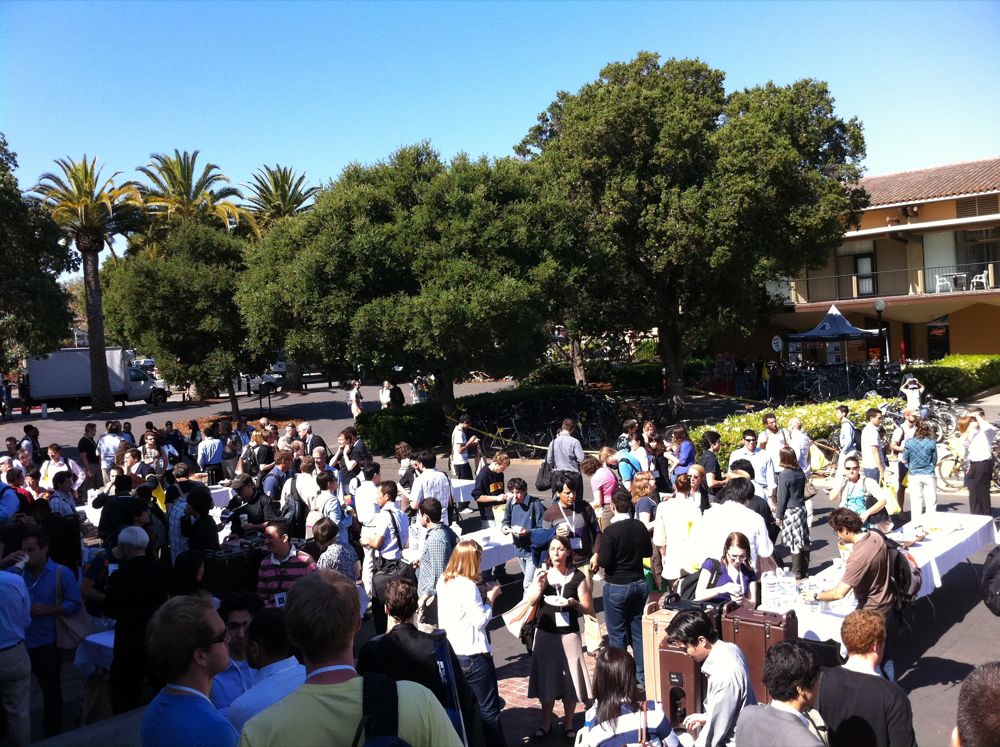
I then went to a talk or two and spent a bunch of time sitting outside talking to various people.  I pretty much always like meeting and talking to people over going to talks in overheated conference rooms (note to Stanford – if you want to host meetings in June get some f*$&% air conditioning in your rooms).  Also note – it may not be the best idea in the world to put out lunch boxes in the sun at 10:30 AM.


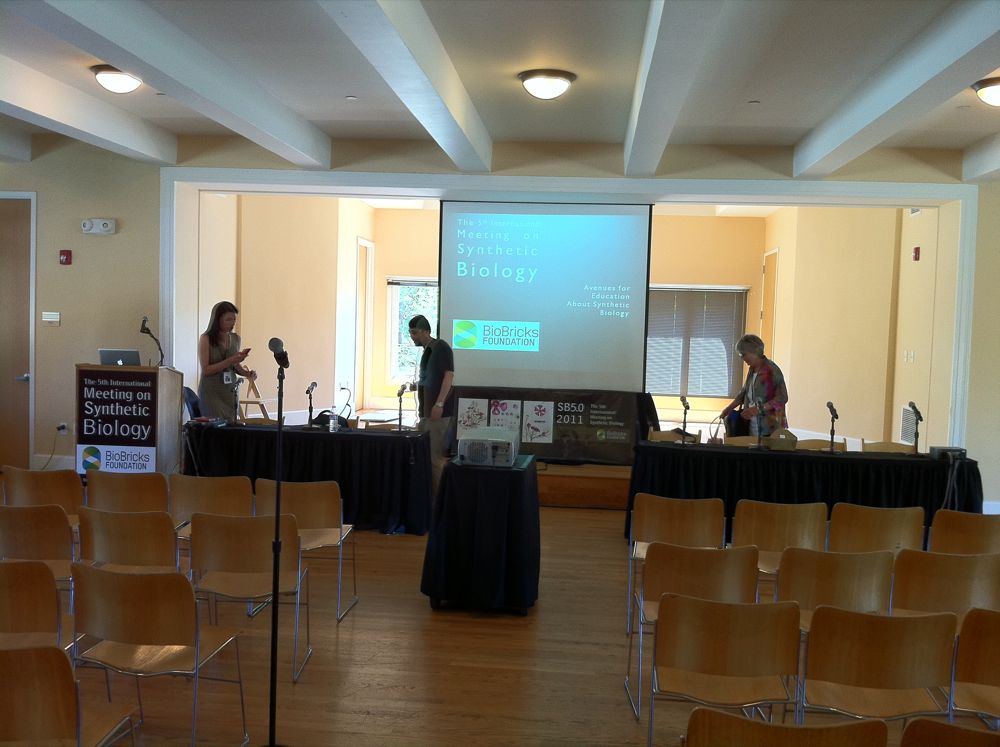
Eventually a group of us headed over to the side room where the Education session was going to be held:

The education session seemed to go quite well.  I will try to post more on it later but I note it was videotaped and the video will supposedly be posted.  It was great talking to the people on the panel and meeting some of the interested parties in the crowd.

And then after a group of us sat down for some sodas/tea and chatted.  It was good to get a few minutes with people dedicated to outreach and education.  And then to posters where I saw Marc Facciotti from Davis as well as a few other people I knew.  And finally to home:

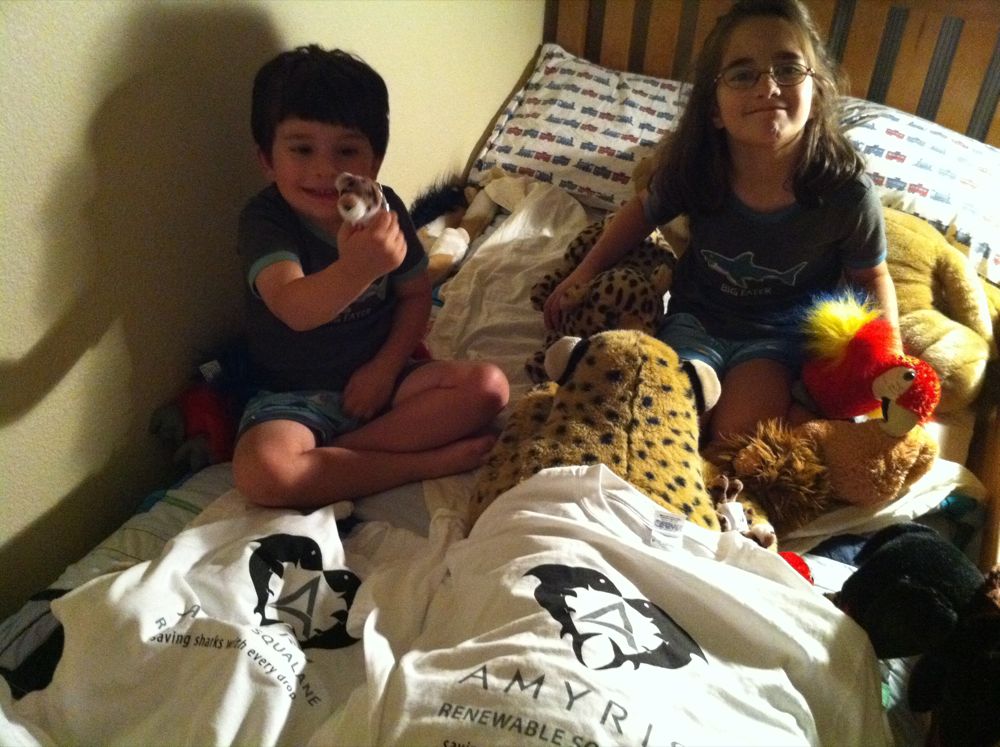
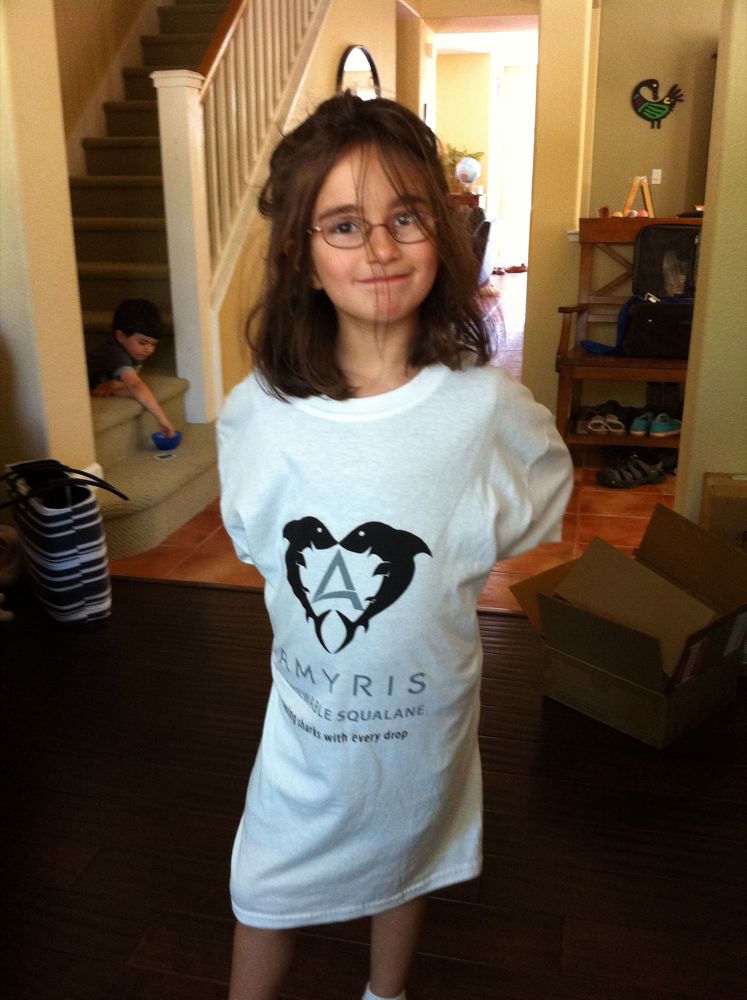
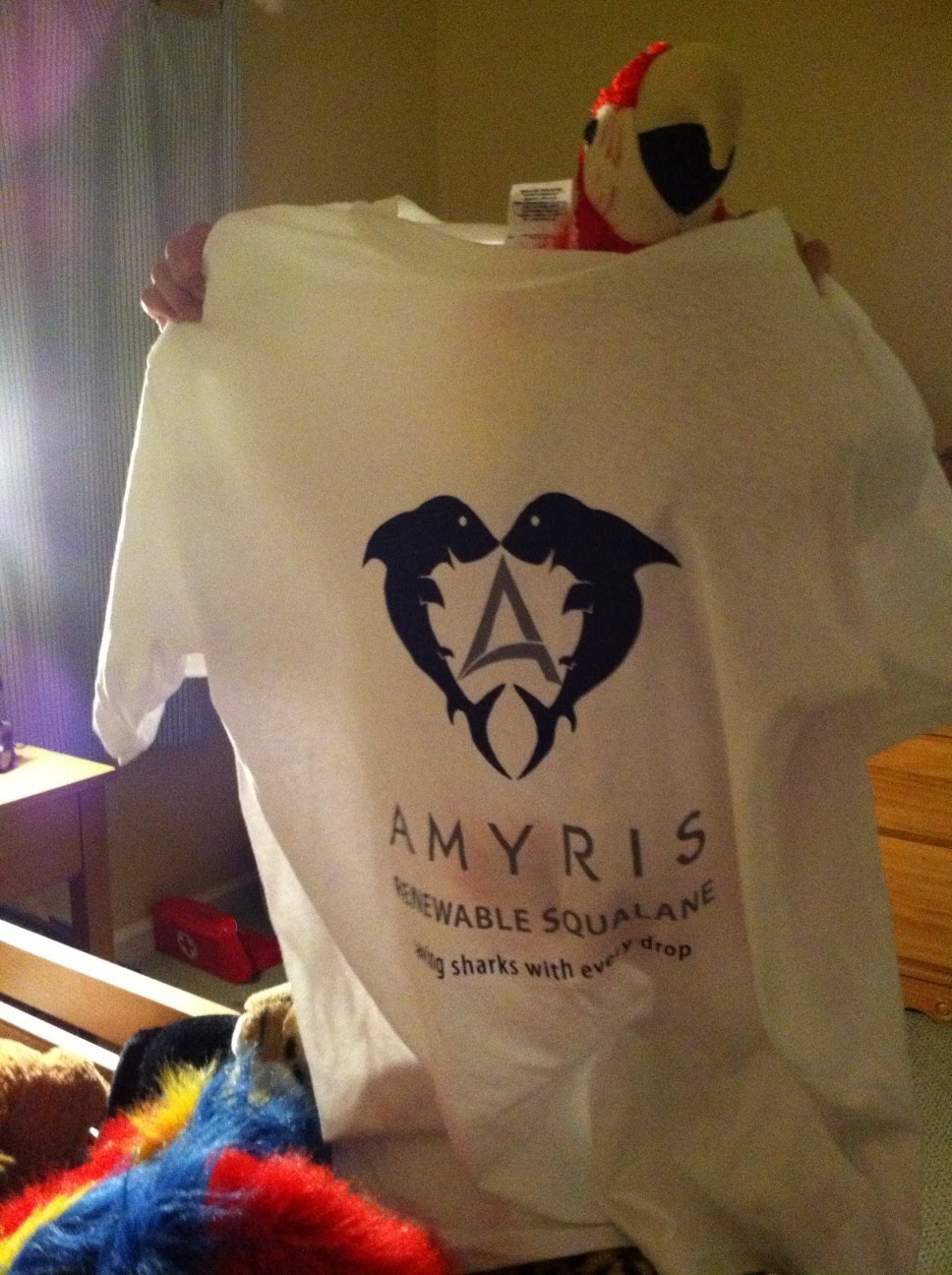
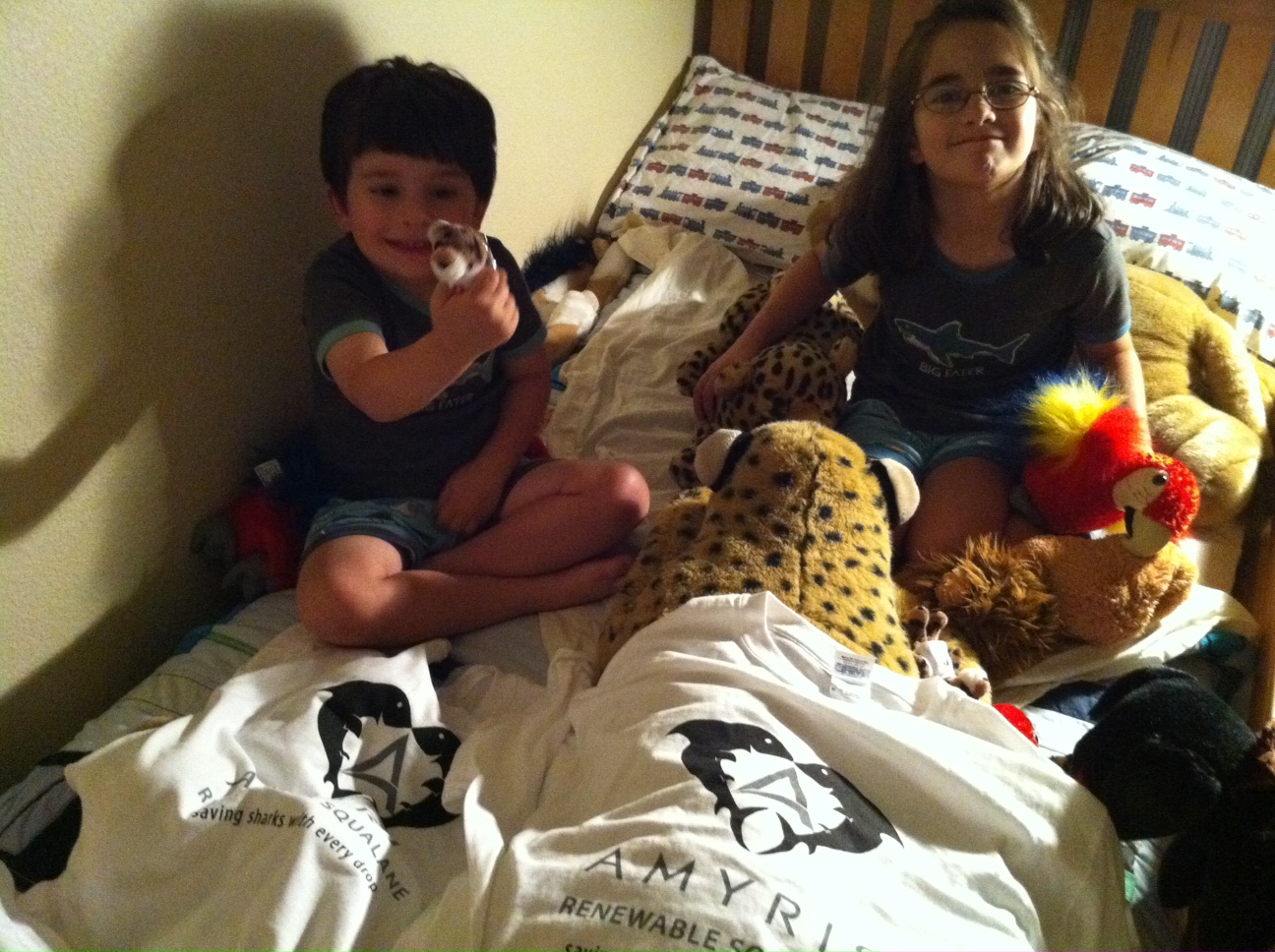
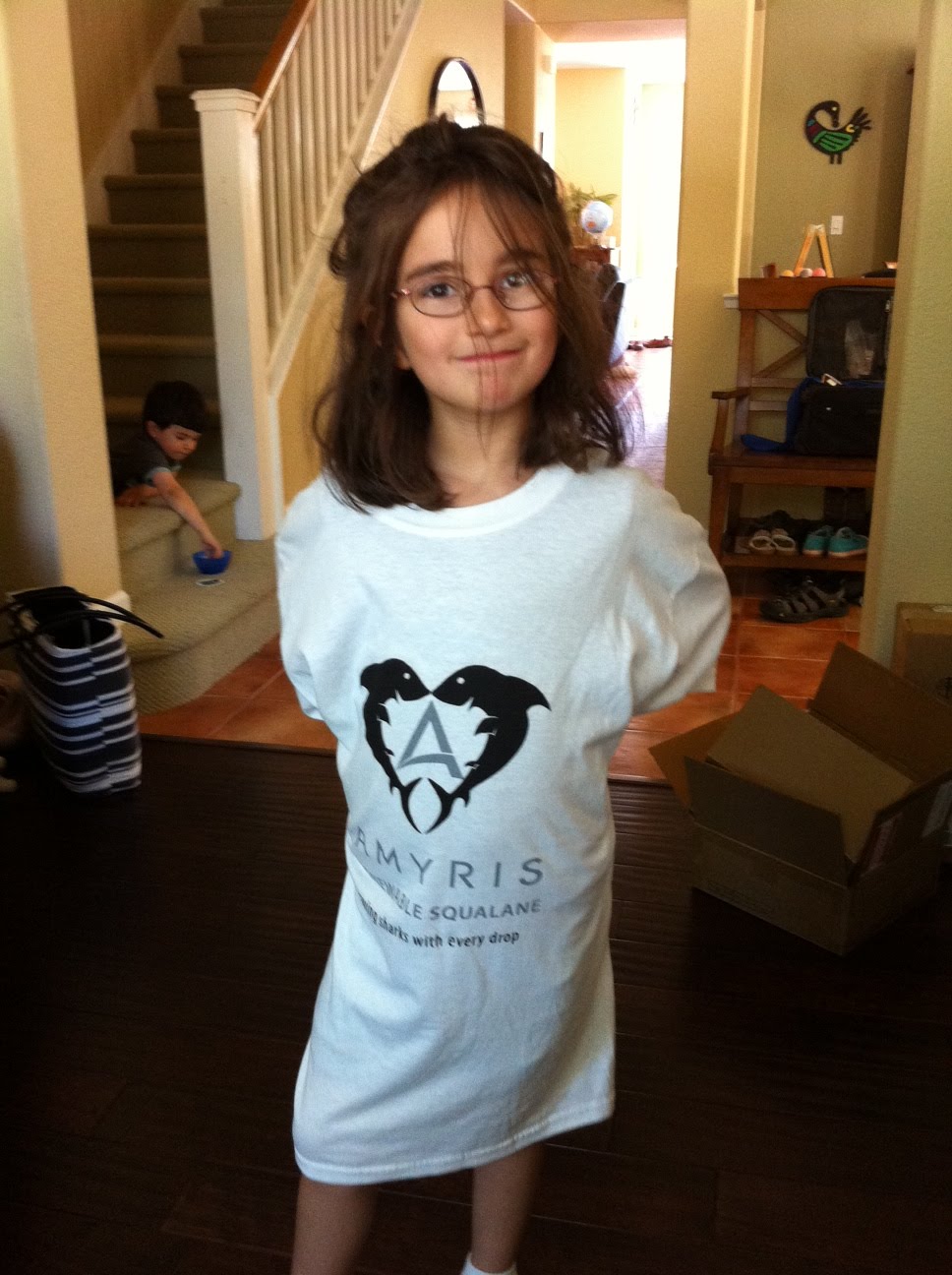
Schwag from #synbio5 very popular at home #Amyris #igem

Well, I am missing day 3 of the synthetic biology meeting but I note – I am very popular at home with some of the meeting schwag – thanks Amyris and iGEM

Twisted tree of life award: @Discovermag for article on Lynne Margulis

Well, if you can, for a minute, ignore that fact that in Discover Interview: Lynn Margulis Says She’s Not Controversial, She’s Right | Evolution | DISCOVER Magazine Discover Magazine in essence is promoting some of the refuted ideas Lynne Margulis has about HIV. Sure they hint in part that they think she is over the top but they also give her a soapbox to spout some of her latest absurdities on HIV and such. I would suggest you don’t even read the main part of the Discover article. Just read Tara Smith’s discussion of it: Margulis does it again : Aetiology. Margulis should not be given such prominence in a magazine like Discover. But that is not what I am hear to write about. I am hear to point out that Discover also sets up a red herring for Margulis. In the beginning of the article, it is written:

“A conversation with Lynn Margulis is an effective way to change the way you think about life. Not just your life. All life. Scientists today recognize five groups of life: bacteria, protoctists (amoebas, seaweed), fungi (yeast, mold, mushrooms), plants, and animals. Margulis, a self-described “evolutionist,” makes a convincing case that there are really just two groups, bacteria and everything else.”

Seriously? Scientists today do not recognize five groups. Scientists today have moved past that to recognize and/or argue about bacteria, archaea and eukaryotes – the three domains of life. These three groups were first proposed in 1977 by Carl Woese and colleagues. Did Discover somehow miss the last 34 years of science? WTF? For setting up such an evolutionary red herring in this painful interview with Lynne Margulis, I am giving Discover Mag my coveted “Twisted tree of life award“. Past winners are:

More pics of hand painted poster from #synbio5

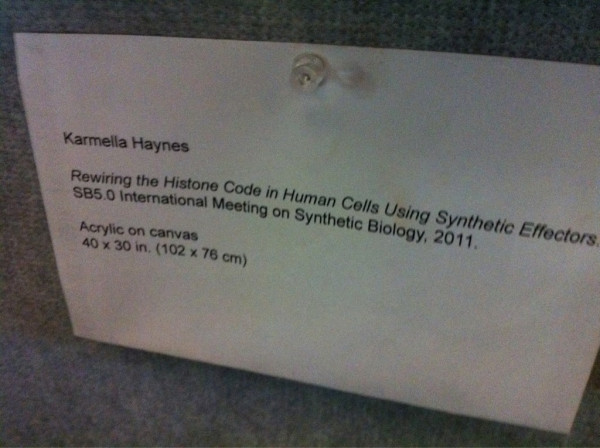
More art & science – hand painted poster at Synthetic Biology #synbio5 – by Karmella Haynes

I posted this to twitter yesterday but am now adding it to my blog since it was so great.  At the Synthetic Biology 5.0 meeting at Stanford I walked into the poster session last night to discover this incredible poster:

Karmella Haynes, had hand painted her poster on canvas.  Drawn in by the art, I went to talk to her (well, first I said “This is awesome” or something like that.  And then I found out a bit more detail.  She had her paints with her and was continuing to add touches to the painting.  Though I was fascinated by the art side of this, then we got to talking about the science because actually – the figures there were about work she had done on applying some ideas from synthetic biology to animal cells in tissue culture.

I was completely blown away by this.  I am not sure if the same posters will be up tomorrow and if so I will try to get some better shots.  Anyway, I found out she is on her way to a faculty position in Arizona and has recently been a post doctoral fellow at Davidson College.

And then with a little help from Google I discovered her openwetware page: Karmella Haynes.  And from that I found her art page: http://www.karmellahaynes.com/.  I hope she does more hand painted posters for conferences – it certainly brightened up the poster session and made my day.

Absolutely spectacular – glass microbes

Wow. These are truly spectacular: Gallery – Glass Microbiology – Luke Jerram

Thanks to Morgan Jackson for pointing me to them via twitter: here

See also:

Coming up on http://phyloseminar.org Jason Stajich (aka @hyphaltip) #fungi #genomics

Upcoming seminar on Phyloseminar.Org

Jason Stajich speaks Wednesday, June 29th at noon PST on “Fungal phylogenomics: Getting lost in the moldy forest.”
Fungi occupy diverse ecological niches in roles from nutrient cycling in rainforest floors to aggressive plant and animal pathogens. Molecular phylogenetics has helped resolve many of branches on the Fungal tree of life and enabling studies of evolution across this diverse kingdom. The genome sequences from hundreds of fungi now permit the study of change in genes and gene content in this phylogenetic context and to connect molecular evolution with adaptation to ecological niches or changes in lifestyles. I will describe our work in studies contrasting pathogenic and non-pathogenic fungi and efforts to unravel the evolution of multicellularity in fungi comparing unicellular basal fungi with multicellular mushrooms and molds.
The development of tools for data mining and use of fungal genomics is also driving the pace of molecular biology and genetics of fungi. I will highlight new approaches to make this easier and the ways data integration can inform and transform studies of functional biology of fungi.

Japan 04:00 (04:00 AM) on Thursday, June 30
New Zealand 07:00 (07:00 AM) on Thursday, June 30
West Coast USA 12:00 (12:00 PM) on Wednesday, June 29
East Coast USA 15:00 (03:00 PM) on Wednesday, June 29
England 20:00 (08:00 PM) on Wednesday, June 29
France 21:00 (09:00 PM) on Wednesday, June 29

Learn how to connect ahead of time. To hear about upcoming talks, send an email to phyloseminar+subscribe@googlegroups.com or follow @ematsen.
If you can’t make it, don’t fret– you can always watch the recording

Yes, I am a #RedSox & #PLoS fan; & this video sort of is proof #BenFranklinAward #OpenScience

Just saw this posted on Youtube.  Did not know it was coming … but am happy they recorded it

And here are the slides I used.  Will try to synch

For more on this award see