Notes from my trip to #AAASMtg #EarthMicrobiomeProject #Storify

I am hoping to write up some more notes from my trip to the AAAS meeting in Vancouver. But for now these pics and this Storification of tweets and related posts will have to do … https://picasaweb.google.com/s/c/bin/slideshow.swf

Slideshow version of Storification http://storify.com/phylogenomics/jonathan-eisen-at-aaas-2012.js?template=slideshow[<a href=”http://storify.com/phylogenomics/jonathan-eisen-at-aaas-2012″ target=”_blank”>View the story “Jonathan Eisen at AAAS 2012” on Storify</a>]

Second video of the week: Mackenzie Smith on Open Licenses

Video of the week: Rosie Redfield on the Arsenic Life story #ILoveRosie

Interesting piece by John Rennie at Smartplanet: What comes after antibiotics?

Interesting piece by John Rennie at Smartplanet: What comes after antibiotics? | SmartPlanet. It discusses a variety of topics including antiomicrobial peptides, nanotechnology, Kary Mullis, Michael Zasloff, DARPA, Maryn McKenna, and more. Definitely worth checking out.

Notes for talk by Mackenzie Smith – candidate for #UCDavis University Librarian position

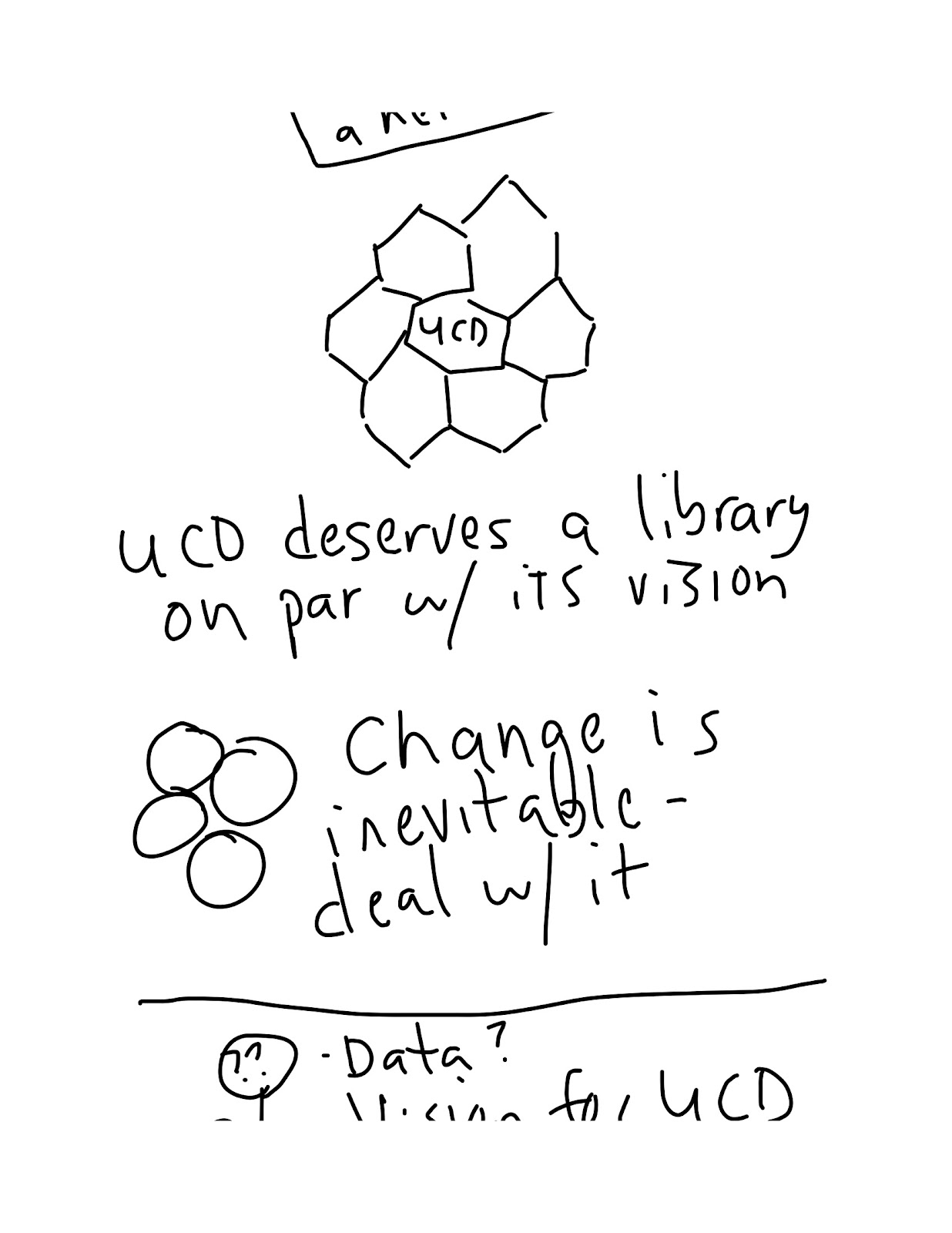
Here are some notes I took using my iPAD for a talk by Mackenzie Smith about libraries: Note Feb 21, 2012
She is a candidate for the UC Davis University Librarian position for which I am on the committee.  This is the first time I have taken and posted notes from a talk using my iPAD – so please bear with me – it is an experiment of sorts. Note to do this I used an iPAD2, a Bamboo Stylus and the Notability App. I then exported to PDF and posted it (the Note above).  For the images below I then had to export single pages to JPGs.  If anyone knows an easy way to export a multipage PDF as a single JPG I would appreciate information … Inspiration provided by Kosta.

http://storify.com/phylogenomics/mackenzie-smith-talk-at-ucdavis.js?template=slideshow[<a href=”http://storify.com/phylogenomics/mackenzie-smith-talk-at-ucdavis” target=”_blank”>View the story “Mackenzie Smith talk at #UCDavis” on Storify</a>]

Antibiotic use in animals (may) lead to superbugs in people #mBIO

New paper in mBIO of potential interest from Lance Price et al.:  Staphylococcus aureus CC398: Host Adaptation and Emergence of Methicillin Resistance in Livestock.  For those not in the know, mBIO is a relatively new Open Access journal from the American Society for Microbiology.  The paper discusses genomic studies of MRSA which has led the authors to conclude that antibiotic use in animals may contribute to the rise and spread of superbugs in people.

From here. Maximum-parsimony tree of the 89 CC398 isolates (including ST398SO385) based on 4,238 total SNPs, including 1,102 parsimony-informative SNPs with a CI of 0.9591. Clades and groups of importance are labeled in a hierarchical fashion to facilitate description in the text. The tree was rooted with clade I based on an iterative selection process that identified this group as the most ancestral (see Materials and Methods). COO, country of origin; AT, Austria; BE, Belgium; CA, Canada; CH, Switzerland; CN, China; DE, Germany; DK, Denmark; ES, Spain; FI, Finland; FR, France; GF, French Guiana; HU, Hungary; IT, Italy; NL, The Netherlands; PE, Peru; PL, Poland; PT, Portugal; SI, Slovenia; US, United States; P, pig; H, human; R, horse; T, turkey; B, bovine; MET, methicillin susceptibility; R, resistant; S, susceptible.

The figure above is the only figure in the main text of the paper.  There are others in supplemental information which seems a bit strange to me – why put anything in supplemental information when the paper is only released online?  Or at least have thumbnail images for all figures in the main text …

Anyway, the paper and press release got picked up by many newsy places.  See for example:

I note – the Press Release is MUCH better than the last one that was about a paper by Price that I wrote about here: The Tree of Life: #PLoSOne paper keywords revealing: (#Penis #Microbiome #Circumcision #HIV); press release misleading …  Lance was awesomally quick to respond to my complaints about that PR.  The PR for this paper is not so bad — a bit over the top in some of the quotes – but no need for comments I think. 
Citation:
Price LB, et al. 2012. Staphylococcus aureus CC398: host adaptation and emergence of methicillin resistance in livestock. mBio 3(1):e00305-11. doi:10.1128/mBio.00305-11.

UPDATE 2/21 5:30 PM: an alternative (and much more pleasing) press release from ASM is here.

Slideshow w/ audio of my talk on "A Field Guide to the Microbes" from the AAAS Meeting #AAASMtg

I recorded the audio of my talk on “Towards a field guide to the microbes” from the AAAS meeting on Saturday AM. Here is a slideshow of the talk with audio synched to the slides (I did this using Keynote on a Mac with the “record Slideshow” function).

My slides from the talk are available at Slideshare.

Jack Gilbert @gilbertjacka clarifies comments at #AAASMtg re: opening windows, cleanliness & microbes

Just got this to post from my college colleague Jack Gilbert in regard to some comments he made to the press at the AAAS Meeting a few days ago.  He sent this in part in response to some news stories that came out of the press conference we had at the meeting (e.g., see Florence Nightingale approach ‘could help fight infection in …Open hospital windows to stem spread of infections, says … and others).  And I encouraged him to consider whether or not he needed to clarify some of his comments – and here is his response.


A confession, lesson and retraction
By Jack A. Gilbert

At the AAAS 2012 annual meeting on Friday, I was involved in a press conference to announce the initial results and ideology for the Earth Microbiome Project (http://www.earthmicrobiome.org). Following the press conference we went to another room, where we were openly discussing these concepts with the reporters. Several reporters asked me to comment on the potential impact of this research in the medical sphere. At which point I started to discuss some excellent research by Jessica Green (http://biology.uoregon.edu/people/green) regarding her recent evidence that improved ventilation in hospital wards reduced the airborne abundance of organisms that were related to pathogens. I showed these reporters the paper
(http://www.nature.com/ismej/journal/vaop/ncurrent/full/ismej2011211a.html) and asked them to discuss this with Jessica Green.

I then proceeded to discuss some current research we are doing at University of Chicago that is looking at the impact of having a natural microbial community on surfaces to reduce the likelihood that pathogens can establish in that environment. Specifically we are exploring whether ‘good bacteria‘ can be used as a barrier to outcompete ‘bad bacteria’, I suggested that this was testing the hypothesis outlined by Florence Nightingale.

To this end I said, that maybe instead of sterilizing every surface in a hospital we could explore a different strategy. There is however currently only circumstantial evidence to support my claims, and I could have done a much better job in making clear that I was discussing an idea – not something for which there was evidence.

I am sorry for my indiscretion and hyperbole, and hope that I didn’t cause any groups or individuals concern or worry about this topic. These were concepts being discussed, specifically that by using the EMP we could explore ecological dynamics that could lay the groundwork to help determine if a community could play the role of a barrier against infection.

I want to stipulate that I believe hospitals should be cleaning, and I believe that surgeons should scrub and use the sterile method. To be clear, I wanted to state that ‘good’ bacteria could in the future play a role in reducing the instances of hospital borne infection, and that this is something we should investigate. People should wash their hands after the toilet, and wash their hands when they are sick; there is nothing wrong with being clean.

w/o a doubt the best aspect of #AAASmtg – giving my kids science schwag #GoScience

Here we go again: discouraging PR #SPAM by posting them pre-embargo: Here’s one about smokeless tobacco #AAASMtg

Just received this in my email.  As I have said before (The Tree of Life: How to stop press release spam? Post embargoed press releases) I am sick of getting unsolicited press releases that are embargoed and do not have any relevance to my work.  They are SPAM.   And to discourage this practice I am posting them to my blog when I receive them in order to break their embargo which I did not agree to.  Please – all of you out there sending out unsolicited PR SPAM – stop it.  Stop it.  Stop it.

EMBARGOED TO 6 P.M. EST, SATURDAY, FEB. 18, 2012
(3 P.M. PST, SATURDAY, FEB. 18, 2012)
Contact: Jill Scoggins, 502-475-2428, jill.scoggins@louisville.edu

UofL RESEARCH SHOWS SUBSTITUTING WITH SMOKELESS TOBACCO SAVES LIVES
Presentation at AAAS shows scientific foundation for tobacco harm reduction efforts


VANCOUVER, British Columbia – Substituting smokeless tobacco products can save smokers’ lives, and there is a scientific foundation that proves it.

That is the message Brad Rodu, D.D.S., professor of medicine at the University of Louisville (UofL) School of Medicine and the Endowed Chair in Tobacco Harm Reduction at UofL’s James Graham Brown Cancer Center, delivered at the Annual Meeting of the American Association for the Advancement of Science Feb. 18. Rodu spoke at the session, “Harm Reduction: Policy Change to Reduce the Global Toll of Smoking-Related Disease.”

“Quit or die: That’s been the brutal message delivered to 45 million American smokers, and it has helped contribute to 443,000 deaths per year, according to statistics from the Centers for Disease Control and Prevention,” Rodu said. “The truth, however, is that total nicotine and tobacco abstinence is unattainable and unnecessary for many smokers.”

Rodu’s presentation, “Transforming Tobacco Use: The Potential of Tobacco Harm Reduction,” was based on his almost 20 years of research. His work shows that smokers can greatly reduce their risk of disease and death by replacing smoking products with e-cigarettes or modern, spit-free smokeless tobacco. These products provide a much safer alternative for those smokers who are unable or unwilling to quit smoking because they continue to deliver nicotine without the harmful effect of smoking.

“Nicotine is addictive, but it is not the cause of any smoking-related disease. Like caffeine, nicotine can be used safely by consumers,” Rodu said.

Decades of epidemiologic research bear out Rodu’s findings. While no tobacco product is completely safe, smokeless products have been shown to be 98 percent safer than cigarettes. In the United Kingdom, the Royal College of Physicians reported in 2002 that smokeless tobacco is up to 1,000 times less hazardous than smoking, and in 2007, further urged world governments to seriously consider instituting tobacco harm reduction strategies as a means to save lives.

To see the proof of what tobacco harm reduction can do, look to Sweden, Rodu said. “Over the past 50 years, Swedish men have had Europe’s highest per capita consumption of smokeless tobacco as well as Europe’s lowest cigarette use. During the same time, they also have the lowest rate of lung cancer than men in any other European country.”

In the United States, steps have been made to document the value of tobacco harm reduction. In 2006, a National Cancer Institute-funded study estimated that if tobacco harm reduction was “responsibly communicated” to smokers, 4 million would switch to smokeless tobacco. The American Council on Science and Health – which organized Rodu’s session at the AAAS Annual Meeting – concluded in the same year that tobacco harm reduction “shows great potential as a public health strategy to help millions of smokers.”

Rodu is well aware of the controversy his research findings generate. Opponents of any use of nicotine delivery products maintain that smokeless tobacco puts the user at great risk for oral cancer, a position not supported by research.

“The risk of mouth cancer among smokeless tobacco users is extremely low – certainly lower than the risk of smoking-related diseases among smokers,” he said. “The annual mortality rate among long-term dry snuff users is 12 deaths per 100,000 and the rate among users of more popular snus, moist snuff and chewing tobacco is much lower.  For perspective, the death rate among automobile users is 11 per 100,000 according to a 2009 report from the National Highway Traffic Safety Administration.  Compare those to the rate among smokers: more than 600 deaths per 100,000 every year”

“The data clearly show that smokeless tobacco users have, at most, about the same risk of dying from mouth cancer as automobile users have of dying in a car wreck.”

About Brad Rodu

Rodu earned his dental degree from The Ohio State University. After an oral pathology residency program at Emory University, he completed fellowships at the University of Alabama at Birmingham sponsored by the American Cancer Society and the National Cancer Institute. He was on the UAB faculty from 1981 to 2005 with appointments in several departments in the schools of Medicine, Public Health and Dentistry. He joined the UofL faculty in 2005. His research is supported by unrestricted grants from tobacco manufacturers to the University of Louisville and by the Kentucky Research Challenge Trust Fund.