Eisen Lab Blog

John Novembre seminar “Ancestry inference and population genomics” #UCDavis

Genetics Seminar

“Ancestry inference and population genomics: Insights to
recombination, migration, and rare variant diversity”

Speaker: John Novembre

University of California, Los Angeles | Department of Ecology and Evolutionary Biology

Monday, June 4, 2012

4:10 PM

1022 Life Sciences

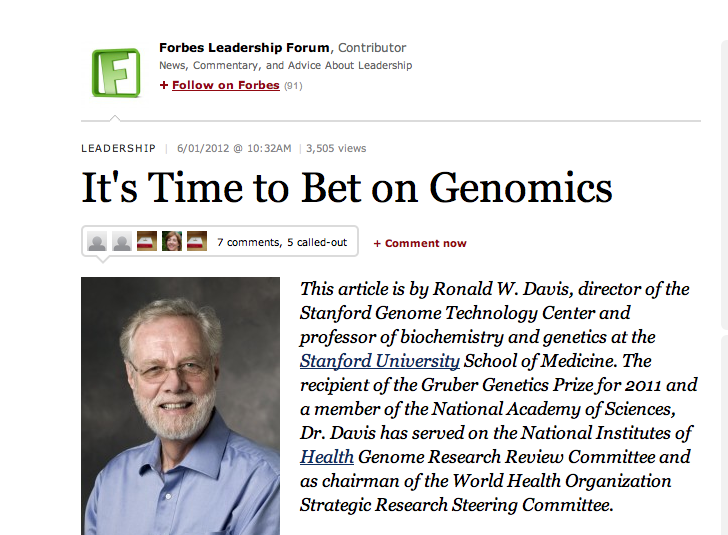
Overselling genomics award #7: Ron Davis & Forbes for PR presented as "essay"

Wow.  Just saw this tweet by Dan Vorhaus:

//platform.twitter.com/widgets.js
So I decided to check it out. The piece is titled It’s Time to Bet on Genomics and it is, well, just completely in appropriate.  Sure – it does take on an article that itself was over the top in downplaying the power of genomics (see Erika Check Hayden’s article about that issue here).  But then Davis goes on to write about a company founded by an ex post doc of his for which Davis is one of the advisors (he does kindly let us know this, but still …).  And what he writes he is a big big pile of fluff with no evidence presented.  Among the lines in the “essay” I find disturbing:

  • One of the most interesting of these is being developed by Genophen
  • Genophen’s application is rather breathtaking in its ambition.
  • Genophen’s “risk engine”—a simple term for some very complex data mining and computer modeling—will map your risk factors against the world’s vast library of medical research and then offer up a personalized set of behavior and treatment recommendations that can help you reduce those risks . . .  and even prevent disease itself.
  • We are now at the point where genomics-enabled medical technology can run various what-if scenarios and show you whether diet, exercise, medication, or some other factor or combination of factors has the greatest statistical likelihood of reducing that risk. The information can then be visually displayed through charts and graphs and made available to patients and their doctors via secure web-based portals.
  • But instinctively I believe it to be true, and anecdotally Genophen’s first trial provided some confirmation.
  • “The trial changed my life,” one female participant who wishes to remain anonymous told me.

All of this without any link to a paper, without any data, without any real details.  Shameful.  Not saying genomic medicine does not have a lot of promise.  But this “essay” is so excessively focused on PR for one company that there is no reason to have any faith in anything said in it.  I am therefore giving Ron Davis and Forbes my coveted Overselling Genomics Award (#7).  Plus I think Forbes deserves some sort of award for “Publishing PR” but I will have to think one of those up.  This piece almost certainly never should have been published at Forbes.Com without many many more caveats.  Yuck.

UPDATE – here is a screenshot from the Forbes Web site.  It is marked as “Forbes Leadership Forum” … hard to tell whether it is meant as an essay, editorial, op-ed, or what.

Preparation Y: Michelle Ellsworth – Performance art mixing dance, genomics, evolution, humor, sex #brilliant

Just got back from a Sloan Foundation funded meeting in Boulder, Colorado that focused on microbiology of the built environment.  More on that another time.  What I want to tell you about – no – what I need to tell you about – is the entertainment that the meeting organizers arranged at dinner Thursday night.

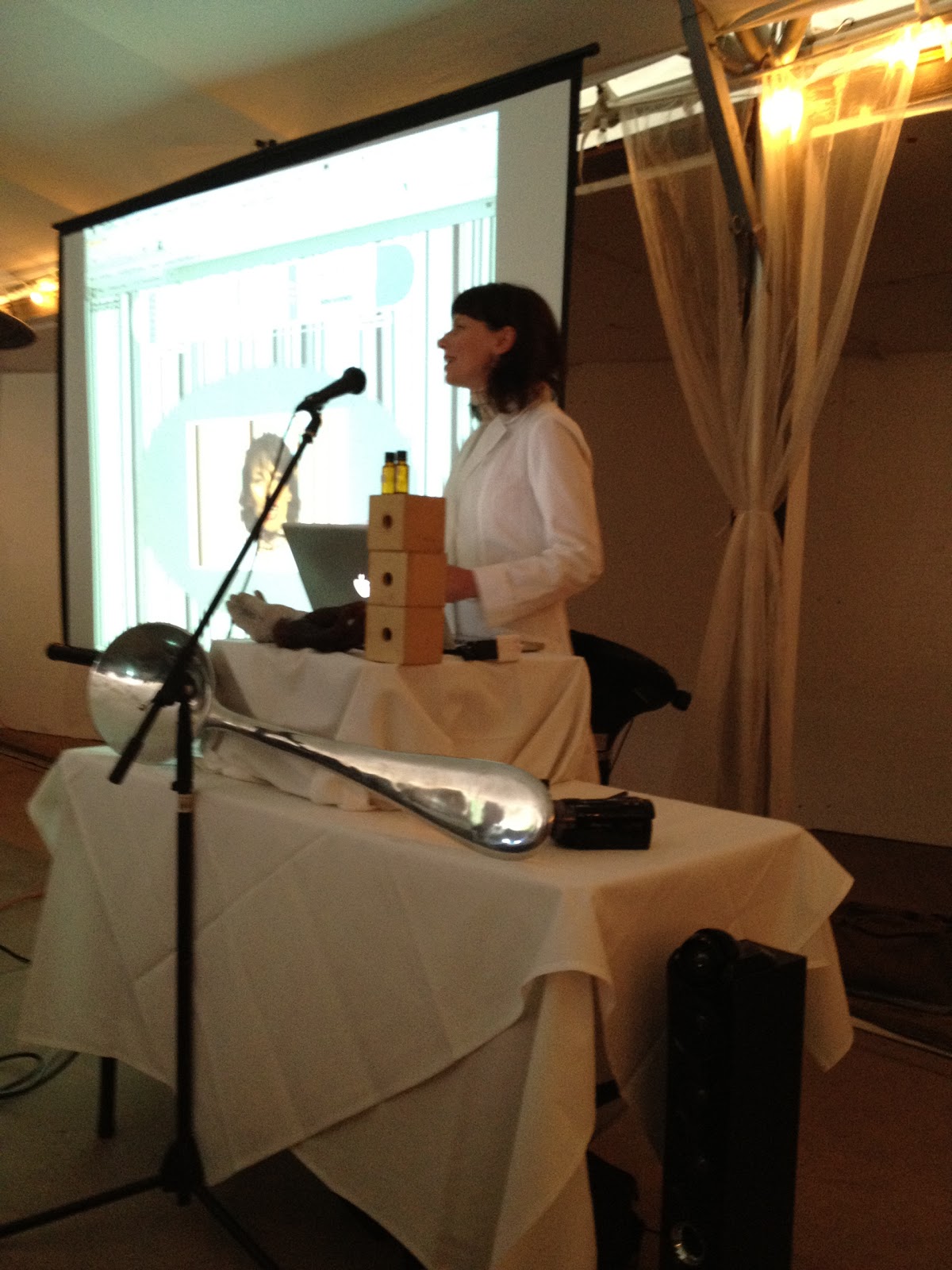
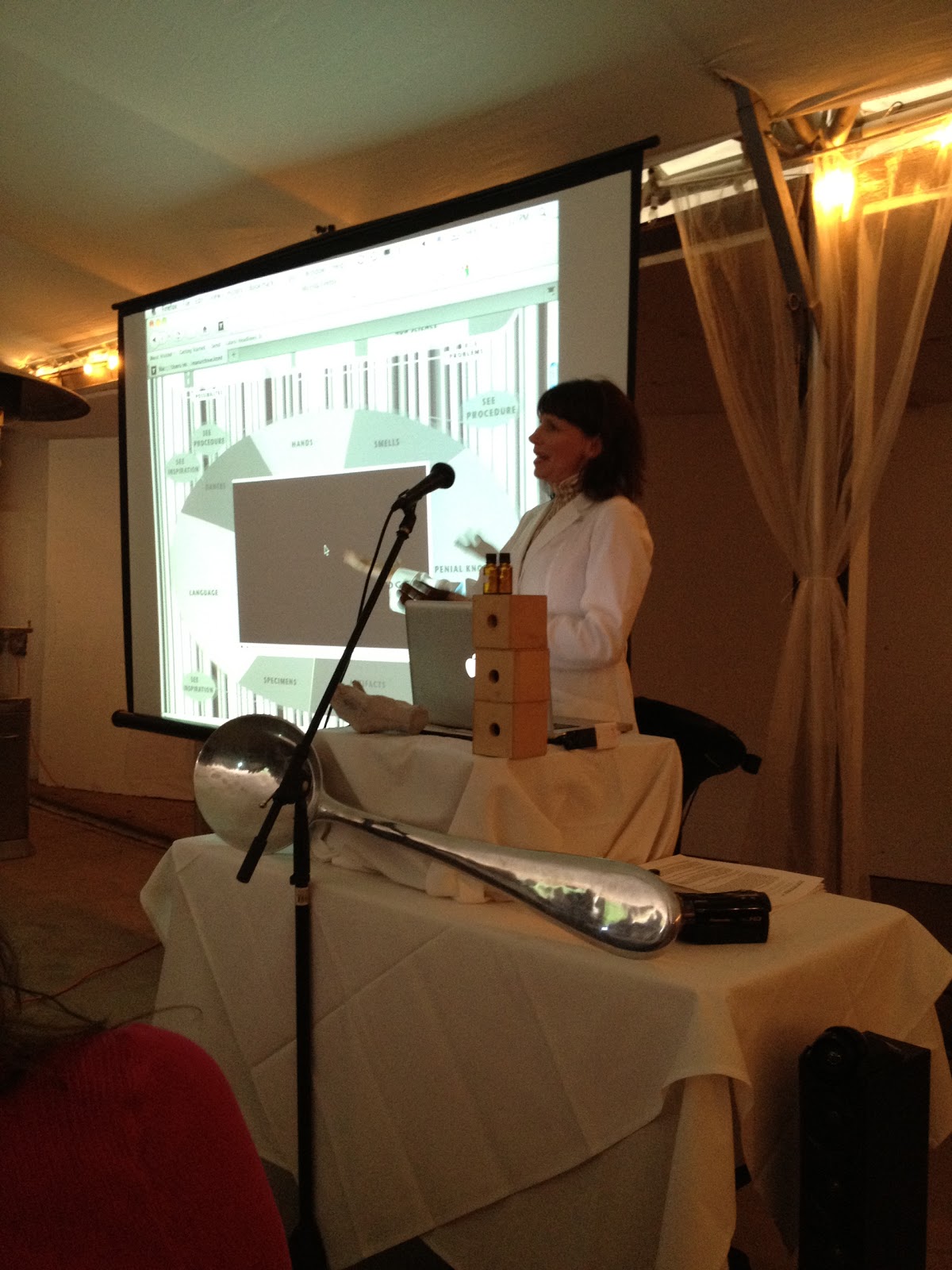
We had dinner at Red Lion Restaurant – a phenomenally gorgeous spot in the canyon just West of Boulder.  And while we were milling around before dinner I saw out of the corner of my eye a woman walking in to the tent where we were to have dinner.  She was dressed in almost all white and was carrying a giant silver spoon.  So I asked the meeting organizer – Mark Hernandez – if she was the entertainment.  And surprisingly he said – yes – she was a dancer and Professor at Boulder and also did a kind of science performance art.

Her name was Michelle Ellsworth and he said she was amazing.  So I was very intrigued as I am a big fan of mixing science and art.  So I went over to where she had set up and asked her a few questions and took her picture …

I grabbed a seat near the front of the area they set up for her.  And Mark Hernandez introduced her

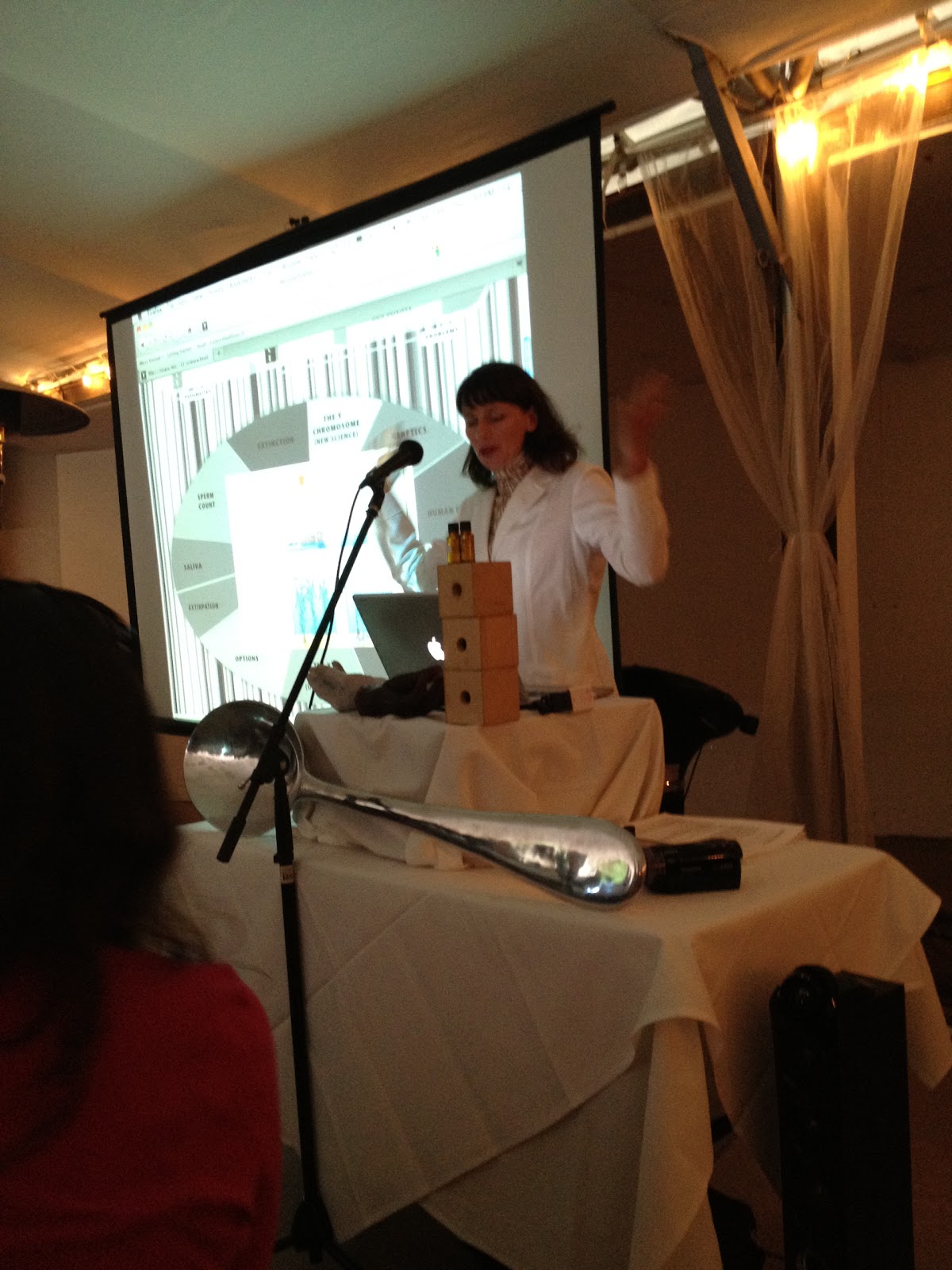
And then I witnessed what I consider to be – seriously – the most entertaining presentation I have ever seen at a conference.  She presented her “Preparation Y” project focused on what should be done to prepare for “the obsolescence of the Y chromosome.”  She then proceeded to discuss some relatively recent work on Y chromosome evolution in humans as well as an article about this by Maureen Dowd.   And she posed the questions (tongue planted firmly in cheek … though done in a style that was remarkably earnest …)

“What will be missed when men are gone? How can we replace them with choreography, apparati and web technology?”

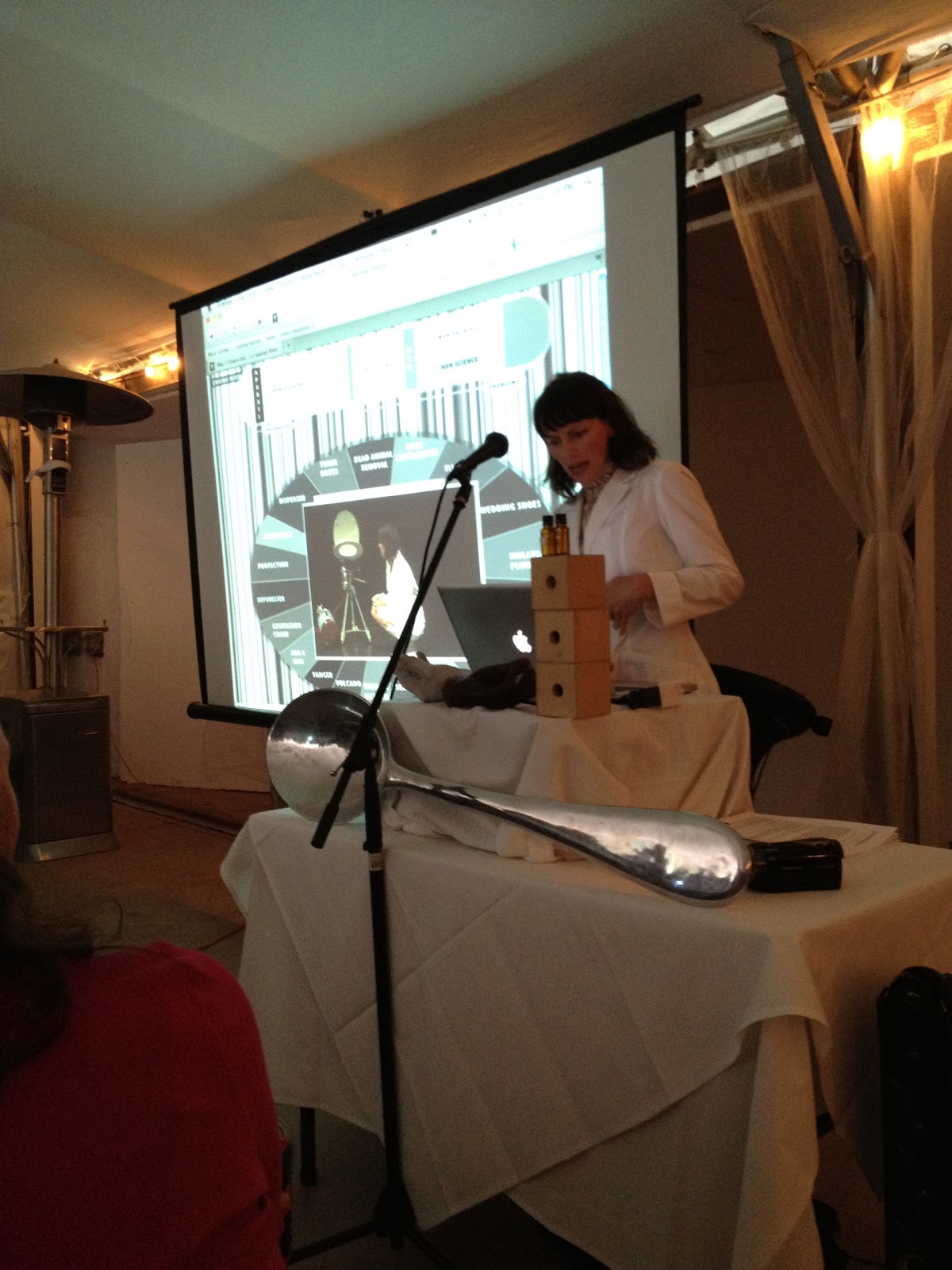
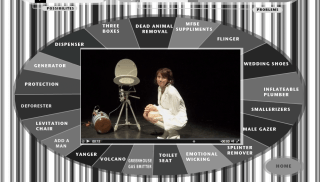
And then she proceeded to use here web site to take us on a tour of some of the issues associated with the demise of the Y chromosome.

Among the concepts she showed us were devices that can do things that men do that one possibly might miss if men were gone including a greenhouse gas emitter, a toilet seat raiser, a smallerizer, a flinger, and more.  To get an idea of what these were go here and then click on the items on the circle (see screen shot below of the seat raiser).
She also had some philosophical discussions of evolution and ecology including pondering the role of men in extinction crises and greenhouse gas emissions and whether men could be considered a “keystone species.”  It was a combination of geeky, absurd, sarcastic, genius, and outrageous.  There was even an extensive discussion of man dances and both recording them and reenacting them (the dances were amazing I note)  The funniest part (from my point of view) was the preservation of male artifacts including smells (which she cans like jam), socks (which she said sometimes she adds sugar to to preserve better), saliva, and more.  I note – she said she brought vials to collect some additional male artifacts from the meeting for her collection.  I think I was the only one who donated …

Some pictures of the “show” are below.

Anyway – if you ever get a chance to see her show or anyone of her presentations, you must do it.  Also consider browsing her website which has some brilliant videos and other materials.

From her website I discovered she has some videos on Vimeo relating to the preparation Y concept.

Now I have to go check out her “Burger Foundation“.  Not sure what it is … but I am sure it will be good …

It’s Library Preparation Time!

Now that we have chosen our candidates we are in the process of preparing libraries for sequencing. I’ve learned a lot about this process in the past few weeks so I thought I’d share some of what I’ve learned.

First, what is a “genomic library” anyway?

“Genomic library” is the term used to describe the prepared genomic DNA that is sent to the Illumina sequencer for sequencing. Library preparation is a critical step because the quality of a library preparation often determines the quality of the sequencing and the ease of assembly.[i]

How does one prepare a genomic library?

Although there are many different methods to choose from in library preparation all methods have the same basic two goals.

  1.  To cut the DNA into small pieces. The size of the pieces depends on the type of sequencing you are trying to do and the purpose of the sequencing. In our case, we want pieces averaging 500 base pairs that are at maximum 800 base pairs. [ii]
  2. To add adapters to each piece.

The differences in library preparation methods are largely differences in the mechanisms by which these two goals are accomplished. For example, the DNA can be chopped enzymatically or mechanically or the adapters can be added by one or a number of enzymatic steps.

Pros and Cons of Library Preparation Methods:

Each step of each preparation method has various advantages and disadvantages associated with it. The primary factors for concern in library preparation are:

  •  Amount of genomic DNA required – in general, the more steps involved in a preparation technique, the more genomic DNA will be required because some DNA will be lost at each step.
  • Cutting bias – certain cutting techniques may be biased depending on the DNA sequence. This generally more of a concern in enzymatic cutting than in mechanical cutting.
  • G-C content – Amplification steps (i.e. PCR in a thermocycler) tend to change the average G-C content of the DNA sample by favorable amplifying sequences based on the amount of guanine and cytosine in them. In general, using fewer amplification steps will decrease this bias. [iii]
  • Price – the preparation methods vary widely in price, this can be a limiting factor.

 Our Methods:

For our libraries we will be using sonication (sound) to chop up the genomic DNA followed by a series of enzyme treatments from the Illumina library preparation kit that will first prepare the DNA pieces for annealing the adapters and then carry our the annealing process itself.

The adapters we are using will each contain a “barcode,” a short sequence of bases unique to each sample. Barcoding allows us to pool our samples and run them on a single Illumina well bringing down the cost of sequencing significantly.

Once we have the sequences back, we will begin the computationally challenging process of assembling and annotating them.


[i] Monya Baker, “De novo genome assembly: what every biologist should know,” Nature Methods 9.4 (2012): 333-337. http://www.nature.com/nmeth/journal/v9/n4/full/nmeth.1935.html?WT.ec_id=NMETH-201204

[ii] More information about how the Illumina sequencing reaction works can be found here: http://seqanswers.com/forums/showthread.php?t=21

and here : http://www.brown.edu/Research/CGP/core/illumina/overview

[iii] Adey, Andrew; Morrison, Hilary; Asan, Xu Xun  “Rapid, low-input, low-bias construction of shotgun fragment libraries by high-density in vitro transposition.” http://genomebiology.com/2010/11/12/R119

Some information on the Microbracterium genus

Our genomic library preparation kit finally came in (about a week late) but neither of the mentors are around to explain how to use it, so I thought I’d do some research and see what I could find on the Microbacterium genus. Unfortunately, most Google results are for the Mycobacterium genus which, while a very fascinating genus I’m sure, does not help me at all.

I finally came across a study performed in the mid 1960’s which analyzed some characteristics of the Microbacterium genus. The term Microbacterium was proposed in the early 20th century to identify a particular group of very small, gram-positive, rod-shaped bacteria that have been found in many dairy products. An important characteristic of Microbacterium species is that they are unusually heat resistant. The researchers conducted a number of tests to learn more about the physiological characteristics of the genus, based on 25 unique strains.

Particularly of interest to me is the following:

  • These bacteria grow aerobically, but some strains can grow under anaerobic conditions.  However, they divide much more slowly and lack pigmentation when grown anaerobically. Each strain in the study grew at a decent rate (typically around 3 days of incubation, but as much as 7 days were needed in some cases) when incubated in the 30-37 degree C range. Only 5 strains grew at 39 degrees and only 3 strains grew at 9 degrees.
  • All strains grew in mediums with a pH of 6.8 and 7.5 . More acidic conditions (pH < 6) yielded almost no growth from the strains.
  • Some members of the genus have the ability to reduce nitrates and liquefy casein, while nearly every strain could hydrolyze gelatin
  • 5 strains were able to withstand 85 degree heat, and every strain was able to withstand at least 60 degree heat
  • There is doubt as t0 where this genus should be placed in a phylogenetic tree. At the time of publication of this study, the most recent proposal was to place Microbacterium within the Corynebacterium. The author, however, dismissed this based on what he observed in terms of heat resistance and ability to be cultured, noting large differences between the two.

Here is a link to the paper

5/31#UCDavis “Data Acquisition and Laboratory Tools; Management, Sharing and Ownership”

Please join us for the next session of the 2011-2012 Responsible Conduct of Research Program:

Data Acquisition and Laboratory Tools; Management, Sharing and Ownership

Thursday, May 31st

*1065 Kemper Hall, 12:10-1:10 PM

*Please note the time and room number for the May 31 session, as it differs slightly from the previous.

For more information, please visit the UC Davis RCR website: http://www.research.ucdavis.edu/rcr

Illumina Webinar: Analyzing Microbes and Complex Microbial Populations with Next-Generation Sequencing

header_bar3.png
header-icon_featured.pngRegister Now header-icon_home.pngwww.illumina.com
Illumina
Analyzing Microbes and Complex Microbial Populations with Next-Generation Sequencing
This webinar will introduce the latest advances in next-generation sequencing for analyzing microbial genomes and transcriptomes, and will present key studies highlighting this technology. Register today.

Date: Thursday, June 7, 2012 Register Now
Time: 9:00 AM (PT)
Speaker: Abizar Lakdawalla, Ph.D.
Illumina, Inc
affinity_top_wide.png
Abstract

Sequencing microbial genomes provides a comprehensive understanding that no other method can provide. For example, it is now possible to achieve single base resolution of the bacterial chromosome, and detailed sequence of all extrachromosomal elements, including plasmids and phages. Improvements in next-generation sequencing methods now enable routine whole bacterial genome sequencing in a single day. Assembling the genome from sequencing reads can be easily performed on a desktop computer, allowing high resolution classification of bacterial subtypes. Many important features, including resistance, virulence, and pathogenicity, can be examined simultaneously with high accuracy. In addition to genomic experiments, next-generation sequencing can be used to analyze the complete transcriptome of microbes for interpretation of gene structure and regulation. Sequencing complex microbial populations or metagenomes provides a comprehensive census of species within samples, including those that cannot be cultured or phenotyped. Subtle changes in microbial populations resulting from, or predictive of, changes in the health status of a patient can be assessed easily and accurately with next-generation sequencing.

affinity_bottom_wide.png
*As a registrant, you will receive an email with a recording of the presentation after the event should you be unable to attend the live presentation.
www.illumina.com
follow us on twitter YouTube Illumina on Facebook
footer_zone3.png

Lab meeting May 30th 2012

Thomas Sharpton will be presenting for this week’s lab meeting.
We will meet at the Genome Center, in room 5206 from 1:30 to 3:00 pm.

Diversity (of speakers, participants) at meetings: do something about it

Some unformed thoughts here but here goes.

Every so often I see a conference announcement and am annoyed by the XY/XX excess for the speakers.  Some recent examples

And more.

Now – I complain about this here and there on Twitter and the like

//platform.twitter.com/widgets.js

//platform.twitter.com/widgets.js
But I felt that this needed a blog post to not get lost in the Twitter stream.  So here it is.

I note – I have posted about this issue previously: A conference where the speakers are all women? | The Tree of Life and for conference for which I am involved I have been trying very hard to work on the speaker diversity (not just XX vs XY, but age, career status, ethnicity, etc).  And it certainly can be difficult to make sure that diversity is there.  But the meetings I list above are pretty egregious.  The Genome Canada one features seven major speakers – all white males.  Yes, they are all big names.  But in biology, where women are reasonably well represented, it suggests a bias to me if a meeting can somehow only manage to invite and/or attract all senior, white, XYs to be major speakers.  Not sure what that bias is and it could be different in each case –  could be who is invited – could be the field itself – could be timing/nature of the meeting – could be something to do with families (e.g., perhaps women are invited but are more likely to feel like limiting travel due to roles in child care).

Also I note – biases are not necessarily affecting any one gender or ethnic group.  For example, I have generally stopped going to meetings/conferences that are on weekends and I have also stopped going to meetings/dinners after 6 PM because I do not want to skip out on time with my family.

So here is a plea.  Next time you are involved in organizing a meeting – make some effort to have a strong representation of diversity of speakers and participants.  For example, if you invite lots of women for example and all say no – try to figure out why and see if you can fix the issue.  Offer travel fellowships for students.  Offer child care or child activity options (even if you cannot pay for it – at least make it easy for people).  Make sure to advertise/promote the meeting to groups/institutions with a high representation of underrepresented groups.  Don’t give up if your first efforts don’t work.  Sometimes it can be difficult to make sure diversity levels are high.  But keep trying … it will help make the conference better and also will help the field in general …

For other posts on this topic see

Dubious Press Release from Cedars-Sinai linking Irritable Bowel Syndrome (IBS) and Bacteria in Gut

Quick one here.

Not impressed with this press release from Cedar-Sinai: Dr. Pimentel links IBS and gut bacteria – Cedars-Sinai (see other variants of it here: Daily Disruption – Cedars-Sinai Study Links Irritable Bowel Syndrome (IBS) and Bacteria in Gut and here: Irritable bowel syndrome clearly linked to gut bacteria).

Among the things that bug me here:

  • They don’t include a link to the paper or even provide a citation
  • They claim that culturing microbes is the “gold standard” for connecting bacteria to the cause of this disease.  AND they imply this is the first method to use culturing to study the disease.  Both notions are wrongheaded.  
  • They confuse cause of IBS and symptoms.  They say that b/c antibiotics help reduce symptoms, therefore, bacteria cause the disease.  Really?  So then fevers must cause things like malaria and flu because ibuprofen helps reduce symptoms right?
  • At some point it might be nice to mention that the MD behind the new study has also been pushing the idea that IBS is caused by bacterial overgrowth for many years both in a book and via a testing company though it is unclear what his association with the company is.  I note – ads for the book claim ” In addition, Dr. Pimentel presents a simple treatment protocol that will not only help you resolve your IBS symptoms, but will also prevent their recurrence.”  So – apparently he already had a cure BEFORE the new study was even done.  I general I am skeptical of papers that show evidence for something coming from someone who apparently already “knew” the answer.

Of course, I am not saying IBS is NOT caused by bacterial overgrowth as they claim.  But I can say this – PRs like this make me skeptical that anything new was done in this current publication.