Meta-Omics and Phylogenetics Journal Clubs

If you’re looking to catch up on your reading, come to journal club!

The Meta-omics journal club is run weekly on Tuesdays, from 11-12 in 5202 GBSF (organized by the Facciotti Lab, papers are sent around via an e-mail list).

There is also a bi-weekly Phylogenetics journal club run by the Center for Population Biology, 4-5pm every other Friday in Storer 5343 (The Treehouse). Regardless of journal club, there is always a 5pm Happy Hour at CPB every Friday – although be warned there are always are a substantial number of vertebrate biologists in attendence.

EVE198 / EVE161 Microbial Phylogenomics Course Spring 2012

Image

EVE 198 – Spring Quarter 2012 – CRN 74485 – 3 units P/NP grading

Microbial Phylogenomics:  The Evolutionary Diversification of Microbes and their Genomes

Professor Jonathan Eisen


TR 1:40-3:00pm

Room 1344 Storer Hall

 Prerequisites for this EVE 198 / Jonathan Eisen course are BIS 2ABC (or its equivalent, for transfer students). (This course is moving through the course approval process, and will eventually be EVE 161!)

Interesting 2011 pub on origin of multicellularity in cyanobacteria

Just a quick one here.  There is an (openaccess) publication I thought people might find interesting: The origin of multicellularity in cyanobacteria.  Schirrmeister BE, Antonelli A, Bagheri HC. BMC Evol Biol. 2011 Feb 14;11:45.

In particular it has some very nice figures on phylogeny of cyanobacteria and the evolution of phenotypes in the group.

Figure 1. Phylogenetic tree of 1,254 cyanobacterial species. 
Figure 4. Phylogenetic tree of a cyanobacterial subset

Some of the same authors also have a paper on the need for better phylogenetic sampling of genome data in the group:

Evolution of cyanobacterial morphotypes: Taxa required for improved phylogenomic approaches. Schirrmeister BE, Anisimova M, Antonelli A, Bagheri HC. Commun Integr Biol. 2011 Jul;4(4):424-7. Epub 2011 Jul 1.

Though I note, I am a bit annoyed and surprised they did not cite my “Phylogeny driven genomic encyclopedia” paper in this pub …

Draft post cleanup #12: RecA is cool (and interesting)

Yet another post in my “draft blog post cleanup” series.  Here is #12:

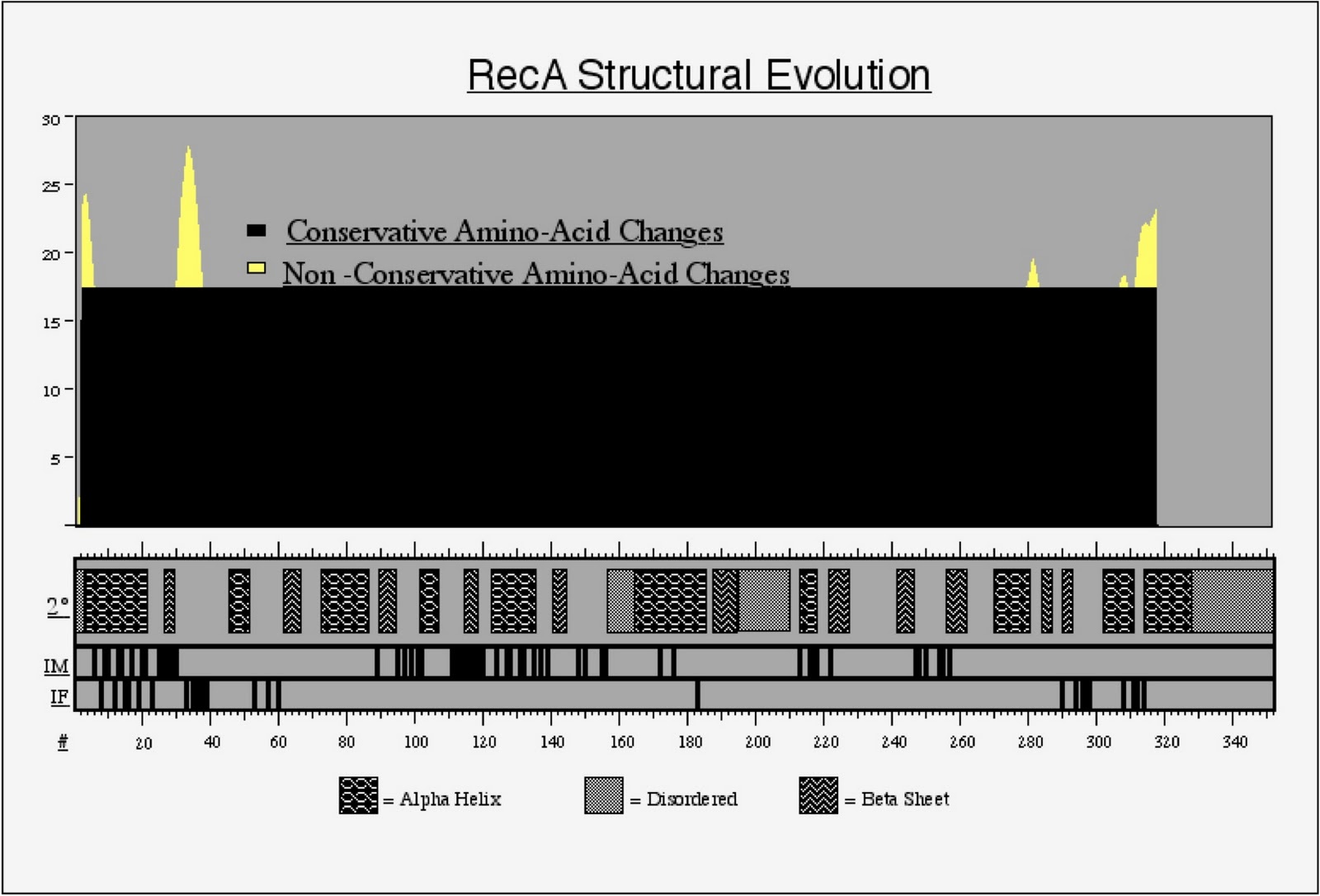
I have been interested in RecA and related proteins for many many years.  In particular I have been interested in structural and functional evolution of RecA and its relatives.  This all started when for my second scientific paper I helped a post doc in the lab where I was doing my PhD do some structure-function-evolution studies (with a little help from Chris Lee, then in Mike Levitt’s lab, and my brother, then in Don Wiley’s lab).

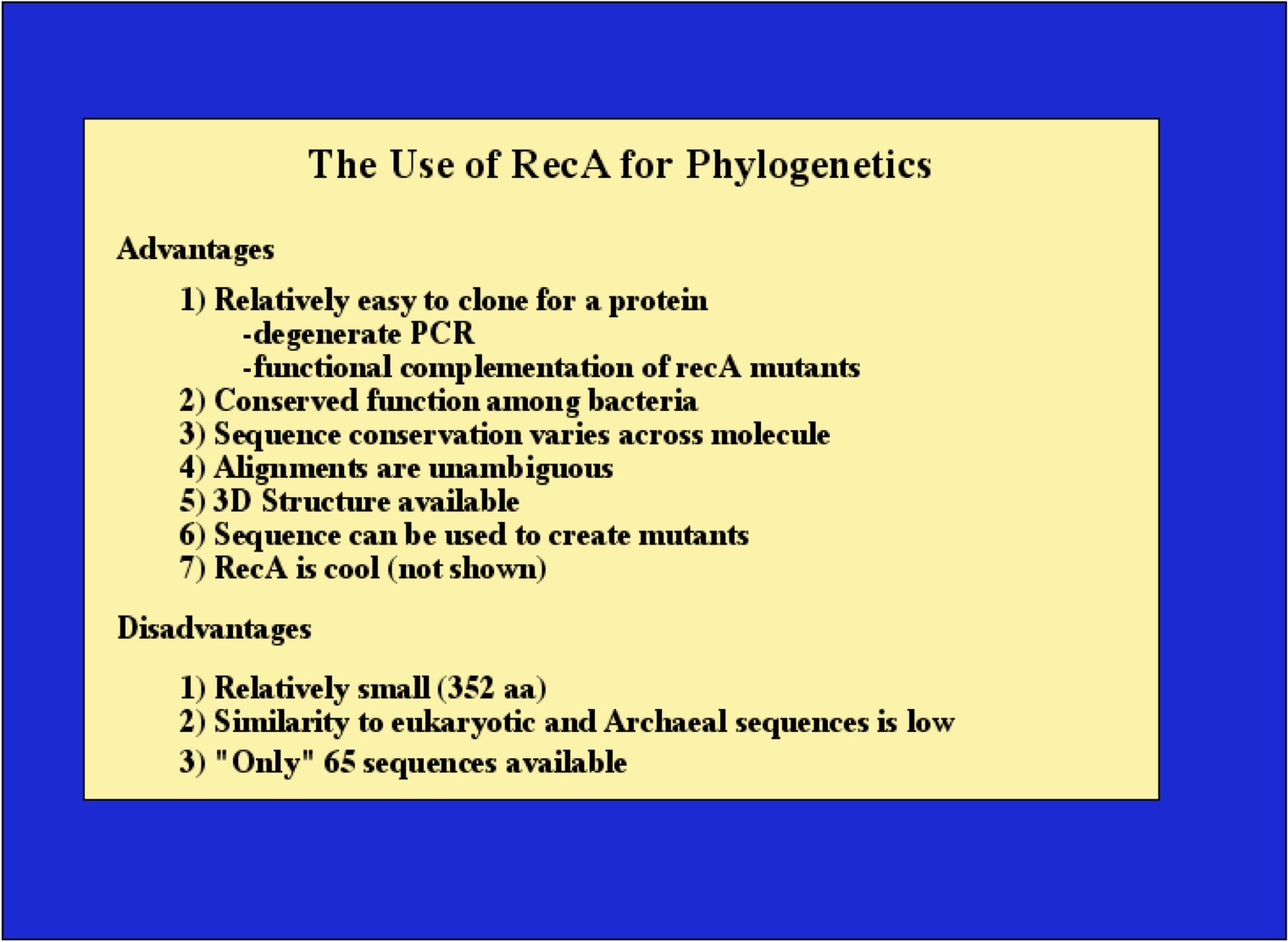
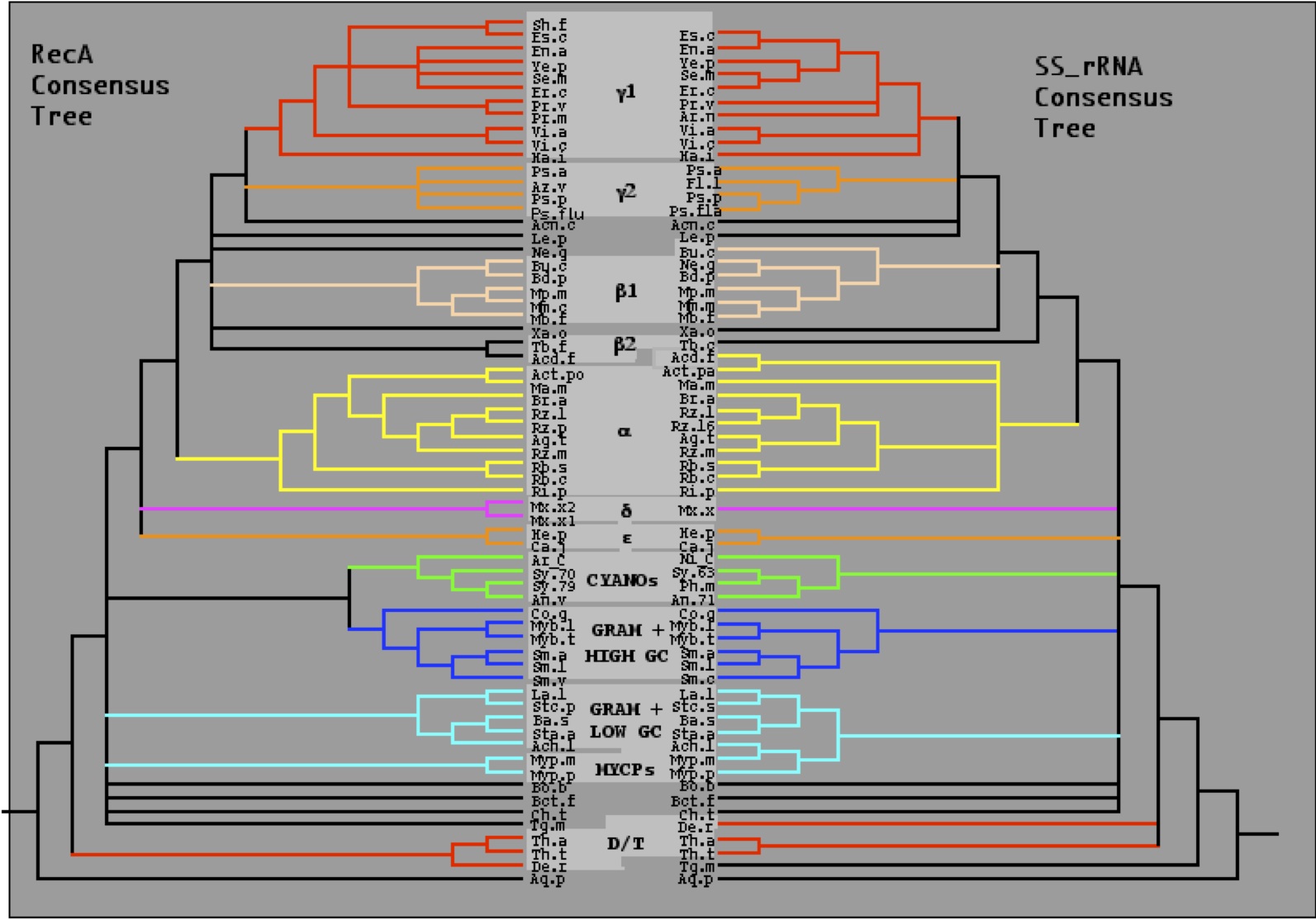
For my first talk at a scientific meeting I discussed using RecA as a marker for phylogenetic studies (and had a slide where I had text saying RecA was cool).  Over the years I have continued to try and study RecA or at least use it for studying microbial diversity in some way.  See for example

Anyway – in this context I was excited to see a new paper on RecA-structure-function-evolution studies: PLoS Genetics: Separation of Recombination and SOS Response in Escherichia coli RecA Suggests LexA Interaction Sites from Olivier Lichtarge and others.  In the paper they use Lichtarge’s Evolutionary Trace method to study RecA.

The paper is worth a look and if you are interested in structure-function-evolution types of studies and need a good protein to work on, I would suggest you look at RecA and its relatives … They are Cool.

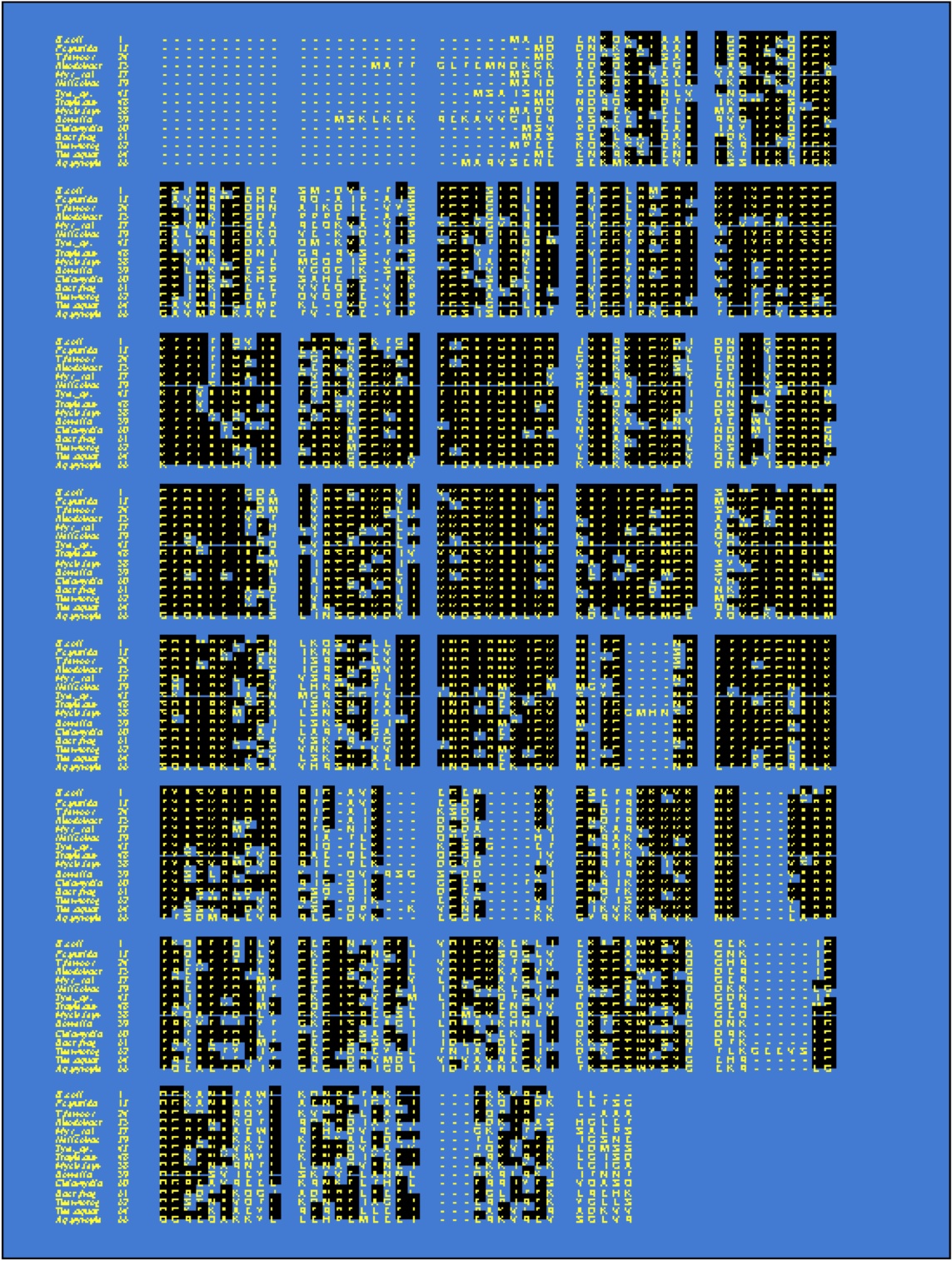
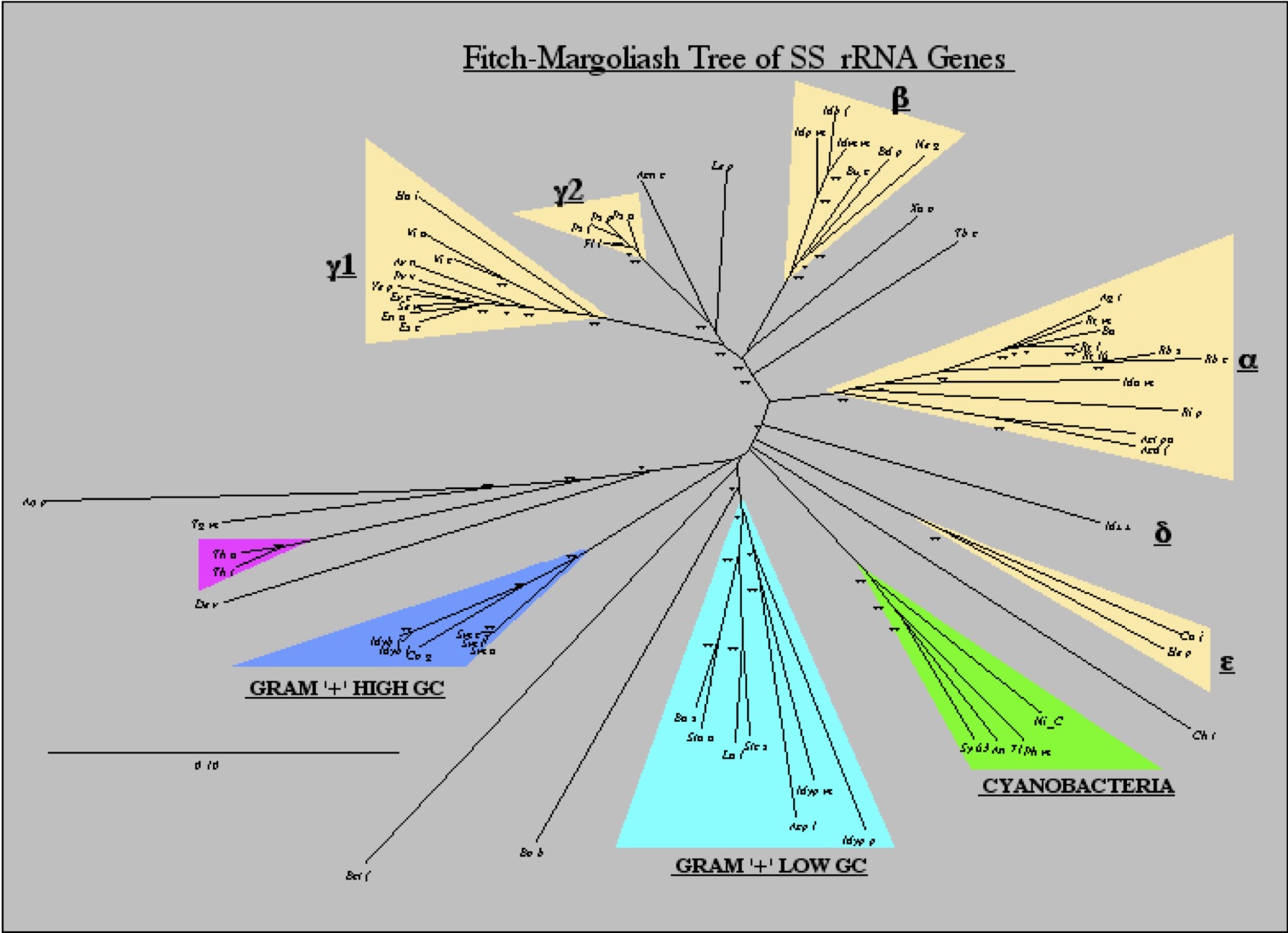
Oh and for the fun of it — I have found some of my slides from that talk in 1995.  Here they are

Draft post cleanup #11: Tree Hugging

Yet another post in my “draft blog post cleanup” series.  Here is #11 from September.

Just a quick one.  In August a nice review paper came out on phylogenetic analysis software: Learning to Become a Tree Hugger | The Scientist.  By Amy Maxmen it is a “A guide to free software for constructing and assessing species relationships”.  Definitely worth checking out.

Among the key links & tools discussed:

Draft post cleanup #6 from 2005: Hydrogen producing microbe mea culpa

Yet another post in my “draft blog post cleanup” series.  Here is #6. From 2005. (Yes, the bottom of my draft list).  In fact, this would have been my second blog post if I had posted it …

I had written

OK, so a few months ago we published a paper on a hydrogen producing microbe and issued a press release. I think the paper we published was pretty cool – lots of interesting science.

Then we (me and our public affairs person) wrote a press release about the project. We were fortunate enough to have the press release picked up by all sorts of bloggers and web commentary groups. Examples include Softpedia (article here) and probably most importantly Slashdot.

So – what was wrong?  Well, I was starting to get more and more jaded with bad press releases about science papers.  And I felt ours had at least one really lame part – my quote

So if you’re interested in making clean fuels, this microbe makes an excellent starting point.

Well, WTF?  I have never done anything with biofuels and I really knew nothing about them then.  That quote should never have been in the press release and I am not sure I even said it.

Other parts of the PR are OK I think but I wish that quote had never been in there.  I note – I do like the end though

What we want to have is a field guide for these microbes, like those available for birds and mammals,” Eisen says. “Right now, we can’t even answer simple questions. Do similar hot springs , a world apart, share similar microbes? How do microbes move between hot springs? Our new work will help us find out.

I agree with that.   I have indeed been obsessed with a Field Guide to the Microbes for a long time …

Draft blog post cleanup #1: Divide and Conquer to Find Orthologs

OK – I am cleaning out my draft blog post list.  I start many posts and don’t finish them and then they sit in the draft section of blogger.  Well, I am going to try to clean some of that up by writing some mini posts.  Here is the first —

Saw an interesting paper worth checking out:
PLoS ONE: Calculating Orthologs in Bacteria and Archaea: A Divide and Conquer Approach

It describes not only a way to speed up continual ortholog annotation in bacterial and archaeal genomes but also is linked to an ongoing open code development project.

Here is the abstract:

Among proteins, orthologs are defined as those that are derived by vertical descent from a single progenitor in the last common ancestor of their host organisms. Our goal is to compute a complete set of protein orthologs derived from all currently available complete bacterial and archaeal genomes. Traditional approaches typically rely on all-against-all BLAST searching which is prohibitively expensive in terms of hardware requirements or computational time (requiring an estimated 18 months or more on a typical server). Here, we present xBASE-Orth, a system for ongoing ortholog annotation, which applies a “divide and conquer” approach and adopts a pragmatic scheme that trades accuracy for speed. Starting at species level, xBASE-Orth carefully constructs and uses pan-genomes as proxies for the full collections of coding sequences at each level as it progressively climbs the taxonomic tree using the previously computed data. This leads to a significant decrease in the number of alignments that need to be performed, which translates into faster computation, making ortholog computation possible on a global scale. Using xBASE-Orth, we analyzed an NCBI collection of 1,288 bacterial and 94 archaeal complete genomes with more than 4 million coding sequences in 5 weeks and predicted more than 700 million ortholog pairs, clustered in 175,531 orthologous groups. We have also identified sets of highly conserved bacterial and archaeal orthologs and in so doing have highlighted anomalies in genome annotation and in the proposed composition of the minimal bacterial genome. In summary, our approach allows for scalable and efficient computation of the bacterial and archaeal ortholog annotations. In addition, due to its hierarchical nature, it is suitable for incorporating novel complete genomes and alternative genome annotations. The computed ortholog data and a continuously evolving set of applications based on it are integrated in the xBASE database, available at http://www.xbase.ac.uk/.

Definitely worth checking out.

The must have job of 2012: Faculty position in Evolution of Organismal Diversity at #UCDavis

The must have job of 2012 – a faculty position in my Department at UC Davis.  It is a GREAT department both scientifically (UC Davis is consistently ranked as having one of the best Evolution/Ecology programs in the country) and personally (the faculty, staff and students are great to be around).  See below for more information.  I am happy to give people any details of the Department, School, campus, etc if you are interested.


EVOLUTION OF ORGANISMAL DIVERSITY, UNIVERSITY OF CALIFORNIA, DAVIS 


The College of Biological Sciences, University of California, Davis invites applications and nominations for a tenure-track position in the Department of Evolution and Ecology at the ASSISTANT Professor level, with the possibility of ASSOCIATE appointment with tenure. Candidates must have a Ph.D. (or equivalent) in the biological sciences or related fields. 


They should have a strong record of integrative approaches to the evolution of organismal diversity. We seek candidates with expertise in the organismal biology/natural history of a multicellular group, and whose research uses genomic data in an explicitly phylogenetic context to address questions in macroevolution, ecology, behavior and/or development. The successful candidate will be expected to teach in the department’s undergraduate program and in the Population Biology Graduate Group and should be committed to departmental service. 


Applicants should submit materials online at this site which contains additional information about the position. Materials required include: curriculum vitae, description of current and projected research, summary of teaching interests and experience, and up to five publications. Applicants should also provide the information requested for three referees. Once entered, referees will be prompted by email with upload instructions for their letters. 


Closing Date: Open until filled, but all application materials, including letters of recommendation, must be received by February 6, 2012, to assure full consideration. 


Administrative contact: Carla Munoz (camunoz@ucdavis.edu). 


Faculty contacts: Peter Wainwright, Michael Turelli, and Rick Grosberg


The University of California is an Equal Opportunity/Affirmative Action Employer with a strong institutional commitment to the development of a climate that supports equality of opportunity and respect for differences.

Meeting of interest: 16th Evolutionary Biology Meeting at Marseilles

Just got an email about a meeting of potential interest and thought I would share:

It is my pleasure to announce that registration and abstract submission for the 16th Evolutionary Biology Meeting at Marseilles, September 18-21, 2012, is open. Please visit the web site of the meeting http://sites.univ-provence.fr/evol-cgr where you will find all relevant information. 

The following subjects will be discussed:

  • – Evolutionary biology concepts and modelisations for biological annotation;
  • – Biodiversity and Systematics;
  • – Comparative genomics and post-genomics (at all taxonomic levels);
  • – Functional phylogeny;
  • – Environment and biological evolution;
  • – Origin of Life and exobiology;
  • – Non-adaptative versus adaptative evolution;
  • – The « minor » phyla: their usefulness in evolutionary biology knowledge;
  • – Convergent evolution

Looking forward to your participation.

Very nice new #PLoSGenetics paper on "Functional Phylogenomics" of Seed Plants

Update2 – 12/22 – Data available here.  Thanks to the authors for clearing things up quickly.


Update1 –  12/19 – Data for this paper seems to be unavailable – not sure why – but looking into this after a TWEET from Karen Cranston. The paper says data is available at: http://nypg.bio.nyu.edu/main/ but I could not find any there.  Note – this is one reason that all data sets should be made available at the journal or third party sites.


Original post:

OK never mind that the terminology of “functional phylogenomics” is a tiny bit vexing to me (long story – some other time perhaps). The paper behind it – PLoS Genetics: A Functional Phylogenomic View of the Seed Plants is very cool.

Here’s what the authors did (a very coarse summary)

1. Identified sets of orthologs between plant species using the OrthologID system (which has a phylogenetic underpinning) (the data input for this appeared to have mostly been Unigene EST clusters)

2. Constructed a “total evidence” phylogeny for these taxa (using a few approaches) 

3. Use this phylogeny to reinterpret some general features of the evolution of plants 
4. Searched for gene ontology categories (in annotated genes from these organisms) that agreed with the phylogeny. In essence, this seems to be a search for shared-derived traits (i.e., synapomorphies) in particular clades. 
5. Generated hypothesis about functional evolution in particular clades.
Overall, there is a lot that is really fascinating in here and this approach seems very powerful (though I note – I think something akin to this though not as comprehensive or as careful has been done for other groups but not sure).  Check out the paper for more detail …
Lee EK, Cibrian-Jaramillo A, Kolokotronis S-O, Katari MS, Stamatakis A, et al. (2011) A Functional Phylogenomic View of the Seed Plants. PLoS Genet 7(12): e1002411. doi:10.1371/journal.pgen.1002411