Eisen Lab Blog

Lab meeting July 23rd 2013

This week’s lab meeting will be lead by Jenna Morgan Lang who will talk about Microbes in Spaaaaaaaace.
We will meet in room 4202 of the genome center from 1:30 to 3pm.

Guest post from Joshua Weitz: Talking about the PI Sabbatical Beforehand: A Brief Guide for Faculty, Postdocs, and PhD Students in the Sciences

Guest Post by Joshua Weitz, Associate Professor, School of Biology and School of Physics, Georgia Institute of Technology

Introduction

I direct a theoretical ecology and quantitative biology group based in the School of Biology at Georgia Tech.  I am going on a 9 month “leave” (Georgia Tech does not call them sabbaticals) to the Department of Ecology and Evolutionary Biology at the U of Arizona in Tucson, AZ from August 2013-May 2014 where I will be based in Matthew Sullivan’s Tucson Marine Phage Laboratory.  In preparation for this leave, our group held an interactive discussion on challenges and opportunities arising from the PI sabbatical for faculty, postdocs and PhD students in the sciences.  The discussion took place in four parts in a one-hour period.  Below I describe the setup of the discussion followed by specific recommendations for faculty, postdocs and PhD students prior to the PI sabbatical. 
How to Talk about the PI Sabbatical
Part 1 – the setup: I asked for a show of hands of group members who had thought about how my sabbatical would change the group and its dynamics?  Nearly all members raised their hands.  When asked, the group members also noted that they were most concerned about how the sabbatical would affect them.  Hence, in an effort to try and understand the effect of the sabbatical on all members, we split into three small discussion groups which were asked to identify challenges and opportunities for (i) the PI; (ii) postdocs; (iii) PhD students. 
Part 2 – small group discussion: The individual groups talked about how the sabbatical would affect different group members.  There are currently 9 members in the group (not including the PI), so we divided into three groups of three (I did not actively participate in the small group discussions, but did check in on all three groups).  The PI group was comprised of one postdoc, 1 graduate and 1 undergraduate.  The postdoc group had 1 postdoc and 2 graduate students.  The grad student group had 3 graduate students.  Hence, the first item of discussion was an effort to identify issues at stake at each career stage.  Then, the groups began to discuss how the sabbatical might change business as usual.  The groups spoke for ~15 minutes.
Part 3 – reporting: Challenges and opportunities were identified for each of the three categories.  A number of salient themes emerged that serve as general recommendations.   The consensus was that a number of common themes would emerge prior to a sabbatical although each science research group may differ in its own interactions.  Our presumption is that the PI was going alone and this shaped the nature of our recommendations.  First, as suggested by one of the students, there was a sense that the PI sabbatical would lead the students into a “Spiderman situation” in the sense that “with great power comes great responsibility”.  The PI sabbatical would lead to greater independence for group members and that this independence involves greater need for self-motivation, taking a holistic (long-term) view of one’s research, and increased pre-planning given the changes to the PI’s availability.  Second, clear communication is essential. For example, if a PI plans to be incommunicado for long stretches of time, this may be manageable (even if non-ideal from a student perspective), so long as provisions have been made to handle both the administrative and research duties that the PI normally would handle.  As a rule of thumb, the greater the change in PI availability, the greater the need for pre-planning to ensure that students and postdocs remain on track for research, career and personal development goals.
Part 4 – the view of the PI:  I provided additional feedback, tailored to the group and specifically addressed an issue that could create the most anxiety: my availability for one-on-one interactions.  I also distributed an initial recommendation list, modified here in light of group discussion. 

Five Specific pre-Sabbatical Recommendations for Faculty, Postdocs and PhD Students

PI
1.     Develop a plan for your year ahead: what are the key goals for the sabbatical?
2.     Identify what is going to be different and what is going to remain the same: e.g., a new project(s), less/no teaching; less/no administrative duties, a new interaction schedule with the group, etc.
3.     Communicate your plans for the sabbatical and your expectations of group members to the group (ideally, after a group discussion of the kind outlined here).
4.     Talk to your Chair about expectations for your year and new expectations (if any) upon your return (and talk to your departmental admin team to make sure they are aware of your plans).
5.     Establish new interactions with your local host and host community.
Postdocs
1.     Establish a regular schedule of interactions with your adviser.
2.     Keep focused on your research & career goals (i.e., do not become a proxy adviser in the absence of the PI, i.e., see 3 & 4 below)
3.     Determine your supervisory responsibilities – what is your (limited) role to advise the students, technicians in the group?
4.     Determine your lab management responsibilities – what is your (limited) role in ordering and other admin duties?
5.     Travel to collaborators and mentors – do not just stay put while your adviser is away.
PhD students
1.     Identify the major research and career development expectations during your adviser’s time away – how will the adviser’s absence affect your thesis (if at all)?
2.     Establish a regular schedule of interactions with your adviser and senior members of the group.
3.     Contact your adviser, even off-schedule if you really need advice.
4.     Remember: your PI’s sabbatical is an opportunity for independence, increased self-motivated work and development as a scholar, not a “holiday”.
5.     Identify a local faculty member who can serve as an occasional resource to provide input and thoughts on your thesis work (this should be coordinated in advance, with your PI).
Final thoughts:
A PI sabbatical can be a very positive opportunity for all group members to become more independent, to set off on new directions, and to bring greater creativity and productivity to a group.  However, two notes of caution.  First, if you are not yet in a group, think carefully before joining with an absent PI, as the initial period in a group (regardless of your status) often sets the frame for the long-term interaction.  Second, the PI remains the PI, so be wary of a sabbatical plan that involves anyone other than the PI becoming the acting group leader.   Although certain senior members may take over duties, the sabbatical plan should (ideally) involve availability of the PI to make key decisions critical to the group, including thesis advancement, hiring/firing and mediation of major conflicts.

And, I suppose I’ll have to revisit this guide next year to report back on what worked and what we should have thought of in advance!

Participants:

  •  Dr. Joshua Weitz
  •  Dr. Alexander Bucksch
  •  Dr. Michael Cortez
  •  Abhiram Das, PhD candidate
  •  Cesar Flores, PhD candidate
  •  Luis Jover, PhD candidate
  •  Gabriel Mitchell, PhD candidate
  •  Bradford Taylor, PhD candidate
  •  Charles Wigington, PhD candidate
  •  Victoria Chou, NSF REU student
Further reading
Many blogs are available detailing sabbatical “adventures” and “diaries”.

A letter from Chair of the Board of Regents Bruce Varner

Forwarding this

Storify-based notes on #SMBE13 session on evolution of microbes and their genomes

Just finally getting notes up from the SMBE 2013 meeting session on “Diversity and evolution of microbes and their genomes” that I chaired.  After some issues with Storify I managed to record a “storification” with Twitter posts from the session. It is embedded below.

The talks were as follows:
Invited Talks

  • Holly Bik, UC Davis, Microbial Metazoa and the Taxonomic Abyss 
  • Lauras Katz, Smith College, Genome Dynamics across the Eukaryotic Tree of Life 
  • Jennifer Gardy, Of Snow and Short Reads: How Microbial Genomics Is Changing Public Health, British Columbia Center for Disease Control 
  • Tanja Woyke, Insights into the Phylogeny and Coding Potential of Microbial Dark Matter DOE Joint Genome Institute 

Talks selected from submitted abstracts

  • Pedro H. Oliveira: A Comparative Genomics Approach Provides New Insights into the Distribution and Evolutionary History of Restriction Modification Systems in Bacteria, Institut Pasteur 
  • Daniel J. Wilson, Genomic Insights into Within-Host Evolution and Pathogenesis in Staphylococcus aureus, University of Oxford 
  • John P. McCutcheon, Extensive Horizontal Gene Transfer Complements Missing Symbiont Genes in Mealybugs, U. Montana, 
  • Florent Lassalle, Biased Gene Conversion Shapes the Bacterial Genome Landscape, University of Lyon

New paper from the Eisen lab: Sporulation phylogenetic profiling

Quick post here. This paper came out a few months ago but it was not freely available so I did not write about it until now as it just showed up in Pubmed Central. It was published in the Journal of Bacteriology but they do not release material for free onto their website or Pubmed Central for a few months. Alas, as I was kind of a peripheral player in the main work in the paper (I helped them with the phylogenetic profiling part) I did not end up pushing as hard as I should have for paying the open access fee to make it available earlier / openly.

Here is a link to the paper: Gene Conservation among Endospore-Forming Bacteria Reveals Additional Sporulation Genes in Bacillus subtilis.

It is from Richard Losick’s lab at Harvard and it is one I am very very pleased with. Basically, Losick’s lab has been studying sporulation in Bacillus subtilis like forever. And in 2005 we wrote a paper on the genome of another member of the same phylum that also sporulates (Carboxydothermus hydrogenoformans): Life in Hot Carbon Monoxide: The Complete Genome Sequence of Carboxydothermus hydrogenoformans Z-2901.

And in that paper we did a phylogenetic profile based analysis of sporulation genes and found a set of genes that were (on average) in all the sporulating species and not in non sporulating species.  Among this set of genes were quite a few that nobody had ever shown to be involved in sporulation.  We predicted that they were likely involved in sporulation. 
And then I waited, since I did not really work on sporulation.  And in a series of discussions with Losick and people in his lab found out that they had evidence that many of these genes in B. subtilis were involved in sporulation.  And the latest paper is in essence a follow up on some of those discussions (well, really it is a lot of work from Losick’s lab with a little input from those conversations to guide some of the experimental tests). 

New paper from some in the Eisen lab: phylogeny driven sequencing of cyanobacteria

(Cross post from my lab blog)

Quick post here.  This paper came out a few months ago but it was not freely available so I did not write about it (it is in PNAS but was not published with the PNAS Open Option — not my choice – lead author did not choose that option and I was not really in the loop when that choice was made).

Improving the coverage of the cyanobacterial phylum using diversity-driven genome sequencing. [Proc Natl Acad Sci U S A. 2013] – PubMed – NCBI.
Anyway – it is now in Pubmed Central and at least freely available so I felt OK posting about it now.  It is in a way a follow up to the “A phylogeny driven genomic encyclopedia of bacteria and archaea” paper (AKA GEBA) from 2009 with this paper a zooming in on the cyanobacteria.

New paper from some in the Eisen lab: phylogeny driven sequencing of cyanobacteria

Quick post here.  This paper came out a few months ago but it was not freely available so I did not write about it (it is in PNAS but was not published with the PNAS Open Option — not my choice – lead author did not choose that option and I was not really in the loop when that choice was made).

Improving the coverage of the cyanobacterial phylum using diversity-driven genome sequencing. [Proc Natl Acad Sci U S A. 2013] – PubMed – NCBI.

Anyway – it is now in Pubmed Central and at least freely available so I felt OK posting about it now.  It is in a way a follow up to the “A phylogeny driven genomic encyclopedia of bacteria and archaea” paper (AKA GEBA) from 2009 with this paper a zooming in on the cyanobacteria.


Postdoctoral researcher opportunity at #UCDavis John Muir Institute of the Environment

Postdoctoral Opportunity

The UC Davis John Muir Institute (JMIE) invites applications for two postdoctoral positions in the area of integrating climate change into natural resource decision making. Postdoctoral scholars will contribute to one or more of the following on-going research projects:

1. Estimate, characterize, and communicate climate change risk to natural resources in the southwestern United States using a structured decision-making approach.

2. Monitoring for adverse biological impacts as a consequence of the California forest carbon sequestration program.

3. Estimating the vulnerability of southwestern forested communities to climate change and fire.

4. Assessing state laws regarding movement of species and how these laws relate to climate change adaptation through managed relocation of species.

We seek postdoctoral scholars to work closely with our research team as well as natural resource management agencies. Each project is linked to specific resource management agencies. Valued skills include climate change vulnerability assessment, structured decision making, natural resource law, natural resource economics, quantitative social surveys, geographic information systems and modeling.

We will consider candidates who have recently completed their PhD, or will have completed it by the start date for this position. Postdoctoral appointments are for two years, subject to review after the first year. The start date may be as early as September 1, 2013, but must be before December 2013. Postdoctoral positions have an annual salary of approximately $40,000 plus full benefits.

Interested candidates should submit a cover letter, CV, short (1-2 page) description of how the candidate envisions integrating into the aforementioned research areas. This package should be submitted as a single PDF file. Candidates are also encouraged to submit pdf copies of two publications. All materials should be addressed to Mark Schwartz and emailed to:jmie. Please arrange to have three letters of recommendation, including one from the candidates Ph.D. advisor, sent under separate emails to jmie. Consideration of candidates will begin August 20. Interested candidates who would like more information may also indicate in an email to mwschwartz The University of California is an affirmative action/equal opportunity employer with a strong institutional commitment to the development of a climate that supports equality of opportunity and respect for differences.

Postdoctoral Opportunity.docx

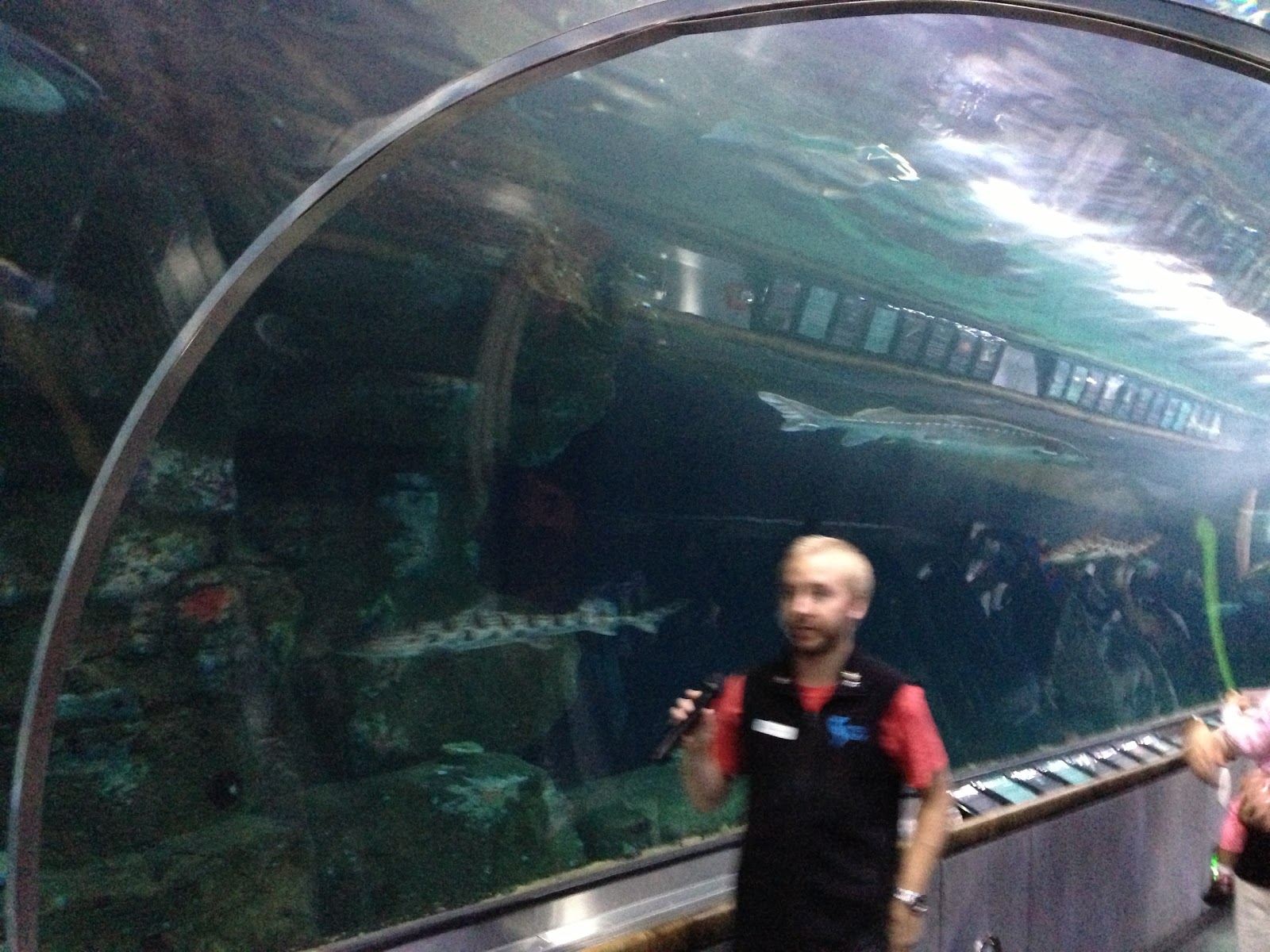
Dangerous overcrowdng at the Aquarium by the Bay in San Francisco

Bad bad bad experience at the Aquarium by the Bay on 7/7/13.

We went into the tunnel area (where you are in essence inside the big tank). And they announced they were having a shark feeding. We (11 of us including four kids) waited in the tunnel where they told us to.

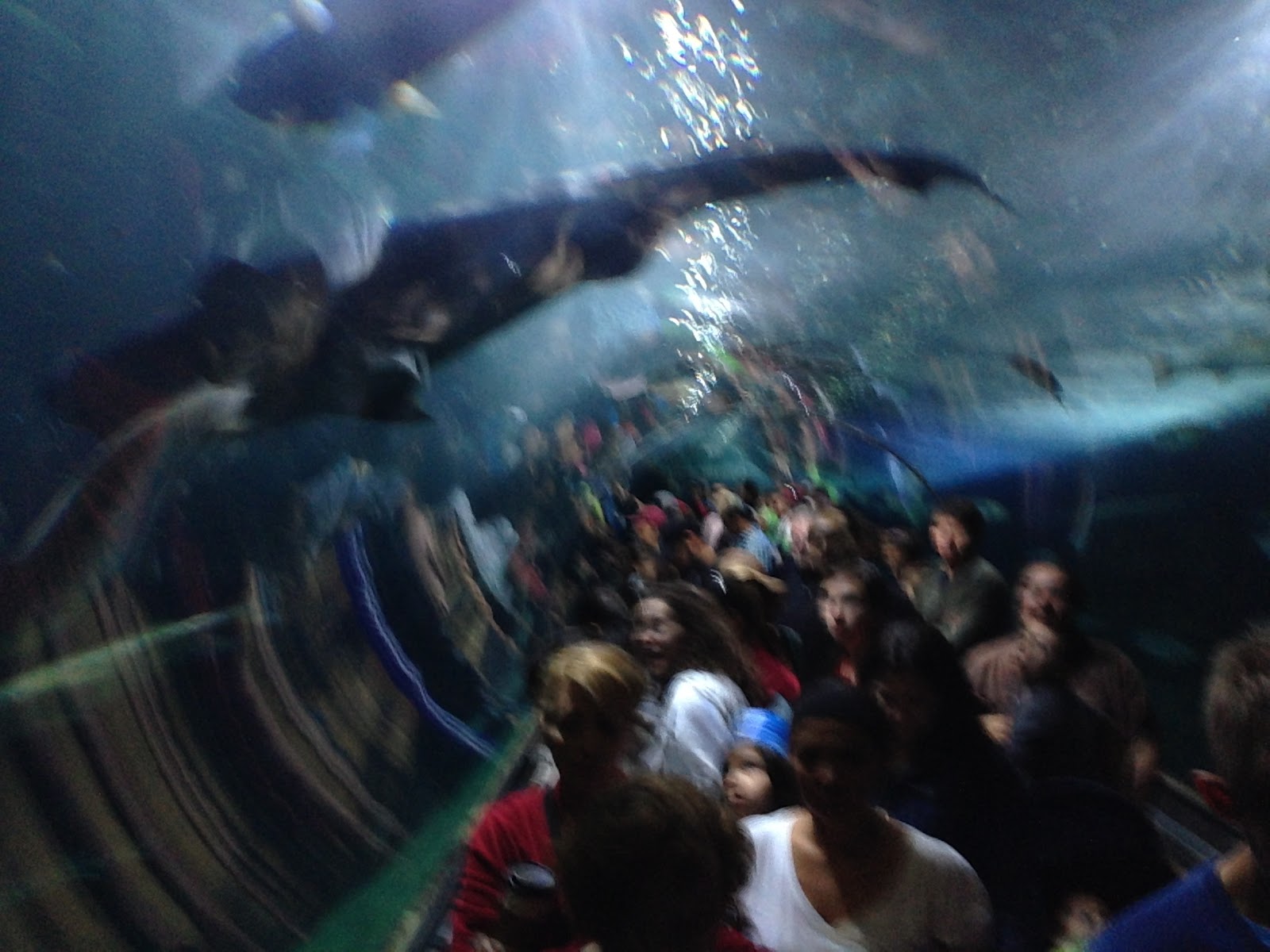
The tunnel has a moving walkway in it on one side of the floor that slowly moves people through the area. On the other side of the floor there is solid ground. At the end of the walkway is a waiting area for the elevator. As the show started they turned on the walkway and people started moving past us.  The walkway was wall to wall people.

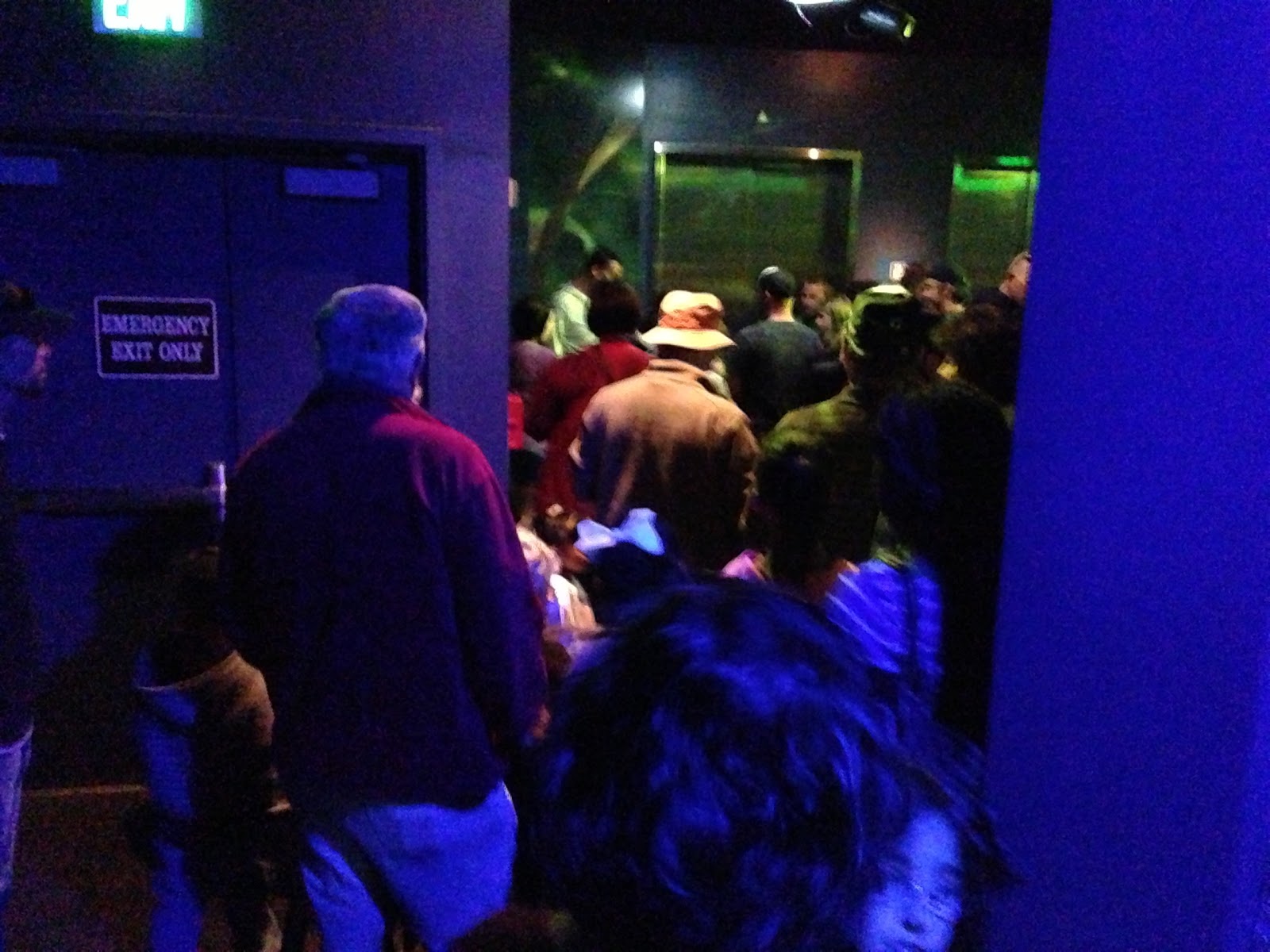
As they turned on the walkway, the elevator could not keep up with the crowd pouring in off the walkway and it started to get very crowded there. We decided to try and get out because it felt unsafe in the tunnel. We squeezed onto the moving walkway (my wife first, with my two kids and then me).

As we got near the elevators people were screaming for the staff to turn off the walkway as people started to get crushed. The staff refused. My sister turned off the emergency switch.

Eventually – after some ten minutes – we got out on the elevator. My kids were completely freaked out as were most of the other people there. This place should probably be shut down.

Lies, damn lies, and press releases – trouble with recent PR about autism and microbiomes

Uggh.  Just saw a bunch of stories about autism and the microbiome.   Many of the comments in the news stories I read seemed, well, not so good.  So I decided to sniff around.  Seems that many of the comments and stories are based on a new PLOS One paper and the comments and press release from the group behind the paper.

Here is the press release I found: Clues about autism may come from the gut.  From Arizona State University.   So I read it.  But I had a hard time getting past paragraph 2:

In new research appearing in the journal PLOS ONE, a team led by Rosa Krajmalnik-Brown, a researcher at Arizona State University’s Biodesign Institute, present the first comprehensive bacterial analysis focusing on commensal or beneficial bacteria in children with autism spectrum disorder (ASD).

This did not sound true and sounded a bit overblown as I could have sworn I had seen other “comprehensive” studies of the microbiome in children with ASD. So first I decided to look at the paper.  And – thanks a lot – there was no link in the PR or the stories I had seen.  So I had to go to PLOS One and do a little searching and I found it:

Reduced Incidence of Prevotella and Other Fermenters in Intestinal Microflora of Autistic Children

Kang D-W, Park JG, Ilhan ZE, Wallstrom G, LaBaer J, et al. (2013) Reduced Incidence of Prevotella and Other Fermenters in Intestinal Microflora of Autistic Children. PLoS ONE 8(7): e68322. doi:10.1371/journal.pone.0068322

So – first I asked – did they make the same claim in the paper or was this just in the PR?  Usually such things are just in the PR but amazingly they have this claim in the paper too, with lines like:

“previous studies describing the relationship between autism and gut microbes have either mostly focused on the emergence of harmful bacteria or mainly paid attention to already-known beneficial bacteria”

So I decided to then look at Pubmed and Google Scholar for other papers on autism and the microbiome. Here are some that I found:

Not all of these are what one would call comprehensive.  But some of them are at least approaching the scale of what was done here.  And surprisingly, not all of them are cited in the new study.  In particular, the papers by Gondalia et al including one on “Molecular Characterisation of Gastrointestinal Microbiota of Children With Autism (With and Without Gastrointestinal Dysfunction) and Their Neurotypical Siblings” is not references despite it doing some similar things.  I guess, if you don’t cite other comparable studies, and pretend they don’t exist, then that makes one’s work seem a but more novel right?  Weird not to cite that work though – not sure why that happened.  And certainly some of the other studies, even though they are cited, seem like they could be referred to as comprehensive.  I mean – Ian Lipkin’s study did metagenomics not just PCR based sequencing.  Isn’t metagenomics sort of more comprehensive than PCR?  
Anyway – let’s just say this is not the first “comprehensive” study of autism and the microbome.
Moving on in the press release I encountered another painful statement.

The work also offers hope for new prevention and treatment methods for ASD itself, which has been on a mysterious and rapid ascent around the world.

Just what exactly does this new study say about prevention or treatment?  Actually, as far as I can tell – nothing.  So this is a bonus overselling statement just for the PR
Oh but then the PR just get’s worse:

Their new study is the first to approach autism from a different angle, by examining the possible role of so-called commensal or beneficial bacteria.

Seriously?  We have gone from trying to claim this is the first comprehensive study of the microbiome and autism to now saying it is the first?  Fu#*(@@# ridiculous.
Other lines that are troubling are encountered further on including
  • The authors stress that bacterial richness and diversity are essential for maintaining a robust and adaptable bacterial community capable of fighting off environmental challenges.”.  Hmm.  What is the difference between richness and diversity? And what is the evidence that they are essential for such functions?
  • The species is a common component in normal children exhibiting more diverse and robust microbial communities.”  Again – what makes that robust?
  • Michael Polan’s recent New York Times Magazine story on the microbiome points to the fact that he is proud that his gut microbiome is rich in Prevotella regarding it as a possible sign of a healthy non-Western diet.  Really?  They brought Michael Pollan (with a mis-spelling that might be on purpose so that Pollan does not see this) into their PR?  Uggh
Anyway – I kind of wanted to give them an overselling the microbiome award for some of their statements.  But in the end I would rather give them an “Overselling ourselves” award.  It is a shame too.  I think continuing to explore possible connections between autism and the microbiome will be important.  Making misleading statements about what you have done and not citing / properly referencing other work will not help.